
Every customer interview,
working for your roadmap.
Store every customer interview, generate insights you control, cluster them into themes, and feed a roadmap you can defend.
Three failure modes every PM knows.
Interviews go in, nothing comes out.
The recording sits in a Drive folder, the notes in a doc nobody reopens, the board of sticky notes gathering dust on the wall. The insight was there — but it stayed static, and everyone forgot it existed.
Recency wins. Always.
Whatever happened in the last call drowns out what 12 earlier interviews already told you. The roadmap whips around.
Synthesis is a weekend project.
Pulling themes out of a dozen calls means hours of re-reading transcripts and copy-pasting quotes.
Stop stitching together a research stack.
Most teams run discovery across a recorder, a notes app, a whiteboard for affinity mapping, and a spreadsheet to track it all — and the insight gets lost in the gaps between them. Intervool replaces the patchwork: capture, transcripts, insights, themes, and the roadmap in one place.
- Recording calls — no more Zoom / a recorder.
- Notes & transcripts — no more Notion / a notes app.
- Affinity mapping themes — no more Miro / a whiteboard.
- Tracking insights & priorities — no more Spreadsheets.
One conversation, captured all the way to the roadmap.
Intervool ties every insight to the conversation it came from, so nothing gets lost between the call and the roadmap review. New here? See what Intervool is and how the loop works.
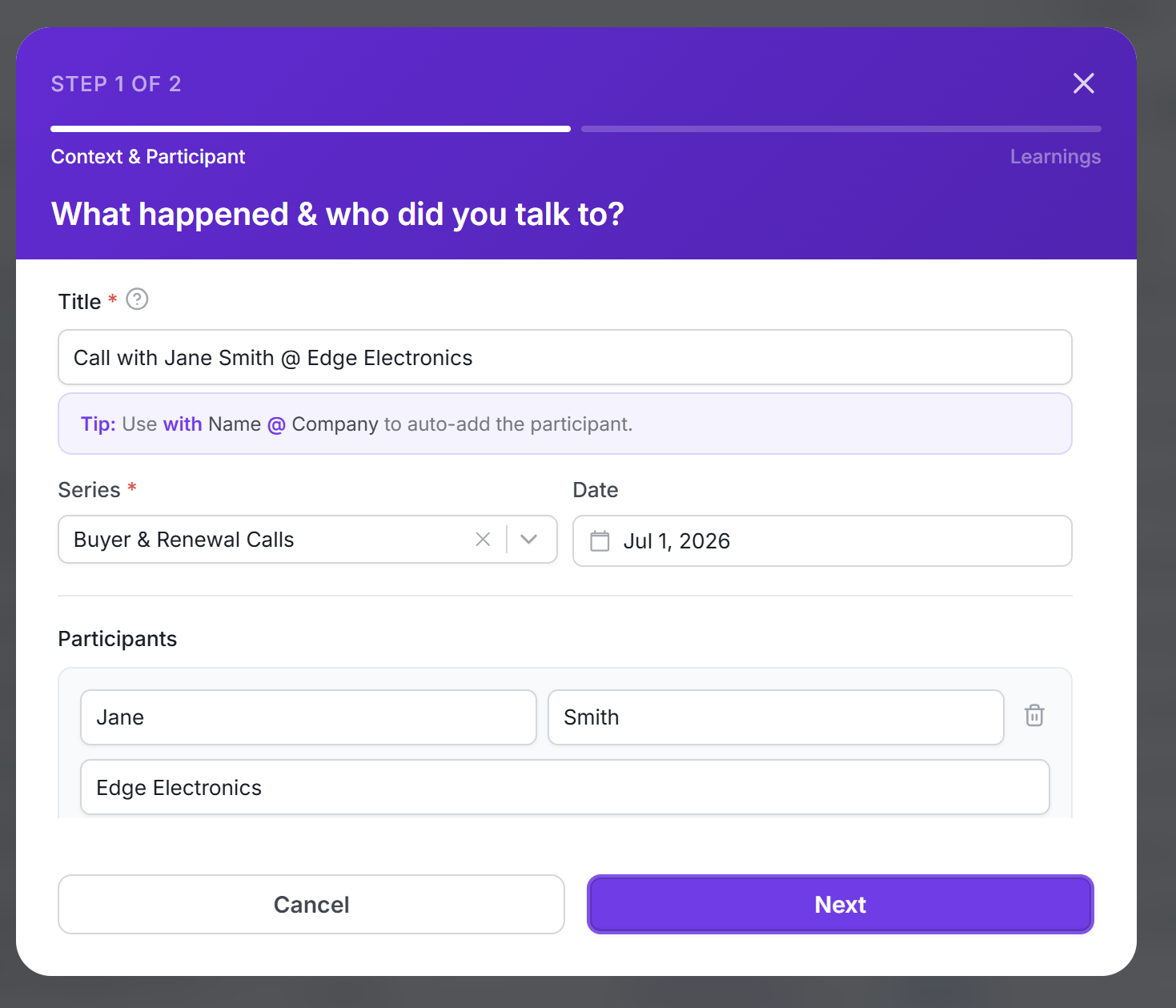
Log who you talk to and group it under a series.
Add the person you spoke with and tag the interview to a series — for a segment or research question, like 'SDRs.' Related conversations stack under the same series, so you're synthesizing a body of work instead of one-off calls.
Generate insights, highlights, and video clips from every call.
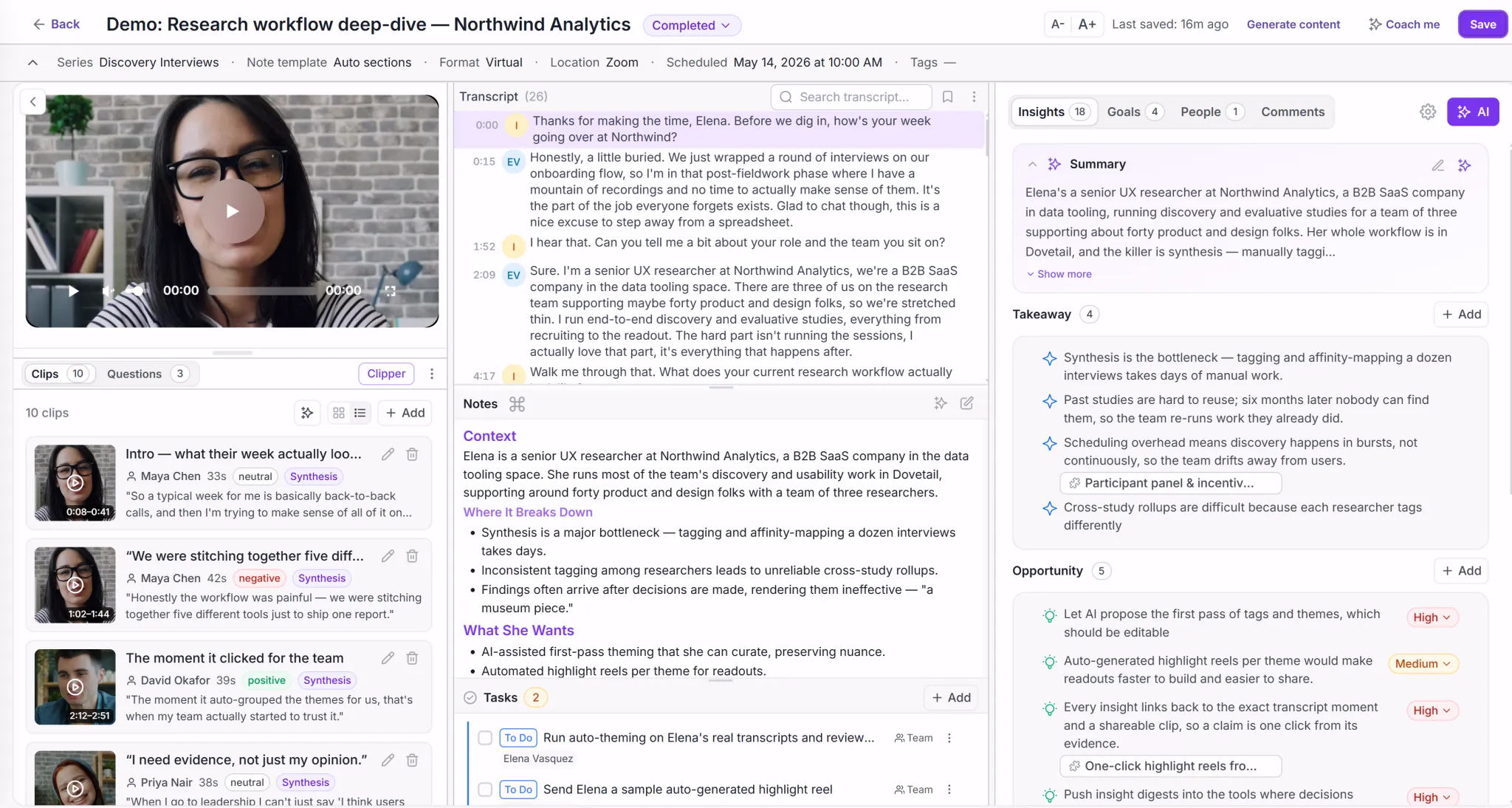
Point Intervool at a conversation and it scans the transcript into structured outputs: insights, notes, follow-up tasks, highlights, and video clips, each linked back to the moment it came from. You review and promote what matters instead of transcribing it yourself.
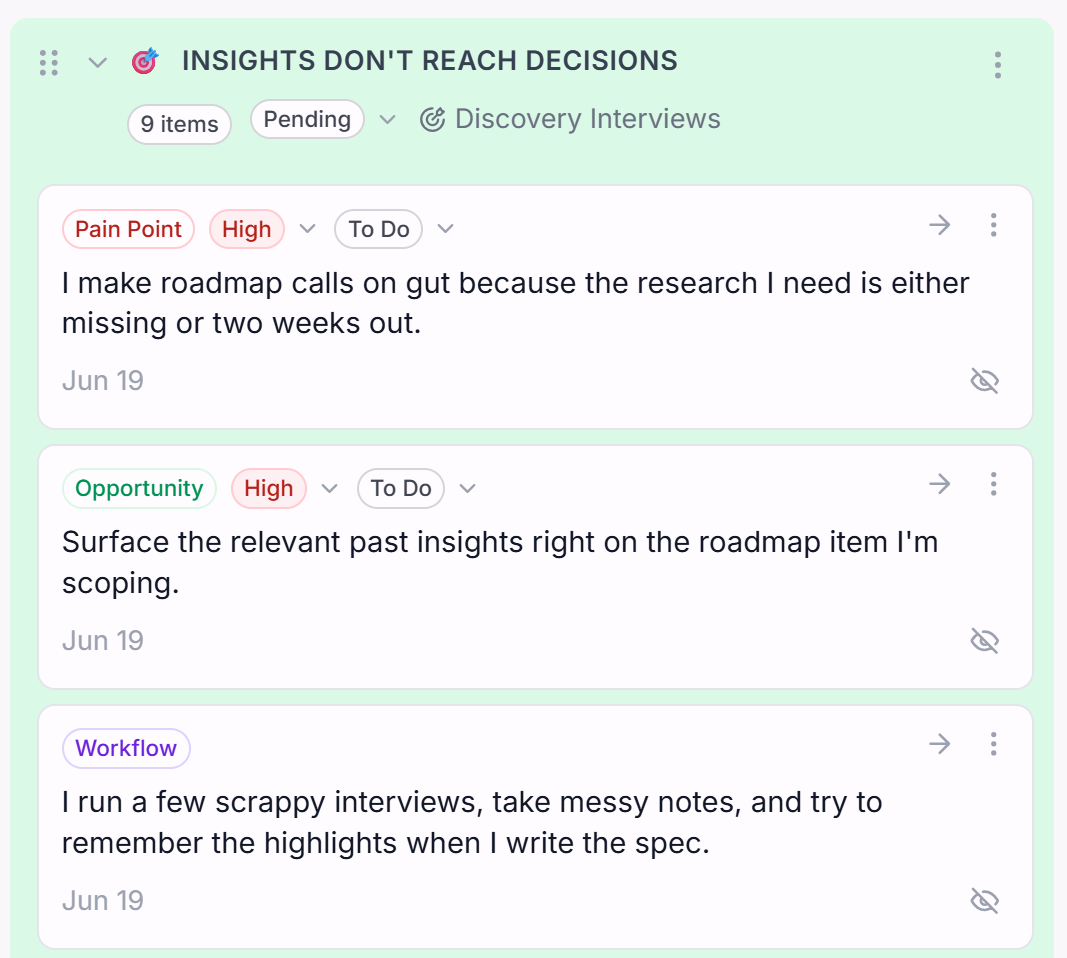
See what repeats across every conversation.
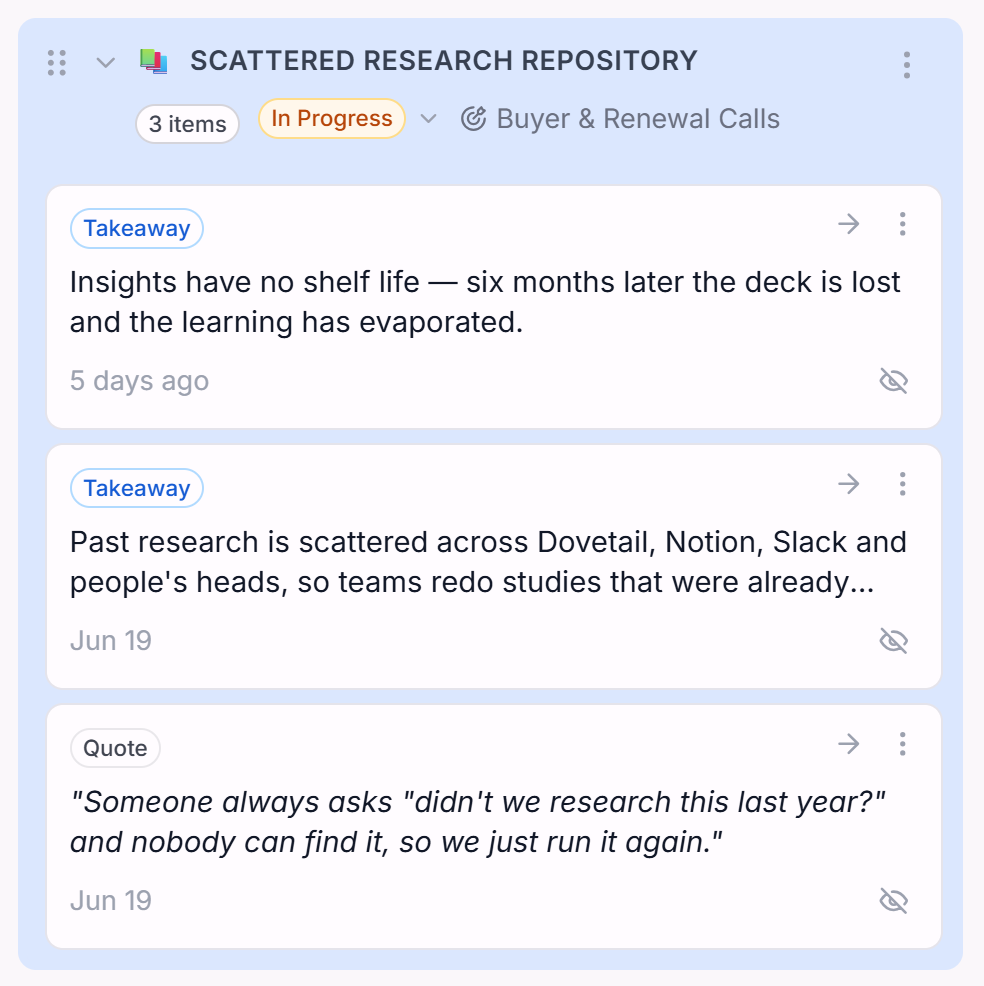
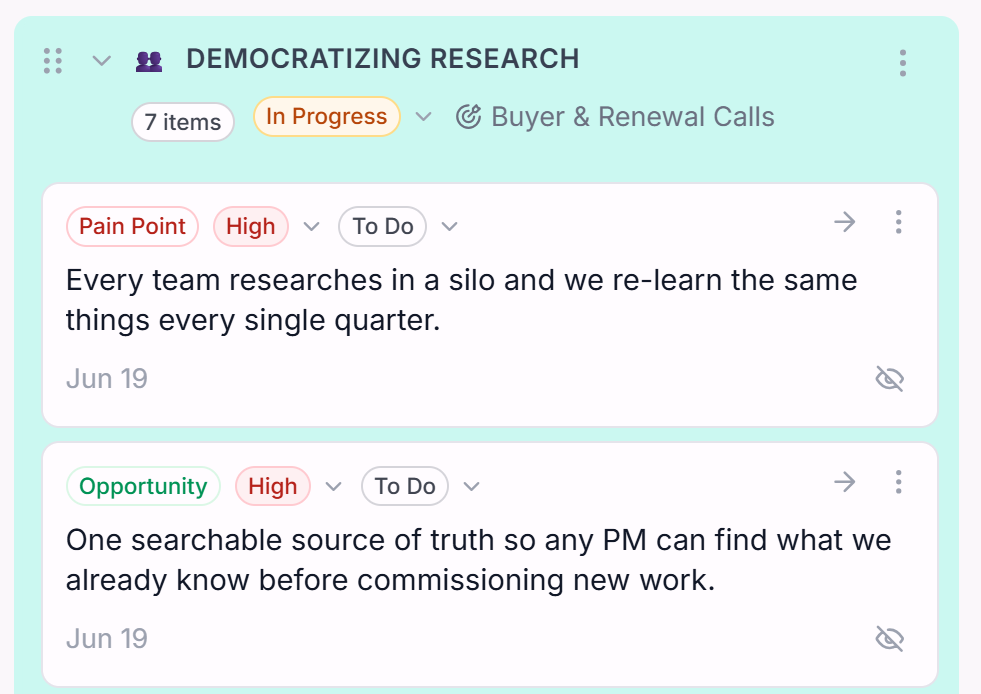
Insights roll up into evidence-linked themes on a board you can scan at a glance. Let AI propose groupings, then rename, merge, or reassign — you stay in control.
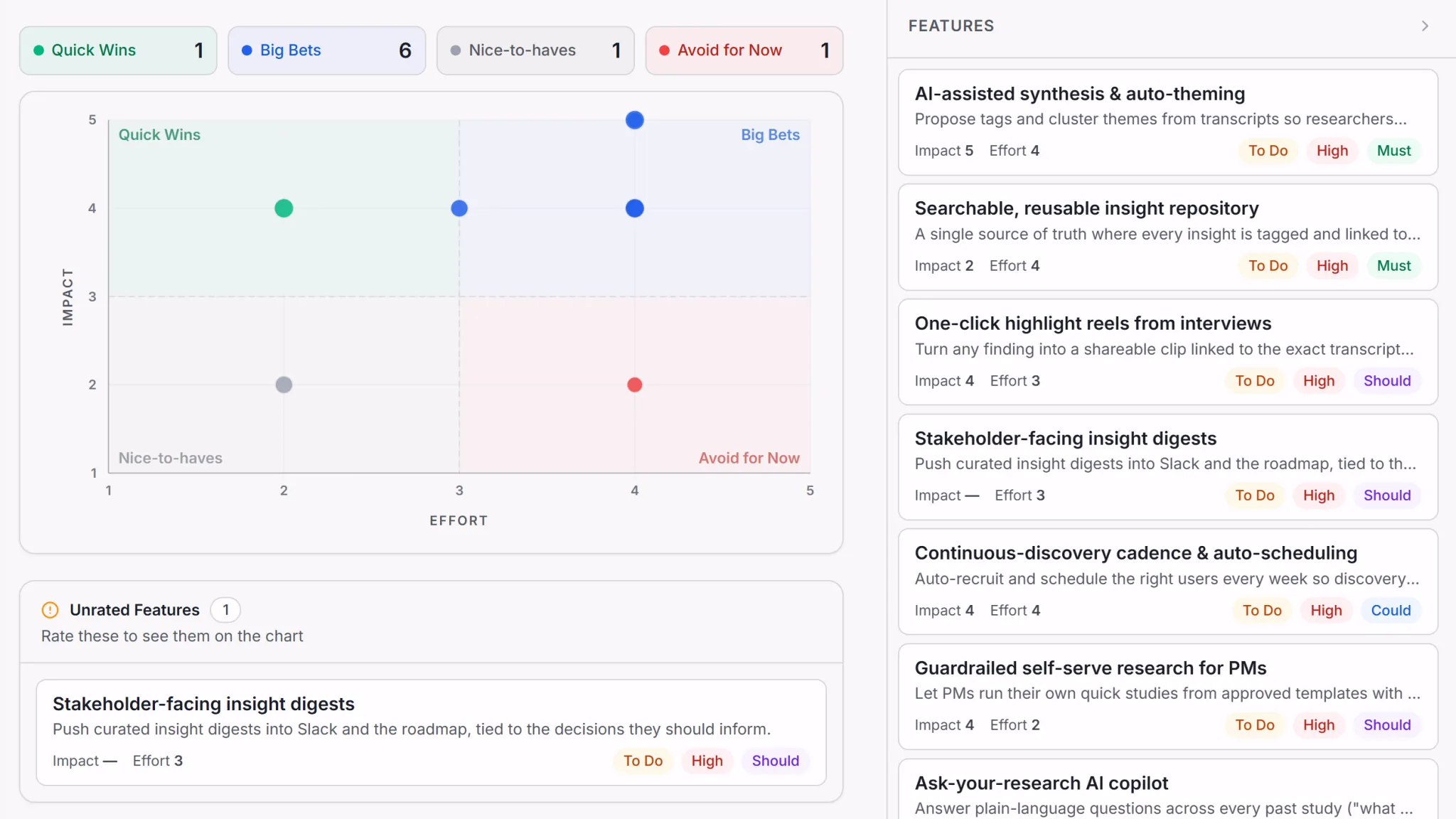
Turn themes into prioritized, defensible bets.
Themes turn into feature ideas scored on impact vs effort. Every priority links back to the quote, interview, and person behind it — so when someone asks ‘why this?’, the answer is one click away.
Now read those insights through the people behind them.
Every insight and theme you just captured traces back to someone you talked to. Group those people into personas built from real signals, and “the customer” stops being one undifferentiated voice.
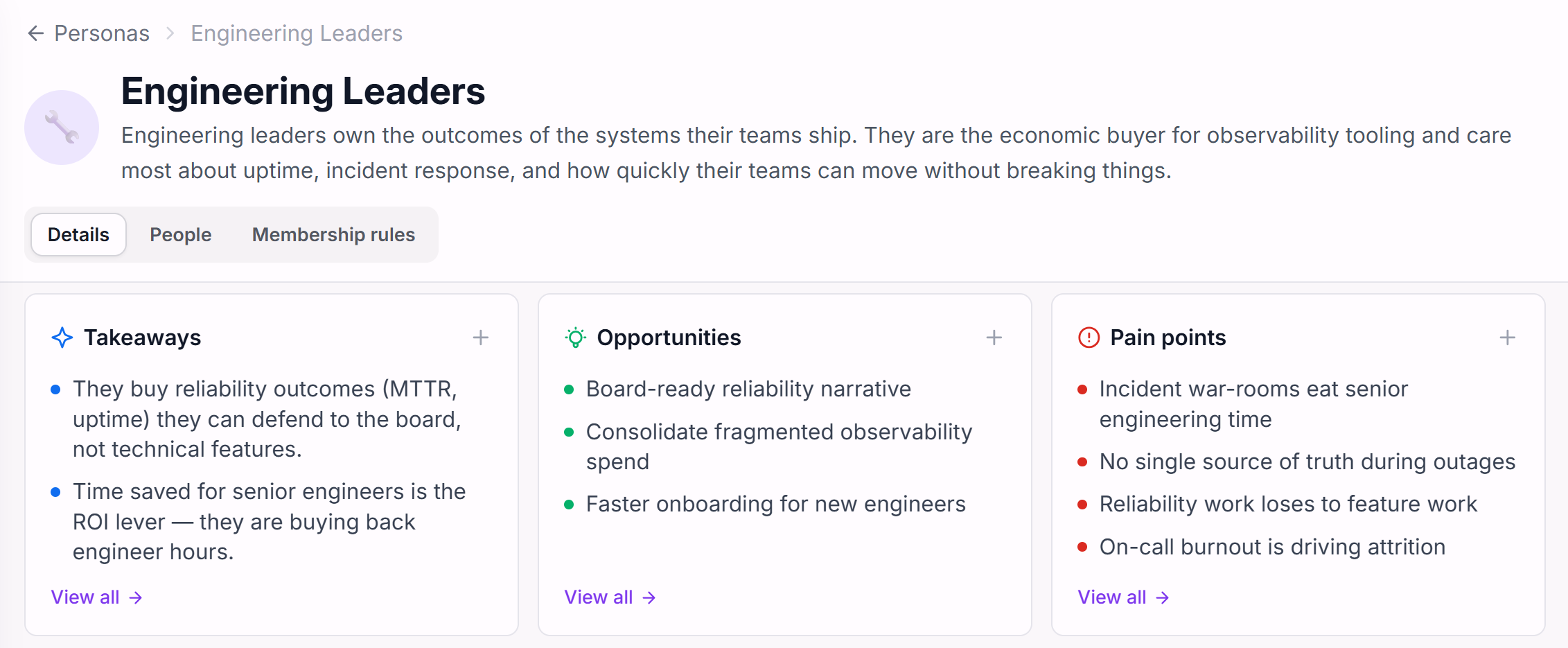
Different people want different things
An executive chasing ROI, a team lead protecting their workflow, and a hands-on user who just wants it faster all pull in different directions. See what each persona actually asks for instead of flattening it into one blurry average.
Defined by signals, not job titles
Each persona is described by the criteria that actually matter — what they own, what they're accountable for, who they report to — so membership means something.
Auto-populated from your people
As interviews and contacts come in, people fall into the personas they match. The population count stays live instead of going stale in a slide.
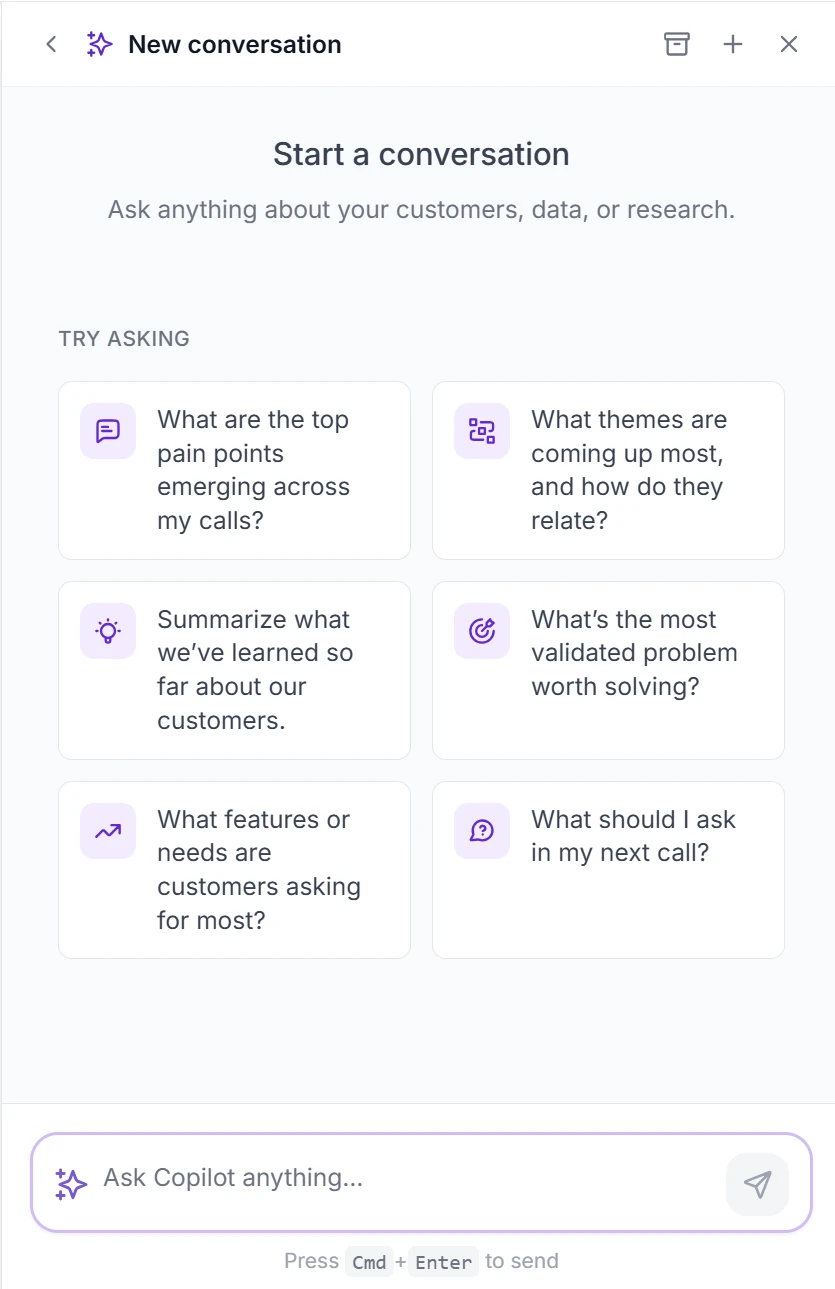
Ask Copilot anything about your data.
Every interview, theme, person, and company you've captured becomes something you can just ask about. Copilot answers from your own research — with sources — instead of making you dig.
- “What patterns are showing up in customer interviews?”
- “What types of customers should I go after and why?”
- “Which companies look most promising?”
- “Create a report outline from what we know.”
From first interview to roadmap defense.
Prep your questions
Reusable question templates that structure each conversation without scripting it, so every call is captured the same way.
Store the interview
Video, audio, and an auto-generated transcript on one record, linked to the person you spoke to.
Generate insights
Scan the transcript into outputs you choose — opportunities, quotes, pain points, and more.
Cluster into themes
Insights group into evidence-linked themes. AI proposes, you decide what's a pattern.
Defend the roadmap
Themes become prioritized ideas. Every bet links to the customer quote behind it.
"Every feature on the roadmap traces back to the people who asked for it."
Team is $279/mo for your team. Shared workspaces, richer synthesis, real-time collaboration.
Start solo on Basic, scale to Team when the team grows. 14-day free trial. No credit card.
How does Intervool capture and store customer interviews?
Add an interview — title, date, series, and who you spoke to — and Intervool stores the video, audio, and an auto-generated transcript on the record. Reusable question templates help you prep each call so every conversation is captured the same way.
How does Intervool generate insights from an interview?
Intervool scans each interview and proposes insights — opportunities, takeaways, quotes, pain points, feature requests, and workflows — each linked back to the moment in the conversation. You promote the ones that matter and refine the rest.
Can I control what kinds of outputs an interview produces?
Yes. Per interview (or by series default) you choose which output types are generated — Opportunity, Quote, Takeaway, Feature Request, Pain Point, Workflow — so a pricing call and a usability session extract different things.
Can I ask questions about my research?
Copilot lets you chat with everything you've captured. Ask what patterns are showing up across interviews, which customers to go after, or to draft a report outline from what you know — answered from your own data, with sources.
How does this feed the roadmap?
Insights cluster into themes — with AI proposing groupings you can edit — and themes become feature ideas scored on impact vs effort. Every priority traces back to the quote, interview, and person behind it, so you can defend the roadmap with evidence.
What does Intervool cost for a product team?
The Team plan is $279/mo for your team and adds shared workspaces, real-time collaboration, and richer synthesis. Every plan includes a 14-day free trial with no credit card required.
A roadmap you can actually defend.
Try Intervool free for 14 days. No credit card required.