
Condens stores your research. Intervool puts it to work.
Condens is a great place to store and tag what you learn. But a tidy archive of findings isn't a decision. Intervool carries every interview through to personas, segments, and a roadmap you can defend — each priority one click from the customer quote behind it.
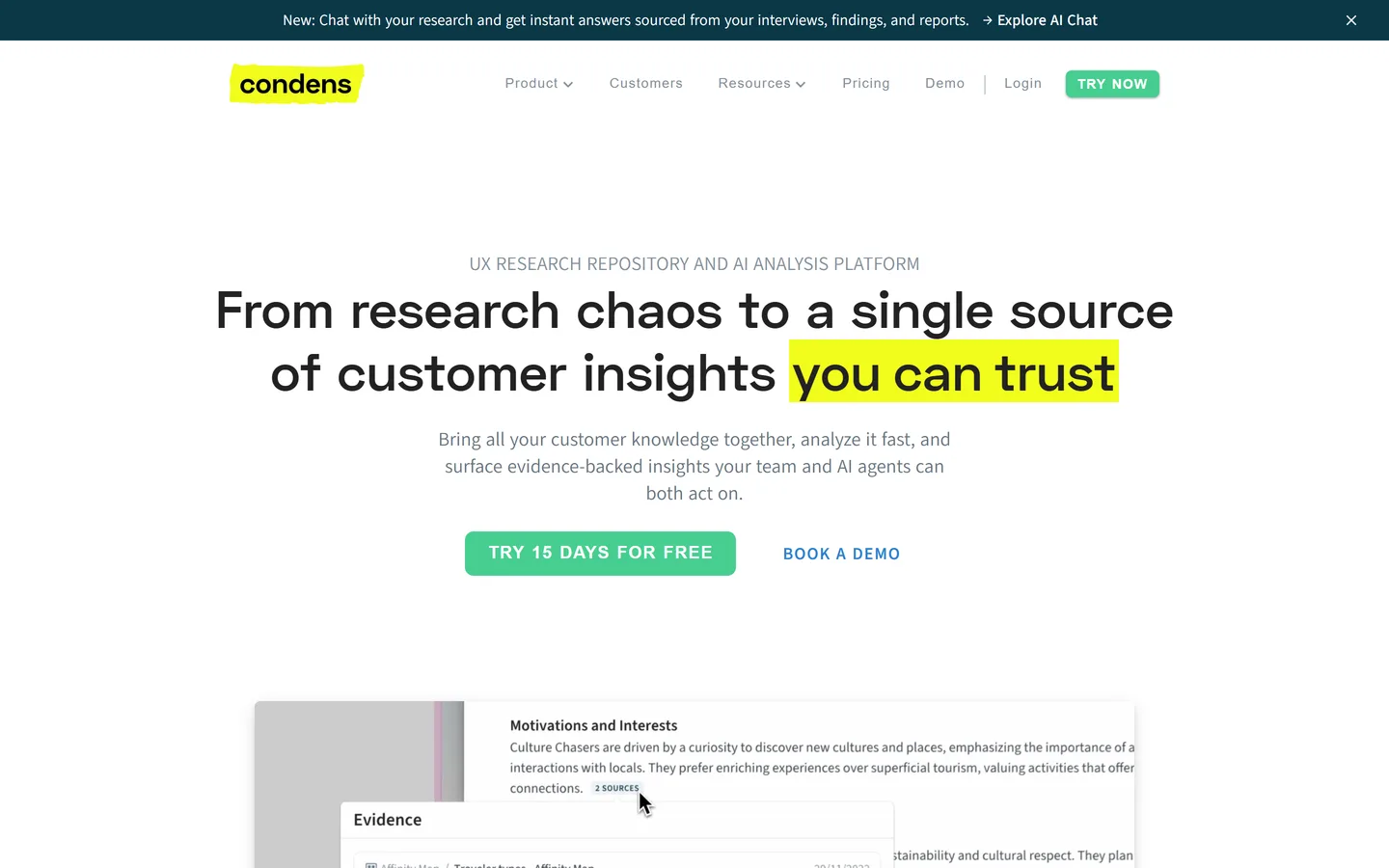
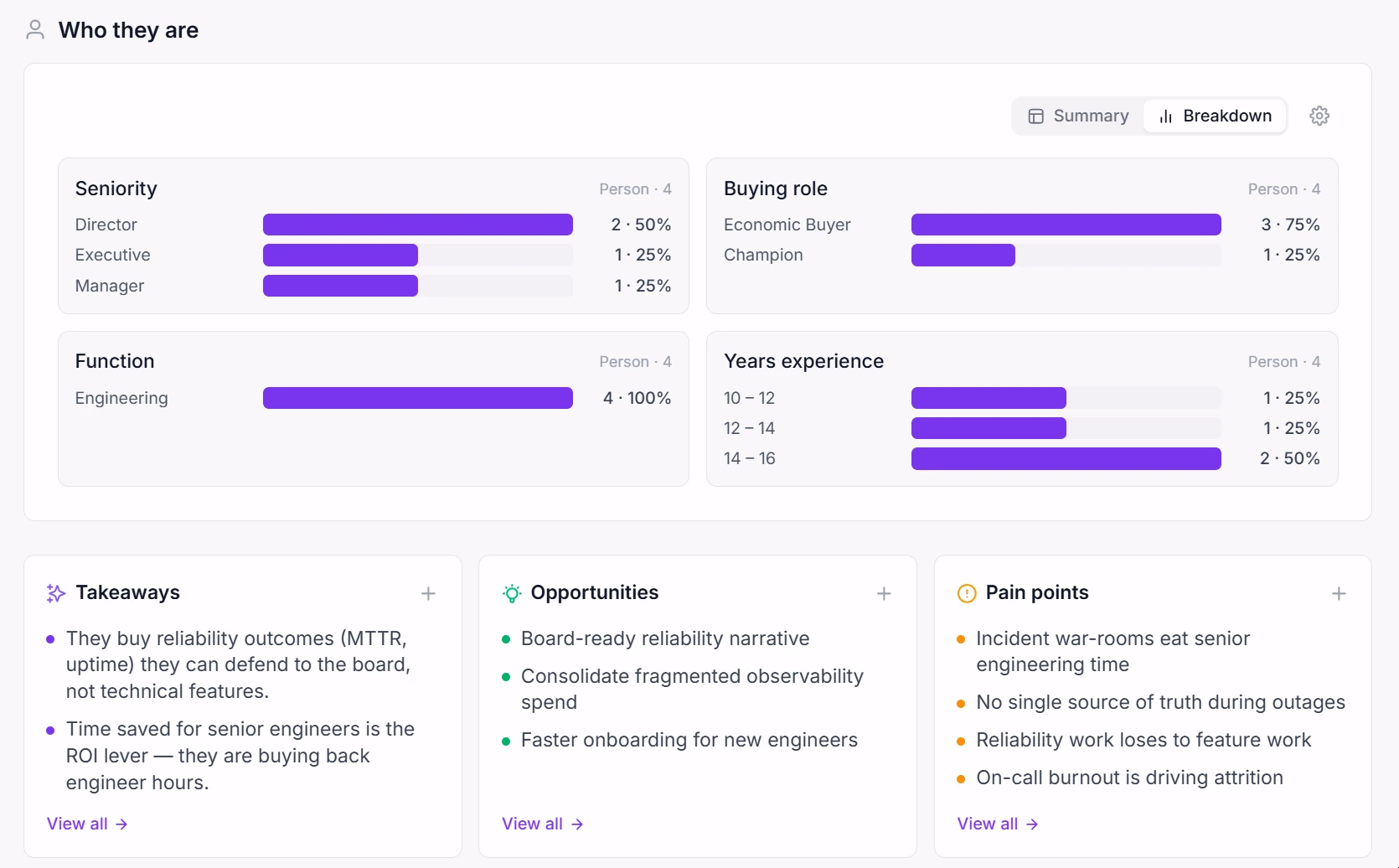
Intervool vs Condens, dimension by dimension.
What the difference looks like in the product.
The table above is the short version. Here is the same workflow on screen — the steps that carry on after the point a Condens-style repository hands the work back to you.
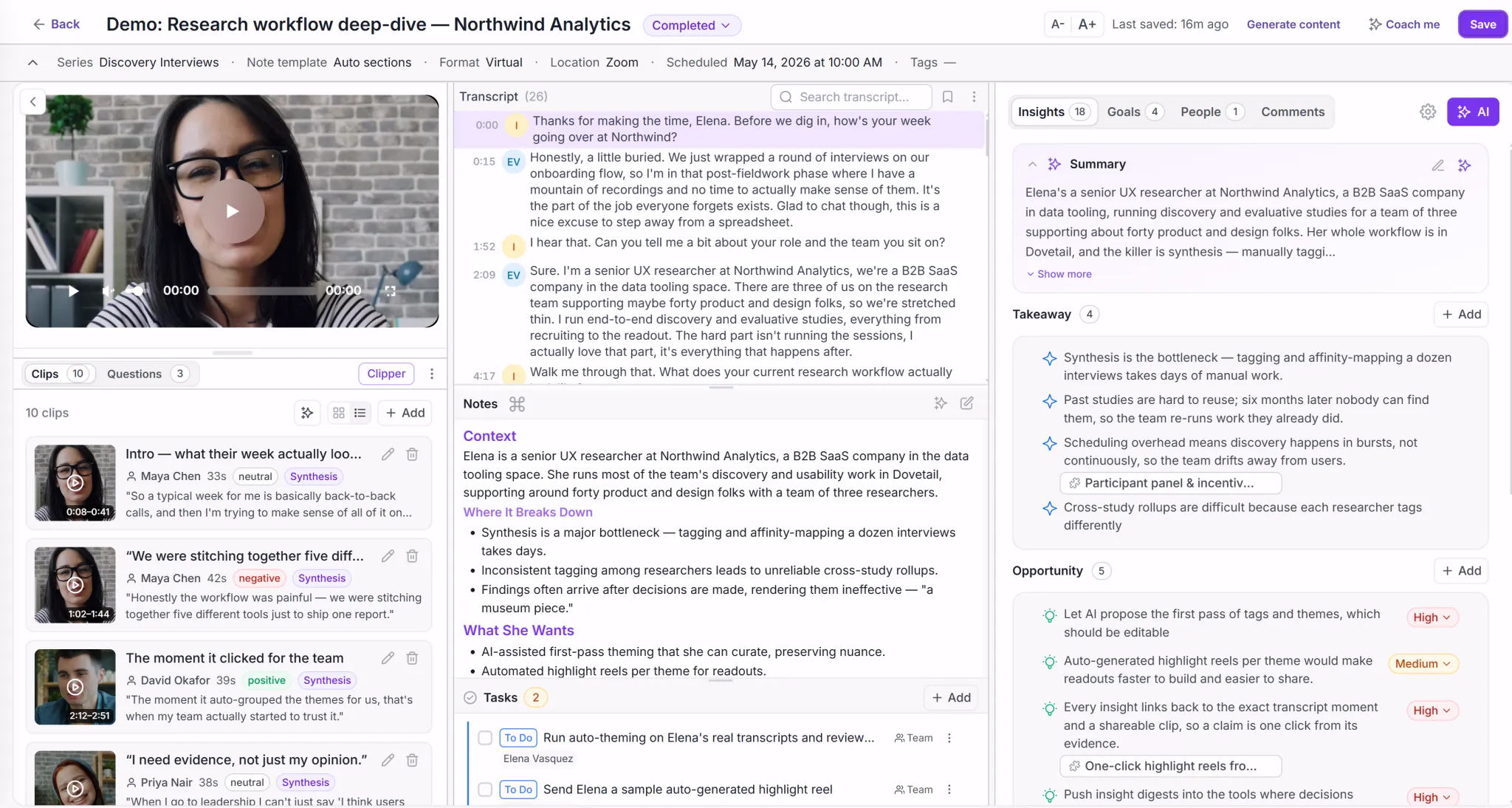
You decide what every call gets read for.
Instead of a fixed set of findings, you pick the output types each interview should produce — pain points, feature requests, opportunities, quotes, workflows — and describe in plain English what counts for your product. Every call from then on comes back structured the same way, so the set is comparable rather than a pile of individually tagged notes.
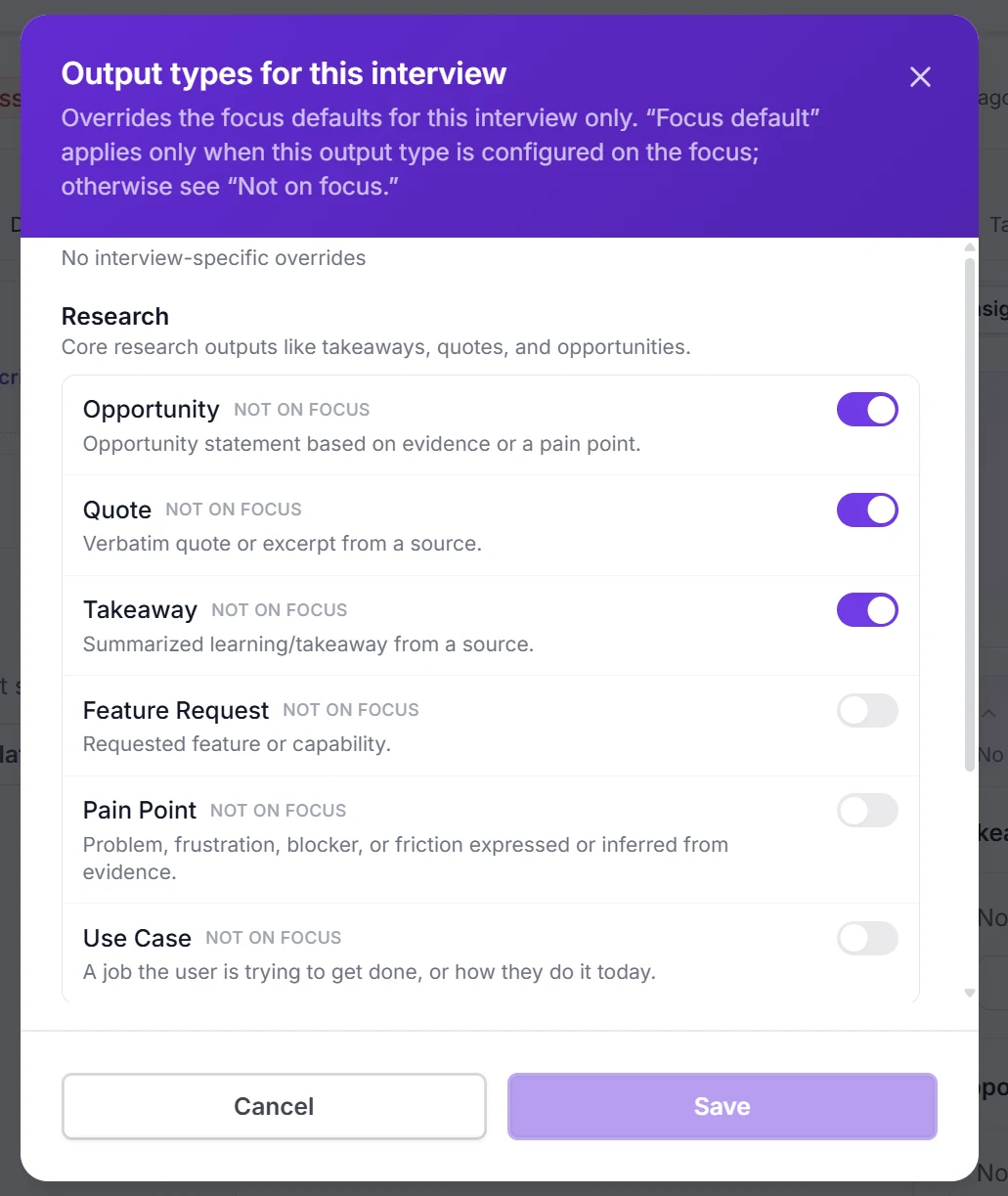
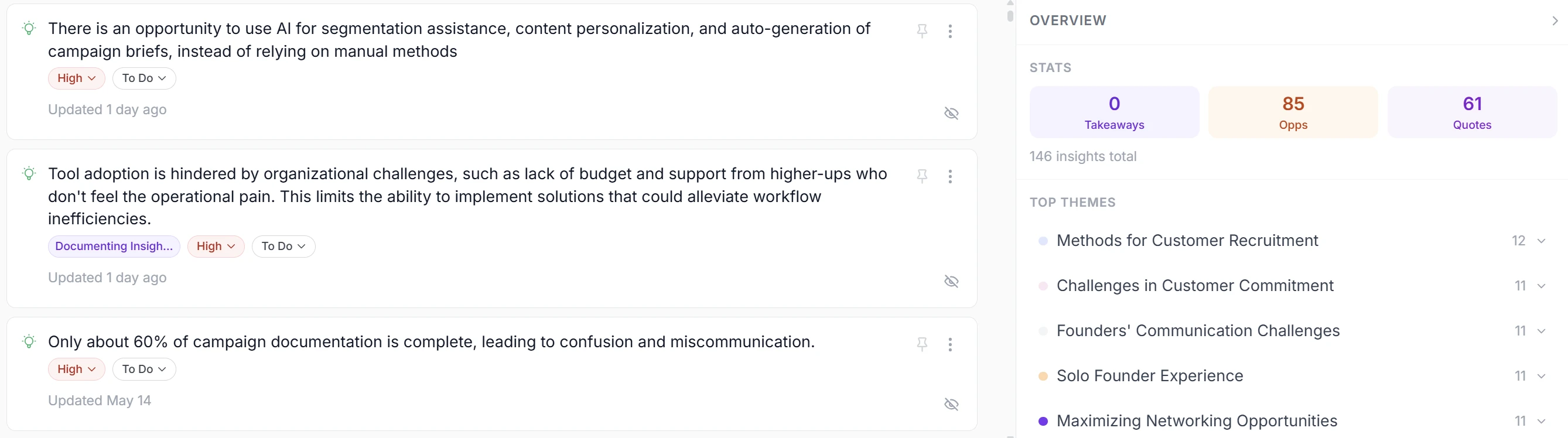
Findings from all your calls, already linked to their source.
Insights land in a single view across every interview — each one carrying the person, company, and moment it came from. Tagging is what a repository asks you to do to get here; in Intervool it's the starting point, and one click takes you back to the quote in the transcript.
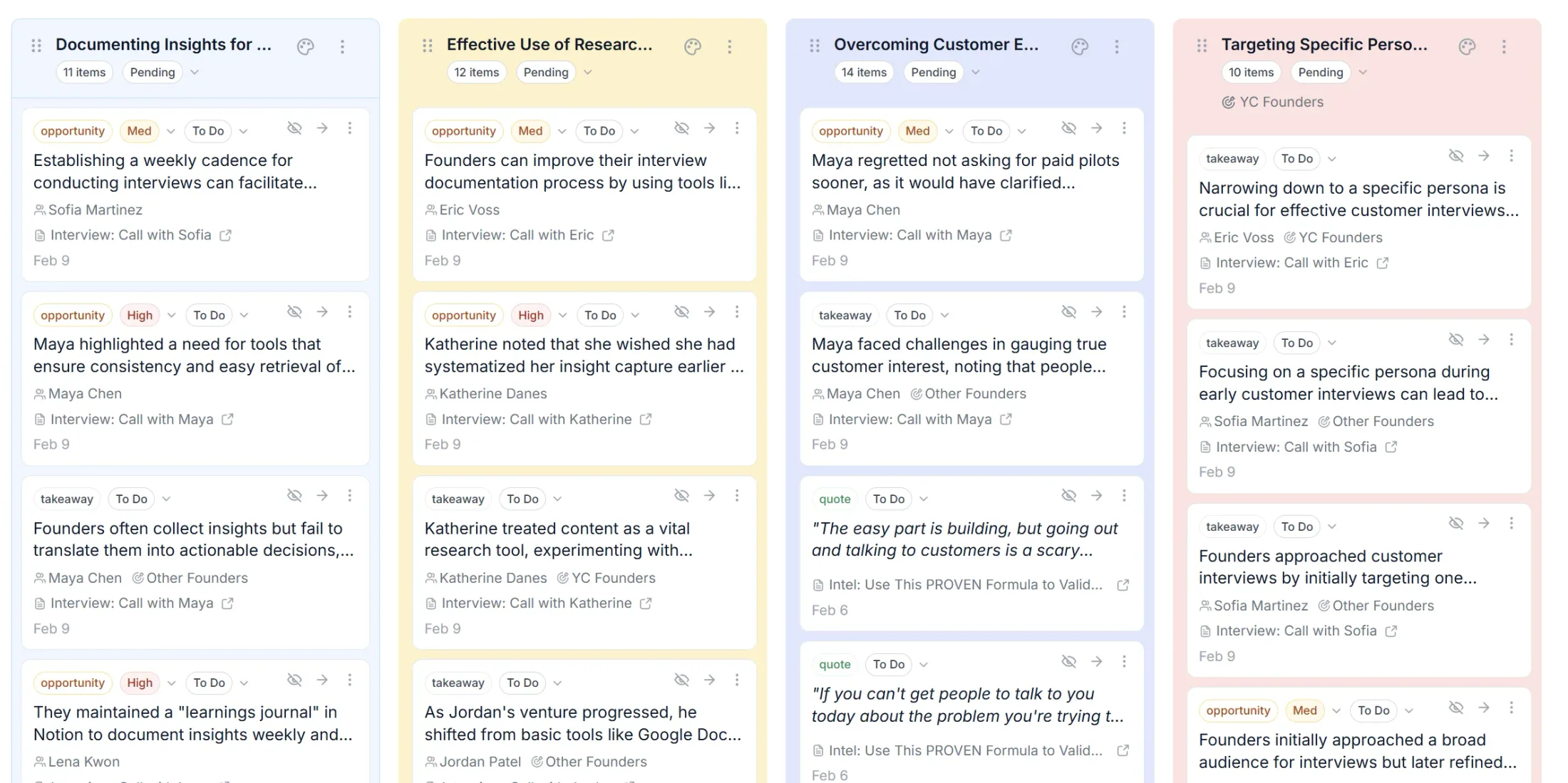
What repeats across calls surfaces on its own.
Related findings group into themes as your research grows, so the third mention of the same friction shows up as a pattern instead of a note you have to remember searching for. Each theme keeps the calls underneath it, so you can see exactly how many people said it and who they were.
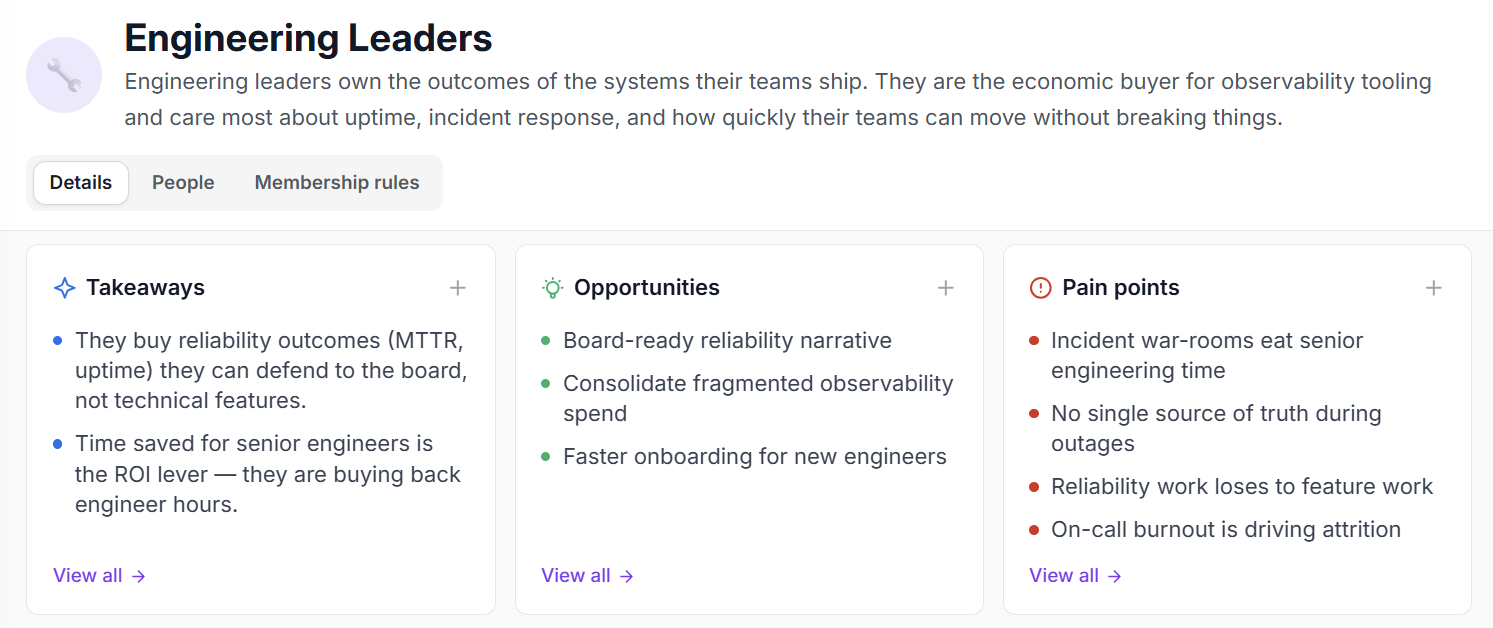
Who said it — kept current as you learn.
Personas and segments in Intervool aren't a slide you refresh once a year. They're built from the interviews themselves and update as new calls land, showing each group's pain points, opportunities, and objections with the evidence attached.
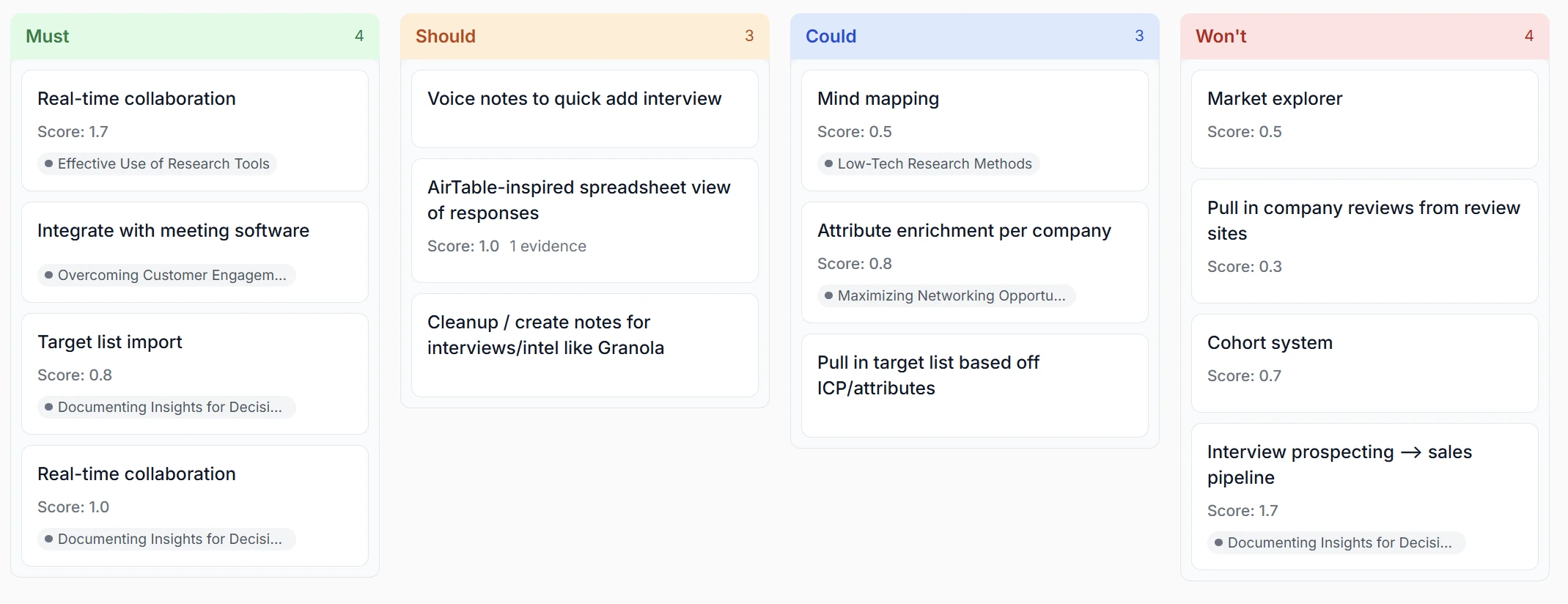
Themes become a roadmap you can defend.
This is the step that lives in a different tool when your research sits in a repository. In Intervool, themes turn into feature bets sorted into must / should / could and scored on impact versus effort — and each one stays one click from the customer quote that justified it, so the roadmap answers "why" without you rebuilding the trail.
Condens alternative — common questions.
Is Intervool a good Condens alternative?
Yes — if you want customer research to drive product decisions, not just sit in a repository. Condens is built to store, tag, and share research findings. Intervool captures and synthesizes interviews too, then carries that work forward into dynamic personas and segments and a prioritized roadmap — all in one workspace, each decision one click from the customer quote behind it.
What does Intervool do that Condens doesn't?
Intervool continues past synthesis. Insights become dynamic personas and segments that update as you learn, and themes become a prioritized feature roadmap — each item one click from the customer quote behind it, without exporting to a separate tool.
Can I move my existing research from Condens into Intervool?
Yes. Upload existing recordings, audio files, or written notes and Intervool transcribes them and pulls structured insights just like a new call — so research you already did in Condens isn't stranded.
Do I need a dedicated researcher to use Intervool?
No. Intervool is built so founders and PMs can run and synthesize research themselves — AI proposes the insights, themes, and groupings, and you refine them. A dedicated researcher makes it more powerful but isn't required.
How much does Intervool cost?
Basic is $39/mo for one seat, Team is $279/mo with 6 seats included, and Enterprise is custom. Every plan includes a 14-day free trial with no credit card required.
How much does Condens cost compared to Intervool?
Condens publishes a Lite plan at around €15 per user per month for individual work, then a Business plan at roughly €500 per month for five or more contributors, with Enterprise custom. The jump between the two is the part worth planning for: a five-person team is around €100 per contributor per month. Intervool is $39/mo for Basic and $279/mo for Team with six seats included, so a small team lands below the Condens Business plan and stakeholders who only read the research don't change the bill.
Is Intervool easier to use than Condens?
They're easy in different places. Condens is genuinely simple to learn as a repository, and its analysis board gives researchers hands-on control over how highlights get clustered. The work it leaves you is the clustering itself, which grows with the archive. Intervool proposes the findings and the themes and asks you to correct them, so the effort per interview stays flat as the number of interviews grows — better if you don't have a researcher, less appealing if you want to code everything yourself.
Can I keep using Condens alongside Intervool?
Yes, and some teams do while they migrate. Condens stays the archive of past studies while new interviews run through Intervool for synthesis and prioritization. Because Intervool accepts uploaded recordings, audio, and written notes, you can also backfill the studies that matter most rather than exporting everything at once.
Who is Condens better for than Intervool?
Trained researchers who want manual control over their own analysis, and teams whose main need is a tidy, searchable archive of completed studies. Condens is a well-built repository and doesn't pretend to be more than that. Intervool is the better fit when the research is being run by founders or PMs and the problem isn't storing findings but getting from findings to an agreed roadmap.
See what Intervool does after the interview.
Try Intervool free for 14 days. No credit card required.