
From interview to insight, in one repository.
You already ran the sessions. Intervool finds the story in them — so the insight lands on the roadmap instead of in a folder nobody opens again.
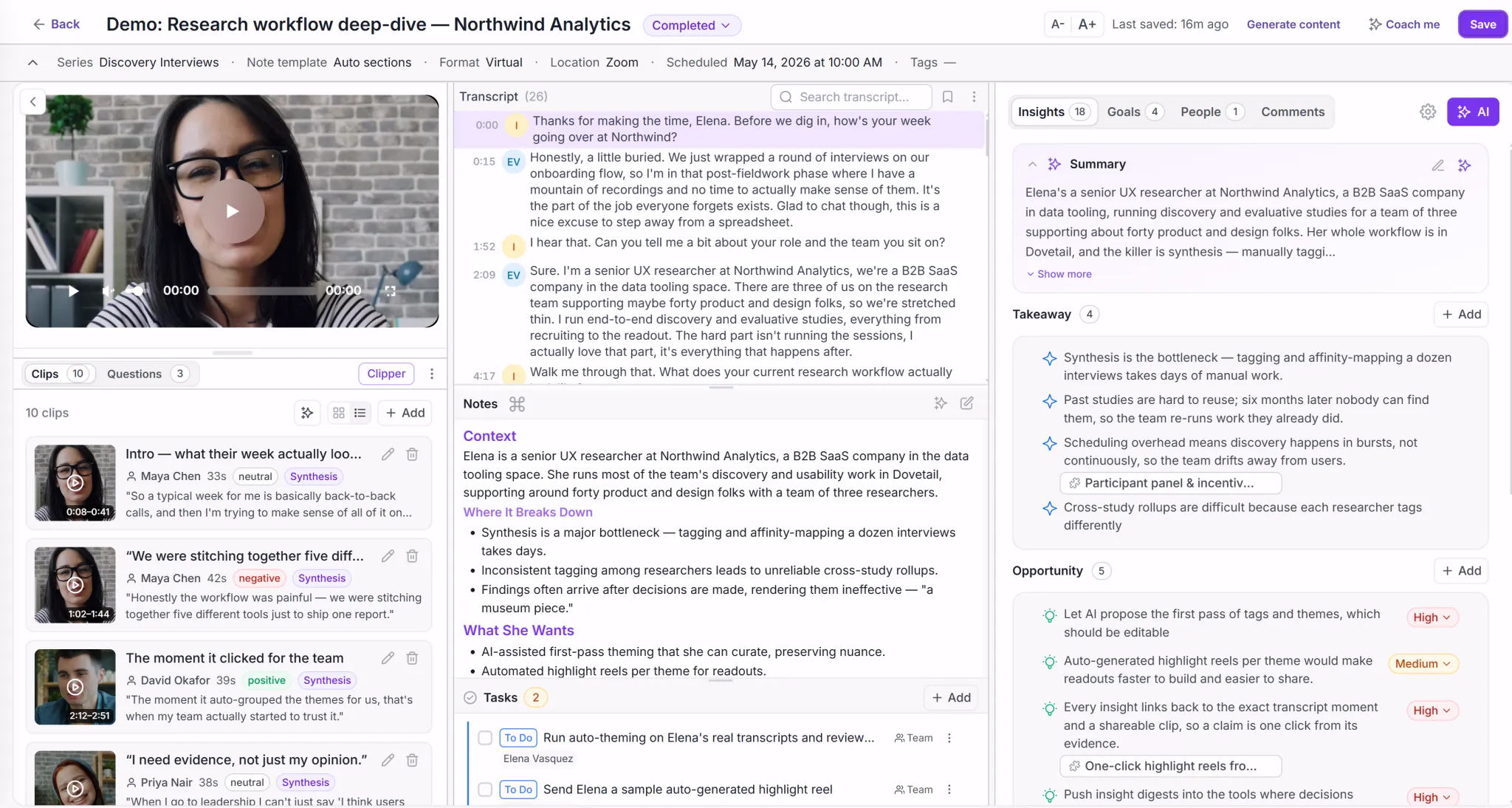
The insight is there. Getting to it isn't.
Research scattered everywhere
Recordings in Zoom, notes in Notion, insights in a deck. Nobody can find the study from three months ago.
The repository nobody uses
A tidy archive that's a chore to maintain and a graveyard for insight — disconnected from any decision.
Synthesis eats the week
Re-watching calls, tagging transcripts, mind-mapping sticky notes. The analysis is where momentum dies.
A home for your usability test notes.
Ran a usability session somewhere else? Drop the recording and your notes in. Intervool transcribes and synthesizes them alongside the rest of your research, so the findings don’t end up stranded in a doc no one reopens.
That’s the notes-and-insight layer today. Task flows and structured severity are shipping soon.
The insight layer of your UX research stack.
Keep your usability-testing and UX analytics tools for the quantitative and behavioral side. Intervool captures and transcribes sessions, runs synthesis, keeps a searchable UX research repository, and feeds the roadmap — the part of the UX research tools landscape that turns conversations into decisions.
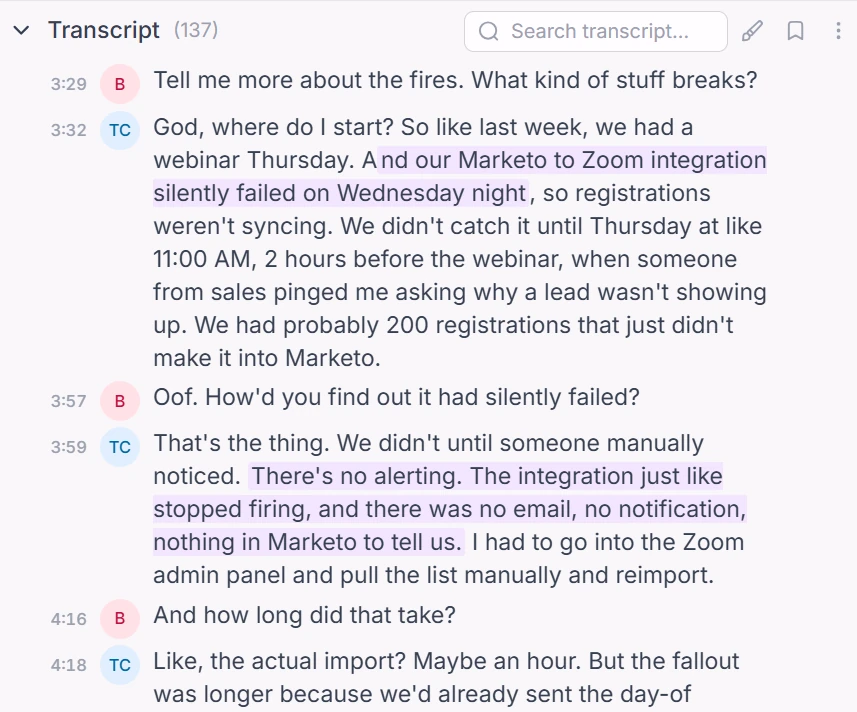
Capture & transcribe
Record or upload every session — video, audio, transcript.
Interview transcription →Skip the tagging. Keep the thinking.
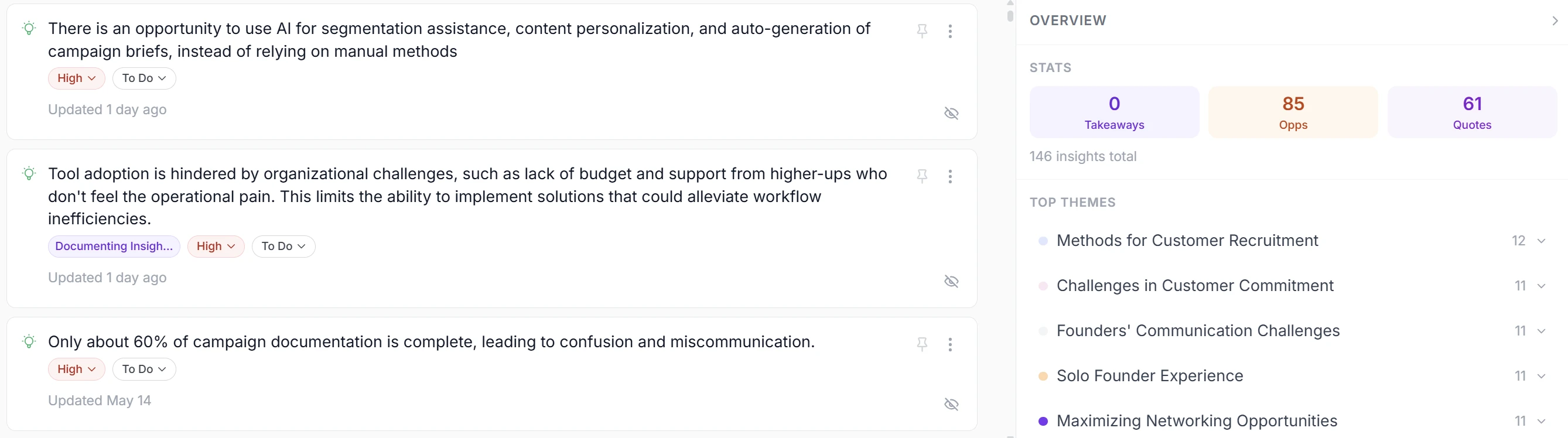
Intervool reads every transcript and proposes evidence-linked themes, each one click from the quote behind it. You rename, merge, and split until the story is right — a week of sticky notes becomes an afternoon of curation.
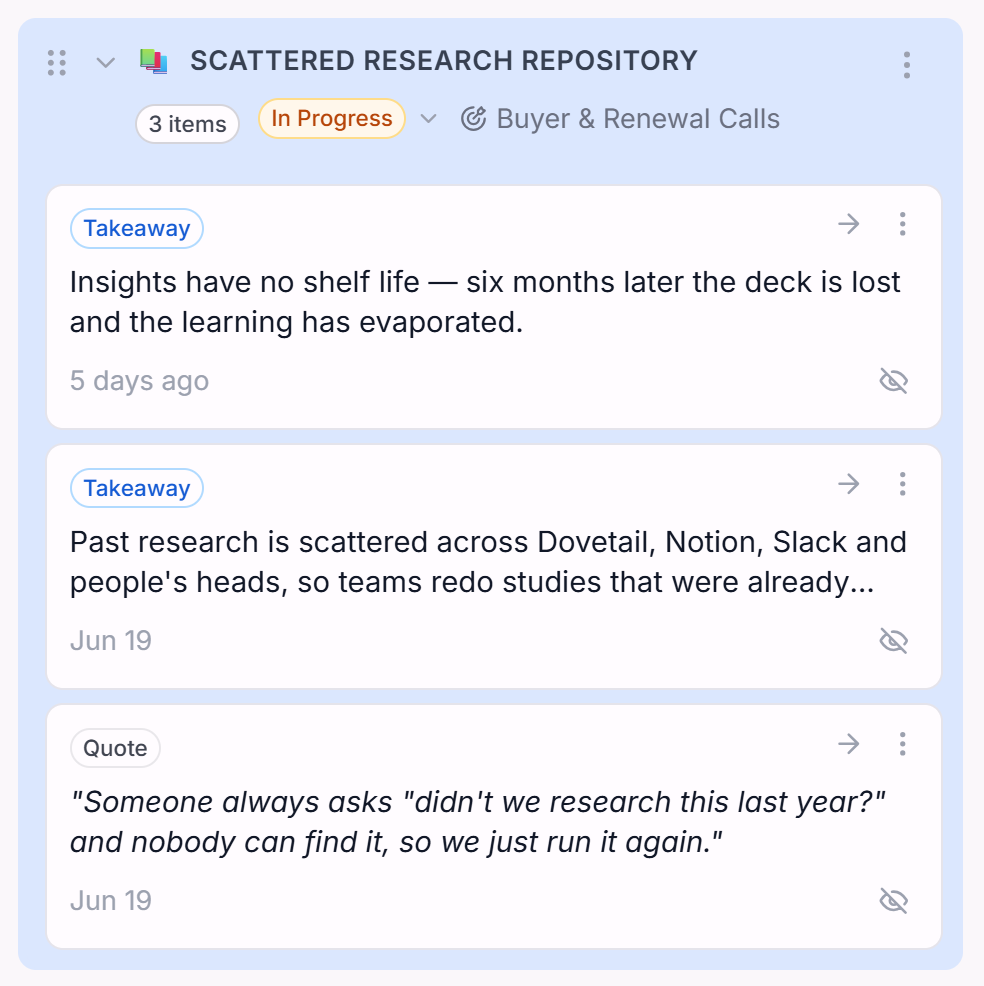
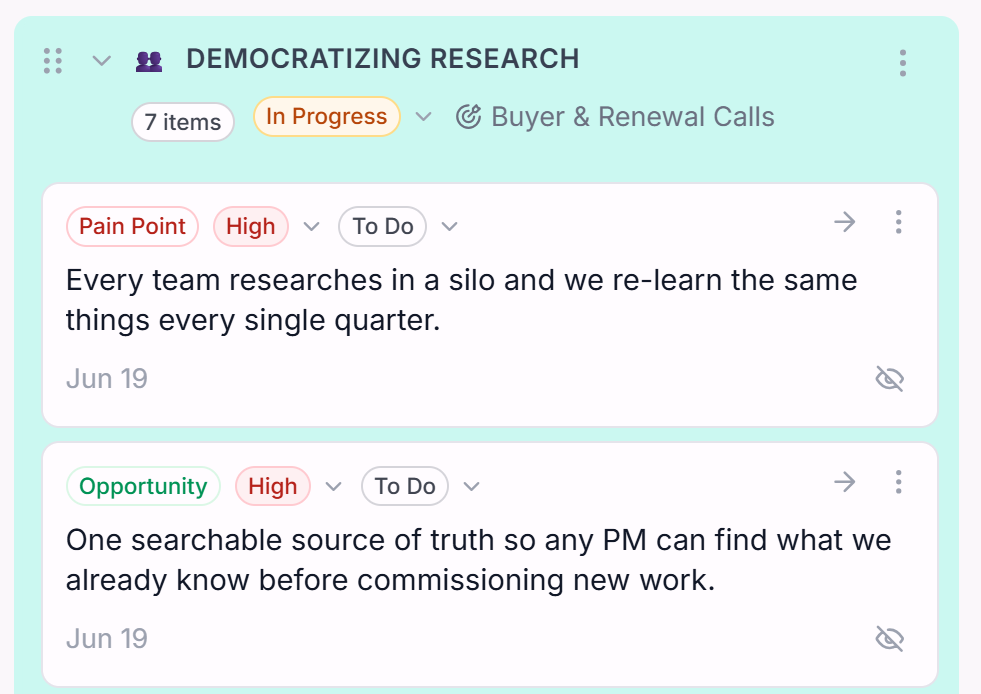

AI proposes; you decide. How synthesis works, step by step
Find that study from three months ago.
Every insight is tagged, themed, and traceable to its quote. Anyone on the team can search it or just ask Copilot — so past studies keep paying off instead of going stale. It is an insights repository first and a filing system second — see how the UX research repository works, or compare research repository tools.
- Searchable across every interview and theme
- Evidence-linked — every insight traces to its source
- Personas and segments built from real signals
- Connected to a prioritized roadmap
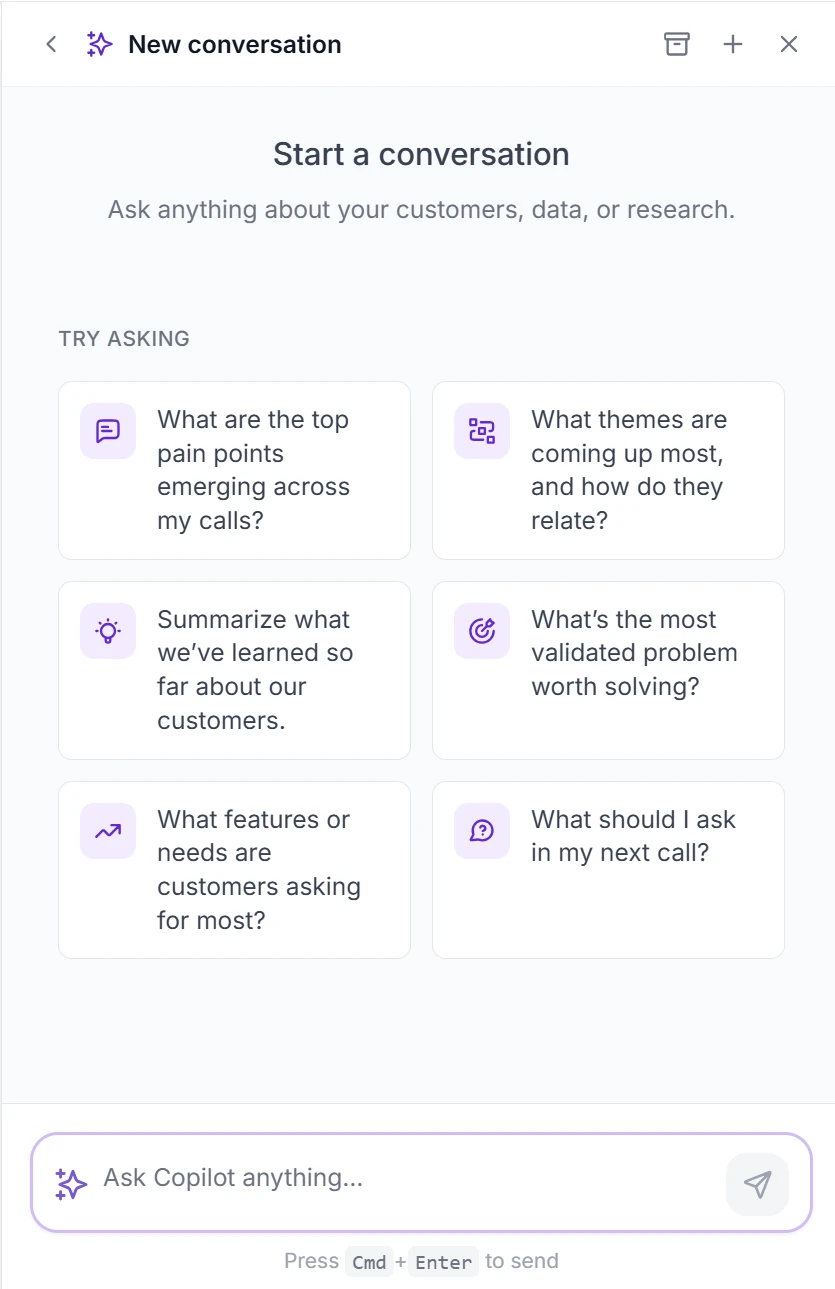
Ask your research, get answers with receipts.
Copilot answers from your own sessions, sources attached — so a stakeholder question doesn’t send you back into a folder of recordings.
- “What themes are showing up across this study?”
- “Which findings contradict each other, and where?”
- “Summarize what participants said about onboarding.”
- “Draft a readout outline from this round of interviews.”
Run discovery sessions that actually surface insight.
Attach a reusable question set to every interview so your UX research questions stay consistent and comparable, and every discovery session stays on track. Then let Intervool turn the answers into themes — no manual tagging required.
“Research shouldn’t die in a deck. It should be findable, reusable, and cited.”



UX research, common questions.
What UX research tools does Intervool replace?
Intervool replaces the patchwork most UX researchers stitch together for interview-to-insight work — a recorder, a transcription service, a notes doc, and a separate repository. It captures and transcribes interviews, synthesizes evidence-linked themes, and keeps everything in one searchable UX research repository. It complements (rather than replaces) usability-testing and UX analytics tools.
Is Intervool a UX research repository?
Yes. Every interview, transcript, and insight lives in one searchable place — tagged, themed, and linked to the source moment — so past research stays findable and reusable across the team, and connects to the roadmap.
Does Intervool do usability testing or UX analytics?
Use Intervool to store and synthesize your usability test notes: bring the session recording and notes in to transcribe, theme, and file them alongside the rest of your research so the findings stay findable and connected to decisions. Today it isn't a usability-testing tool itself (no heatmaps, card sorting, or prototype tests) or a UX analytics tool — it's the notes-and-insight layer for the sessions you already run, and much more is coming soon.
Can Intervool help with UX research questions and UX testing questions?
Yes. You can attach a reusable question set or interview template to each session so your UX research questions stay consistent and comparable, and discovery sessions stay on track. (See our guides on UX testing questions for prompts you can steal.)
Do I need to be a dedicated researcher to use it?
No. Intervool is built so researchers, designers, and PMs can all run and synthesize research — AI proposes the insights, themes, and groupings, and you refine them. It scales a research practice without scaling headcount.
Make your research findable, reusable, and acted on.
Try Intervool free for 14 days. No credit card required.