Tool roundup

Best User Research Repositories in 2026

A research repository solves a real problem: findings scattered across docs, decks, and someone's laptop, so every study starts from zero and the same question gets researched twice. It also has a well-documented failure mode — the repository becomes an archive nobody opens, and beautifully tagged insight has no more influence on the roadmap than it did in a folder. This guide compares the leading repositories on how well they store and retrieve research, and on the harder question of whether anything you file there comes back out.

By Jess O'Malley, Founder & CEO, IntervoolLast reviewed 8 tools compared

What's the best user research repository?

Dovetail is the most capable repository and the right answer for a large research team that needs rigorous tagging and a long, searchable archive. Condens does most of the same job at a fraction of the price and is the better fit for a small research team. Notably suits teams who analyze by clustering things visually, and Aurelius is strong if you want findings tied explicitly to recommendations. If your actual problem is that research gets filed and never influences anything, the repository category isn't the fix — Intervool is built the other way round: the same capture and synthesis, but the output is personas, segments, and a prioritized roadmap rather than an archive.

Compared at a glance

The first three columns are what every repository promises. The last three are what decides whether the archive changes anything.

Tool
Store & tag
Search across studies
Transcription included
AI cross-study themes
Personas & segments
Prioritized roadmap
Intervool — Store & tag: Yes
Intervool — Search across studies: Yes
Intervool — Transcription included: Yes
Intervool — AI cross-study themes: Yes
Intervool — Personas & segments: Yes
Intervool — Prioritized roadmap: Yes
Dovetail — Store & tag: Yes
Dovetail — Search across studies: Yes
Dovetail — Transcription included: Yes
Dovetail — AI cross-study themes: Yes
Dovetail — Personas & segments: No
Dovetail — Prioritized roadmap: No
Condens — Store & tag: Yes
Condens — Search across studies: Yes
Condens — Transcription included: Yes
Condens — AI cross-study themes: Yes
Condens — Personas & segments: No
Condens — Prioritized roadmap: No
Marvin — Store & tag: Yes
Marvin — Search across studies: Yes
Marvin — Transcription included: Yes
Marvin — AI cross-study themes: Yes
Marvin — Personas & segments: No
Marvin — Prioritized roadmap: No
Notably — Store & tag: Yes
Notably — Search across studies: Yes
Notably — Transcription included: Yes
Notably — AI cross-study themes: Yes
Notably — Personas & segments: No
Notably — Prioritized roadmap: No
Aurelius — Store & tag: Yes
Aurelius — Search across studies: Yes
Aurelius — Transcription included: Partial
Aurelius — AI cross-study themes: Partial
Aurelius — Personas & segments: No
Aurelius — Prioritized roadmap: No
Reduct — Store & tag: Partial
Reduct — Search across studies: Yes
Reduct — Transcription included: Yes
Reduct — AI cross-study themes: Partial
Reduct — Personas & segments: No
Reduct — Prioritized roadmap: No
Looppanel — Store & tag: Partial
Looppanel — Search across studies: Yes
Looppanel — Transcription included: Yes
Looppanel — AI cross-study themes: Yes
Looppanel — Personas & segments: No
Looppanel — Prioritized roadmap: No
Yes Does thisPartial Partly, or with workaroundsNo Not a feature
Store & tag
A structured place to keep findings with a tagging model that stays consistent across studies.
Search across studies
Find a quote or finding from any past study, not just the one you're currently in.
Transcription included
Interview transcription is part of the product rather than something you bring from elsewhere.
AI cross-study themes
AI proposes what repeats across studies instead of you tagging your way to the pattern by hand.
Personas & segments
Builds and maintains profiles of customer types and groups from what the research says, as a first-class workflow.
Prioritized roadmap
Turns what you learned into ranked feature bets inside the same tool, rather than exporting to a separate PM tool.

The categories, and what each is for

These products get compared as if they’re interchangeable. They aren’t — they’re solving different halves of the job.

Repository that ends in decisions

Same capture and synthesis, but findings continue into personas, segments, and a prioritized roadmap.

Intervool

Full repositories

Mature storage, tagging, and search built for teams with a research function and a tagging discipline.

Dovetail, Condens, Marvin

Analysis-led repositories

Organized around the act of analyzing — visual canvases, affinity mapping, and recommendations.

Notably, Aurelius

Media-first archives

Built around video and transcripts rather than tags. Best when your output is clips and reels.

Reduct, Looppanel

The tools in detail

01

Intervool

Our productRepository that ends in decisions

A repository whose output is a roadmap, not an archive
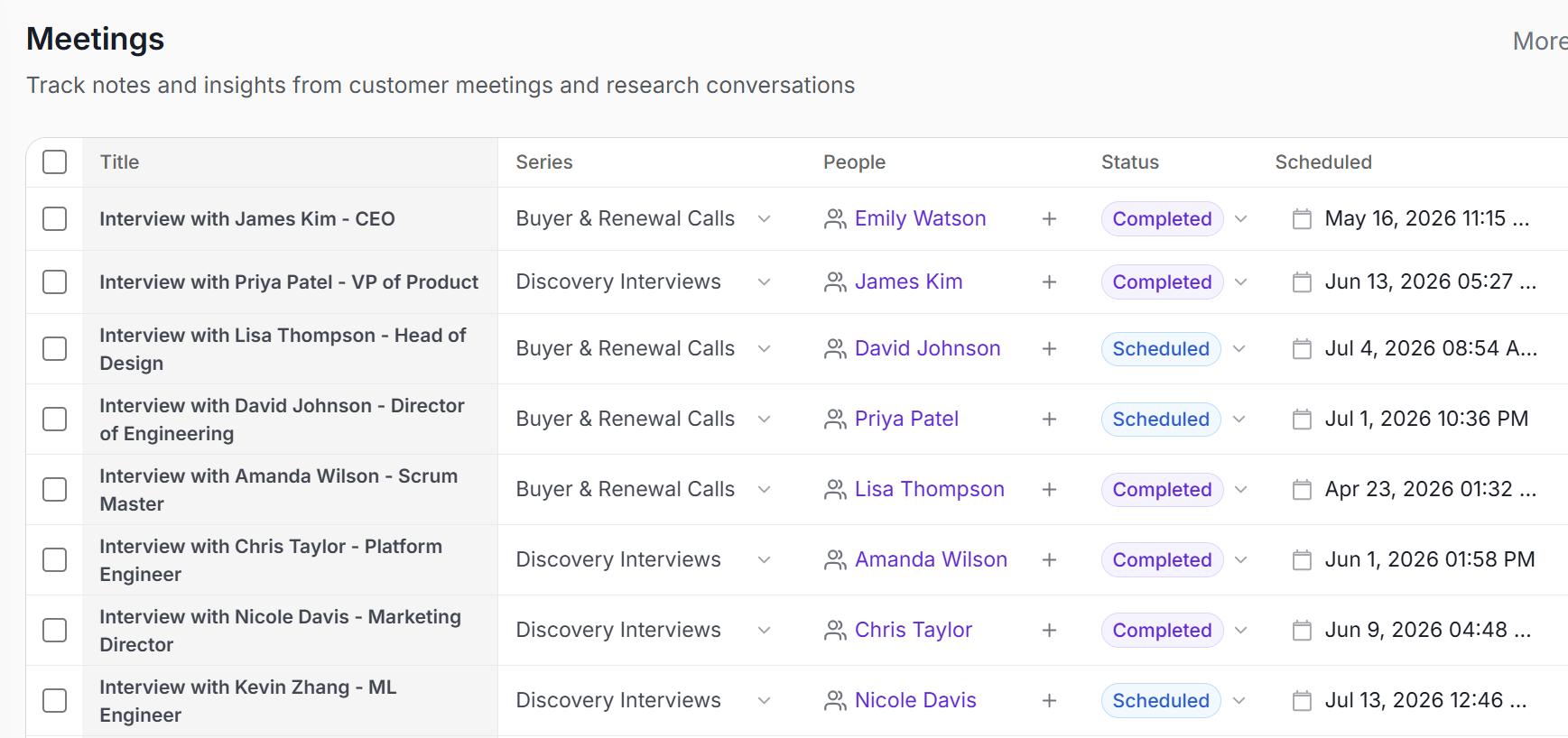
Intervool interview library listing every recorded customer interview with status and focus
Every interview in one searchable library.

Intervool stores and searches your research like a repository, and then keeps going. Interviews are transcribed and searchable, insights stay linked to the exact transcript moment and the person who said it, and AI clusters what repeats into evidence-linked themes without you maintaining a tagging taxonomy. Those themes build dynamic personas and segments and become a prioritized roadmap, so the archive isn't the destination — it's the evidence trail behind decisions you can defend. The trade-off is deliberate: it's less configurable than a mature repository for a large research org with an established tagging model.

Best for
Teams who don't need a better archive — they need research to change what gets built
Pricing
Basic $39/mo · Team $279/mo (6 seats) · Enterprise custom
Free option
30-day free trial, no credit card

Strengths

  • Findings continue into personas, segments, and a roadmap
  • AI proposes themes — no tagging taxonomy to maintain
  • Every insight one click from the quote and person behind it
  • Flat pricing, six seats on Team — the whole company can read the evidence
  • Accepts uploads, so an existing archive isn't stranded

Limitations

  • Less configurable than Dovetail for a large research function
  • Not built around a formal tagging model
  • No permanent free tier
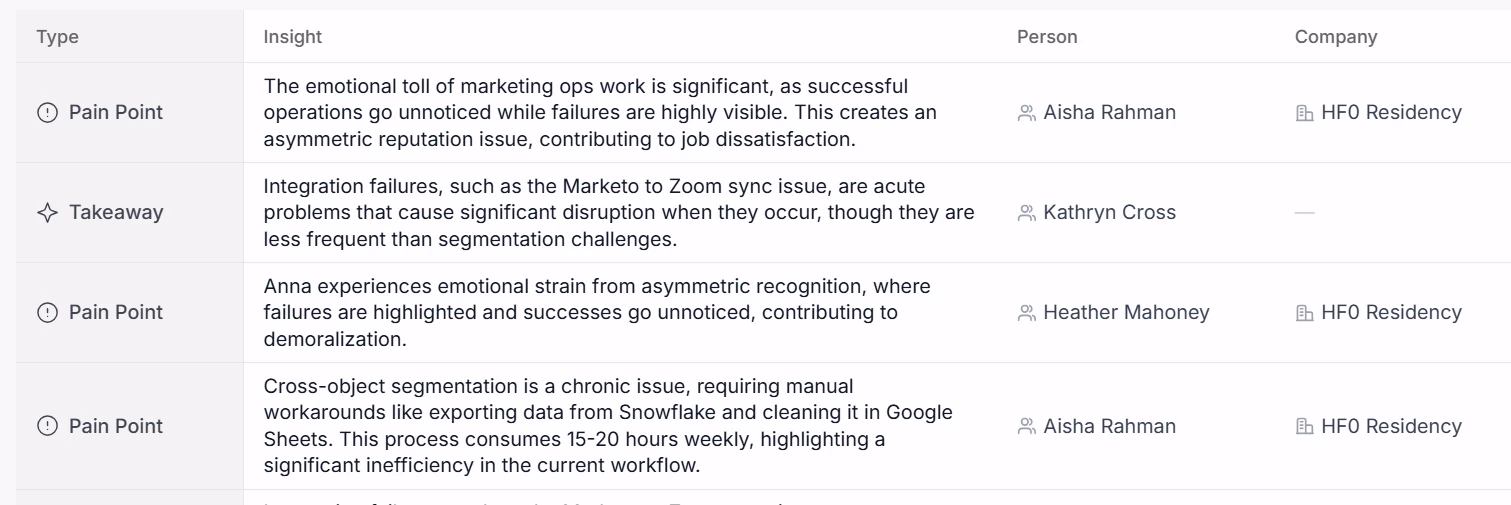
Intervool insights table showing extracted pain points and opportunities with their source interviews
Each insight keeps the interview and person it came from.
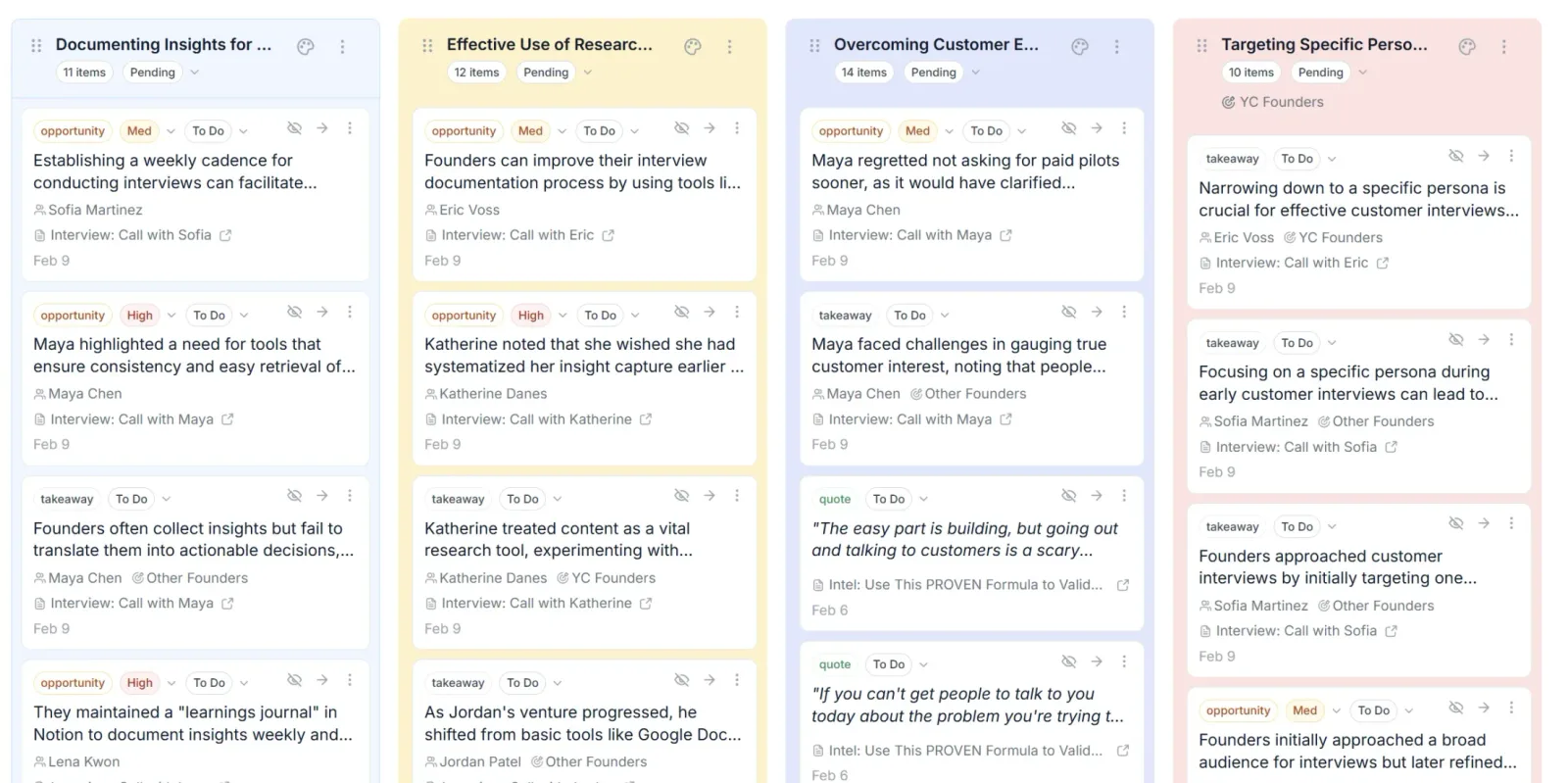
Intervool theme board showing recurring themes across customer interviews with supporting evidence
Themes across every interview, with the evidence attached.
02

Dovetail

Full repository

The most capable repository in the category

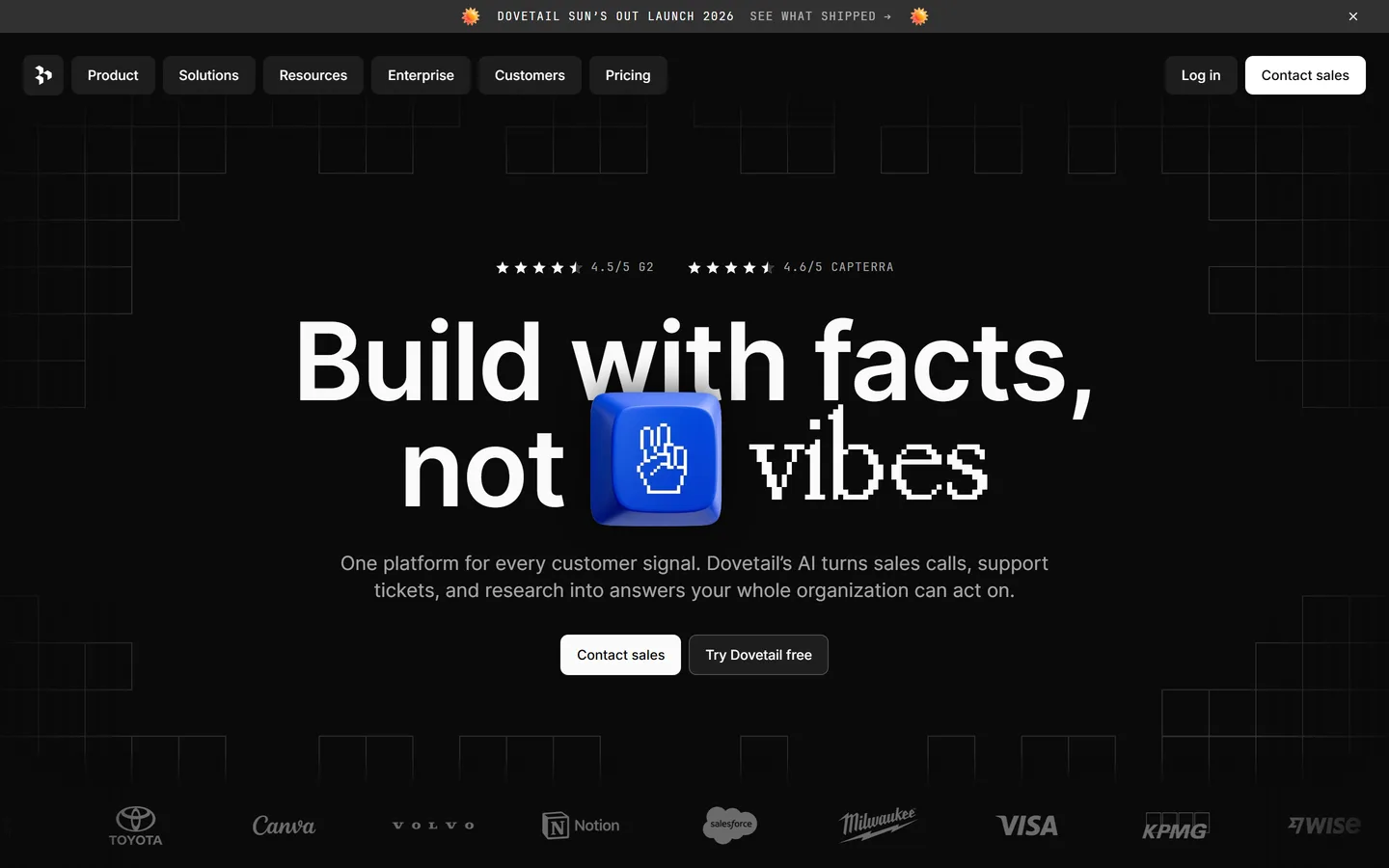
Dovetail homepage — the market-leading user research repository

Dovetail is the most mature research repository available, and for an organization with dedicated researchers it's hard to argue against: rigorous tagging, excellent search across years of studies, strong integrations, and the governance a large team needs. Its power depends on discipline — the tagging model is only as good as the person maintaining it, which is why it works well with researchers and drifts without them.

Best for
Large research teams with a tagging discipline to maintain
Pricing
From ~$29/user/mo to enterprise
Free option
Limited free plan and trial

Strengths

  • Deepest tagging and search in the category
  • Excellent integrations and enterprise governance
  • Scales to very large archives and teams

Limitations

  • Per-seat pricing scales sharply
  • Value depends on someone maintaining the taxonomy
  • Findings export elsewhere to become decisions
03

Condens

Full repository

Most of Dovetail, for much less

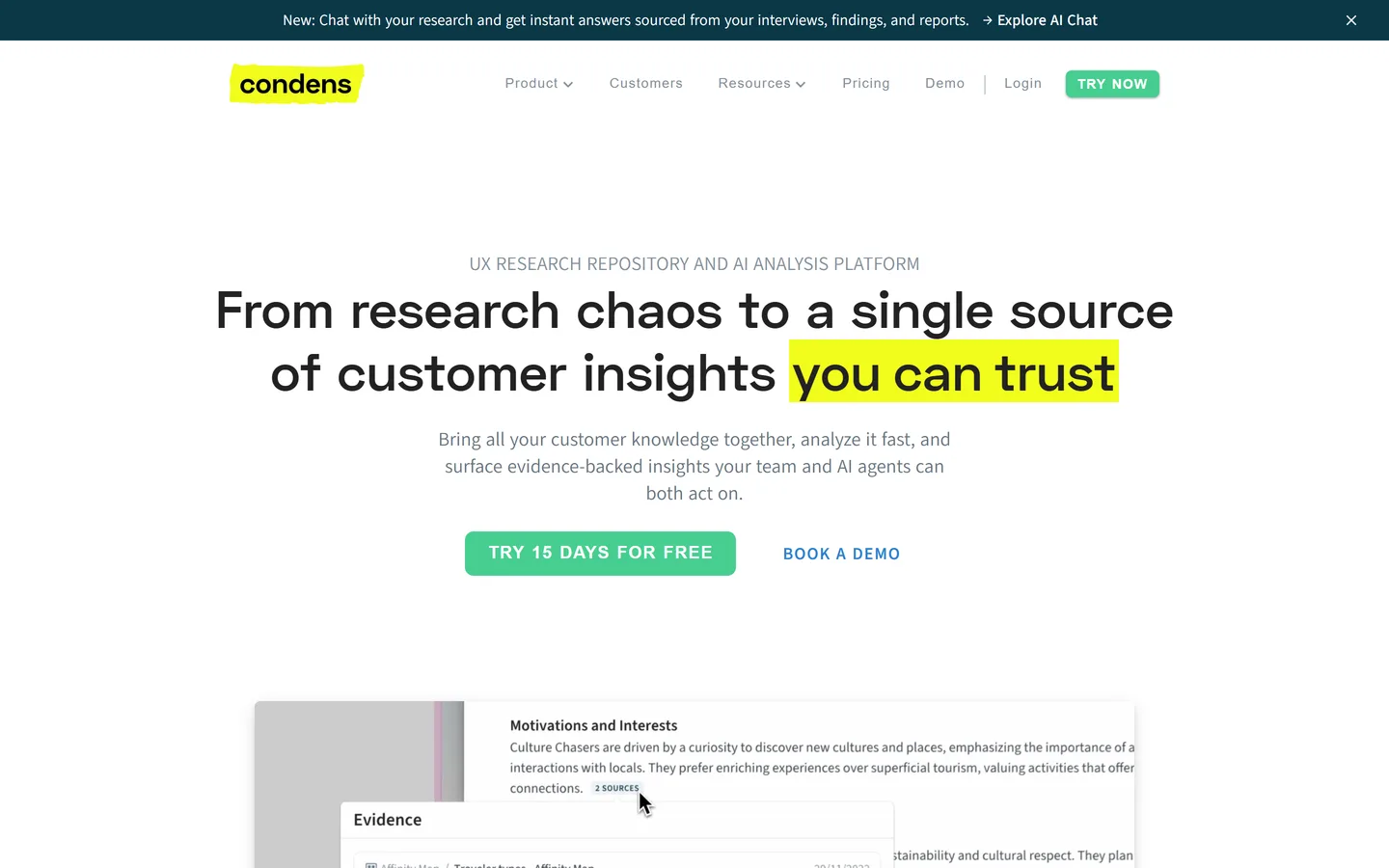
Condens homepage — affordable user research repository and analysis tool

Condens covers the core repository job — storing, tagging, highlighting, searching — with a notably clean interface and pricing starting around €15 per user per month. For a team of two or three researchers it delivers most of what Dovetail does at a fraction of the cost. It's lighter on enterprise governance and very large archives, which is exactly the trade a small team should want to make.

Best for
Small research teams who want a proper repository on a real budget
Pricing
From ~€15/user/mo
Free option
Free trial only

Strengths

  • Excellent value for a full repository
  • Clean, fast interface that's quick to learn
  • Good transcription and highlighting workflows

Limitations

  • Lighter than Dovetail at very large scale
  • Still per-seat
  • No prioritization or roadmap layer
04

Marvin

Full repository

Repository with a heavy AI synthesis layer

Marvin homepage — AI-powered user research repository

Marvin is a repository built with AI synthesis as a first-class feature rather than an add-on: it transcribes, summarizes, and proposes clusters, which reduces how much manual tagging a study needs. For teams who find repository upkeep the tedious part, that's a genuine advantage. At around $50 per user per month it's the most expensive per-seat option in this guide.

Best for
Research teams who want AI doing more of the analysis
Pricing
From ~$50/user/mo
Free option
Free trial only

Strengths

  • Strong AI synthesis inside a real repository
  • Reduces manual tagging effort
  • Good transcription quality

Limitations

  • The costliest per-seat option here
  • Smaller ecosystem than Dovetail
  • Analysis is still the end of the line
05

Notably

Analysis-led

Affinity mapping on a visual canvas, with AI help

Notably pairs a repository with a visual canvas for affinity mapping and AI assistance for summarizing and clustering. If your analysis process involves arranging notes into groups and moving them around until the shape emerges, it matches that thinking more directly than a tag-and-filter repository does. Entry pricing sits below the established players, with a smaller product and ecosystem to match.

Best for
Researchers who analyze by physically grouping things
Pricing
From ~$25/user/mo
Free option
Limited free plan

Strengths

  • Visual affinity mapping with AI assistance
  • Cheaper than the established repositories
  • Good fit for workshop-style analysis sessions

Limitations

  • Smaller product and ecosystem
  • Per-seat pricing
  • No prioritization or roadmap output
06

Aurelius

Analysis-led

Findings tied explicitly to recommendations

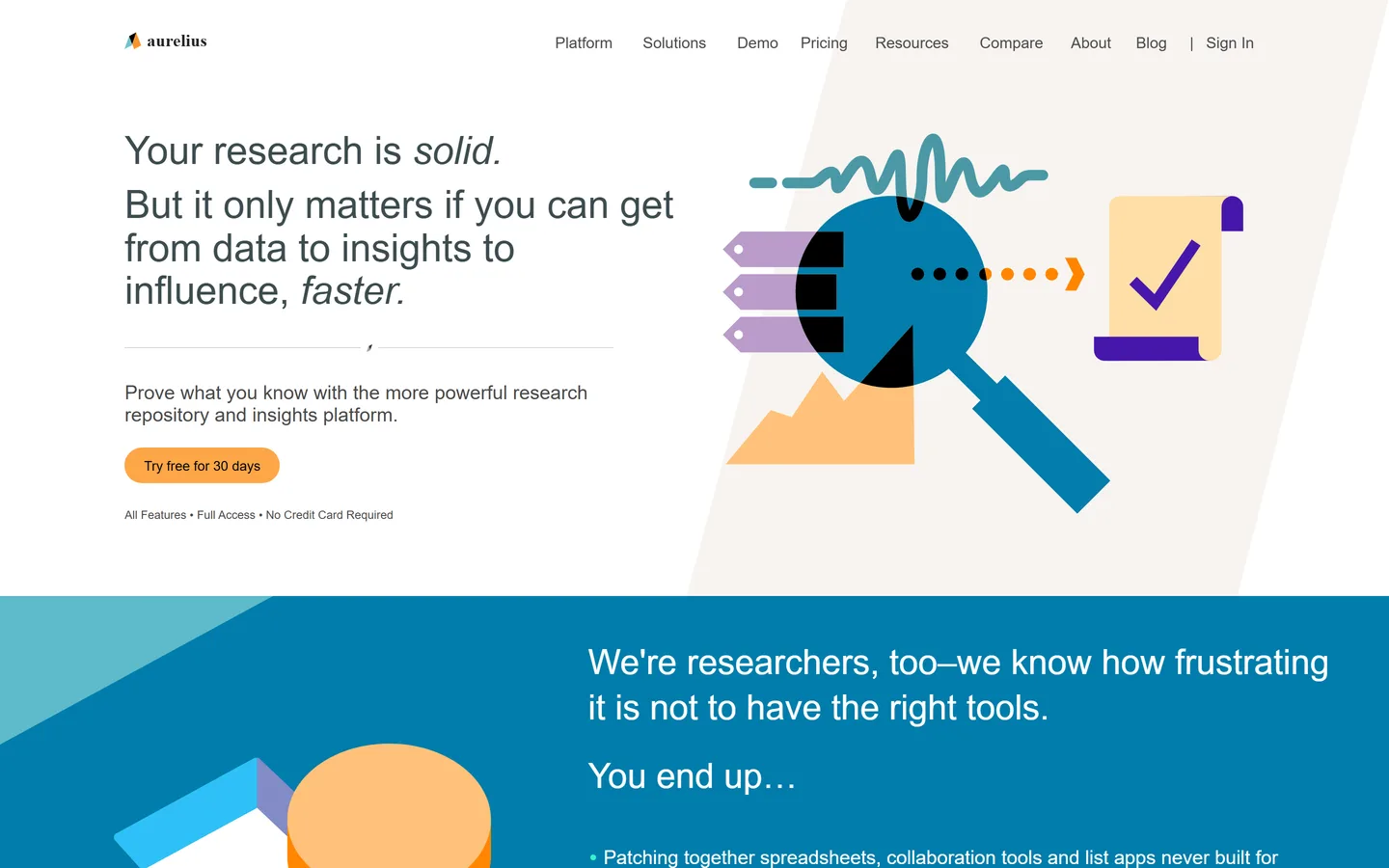
Aurelius homepage — research repository linking findings to recommendations

Aurelius structures research around the chain from raw notes to key findings to recommendations, which forces the analysis to end in a statement someone can act on rather than a pile of tagged quotes. That structure is its main idea and it's a good one. It's a smaller, simpler product than Dovetail — fewer integrations, less governance, and no layer that turns recommendations into a prioritized plan.

Best for
Teams who need research to produce clear, defensible recommendations
Pricing
From ~$49/mo
Free option
Free trial only

Strengths

  • Explicit findings-to-recommendations structure
  • Simple and quick to adopt
  • Good search across projects

Limitations

  • Fewer integrations than the market leaders
  • Lighter AI assistance
  • Recommendations still hand off to a PM tool
07

Reduct

Media-first

A searchable video archive you can edit by transcript

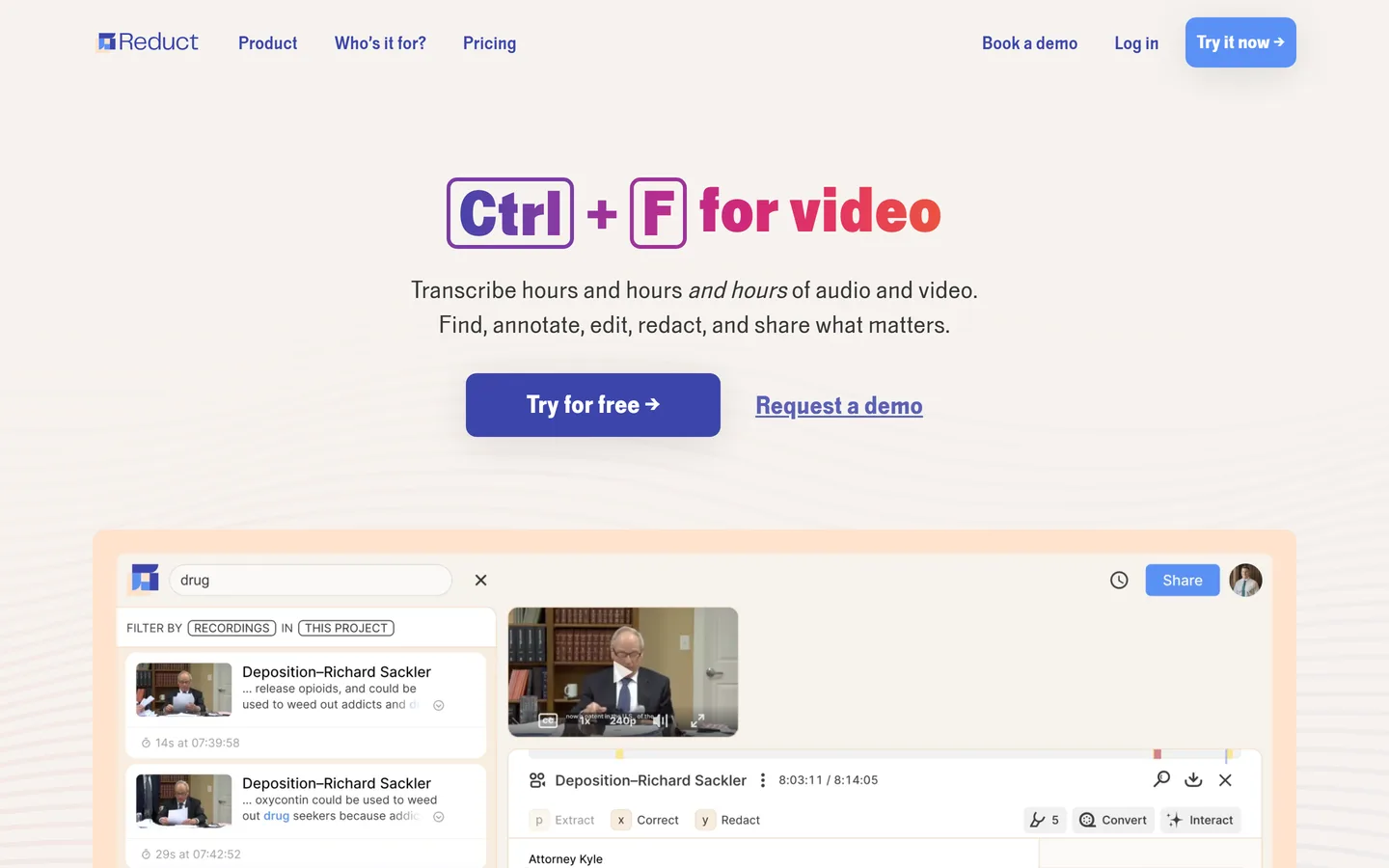
Reduct homepage — searchable research video archive edited by transcript

Reduct treats the corpus as video: search across every recording by transcript, then edit clips by deleting text. As an archive it's excellent when the thing you need to retrieve is a moment rather than a finding — and a montage of customers saying the same thing persuades a room in a way a tagged quote list doesn't. Tagging and structured synthesis are lighter than in a dedicated repository.

Best for
Teams whose research output is video, not documents
Pricing
From ~$30/user/mo; usage tiers above
Free option
Free trial only

Strengths

  • Best-in-class video search and clipping
  • Transcript-based editing is remarkably fast
  • Highlight reels that actually move stakeholders

Limitations

  • Lighter tagging and structured synthesis
  • Pricing rises with hours of footage
  • No personas, prioritization, or roadmap
08

Looppanel

Media-first

Analysis-first, with a lightweight archive attached

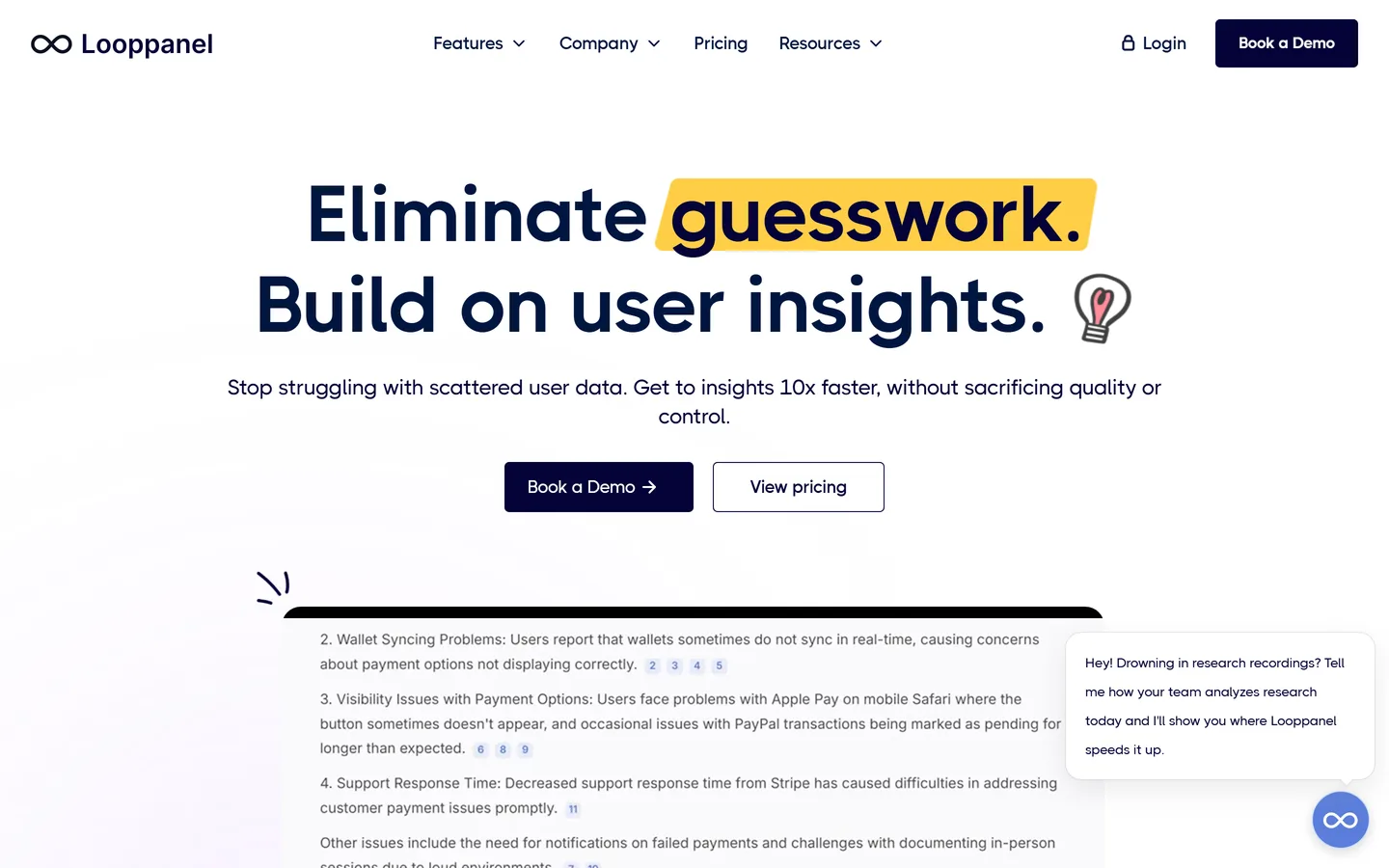
Looppanel homepage — AI analysis and lightweight repository for research calls

Looppanel joins research calls, transcribes them, generates notes against your questions, and lets you query across a study. Its storage layer exists but the product's centre is analysis, which makes it a good fit if the repository was never really the point. For an organization that needs a durable, governed archive across years of research, a dedicated repository is the better shape.

Best for
A researcher who wants AI notes more than a filing system
Pricing
From ~$30/user/mo
Free option
Free trial only

Strengths

  • Strong AI analysis of research calls
  • Ask-AI across a whole study
  • Cheaper entry than full repositories

Limitations

  • Lighter as a long-term archive
  • Per-seat pricing
  • No personas, prioritization, or roadmap
Methodology

How we evaluated these

We asked whether anything comes back out

Every tool here stores research competently. The differentiating question is retrieval and influence: can you find a finding from eight months ago, and does anything you filed change a decision? The last three grid columns exist for that reason.

We accounted for maintenance cost

A tagging model is a system somebody has to maintain, and it decays fast without an owner. Tools that infer structure with AI carry less upkeep than tools that require a disciplined taxonomy, and we noted which is which.

We priced for the whole audience

Research is written by a few and should be read by many, so per-seat pricing quietly limits who can open the archive. Every entry names its pricing model, since that constraint shapes a repository's usefulness more than its feature list.

We kept the honest limitation in

The repository failure mode — a beautifully organized archive nobody consults — is named on this page rather than hidden, because it's the single most common outcome and worth knowing before you buy.

Pricing checked August 2026, and we're not neutral

Published prices as of August 2026, rounded; enterprise tiers are negotiable. Intervool is ours and marked as such, and its real weakness against these tools — less configurable tagging for a large research function — is stated in its own entry.

FAQ

Common questions

What is a user research repository?

A central place to store, tag, and search everything a team learns from research — recordings, transcripts, notes, and findings — so insight from past studies stays retrievable instead of living in scattered docs. Dovetail, Condens, and Marvin are the best-known examples.

Do we actually need a research repository?

You need the problem it solves, which is research being lost. Below roughly twenty studies a shared folder with a consistent naming convention genuinely works. A repository earns its cost when people are re-researching questions the team already answered, or when someone asks 'didn't we hear this last year?' and nobody can check.

Why do research repositories fail?

Almost always the same way: filing gets done, retrieval doesn't. Tagging is upkeep, and upkeep slips when the person who cared moves on — so the archive grows while consultation falls, and research stops influencing decisions even though it's better organized than ever. The tools that resist this either infer structure automatically or push findings toward a decision rather than waiting to be searched.

What's the cheapest research repository?

Condens, starting around €15 per user per month, is the cheapest full repository. Notably is a little more at around $25 per user. For a small team where everyone needs access, a flat plan often works out lower overall than any per-seat option — Intervool's Team plan is $279/mo with six seats included.

Can I use Notion or Confluence as a research repository?

Yes, and plenty of teams do successfully. What you give up is transcription, timestamped links back to the moment a quote came from, and any automatic clustering — so synthesis is entirely manual and traceability depends on links people remember to add. It works well early and gets painful somewhere around thirty studies.

Can I migrate from one repository to another?

Partially, and go in expecting to lose the tags. Most tools export recordings, transcripts, and notes cleanly, while tagging structures are proprietary and rarely survive the move. Intervool accepts uploaded recordings, audio, and written notes and re-derives insights from them, which sidesteps the tag-mapping problem entirely.

Stop losing what your customers told you

Intervool turns every interview into themes, personas, and a roadmap you can defend. Free for 30 days, no credit card.