Research tooling has an awkward price shape: the well-known platforms are priced per seat for teams with a research function, and the sticker on a five-person team is often several hundred dollars a month. This guide covers the tools that do the same core work for meaningfully less, with the real entry price for each — and flags the pricing model that actually determines your bill, which is almost always per-seat versus flat rather than the headline number.
Condens is the closest like-for-like repository at a much lower price, starting around €15 per user per month, and it's the straightforward swap if you want what Dovetail does for less. Reduct is the cheapest entry if your need is analysis of research calls rather than a repository. Intervool is the best value if you want the whole loop rather than a repository — $39/mo for Basic, or $279/mo for Team with six seats included, covering transcription, AI synthesis, personas, segments, and a prioritized roadmap, with no per-seat multiplication. The pricing detail that matters most: Dovetail, Condens, Marvin, and Looppanel all charge per seat or per editor, so their cost scales with how many people need access, while flat plans don't.
Jump to a tool
Compared at a glance
Headline price tells you less than pricing shape. Whether a tool charges per seat is what decides a small team's bill.
Yes Does thisPartial Partly, or with workaroundsNo Not a feature
Under $50/mo to start
A real entry plan under $50 per month, not an enterprise quote with a starting-from figure.
Not per-seat
Pricing that doesn't multiply with every colleague who needs access — flat plans or generous included seats.
Transcription included
Interview transcription is part of the price rather than a metered add-on.
Cross-call themes
Finds what repeats across many interviews, rather than summarizing each call in isolation.
Personas & segments
Builds and maintains profiles of customer types and groups from what the research says, as a first-class workflow.
Prioritized roadmap
Turns what you learned into ranked feature bets inside the same tool.
The categories, and what each is for
These products get compared as if they’re interchangeable. They aren’t — they’re solving different halves of the job.
Full loop, flat pricing
Capture, synthesis, personas, and roadmap in one plan that doesn't multiply per colleague.
Intervool
Low-cost repositories
Store, tag, and search findings for far less than the market leader. Still per-seat.
Condens, Notably
Analysis-only, cheapest entry
AI notes and queries over your research calls without paying for a full repository.
Reduct
The expensive baseline
What people are usually comparing against. Strong tooling, priced for funded research teams.
Dovetail, Marvin, Looppanel
The tools in detail
01
Intervool
Our productFull loop, flat pricing
The whole research loop, without per-seat maths
app.intervool.com/interviews
Every interview: video, transcript, and AI takeaways in one view.
Intervool covers what would otherwise be two or three purchases — interview capture and transcription, AI synthesis into evidence-linked themes, dynamic personas and segments, and impact-vs-effort prioritization — on one plan. Basic is $39/mo for a single seat and Team is $279/mo with six seats included, so cost doesn't climb every time someone new needs access. Compared with a per-seat repository at $29–$50 per person plus a separate roadmap tool, a five-person team typically lands well under half the total.
Best for
Small teams who want research to reach the roadmap without a research budget
Pricing
Basic $39/mo · Team $279/mo (6 seats) · Enterprise custom
Free option
14-day free trial, no credit card
Strengths
Six seats included on Team — no per-seat multiplication
Replaces a repository plus a prioritization tool
Transcription and AI synthesis included, not metered
Built for founders and PMs — no researcher headcount required
14-day free trial, no credit card
Limitations
No permanent free tier
Not a full enterprise repository for a large research org
No participant recruiting or usability testing
app.intervool.com/insights
Insights from every call, clustered into themes you can act on.
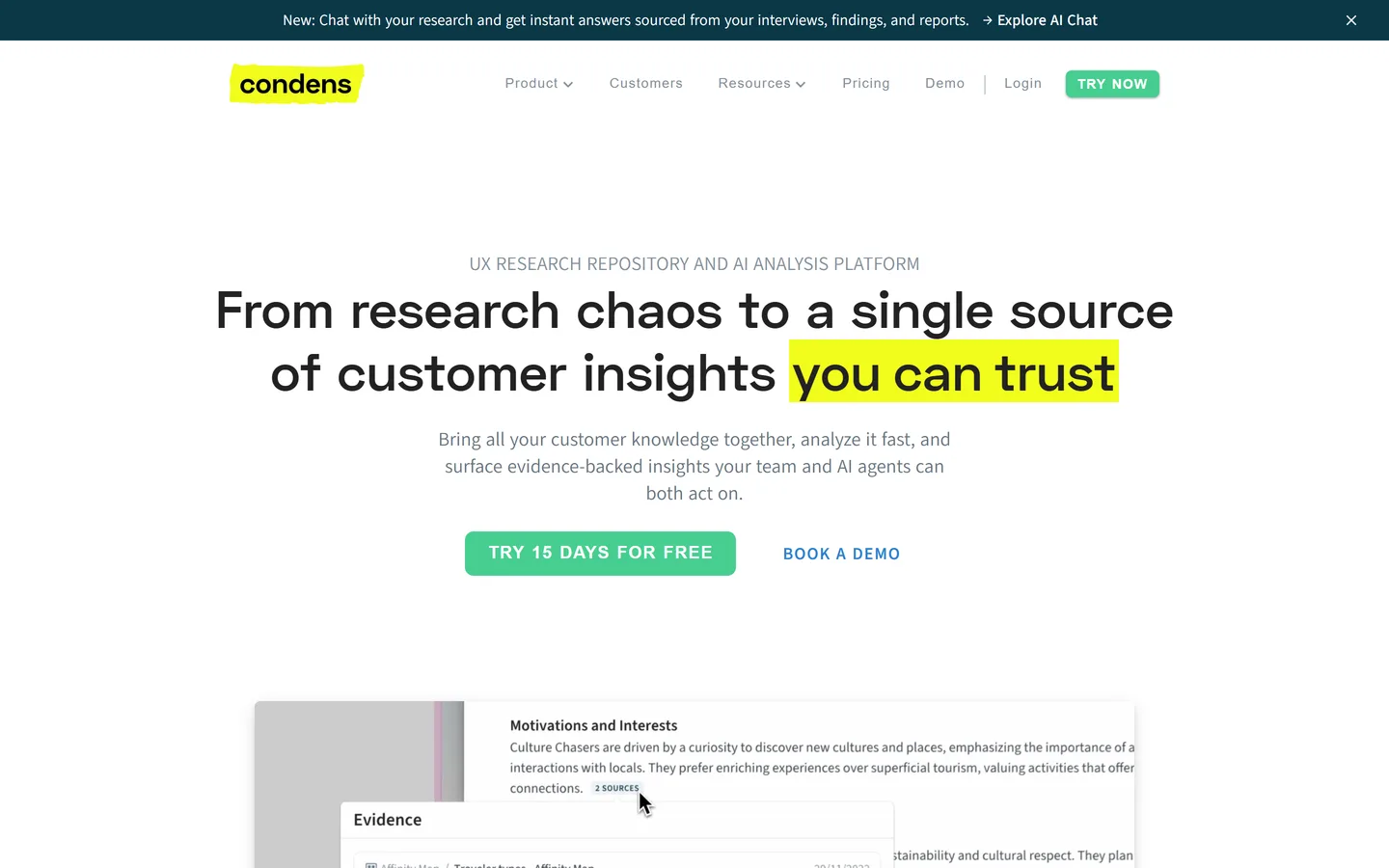
Condens does the core repository job — storing, tagging, highlighting, and searching research — with a clean interface and pricing that starts around €15 per user per month, a fraction of the market leader. For a team that specifically wants a repository and finds Dovetail's pricing hard to justify, this is the most direct swap available. It remains per-seat, so the saving narrows as the team grows, and findings still hand off elsewhere for decisions.
Best for
Small research teams who want a proper repository for less
Pricing
From ~€15/user/mo
Free option
Free trial only
Strengths
Genuinely low entry price for a full repository
Clean, fast interface with good tagging
Solid transcription and highlight workflows
Limitations
Per-seat pricing still scales with the team
No personas, prioritization, or roadmap
Lighter than Dovetail for very large research orgs
Strong AI analysis, priced well above budget range
looppanel.com
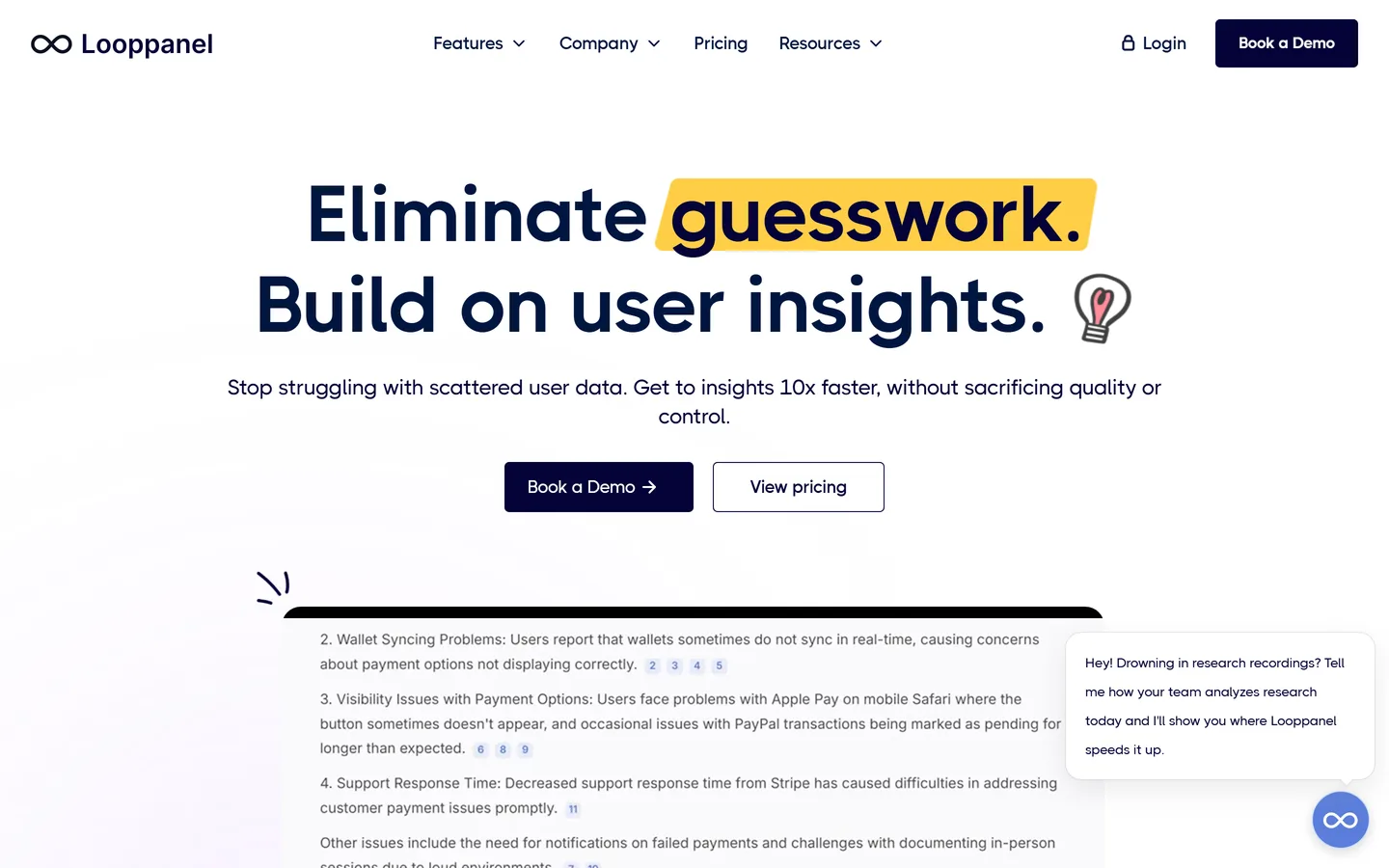
Looppanel covers the analysis job specifically: joining research calls, transcribing, generating notes against your questions, and answering queries across a set of interviews. It does that well. It is in this guide as a price reference rather than a budget option — the Pro plan is around $395 per month for five editors, with roughly $75 per month for each editor beyond that, which puts it above most of the repositories it's often compared against. There's also no path from analysis to prioritization.
Best for
A funded research team that wants analysis depth and isn't price-constrained
Pricing
Pro from ~$395/mo (5 editors); ~$75/mo per additional editor
Free option
1-month free trial only
Strengths
Ask-AI across a whole study
Purpose-built for research, not generic meetings
Editor-based pricing includes five seats before it scales
Limitations
Entry price is the highest in this guide
No repository, personas, or roadmap
Aimed at researchers rather than mixed product teams
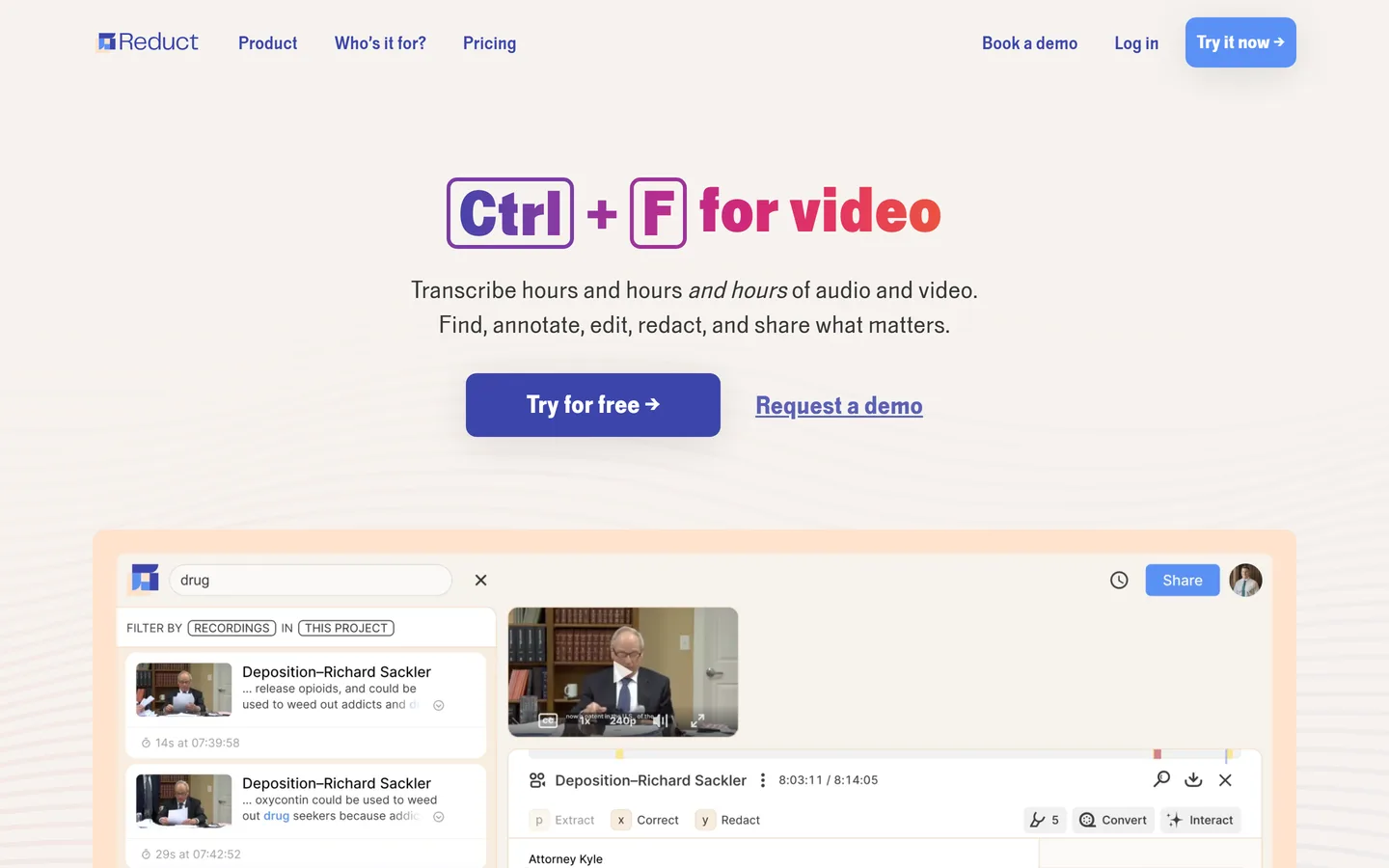
Reduct's distinctive idea is editing video by editing its transcript — delete a sentence and the video cuts with it, which makes assembling highlight reels from interviews dramatically faster. If your research deliverable is a persuasive video montage rather than a written report, nothing else here comes close. It's a video-first tool, so theming and repository features are lighter than the dedicated research platforms.
Best for
Teams whose research output is video reels for stakeholders
Pricing
From ~$30/user/mo; usage tiers above
Free option
Free trial only
Strengths
Transcript-based video editing is genuinely fast
Excellent for building stakeholder highlight reels
Notably combines a research repository with a visual canvas for affinity mapping, plus AI assistance for summarizing and clustering. If your analysis process is physically arranging notes into groups, it's the tool that most closely matches that way of working. Entry pricing sits below the established repositories, and it remains per-seat with an analysis-shaped ceiling.
Best for
Researchers who think by clustering things on a board
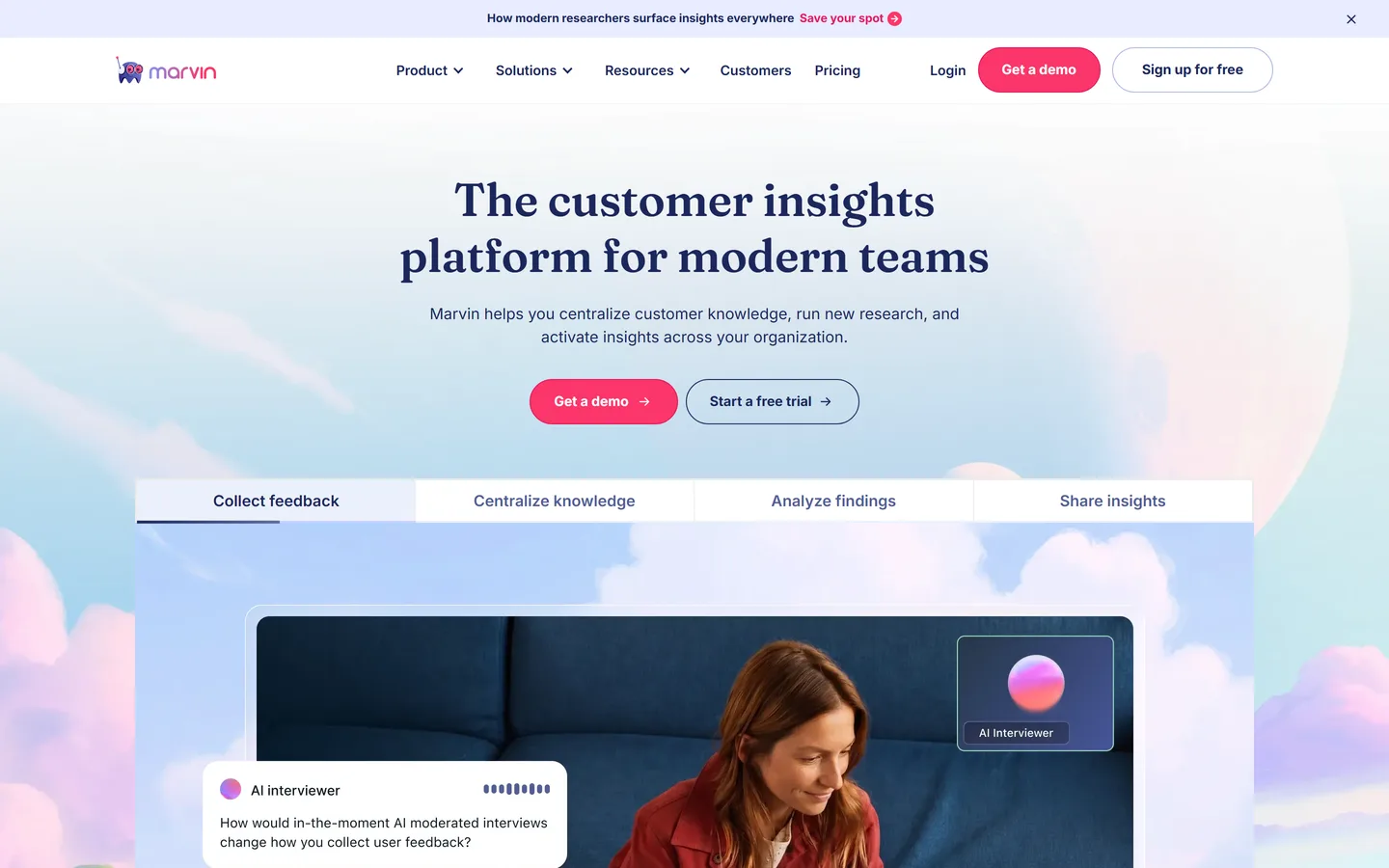
Marvin is a research repository with a substantial AI synthesis layer — good transcription, AI summaries, and clustering inside a proper repository structure. It's a capable product, and it sits in this guide as a price reference rather than a budget option: around $50 per user per month puts a small team into the hundreds before anything else is added.
Best for
Research teams who want strong AI synthesis inside a repository
Pricing
Paid tiers quoted on request (Starter, Pro, Enterprise)
Free option
Free plan — 5 file uploads/mo, AI notetaker and Ask AI included
Strengths
Strong AI synthesis within a repository
Good transcription quality
Well suited to dedicated research teams
Limitations
Around $50/user/mo — the costliest per-seat option here
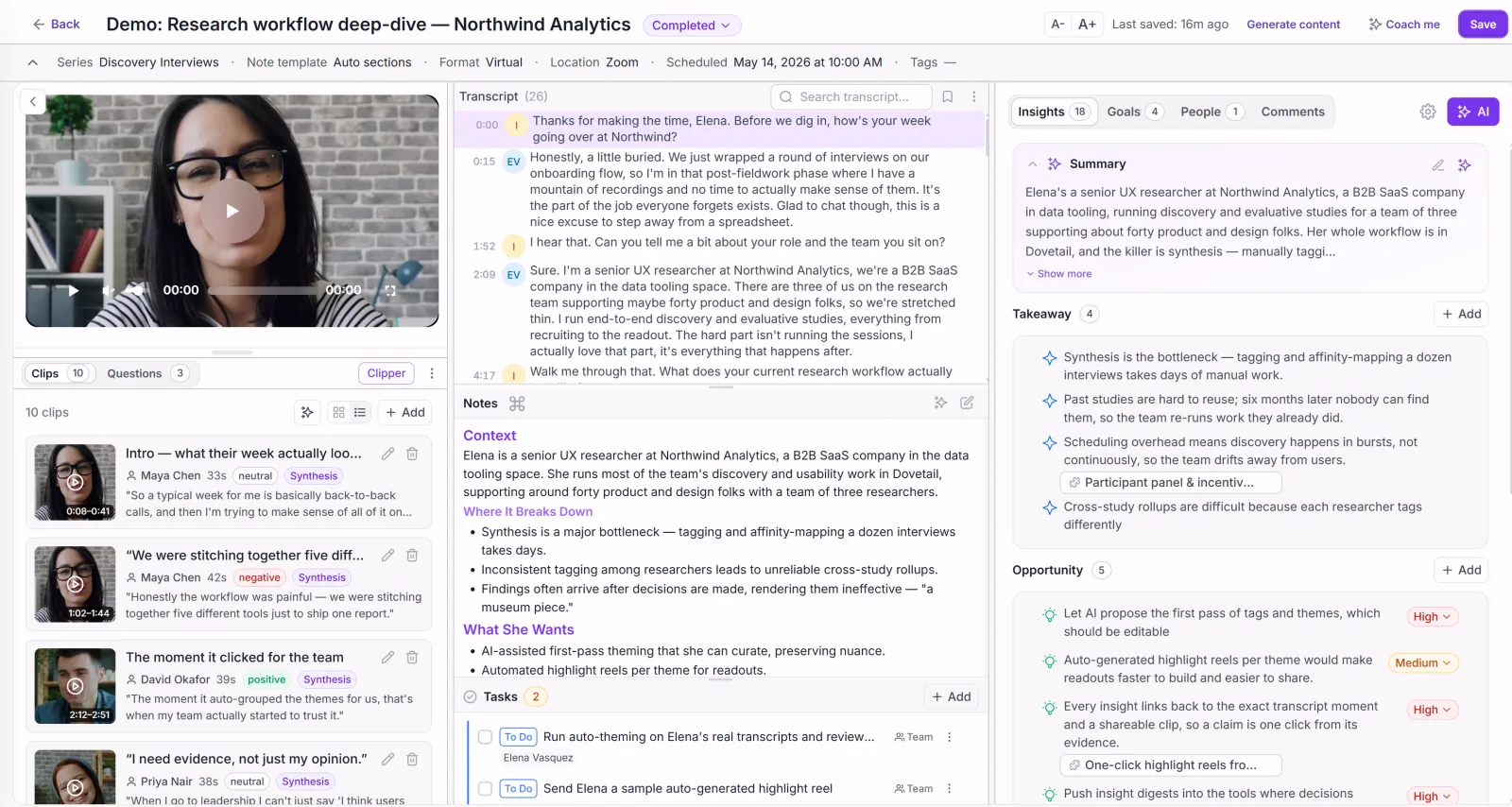
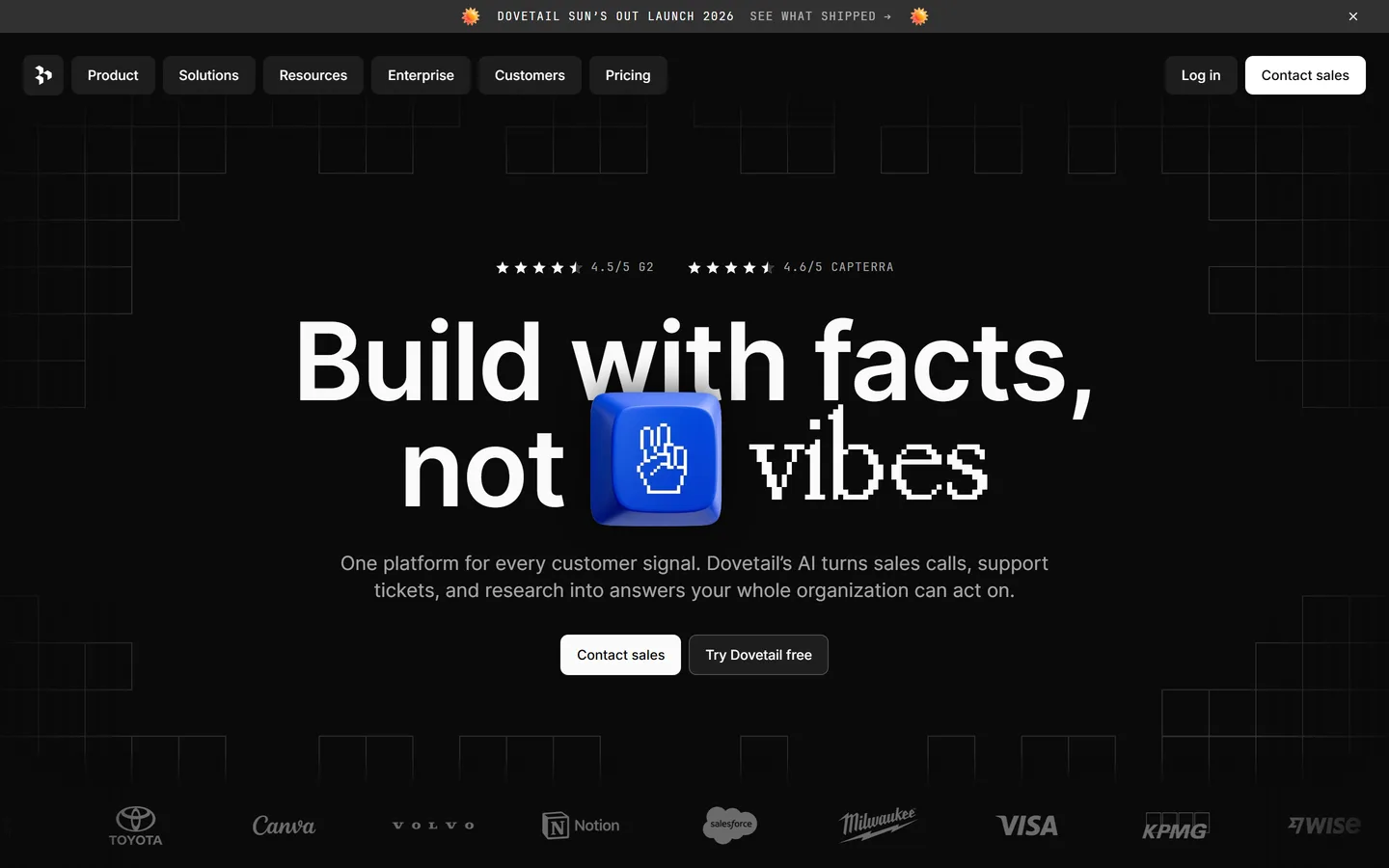
Dovetail is the reference point for this whole comparison, and it earns its position: the most mature repository in the category, with powerful tagging, strong integrations, and the tooling a large research org actually needs. It's included here because it's what people mean by 'too expensive'. Published pricing starts around $29 per user per month, and real bills climb quickly once analysis seats, integrations, and enterprise features are in scope.
Best for
Large research teams who need the most mature repository
Pricing
From ~$29/user/mo to enterprise
Free option
Limited free plan and trial
Strengths
The most mature and capable repository available
Excellent tagging, search, and integrations
Built to support a large research function
Limitations
Cost scales sharply with team size
More tool than a small team needs
Findings stay in the repository — roadmap happens elsewhere
A $15 per-seat tool costs a five-person team more than a $60 flat one. Every entry is marked for whether it multiplies per seat, because for small teams that single fact decides the bill more than the advertised price does.
We counted what you'd otherwise buy separately
A repository plus a transcription tool plus a prioritization tool is three subscriptions. Where a tool covers more of that stack, we said so — cheap that needs two companions often isn't cheap.
We kept the expensive options in
Dovetail and Marvin are listed rather than omitted, with their real strengths intact. A budget guide that pretends the leaders are bad is useless for deciding whether the saving is worth it.
We flagged metered costs
Transcription and video hours are the usual hidden variable. Tools where usage meters the bill are marked, since an under-$50 plan can quietly become an over-$200 one.
Pricing checked August 2026, and we're not neutral
Figures are the vendors' published prices as of August 2026, rounded; enterprise tiers are negotiable. Intervool is ours and is marked as such — it appears here because flat pricing with six included seats is a genuine answer to per-seat cost, and its limits are listed alongside.
FAQ
Common questions
What is the cheapest Dovetail alternative?
Condens is the cheapest direct repository equivalent, starting around €15 per user per month. If you only need analysis of research calls rather than a repository, Reduct starts lower still, from about $15 per editor per month. Looppanel is often suggested here but is not actually a budget option — its Pro plan is around $395 per month. For a small team, Intervool's Team plan at $279/mo with six seats included usually works out lower than any per-seat option once everyone needs access, and it covers prioritization as well.
Why is user research software so expensive?
Most of it is priced for organizations with a dedicated research function — per-seat plans aimed at teams where research is somebody's full-time job and the budget line already exists. That model works badly for a five-person startup where everyone occasionally does research and nobody does it exclusively, which is why per-seat pricing hurts small teams disproportionately.
Can I use free tools instead of paying for research software?
For capture, yes — free notetakers like Fathom and tl;dv record and transcribe interviews well, and that covers you for roughly the first ten to fifteen. What free tools don't do is synthesis across a study. The right time to pay is when re-reading transcripts to check whether a pattern is real starts costing more than the subscription.
Is per-seat or flat pricing better for research tools?
Flat pricing is usually better for research specifically, because research has a wide audience and a narrow set of authors. Per-seat pricing creates pressure to limit who can see findings, which is precisely the wrong incentive — research that only three people can open doesn't change decisions. Flat plans or generous included seats let the whole team read the evidence.
How much should a small team budget for research tooling?
A realistic range for a team of five is $40–$300 per month total. At the low end, a free notetaker plus one paid analysis seat. In the middle, a flat plan covering capture, synthesis, and prioritization for everyone. Above roughly $500 a month you're paying for a research function's tooling, which is rarely the right shape for a team that size.
Do cheaper research tools mean worse transcription?
Not meaningfully. Most tools at every price point use the same underlying transcription providers, so accuracy is broadly comparable on clear audio. Price differences reflect the analysis layer, collaboration features, and enterprise controls — not transcript quality.