Customer interview software has fragmented into categories that look interchangeable and aren't: research repositories that store findings, notetakers that summarize calls, AI platforms that conduct interviews for you, and workspaces that carry interviews through to a roadmap. Every one of them will record and transcribe a conversation. What separates them is what happens next — and that's what this guide compares.
For a dedicated research repository with mature tagging, Dovetail leads and Condens does most of the same job for far less. For AI-generated research notes on calls you run, Looppanel is the strongest specialist. For AI conducting interviews at scale, Conveo. For the whole loop — capturing interviews, synthesizing them into evidence-linked themes, building personas and segments, and turning those into a prioritized roadmap — Intervool covers it in one workspace, which is the right shape when research exists to decide what to build rather than to be archived. If you only need transcripts, a free notetaker like Fathom is enough and you should keep your money.
Jump to a tool
Compared at a glance
Every tool here records and transcribes an interview. These columns are what actually differs — everything that happens after the transcript exists.
Yes Does thisPartial Partly, or with workaroundsNo Not a feature
Transcribes
Records or ingests a call and produces a speaker-labelled transcript automatically.
Works on uploads
Accepts recordings you already have — audio, video, or written notes — not just live calls it joined.
Cross-call themes
Finds what repeats across many interviews, rather than summarizing each call in isolation.
Personas & segments
Builds and maintains profiles of customer types and groups from what the research says, as a first-class workflow.
Prioritized roadmap
Turns what you learned into ranked feature bets inside the same tool, rather than exporting to a separate PM tool.
Evidence trail
Every conclusion stays one click from the exact transcript moment and person it came from.
The categories, and what each is for
These products get compared as if they’re interchangeable. They aren’t — they’re solving different halves of the job.
Interview to roadmap
Capture interviews, synthesize them, build personas and segments, and prioritize a roadmap — one workspace, end to end.
Intervool
Research repositories
Store, tag, and search findings. Built for research teams who export conclusions to other tools.
Dovetail, Condens, Marvin
AI-moderated interviews
AI conducts the interview itself. Best for large-N validation, weaker for open-ended discovery.
Conveo, Outset, Strella
Recording & transcription
Capture calls and summarize each one. Meeting tools rather than research platforms.
Grain, Otter, Fathom, tl;dv
The tools in detail
01
Intervool
Our productInterview to roadmap
Interview to insight to roadmap — one workspace
app.intervool.com/interviews
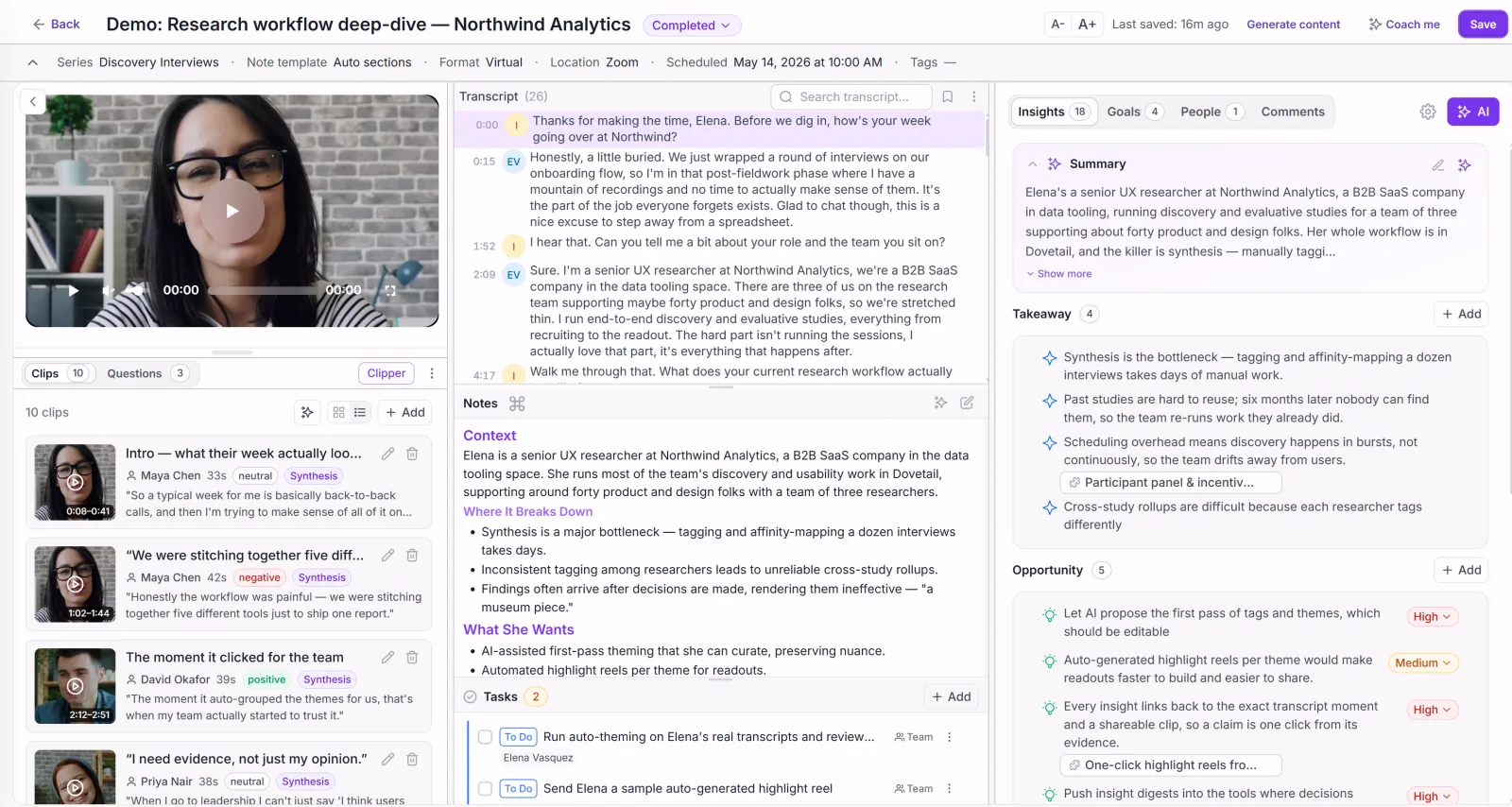
Every interview: video, transcript, and AI takeaways in one view.
Intervool captures and transcribes customer interviews, uses AI to extract evidence-linked insights, clusters them into themes, and carries everything through to personas, segments, and a prioritized roadmap. Every decision stays one click from the customer quote behind it. It accepts uploaded recordings, audio, and written notes as well as live calls, so interviews captured anywhere else still feed the same themes — including exports from a repository you're leaving or a notetaker you're keeping.
Best for
Teams who want research to drive product decisions, not just sit in a repository
Pricing
Basic $39/mo · Team $279/mo (6 seats) · Enterprise custom
Free option
14-day free trial, no credit card
Strengths
Full loop from interview to roadmap in one workspace
AI extracts insights linked to exact transcript moments
Dynamic personas and segments that update as you learn
Built for founders and PMs — no dedicated researcher required
14-day free trial, no credit card
Limitations
Not a usability testing tool (pair with Maze or Lyssna)
No participant recruiting (pair with User Interviews)
No AI moderation — you run the interviews
app.intervool.com/insights
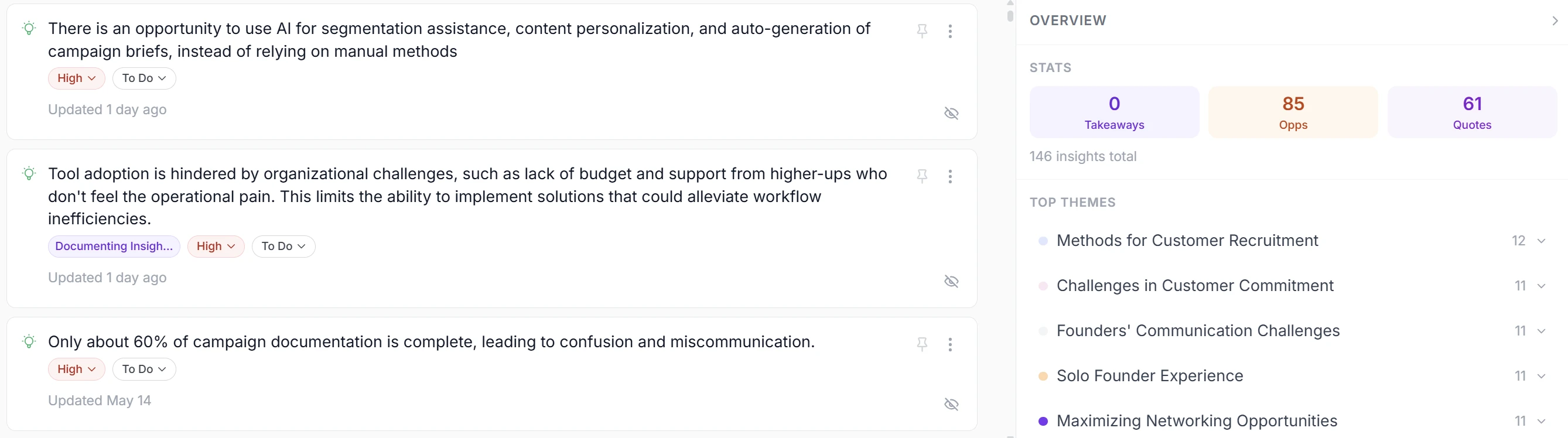
Insights from every call, clustered into themes you can act on.
app.intervool.com/roadmap
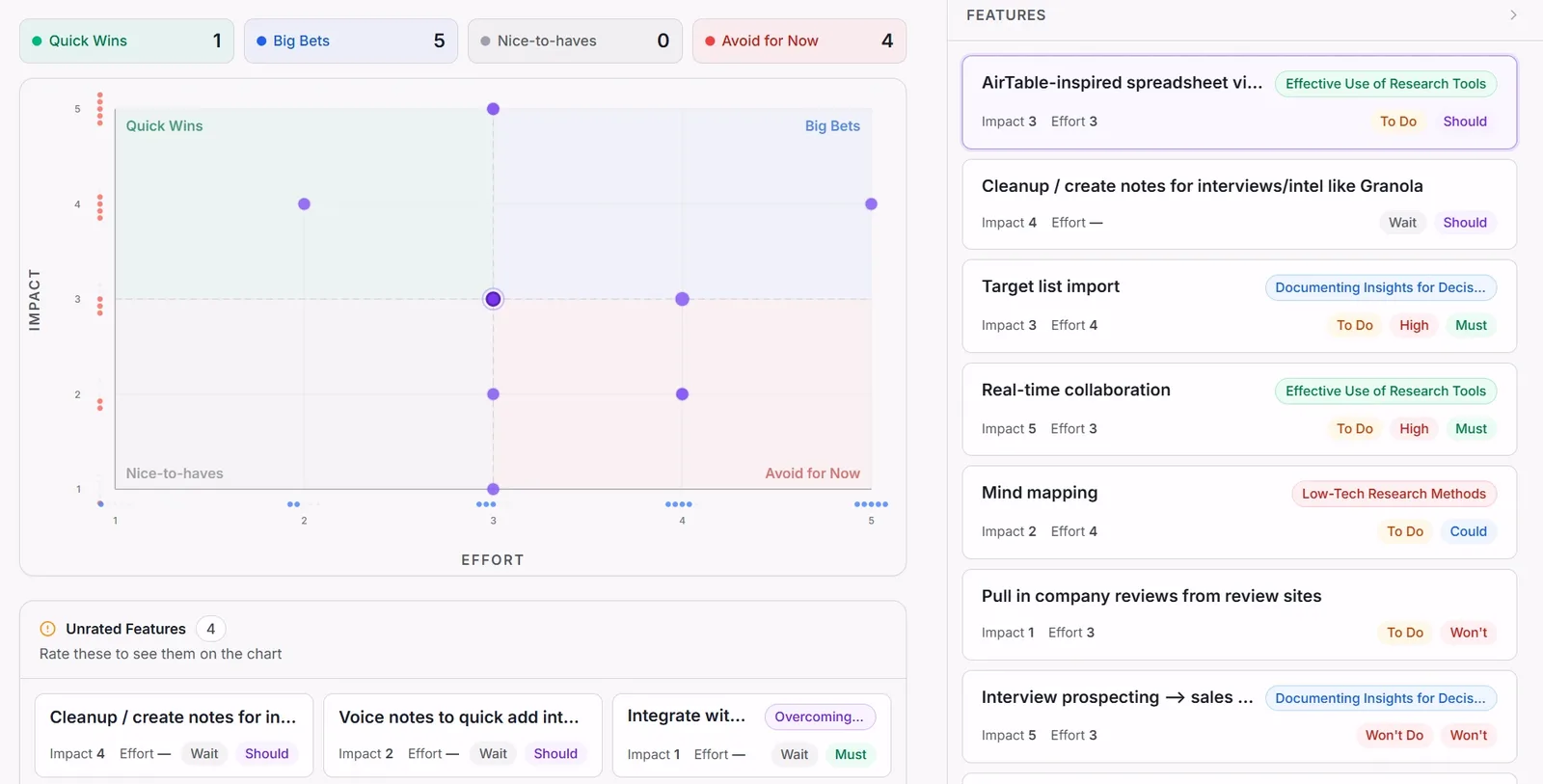
Themes become prioritized bets — each one click from the quote behind it.
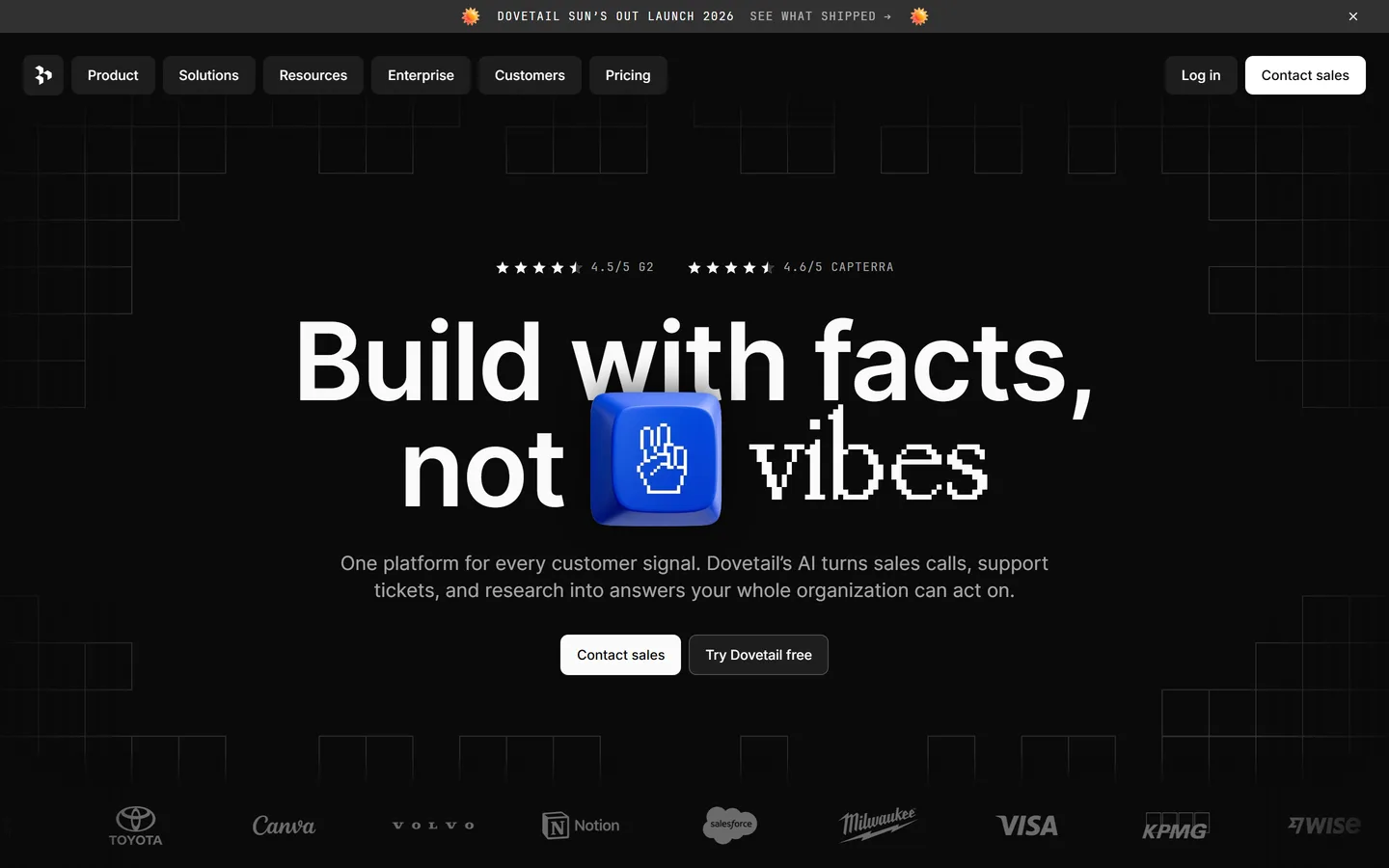
Dovetail is a dedicated research repository where teams store, tag, and share research findings. It's strong for highlighting quotes, tagging themes, and searching across studies, and its integrations are the most developed in the category. It's built around dedicated research teams who export findings to other tools when it's time to decide something.
Best for
Research teams who need a centralized, searchable archive of findings
Pricing
From ~$29/user/mo to enterprise
Free option
Limited free plan and trial
Strengths
Industry-standard repository with powerful tagging
Good integrations (Slack, Notion, Zoom)
Scales to large research teams and long archives
Limitations
Findings stay in the repository — roadmap happens elsewhere
Per-seat pricing climbs quickly
Needs a researcher to get full value from the tagging model
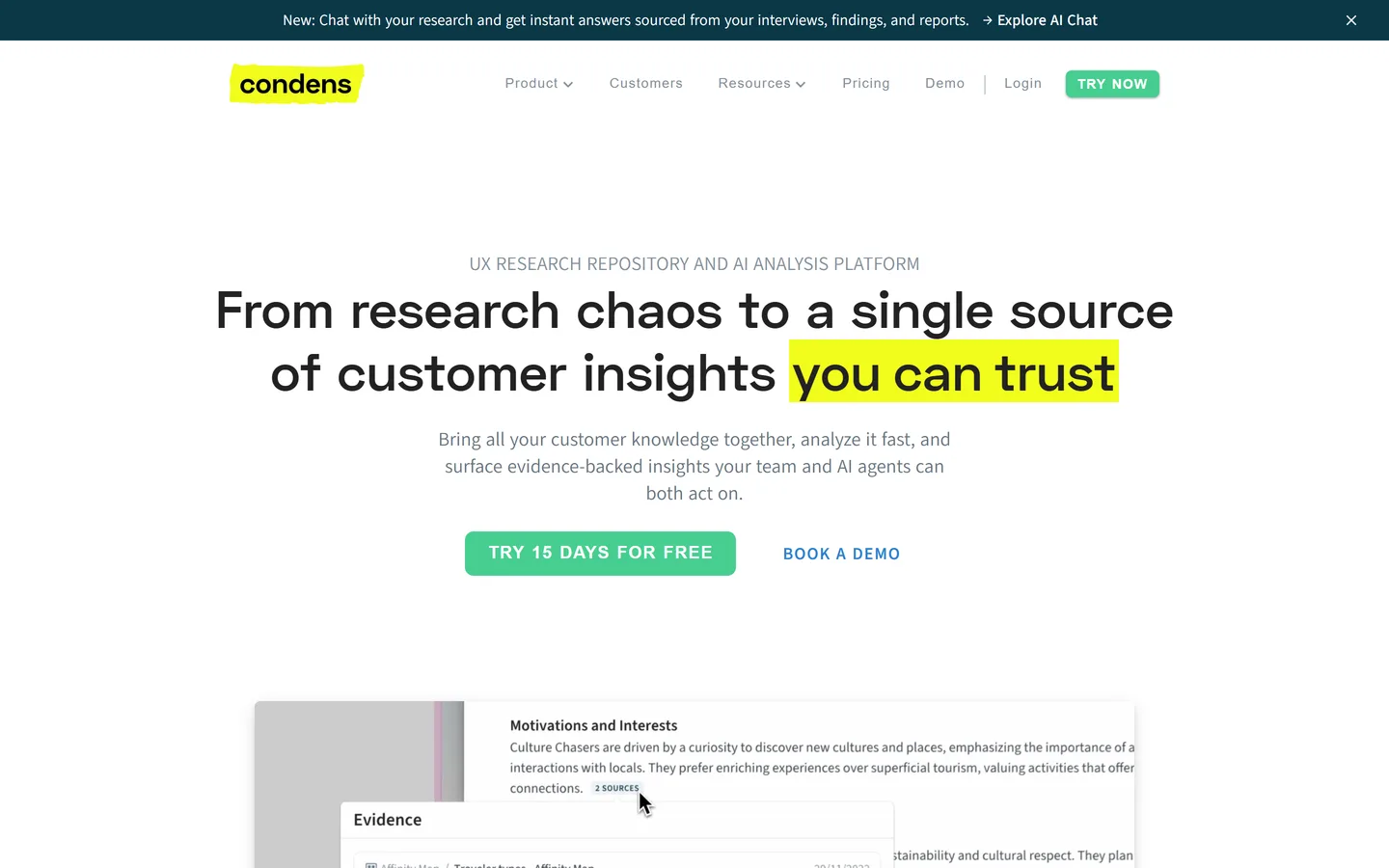
Condens is a research repository focused on storing and synthesizing qualitative research, with a clean interface for tagging, highlighting, and sharing findings. It's more lightweight than Dovetail and starts around €15 per user per month, which makes it the most sensible repository choice for a team of two or three researchers.
Best for
Smaller teams who want a simpler, cheaper alternative to Dovetail
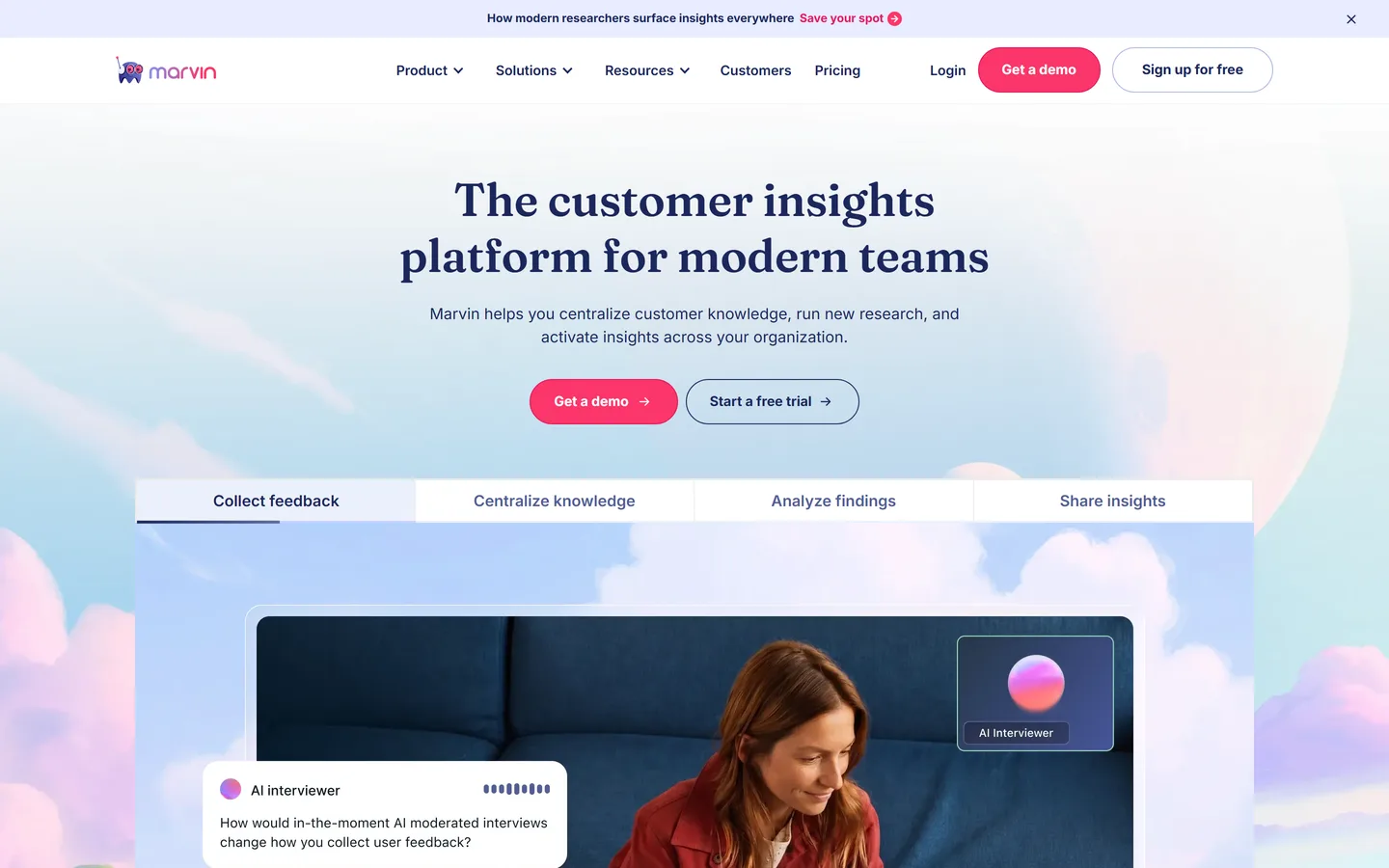
Marvin is a research repository with a dedicated AI synthesis layer. It captures interviews, generates AI summaries, and helps cluster findings, which reduces how much manual tagging each study needs — while staying firmly inside the repository workflow. At around $50 per user per month it's the most expensive per-seat option in this guide.
Best for
Research teams who want AI synthesis on top of a repository
Pricing
Paid tiers quoted on request (Starter, Pro, Enterprise)
Free option
Free plan — 5 file uploads/mo, AI notetaker and Ask AI included
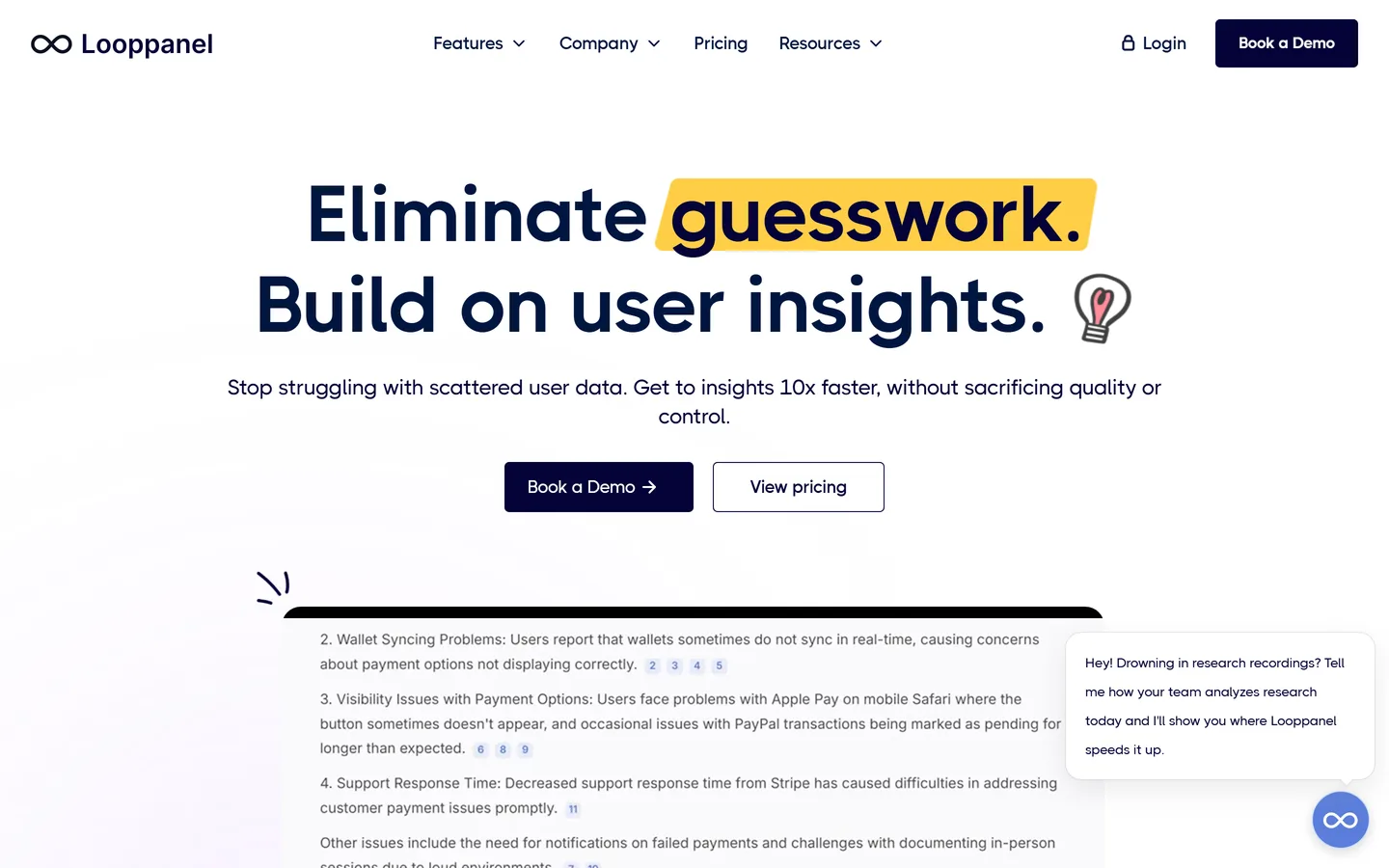
Looppanel joins your research calls, transcribes them, auto-generates notes against the questions you planned to ask, and lets you query across a whole set of interviews. It's the strongest specialist for AI analysis of interviews you run yourself, and unlike a general notetaker it models a study rather than a meeting. Its output is analysis — personas, prioritization, and roadmap work happen elsewhere.
Best for
Researchers who want research-shaped notes and cross-study answers
Pricing
Pro from ~$395/mo (5 editors); ~$75/mo per additional editor
Free option
1-month free trial only
Strengths
Purpose-built for user research, not generic meetings
Ask-AI across a set of interviews, not just one
Good tagging and highlight workflows
Limitations
Analysis is the end of the line — no roadmap layer
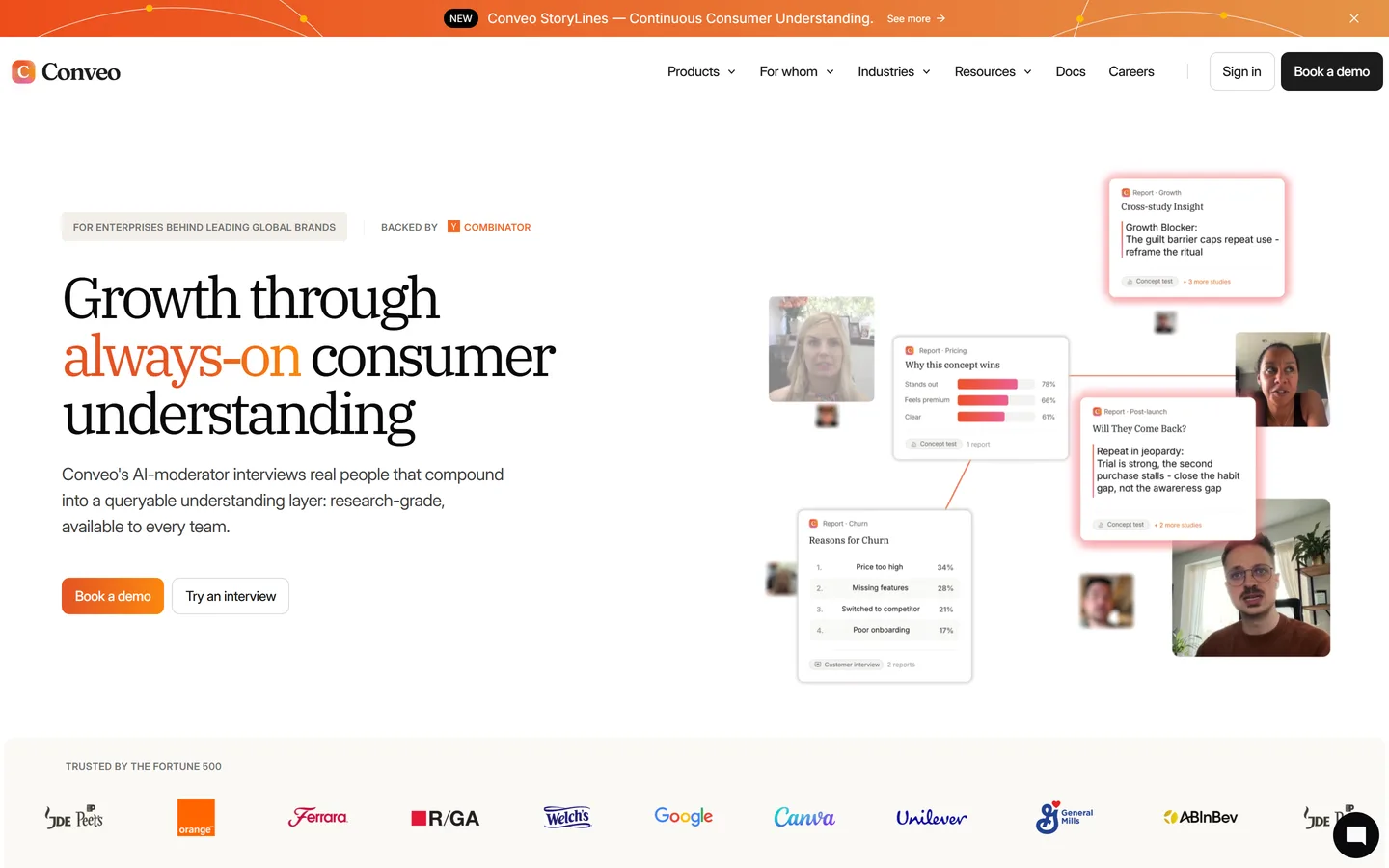
Conveo's AI moderator conducts video interviews with real participants and synthesizes the results across studies, so you can hold hundreds of conversations in the time one researcher would take to run a dozen. It's the strongest general-purpose option in the AI-moderation category and is aimed at enterprise research functions. AI moderation covers the ground you defined in advance, which makes it better for validation than for the early discovery where the useful thing is the question you didn't plan to ask.
Best for
Teams running large-N qualitative studies without doing the calls
Pricing
Custom / enterprise quote
Free option
Demo and sample interview only
Strengths
Hundreds of interviews in the time a human runs a handful
Conversation intelligence with highlights and clips
grain.com
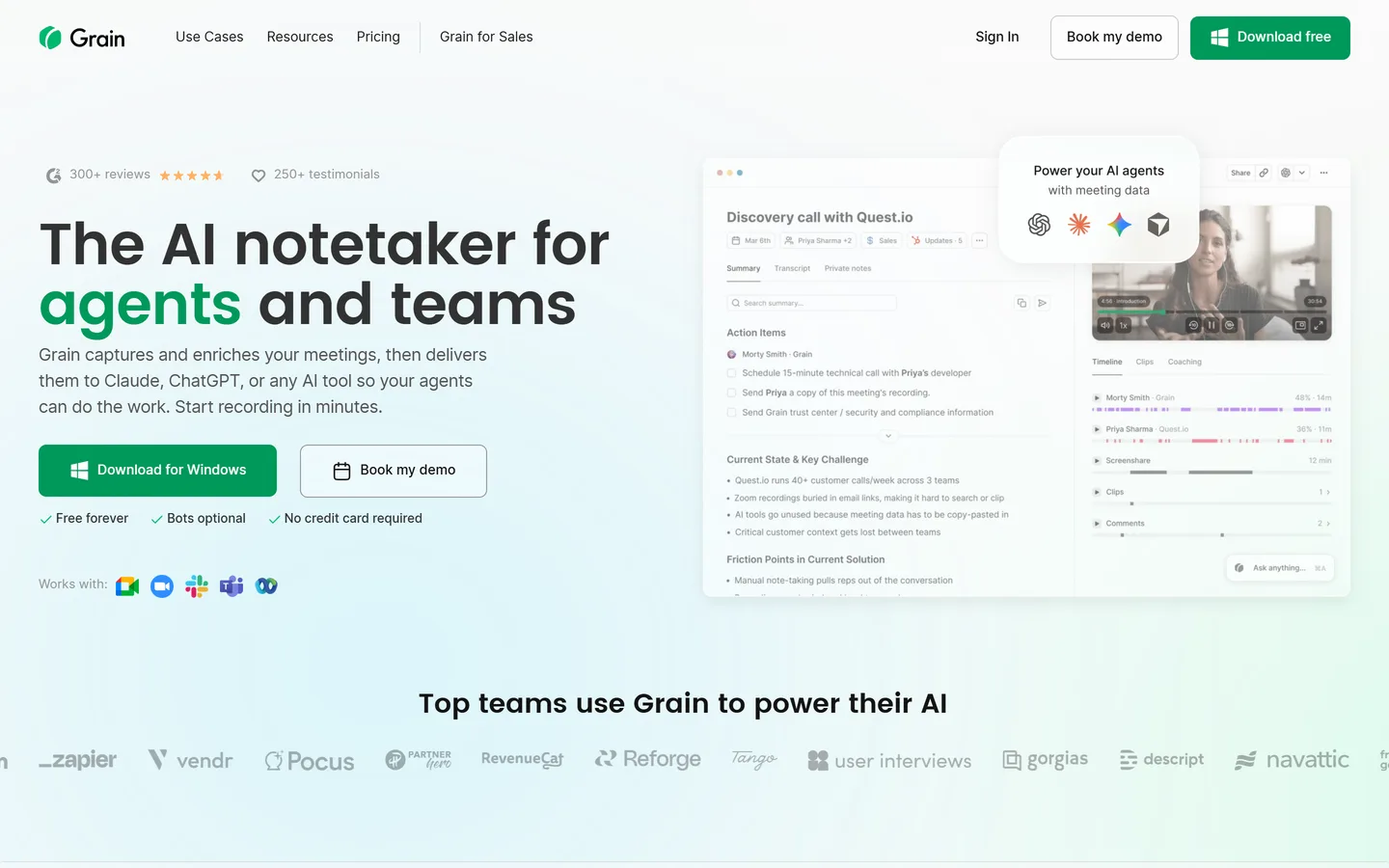
Grain records and transcribes meetings and makes it very easy to cut a short clip of the moment that mattered and share it. In research that capability earns its place: fifteen seconds of a customer struggling changes a stakeholder conversation in a way a bullet point never does. It's focused on capturing and sharing moments rather than synthesizing a study.
Best for
Teams who need to share the actual customer moment, not a summary
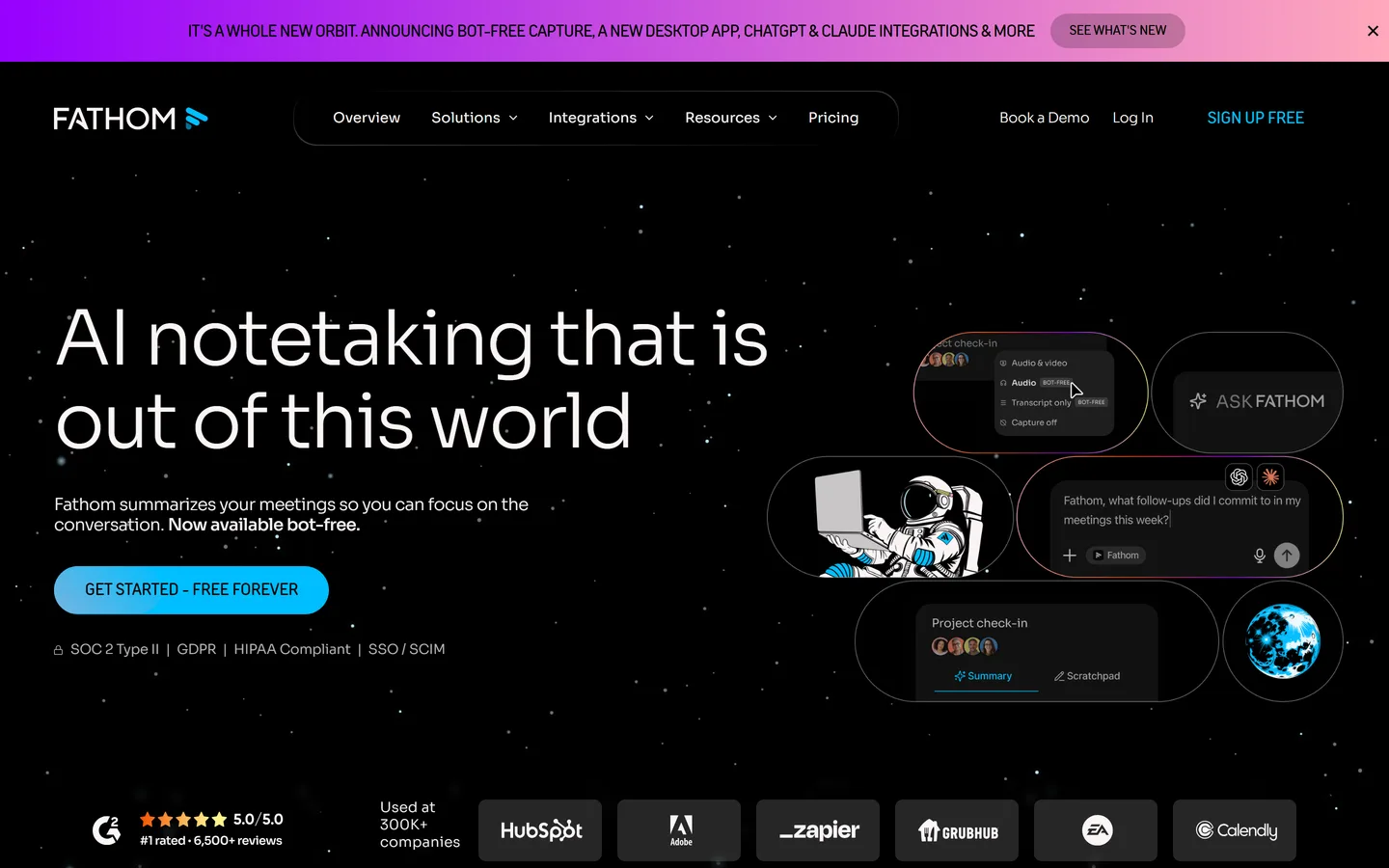
Fathom records, transcribes, and summarizes calls, with a free plan that's unusually complete for an individual — unlimited recording and AI summaries, no expiry. For someone running their first interviews it's the right amount of tooling and costs nothing. It works one meeting at a time: twenty interviews means twenty summaries and the pattern-finding is yours.
Best for
Individuals who want automatic interview summaries at no cost
Pricing
Team plans from ~$19/user/mo
Free option
Free forever for individuals — unlimited recording
Strengths
Genuinely useful free plan for individuals
Fast, well-structured summaries
Easy highlight clips for sharing
Limitations
Individual-productivity tool, not a team research system
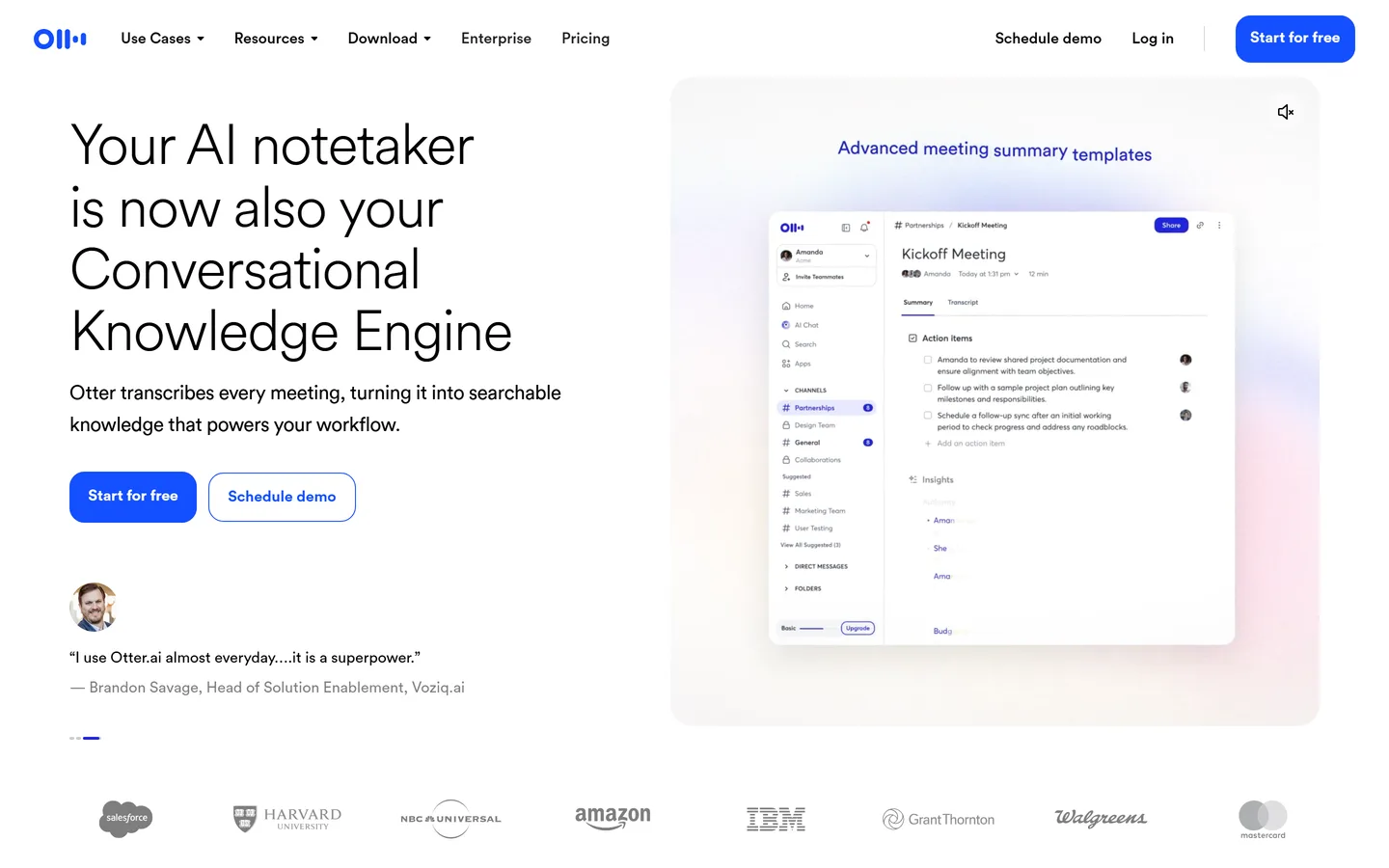
Otter.ai provides real-time transcription and AI-generated meeting notes with reliably high accuracy, plus a free monthly allowance. It's a general-purpose transcription platform rather than research software: there's no concept of a study, a persona, or a theme that spans interviews, so it covers capture and leaves everything else to you.
Best for
Teams who need accurate, searchable transcripts at volume
Pricing
Pro from ~$16.99/user/mo
Free option
Free plan with monthly transcription minutes
Strengths
Excellent transcription accuracy, including real-time
Transcription is a solved problem and every tool here does it competently, so it can't be the deciding factor. The real question is whether a tool helps you see what twenty interviews collectively say, and that's where the category splits cleanly.
We checked whether uploads are supported
Real research includes calls recorded elsewhere, old audio, and written notes. Tools that only work on sessions they hosted or joined leave part of your evidence stranded, and that constraint also decides how painful switching tools later will be.
We looked for the evidence trail
A conclusion you can't trace back to a quote is an opinion with extra steps. We checked whether findings stay linked to the exact transcript moment and the person who said it, since that link is what makes research survive a disagreement.
We noted who has to run it
Several tools here only pay off with a dedicated researcher maintaining a tagging model. Where that's true we said so, because a repository without an owner degrades into an expensive folder within about two quarters.
Pricing checked August 2026, and we're not neutral
Published prices as of August 2026, rounded; enterprise tiers are quote-based. Intervool is ours and is marked as such everywhere it appears, its limits are listed alongside its strengths, and every other tool here is one we'd genuinely recommend for the job it does best.
FAQ
Common questions
What is customer interview software?
Software that helps teams record, transcribe, and analyze conversations with customers. The category ranges from transcription tools that produce a searchable record, through repositories that store and tag findings, to workspaces that synthesize across interviews and connect what you learn to product decisions.
What is the best customer interview software?
It depends on your workflow. For interview-to-roadmap in one workspace, Intervool. For dedicated research repositories, Dovetail or Condens. For AI analysis of research calls, Looppanel. For AI-moderated interviews at scale, Conveo. For transcription only, Otter or Fathom — both of which have free plans worth using before you pay for anything.
Do I need a dedicated researcher to use customer interview software?
For some tools, yes — a repository's value depends on someone maintaining a consistent tagging model. Others are built so founders and product managers can run and synthesize research themselves, with AI handling transcription, extraction, and clustering. Intervool is in the second group; Dovetail rewards the first.
What's the difference between a research repository and interview software?
Repositories like Dovetail and Condens focus on storing and tagging findings you've already analyzed. Interview-to-insight tools do the analysis: they extract what matters from each conversation and surface what repeats. The distinction matters because a repository assumes the thinking is done and needs somewhere to live.
Can AI conduct customer interviews?
Yes — Conveo, Outset, Strella, and others use AI to moderate interviews at scale, and they work well for validation and structured discovery where you know what ground to cover. For early exploration, human-led interviews with AI-assisted synthesis usually work better, because the valuable moment is the follow-up question you ask in response to something unexpected.
How much does customer interview software cost?
Free notetakers like Fathom cover capture at no cost. Analysis tools run roughly $30–$50 per user per month. Repositories start around €15 per user for Condens and rise to enterprise for Dovetail. Intervool is $39/mo for Basic or $279/mo for Team with six seats included. AI-moderation platforms are mostly enterprise-quoted.