Tool roundup

Best Feature Prioritization Tools in 2026

Every prioritization tool will rank a list for you. RICE, weighted scoring, impact versus effort — the maths is not the hard part, and it hasn't been for years. The hard part is that a scoring framework multiplies your inputs, so if the impact number is a guess, a sophisticated formula produces a precisely calculated guess with more decimal places. This guide compares prioritization tools on the frameworks they offer and, more usefully, on where the numbers going into them come from.

By Jess O'Malley, Founder & CEO, IntervoolLast reviewed 8 tools compared

What's the best feature prioritization tool?

For configurable scoring frameworks, airfocus is the most capable and Ducalis the best value for small teams who want structured voting. Craft.io is strongest if you want prioritization inside a full product-management workflow, and Jira Product Discovery is the obvious pick — and free up to three creators — if your organization already lives in Jira. Productboard is the most complete if prioritization needs to sit on aggregated feedback. All of these score what you type into them. Intervool takes the other approach: it derives the inputs from customer interviews, so impact reflects how often a problem actually appeared and for which segments, and every score opens onto the quotes behind it.

Compared at a glance

Most of these tools compete on the second and fourth columns. The one that decides whether the output is trustworthy is the third from the left.

Tool
Scoring frameworks
Scores from evidence
Customer demand signal
Custom formulas
Links to delivery
Under $50/mo to start
Intervool — Scoring frameworks: Yes
Intervool — Scores from evidence: Yes
Intervool — Customer demand signal: Partial
Intervool — Custom formulas: No
Intervool — Links to delivery: No
Intervool — Under $50/mo to start: Yes
airfocus — Scoring frameworks: Yes
airfocus — Scores from evidence: No
airfocus — Customer demand signal: Partial
airfocus — Custom formulas: Yes
airfocus — Links to delivery: Partial
airfocus — Under $50/mo to start: No
Productboard — Scoring frameworks: Yes
Productboard — Scores from evidence: Partial
Productboard — Customer demand signal: Yes
Productboard — Custom formulas: Partial
Productboard — Links to delivery: Yes
Productboard — Under $50/mo to start: Partial
Craft.io — Scoring frameworks: Yes
Craft.io — Scores from evidence: Partial
Craft.io — Customer demand signal: Partial
Craft.io — Custom formulas: Yes
Craft.io — Links to delivery: Yes
Craft.io — Under $50/mo to start: Partial
Ducalis — Scoring frameworks: Yes
Ducalis — Scores from evidence: No
Ducalis — Customer demand signal: Partial
Ducalis — Custom formulas: Yes
Ducalis — Links to delivery: Partial
Ducalis — Under $50/mo to start: Yes
Jira Product Discovery — Scoring frameworks: Yes
Jira Product Discovery — Scores from evidence: Partial
Jira Product Discovery — Customer demand signal: Partial
Jira Product Discovery — Custom formulas: Yes
Jira Product Discovery — Links to delivery: Yes
Jira Product Discovery — Under $50/mo to start: Yes
Canny — Scoring frameworks: Partial
Canny — Scores from evidence: No
Canny — Customer demand signal: Yes
Canny — Custom formulas: Partial
Canny — Links to delivery: Partial
Canny — Under $50/mo to start: No
ProdPad — Scoring frameworks: Partial
ProdPad — Scores from evidence: Partial
ProdPad — Customer demand signal: Yes
ProdPad — Custom formulas: No
ProdPad — Links to delivery: Partial
ProdPad — Under $50/mo to start: Yes
Yes Does thisPartial Partly, or with workaroundsNo Not a feature
Scoring frameworks
Built-in models for ranking work — RICE, impact vs effort, weighted scoring, or MoSCoW.
Scores from evidence
Inputs come from customer research rather than someone's estimate typed into a field.
Customer demand signal
Incorporates what customers asked for — votes, requests, or feedback volume.
Custom formulas
Define your own scoring weights and formulas rather than using a fixed model.
Links to delivery
Connects the prioritized list to the engineering work that ships it.
Under $50/mo to start
A real entry plan under $50 per month, not an enterprise quote with a starting-from figure.

The categories, and what each is for

These products get compared as if they’re interchangeable. They aren’t — they’re solving different halves of the job.

Evidence-driven prioritization

Scores derived from customer research — frequency, severity, and segment breadth — rather than typed estimates.

Intervool

Framework specialists

Deep, configurable scoring models with custom weights and formulas. The maths done properly.

airfocus, Ducalis

Prioritization inside a suite

Scoring as one part of a full product-management platform, connected to roadmaps and delivery.

Productboard, Craft.io, Aha!

Demand-signal prioritization

Ranking driven by what customers asked for — votes and request volume from a public board.

Canny, ProdPad

The tools in detail

01

Intervool

Our productEvidence-driven prioritization

Scores built from what customers actually said
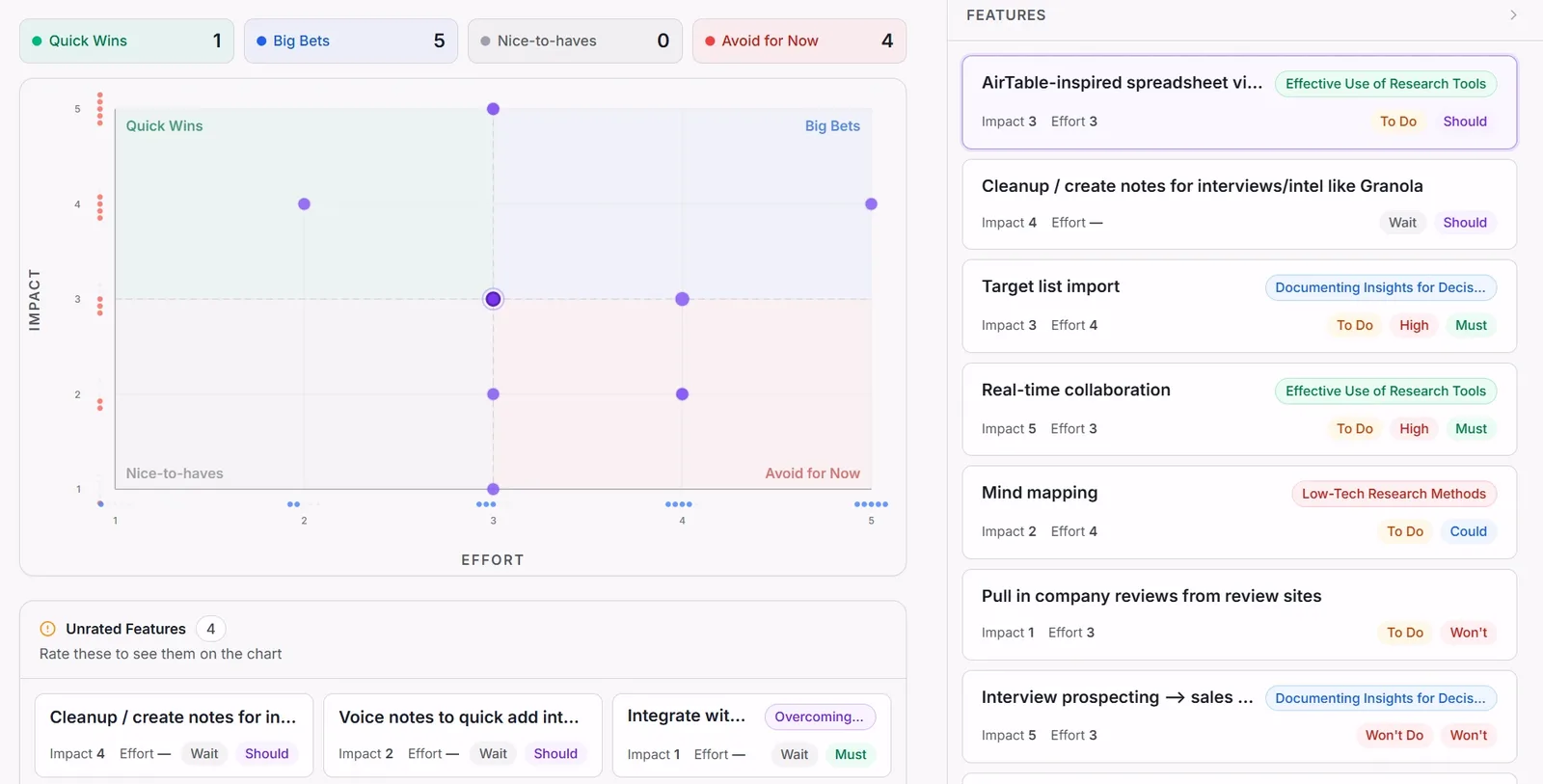
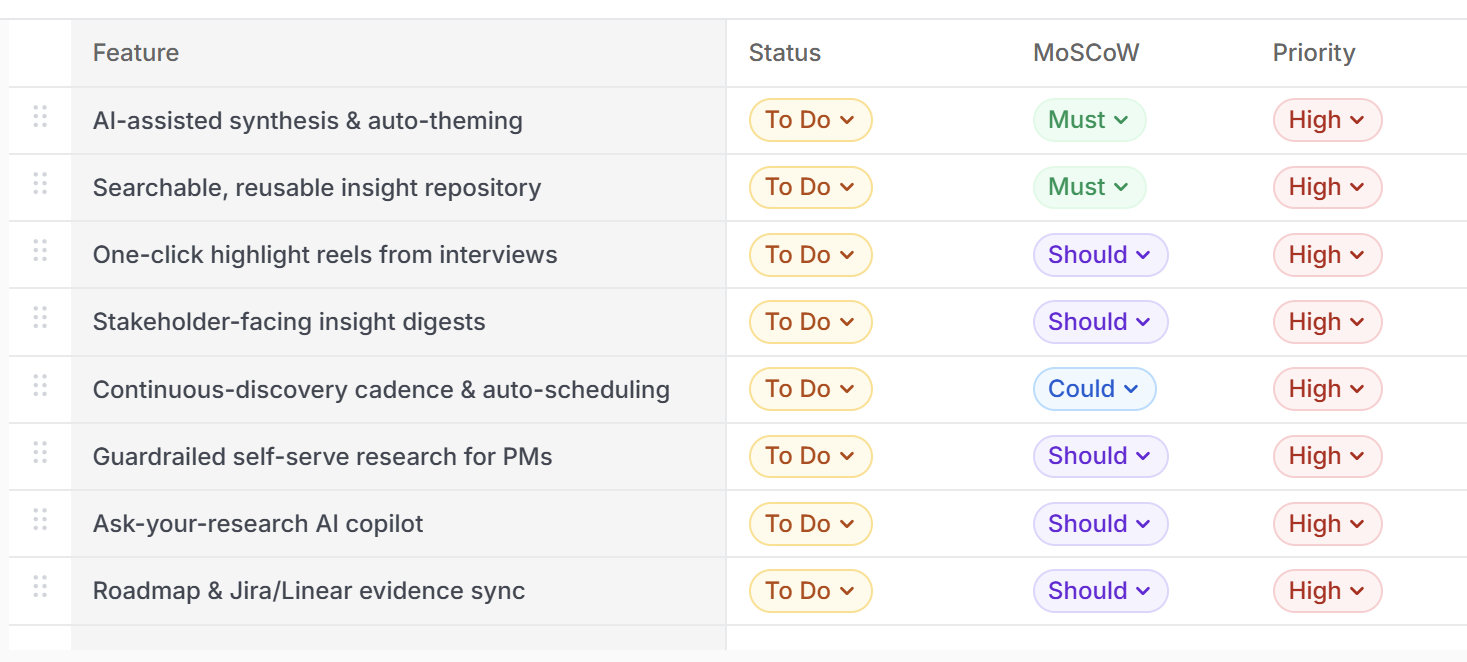
Intervool impact vs effort prioritization board turning interview themes into a product roadmap
Themes become prioritized bets — each one click from the quote behind it.

Intervool derives prioritization inputs from research rather than asking you to estimate them. Because it has synthesized every interview into themes, it knows how many customers raised a problem, how severe they said it was, and which segments it clustered in — so impact is a measured quantity rather than a number someone picked. Themes are scored on impact versus effort and laid out on a matrix and MoSCoW boards, and every item opens onto the customer quotes underneath it. That last part is what ends the meeting: a disagreement about priority becomes a question about evidence, which is answerable.

Best for
Teams whose prioritization arguments keep coming down to whose opinion wins
Pricing
Basic $39/mo · Team $279/mo (6 seats) · Enterprise custom
Free option
30-day free trial, no credit card

Strengths

  • Impact derived from real interview frequency and segment breadth
  • Every score opens onto the quotes behind it
  • Impact-vs-effort matrix and MoSCoW boards built in
  • No separate research tool needed to feed it
  • 30-day free trial, no credit card

Limitations

  • No custom weighted formulas or RICE configuration
  • Needs customer interviews to work — not useful with no research
  • Stops at prioritization; pair with Jira or Linear to ship
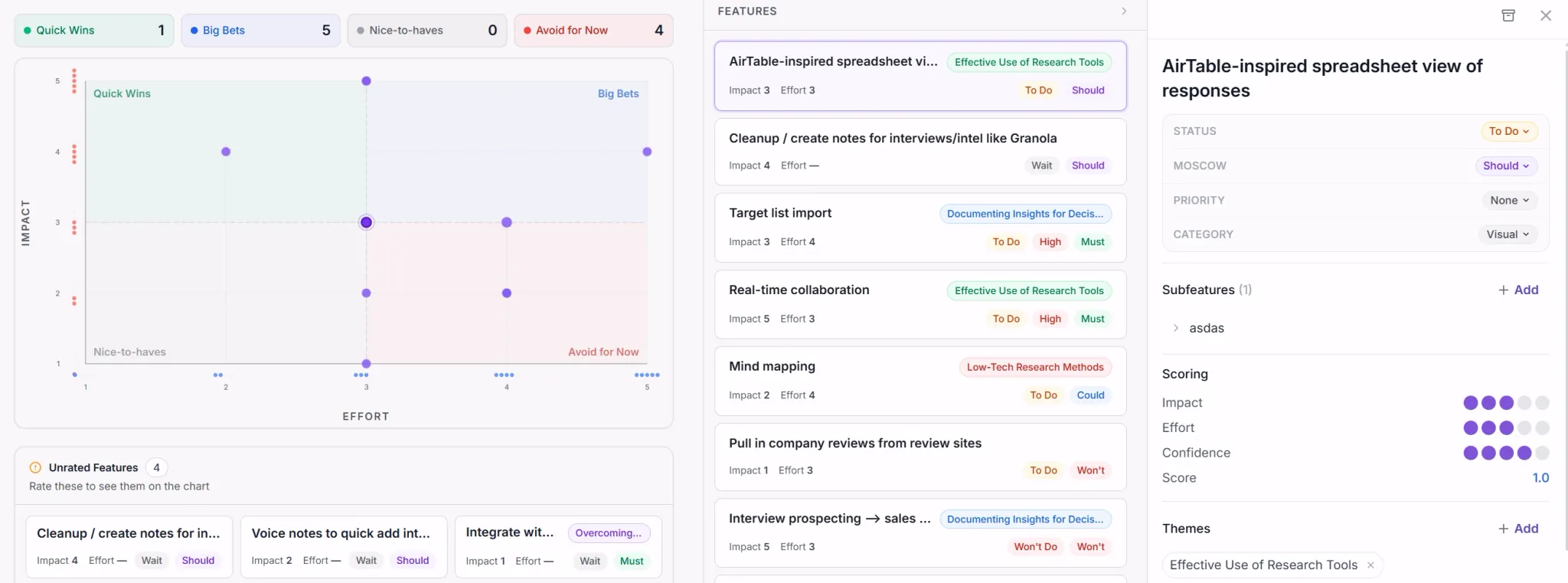
Intervool feature idea scored on impact and effort with the customer evidence behind it
Scores derived from how often a problem actually came up.
Intervool feature list linking each planned feature to the customer insights behind it
Each feature linked to the findings that justify it.
02

airfocus

Framework specialist

The deepest scoring frameworks in the category

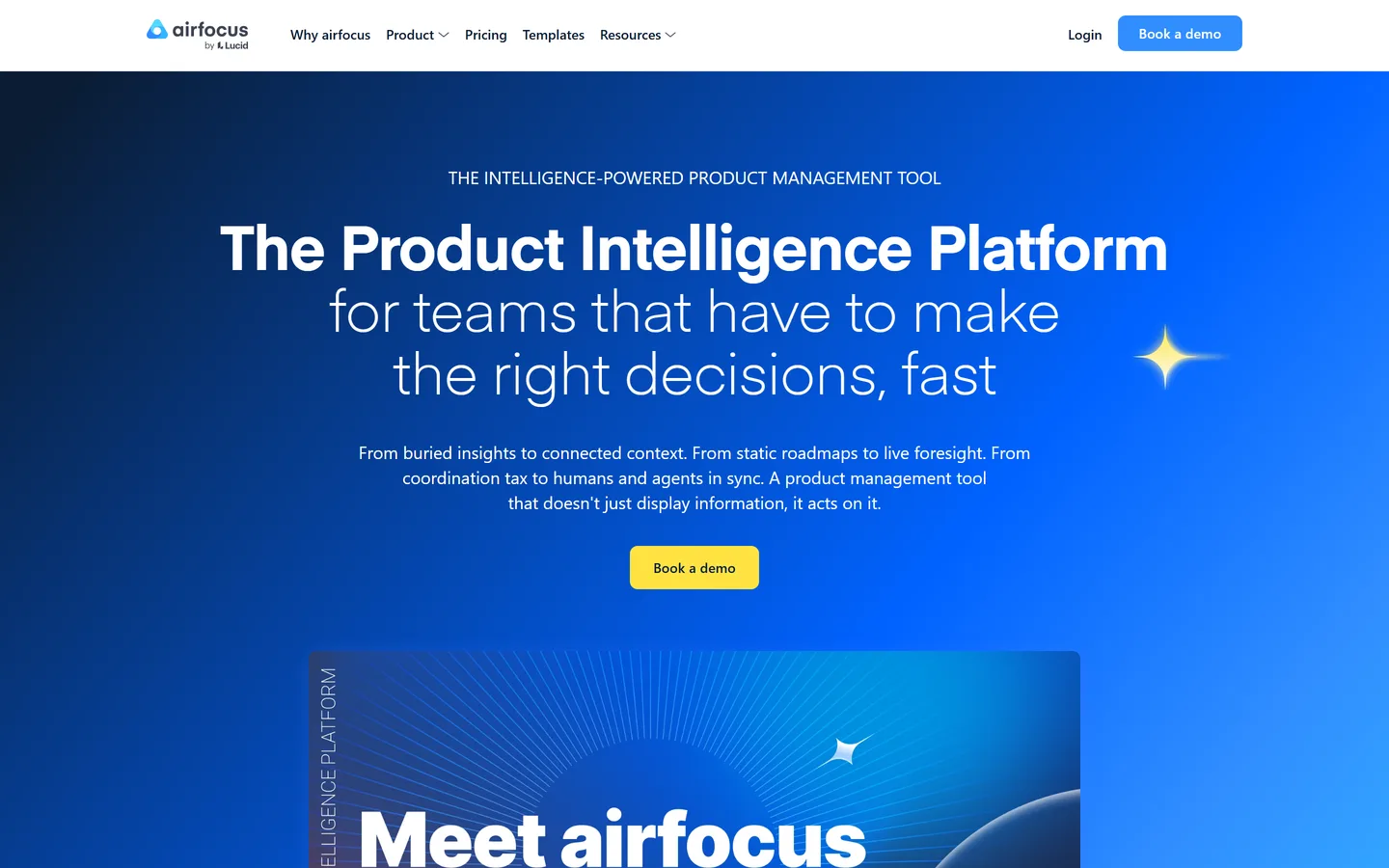
airfocus homepage — prioritization frameworks and modular roadmapping

airfocus is the most capable prioritization engine here — RICE, value versus effort, weighted scoring, and custom formulas with configurable weights, all attached to roadmap views and feedback capture. If your organization has a scoring model it believes in, this will implement it faithfully. What it can't do is improve your inputs: the formula is exact and the estimates feeding it are still estimates.

Best for
Teams who want full control over how work gets scored
Pricing
From ~$59/editor/mo
Free option
Free trial only

Strengths

  • Most configurable scoring in the category
  • Custom formulas and weights
  • Modular — add roadmaps and feedback as needed

Limitations

  • Scores only as good as the inputs you supply
  • Per-editor pricing climbs with team size
  • Configuration takes real time to get right
03

Productboard

Prioritization inside a suite

Prioritization on top of aggregated feedback

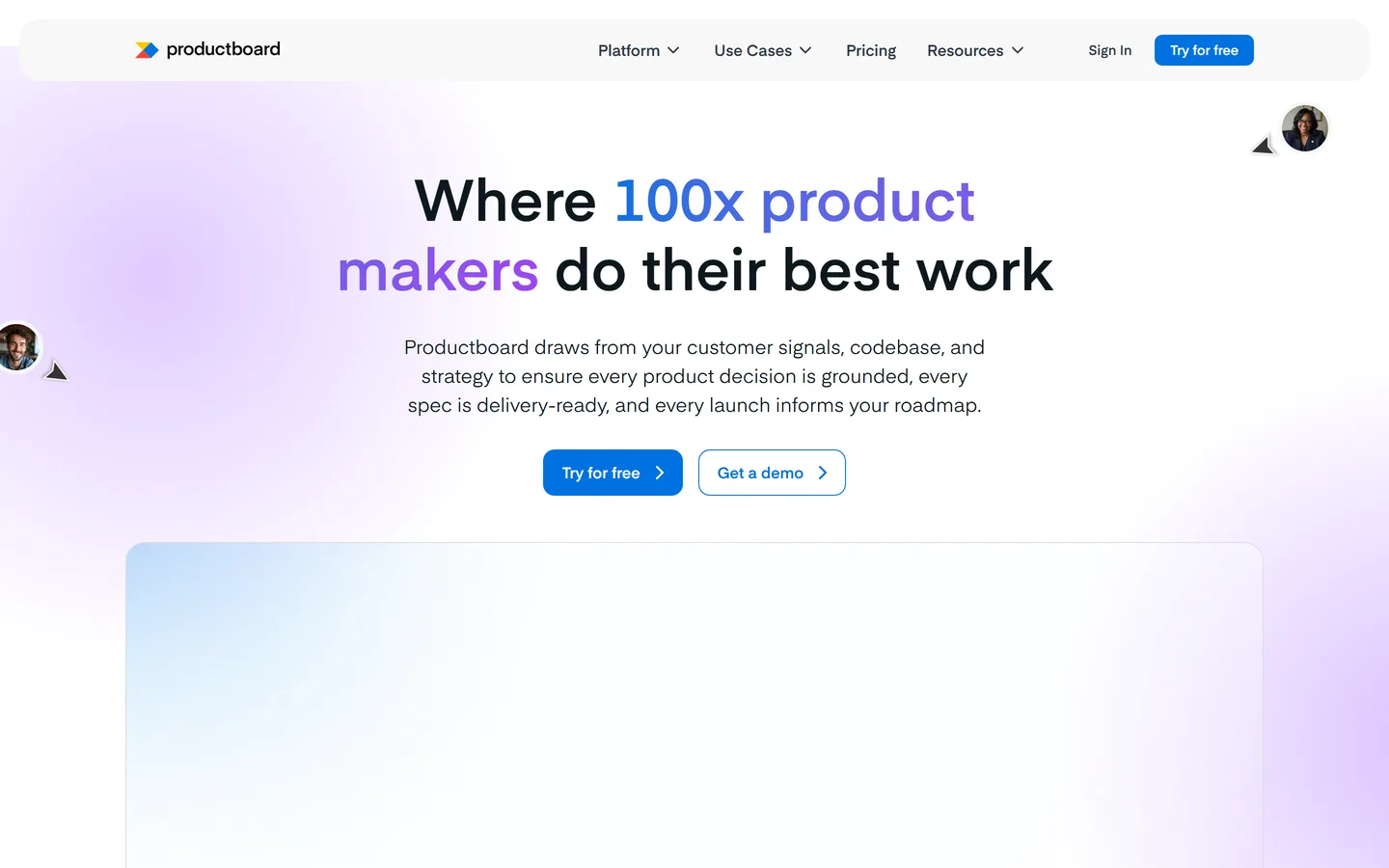
Productboard homepage — feedback-driven feature prioritization

Productboard's prioritization sits on the feedback it aggregates from support, sales, surveys, and portals: features are scored partly on how much linked feedback they carry, which is a better input than a bare estimate. The catch is that linking feedback to features is manual work someone does continuously, so score quality tracks how diligently that job gets done. It's the most complete option if feedback volume is your main signal.

Best for
Product orgs prioritizing from feedback across many channels
Pricing
From ~$25/maker/mo; enterprise tiers custom
Free option
Free trial only

Strengths

  • Scores informed by aggregated customer feedback
  • Mature roadmap and stakeholder views
  • Good integrations across the PM stack

Limitations

  • Feedback linking is manual and ongoing
  • Heavyweight for small teams
  • Volume signals, not interview depth
04

Craft.io

Prioritization inside a suite

Prioritization wired into the whole product workflow

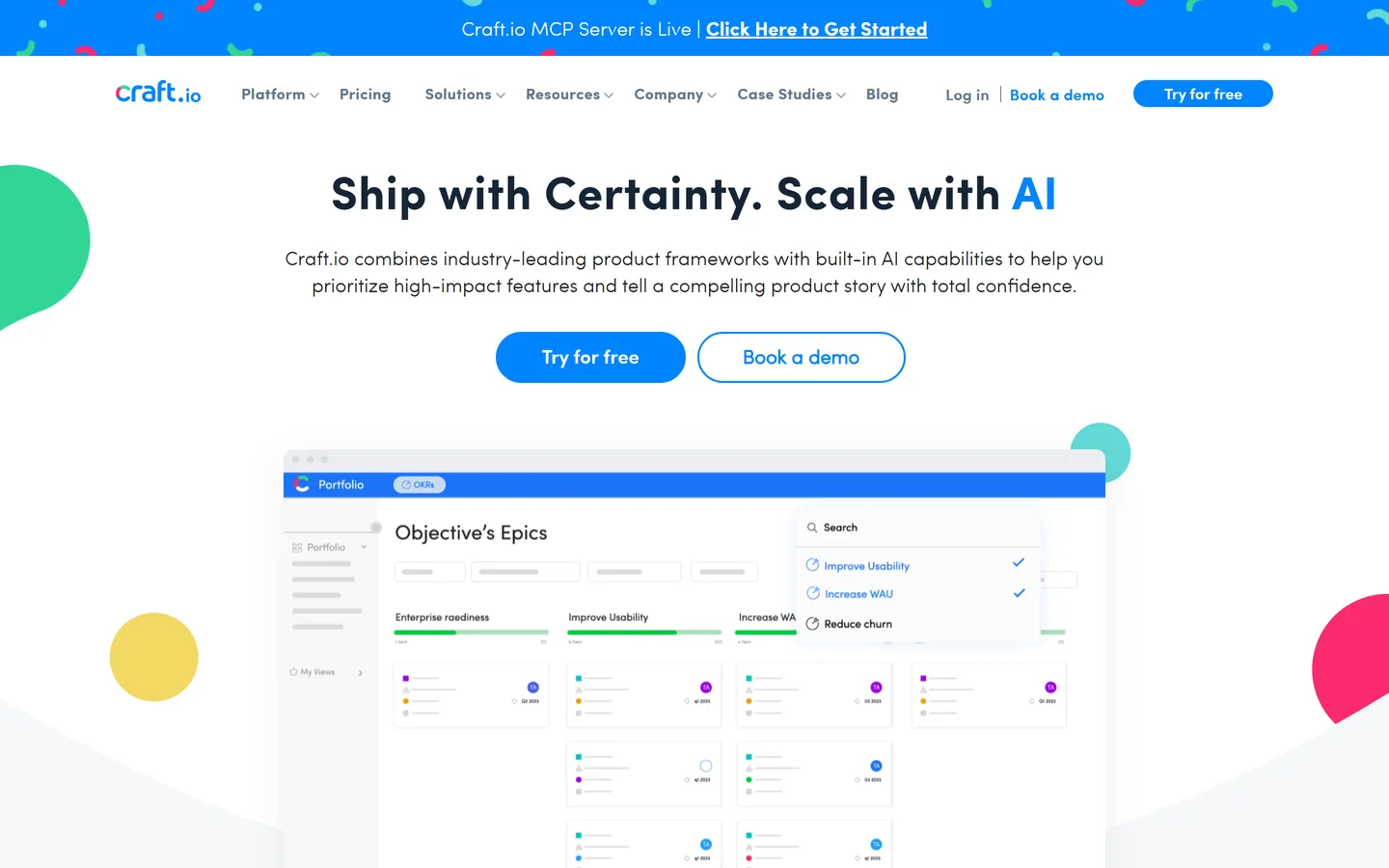
Craft.io homepage — product management platform with prioritization

Craft.io covers prioritization as part of an end-to-end product management workflow — scoring models feed a roadmap, which connects to specs and delivery, with the reasoning documented along the way. For a PM who wants one system rather than four, it's a coherent and well-built option. Its research inputs are as manual as everyone else's here, and pricing targets established product teams.

Best for
Product managers who want scoring, specs, and roadmap in one place
Pricing
From ~$39/user/mo
Free option
Free trial only

Strengths

  • Prioritization connected to specs and delivery
  • Multiple scoring models supported
  • Good documentation of decision rationale

Limitations

  • Priced for established product teams
  • Inputs are still manual estimates
  • More platform than a small team needs
05

Ducalis

Framework specialist

Structured team voting on scoring criteria

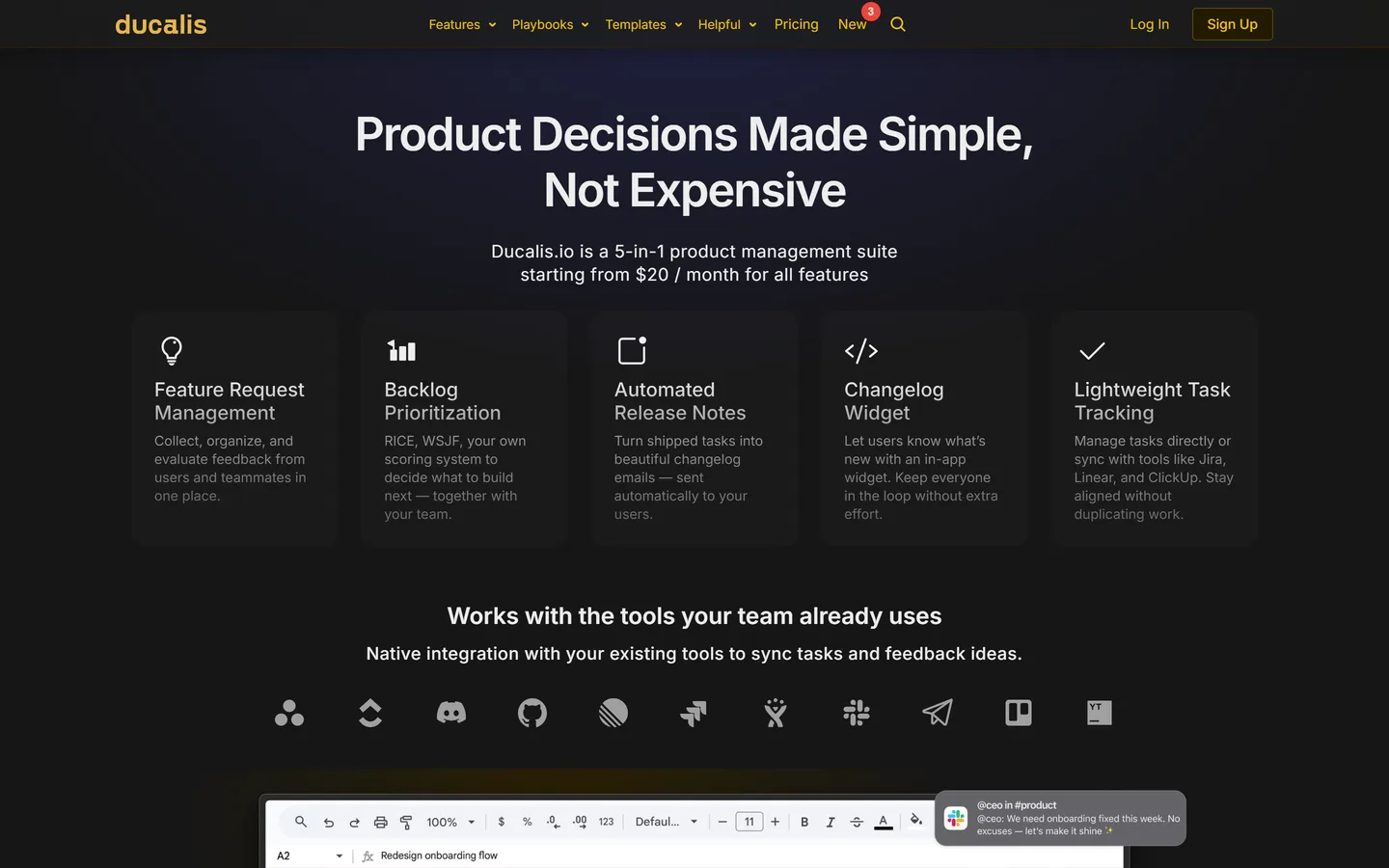
Ducalis homepage — collaborative feature prioritization and scoring

Ducalis has each team member score items independently against agreed criteria, then surfaces where you disagree — which is far more useful than an averaged number, because disagreement usually means people are holding different information. For a team that wants prioritization to be collective without becoming a shouting match, it's the best-designed option here and one of the cheapest. It scores opinions rigorously; it doesn't supply evidence.

Best for
Teams who want prioritization to be a group decision, done properly
Pricing
From ~$18/user/mo
Free option
Free plan for small teams

Strengths

  • Surfaces genuine disagreement instead of averaging it away
  • Independent scoring reduces anchoring on the loudest voice
  • Low price and quick setup

Limitations

  • Rigorous process over opinions, not evidence
  • Smaller product with fewer integrations
  • Needs team buy-in to the ritual
06

Jira Product Discovery

Prioritization inside a suite

Free prioritization for teams already on Jira

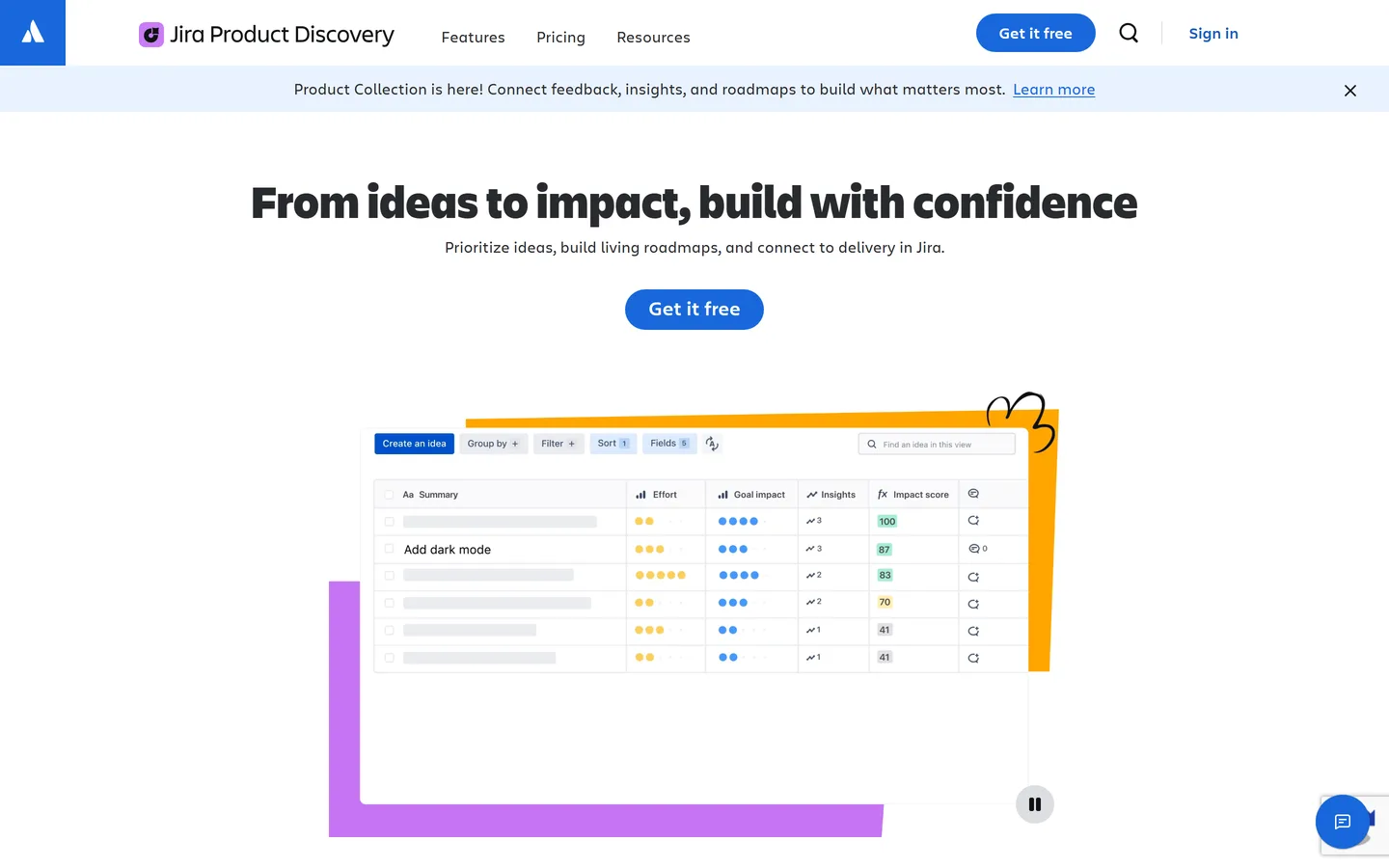
Jira Product Discovery homepage — idea scoring connected to Jira delivery

Jira Product Discovery gives PMs custom fields to score ideas, attach insights, and push the winners straight into Jira epics — and it's free for up to three creators, which makes it the cheapest credible option on this page. If you already run delivery in Jira, the lack of a gap between decision and ticket is worth more than a more elegant scoring model elsewhere. Insight capture is manual pasting, so the evidence behind a score is whatever someone bothered to attach.

Best for
Jira organizations who want discovery connected to delivery
Pricing
Free up to 3 creators; from ~$10/creator/mo
Free option
Free forever for up to 3 creators

Strengths

  • Free for up to 3 creators
  • Native path from prioritized idea to Jira epic
  • Flexible custom scoring fields

Limitations

  • Insight capture is entirely manual
  • Only makes sense on Jira
  • No research synthesis behind the scores
07

Canny

Demand-signal prioritization

Prioritization by customer votes

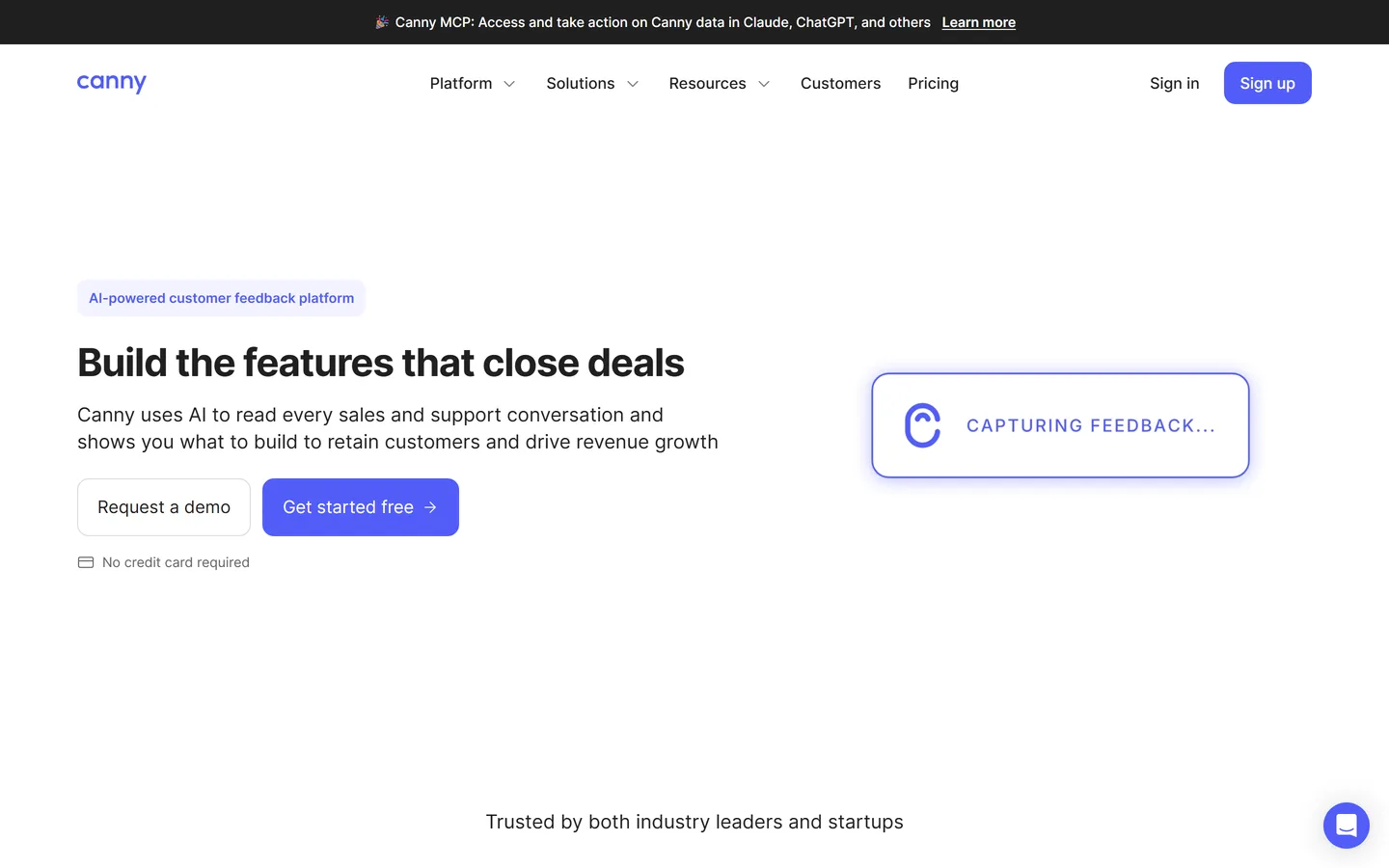
Canny homepage — feature request voting and demand-based prioritization

Canny ranks requests by how many customers voted for them, weighted by segment or revenue on higher tiers. As a demand signal that's genuinely useful — it tells you what people are willing to go and click a button about. As a prioritization mechanism it has a known bias: votes measure engagement and reach, so a request from one active community can outrank a silent problem affecting more valuable customers.

Best for
Teams who want demand ranked by the customers asking
Pricing
From ~$79/mo
Free option
Free plan with limited posts

Strengths

  • Direct demand signal from real customers
  • Revenue and segment weighting on higher tiers
  • Closes the loop with requesters automatically

Limitations

  • Votes measure engagement, not importance
  • No insight into why a request exists
  • Entry pricing is high
08

ProdPad

Demand-signal prioritization

Lean prioritization on a now-next-later board

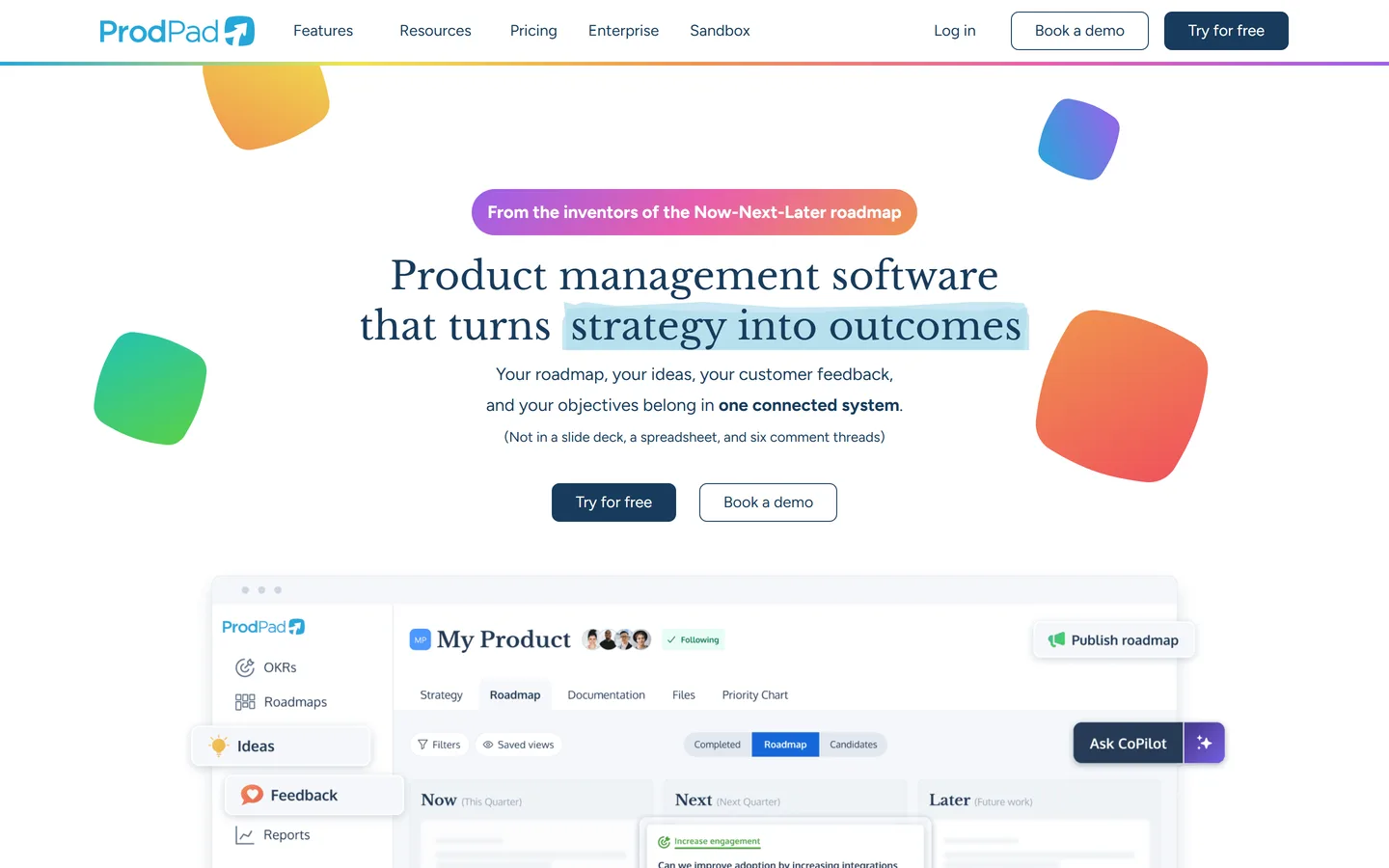
ProdPad homepage — now-next-later prioritization and idea management

ProdPad's answer to prioritization is deliberately less precise: instead of a score to two decimal places, work sits in now, next, or later, with linked feedback supporting each item. That imprecision is a defensible position — false precision in a RICE score has ended more arguments than it has resolved. Feedback linking is manual, and the format suits teams comfortable committing to outcomes rather than rankings.

Best for
Teams who prefer horizons over precise scores
Pricing
From ~$24/editor/mo
Free option
Free trial only

Strengths

  • Avoids false precision in scoring
  • Feedback linked to ideas
  • Reasonable pricing for small teams

Limitations

  • Light on formal scoring models
  • Feedback linking is manual
  • Per-editor pricing across modules
Methodology

How we evaluated these

We judged inputs, not formulas

RICE and weighted scoring are arithmetic and every tool here does the arithmetic correctly. The grid's evidence column asks the question that actually determines output quality: where do the numbers come from?

We noted where estimates are guesses

Impact is the input people are worst at estimating and the one that swings the ranking most. Tools that derive it from something measurable are marked; tools that ask you to type a number are marked too.

We looked at how disagreement is handled

Prioritization is usually a disagreement between people with different information, not a maths problem. Tools that surface where scorers diverge — rather than averaging it into a single misleading number — score better here.

We checked the path to delivery

A prioritized list that lives apart from the work drifts within a sprint. We marked which tools connect the decision to the ticket and which leave you maintaining the same plan in two systems.

Pricing checked August 2026, and we're not neutral

Published prices as of August 2026, rounded. Intervool is ours and is marked as such — it scores 'no' on custom formulas because it doesn't offer them, and airfocus or Ducalis are the honest recommendation when configurable scoring is the requirement.

FAQ

Common questions

What is the best feature prioritization tool?

For configurable scoring frameworks, airfocus. For collaborative team scoring, Ducalis. For prioritization inside a full product suite, Craft.io or Productboard. For Jira organizations, Jira Product Discovery, free up to three creators. For scores derived from customer research rather than estimates, Intervool, which builds impact from how often a problem appeared across your interviews and in which segments.

What is the RICE prioritization framework?

Reach × Impact × Confidence ÷ Effort. Reach is how many users are affected per period, Impact is how much it matters to each, Confidence is how sure you are, and Effort is person-months. The Confidence term is the honest part — it exists specifically because the other numbers are usually estimates, and it's the term teams most often set to 100% without justification.

Is RICE better than impact vs effort?

Not inherently. RICE gives more granularity and more places to be precisely wrong; impact versus effort is faster and its imprecision is at least visible. The framework matters far less than the quality of the inputs — a two-axis matrix fed by real research beats a RICE score built from guesses every time.

How do you prioritize features without customer data?

Carefully, and temporarily. Score on effort, which you can estimate reasonably, and treat impact as an explicit hypothesis rather than a number. Then go get the data: ten customer interviews will change your ranking more than any framework will, and it takes about a week. Prioritization tools cannot manufacture evidence you haven't collected.

Should feature prioritization be based on customer votes?

As one input, not the ranking. Votes tell you what engaged customers will click a button about, which correlates with demand but is biased toward whoever is loudest and most online. A silent problem affecting your largest accounts will never outvote a vocal community. Use votes as a demand signal and interviews to find out what's actually costing people something.

Do small teams need a prioritization tool?

A tool, often not — a spreadsheet handles the maths fine. What small teams do need is a defensible basis for the decision, because with four people the cost of building the wrong thing for a quarter is enormous. If you're going to spend money, spend it on knowing which problems are real rather than on a more configurable way to score guesses.

Stop losing what your customers told you

Intervool turns every interview into themes, personas, and a roadmap you can defend. Free for 30 days, no credit card.