Customer feedback tools split along one line that decides everything: breadth or depth. Breadth tools collect from everyone — surveys, in-app prompts, request boards, support tickets — and tell you what's common. Depth tools capture why, from far fewer people, in conversation. Teams routinely buy one and expect the other, then wonder why a thousand NPS responses haven't told them what to build. This guide covers both, marks which each tool is, and is direct about which problem you're actually solving.
For collecting feature requests and letting customers vote, Canny is the cleanest and Productboard the most complete if you also need roadmapping. For in-app surveys aimed at behaviour, Sprig and Pendo lead, and Survicate is the best value for straightforward survey collection across channels. For making sense of high-volume unstructured feedback, Enterpret's auto-theming is the strongest. All of these tell you what is common. If what you're missing is why customers want what they say they want, that comes from interviews rather than feedback collection — which is the job Intervool does, turning conversations into themes, personas, and a prioritized roadmap.
Jump to a tool
Compared at a glance
The left three columns are breadth — collecting from many people. The right three are depth and what happens to the feedback once you have it.
Yes Does thisPartial Partly, or with workaroundsNo Not a feature
Collects at volume
Gathers feedback from many customers at once — surveys, widgets, portals, or integrations.
In-app surveys
Triggers targeted questions inside your product, at the moment the behaviour happens.
Public request board
A board where customers post and vote on feature requests, visible to other customers.
Qualitative depth
Captures the reasoning behind an answer — conversations and open-ended detail, not just a score.
Auto-themes feedback
Groups incoming feedback into recurring themes automatically instead of leaving you to tag it.
Prioritized roadmap
Turns what you learned into ranked feature bets inside the same tool.
The categories, and what each is for
These products get compared as if they’re interchangeable. They aren’t — they’re solving different halves of the job.
Depth — the why
Few customers, real conversations, and the reasoning behind the request. Explains what the volume tools surface.
Intervool
Feature request boards
Customers post and vote on requests in public. Great demand signal, biased toward whoever shows up.
Canny, Productboard
In-app surveys & analytics
Ask targeted questions inside the product, triggered by what someone just did.
Pendo, Sprig, Hotjar
Survey & feedback aggregation
Collect across email, web, and in-app, or unify feedback already scattered across your tools.
Survicate, Typeform, Enterpret
The tools in detail
01
Intervool
Our productDepth — the why
The tool for the half of feedback that isn't a number
app.intervool.com/insights
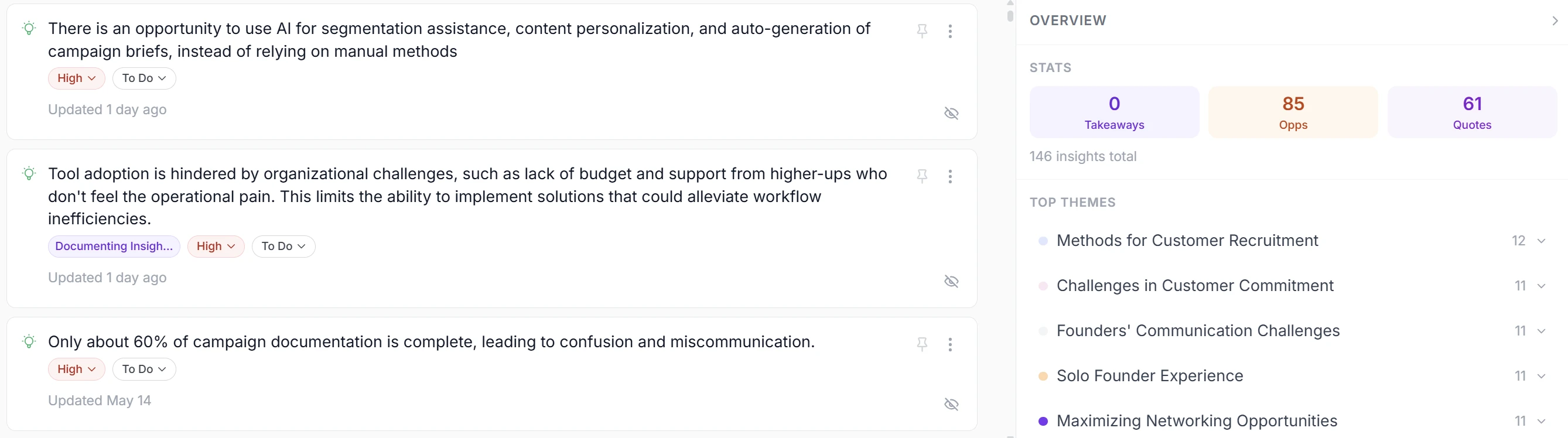
Insights from every call, clustered into themes you can act on.
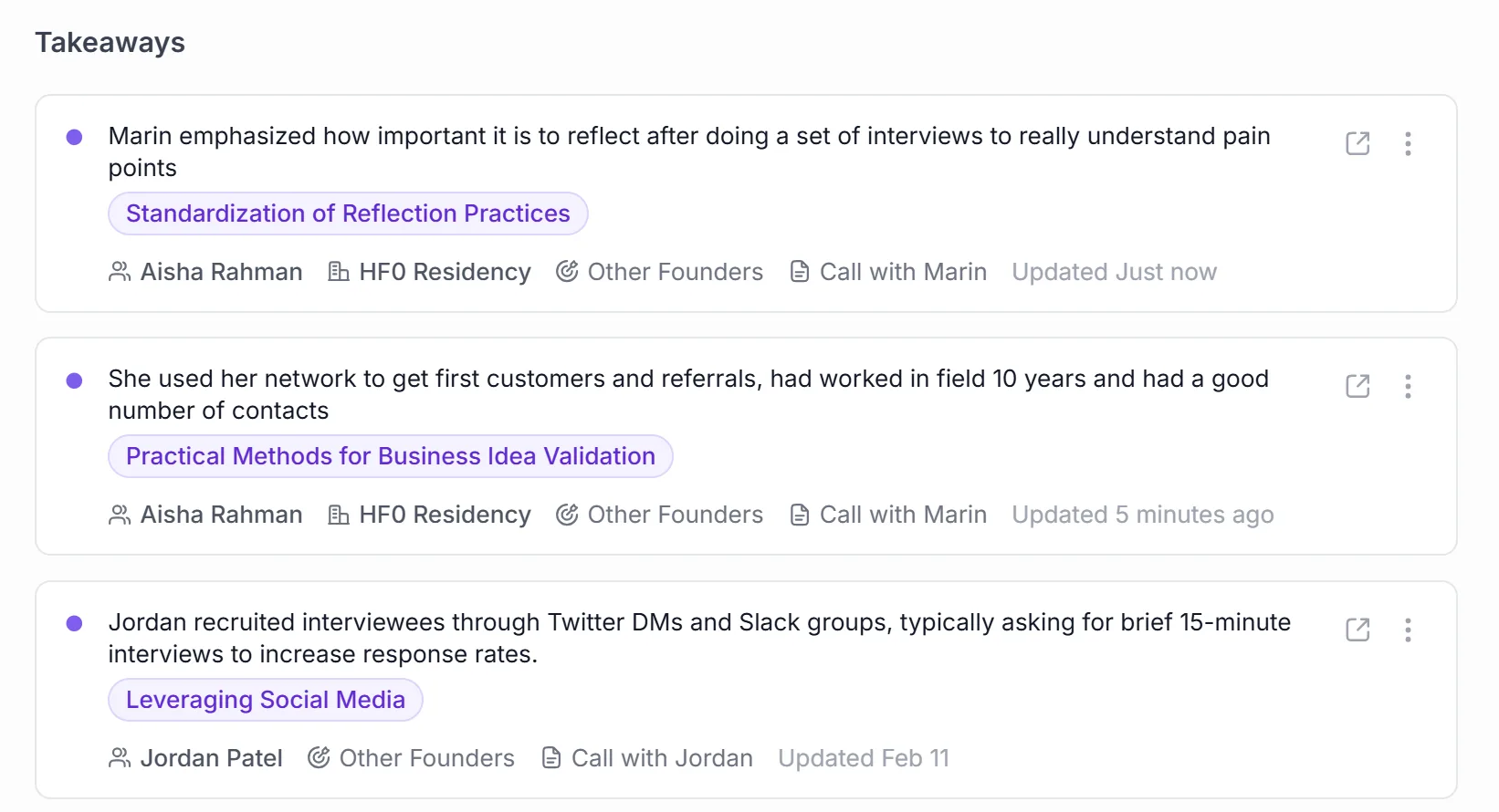
Intervool doesn't collect feedback at volume — it makes sense of the conversations where customers actually explain themselves. It transcribes interviews and customer calls, extracts the pain points and requests inside them, and clusters what repeats into evidence-linked themes, then carries those into dynamic personas and segments and a prioritized roadmap. The common pattern is running it alongside a collection tool: a request board tells you sixty people want exports, and twelve interviews tell you they're all working around the same broken reporting flow, which is a different thing to build.
Best for
Teams who have plenty of feedback and still can't tell what to build
Pricing
Basic $39/mo · Team $279/mo (6 seats) · Enterprise custom
Free option
14-day free trial, no credit card
Strengths
Captures why, not just what and how often
Themes across every conversation with the evidence attached
Dynamic personas and segments built from real customer signals
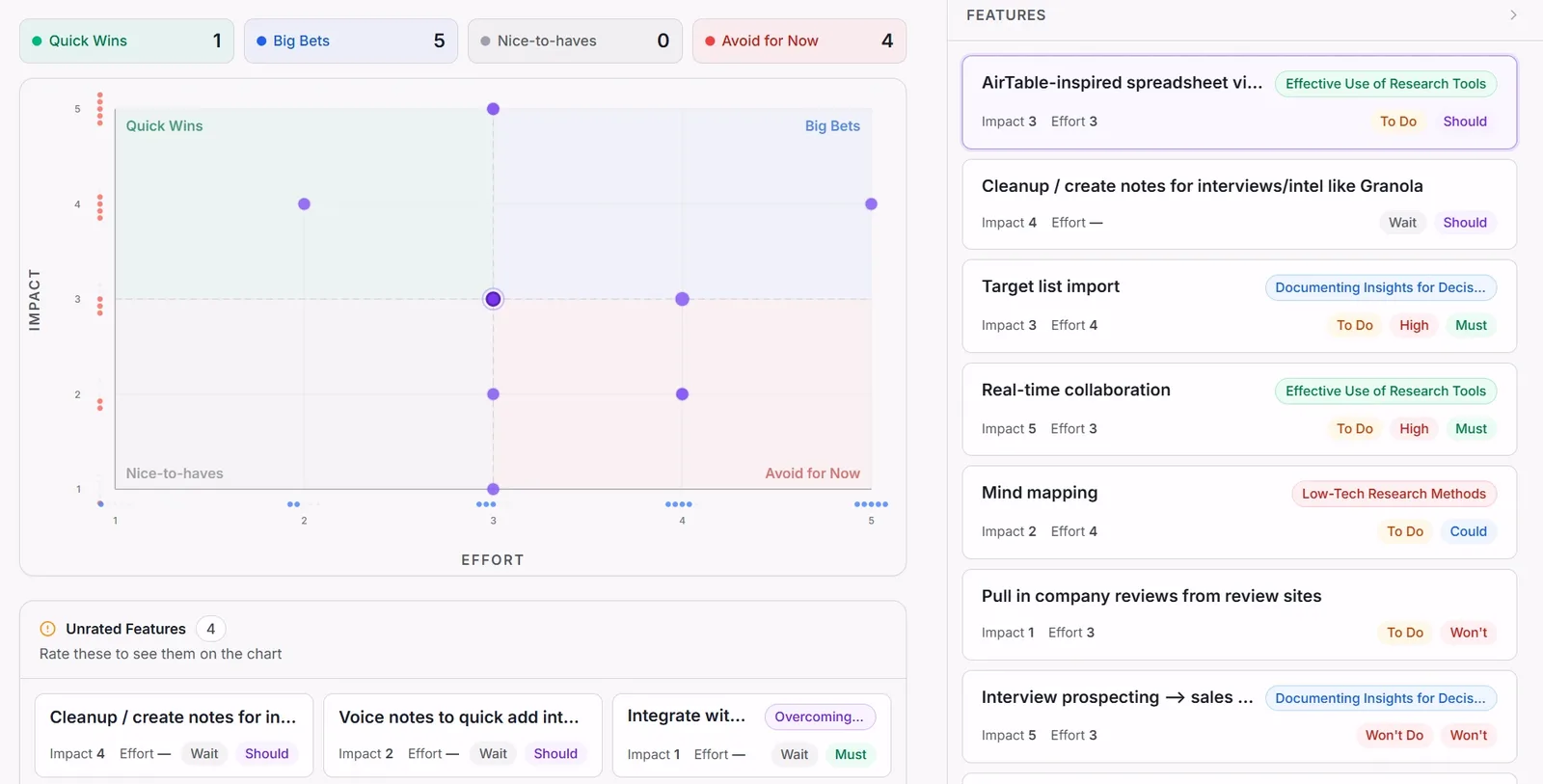
Ends in a prioritized roadmap, each item linked to a quote
Complements a request board rather than replacing it
Limitations
Not a volume collection tool — no widgets or NPS at scale
No public feature request board
No in-app surveys
app.intervool.com/interviews
Structured takeaways pulled from every conversation.
app.intervool.com/roadmap
Themes become prioritized bets — each one click from the quote behind it.
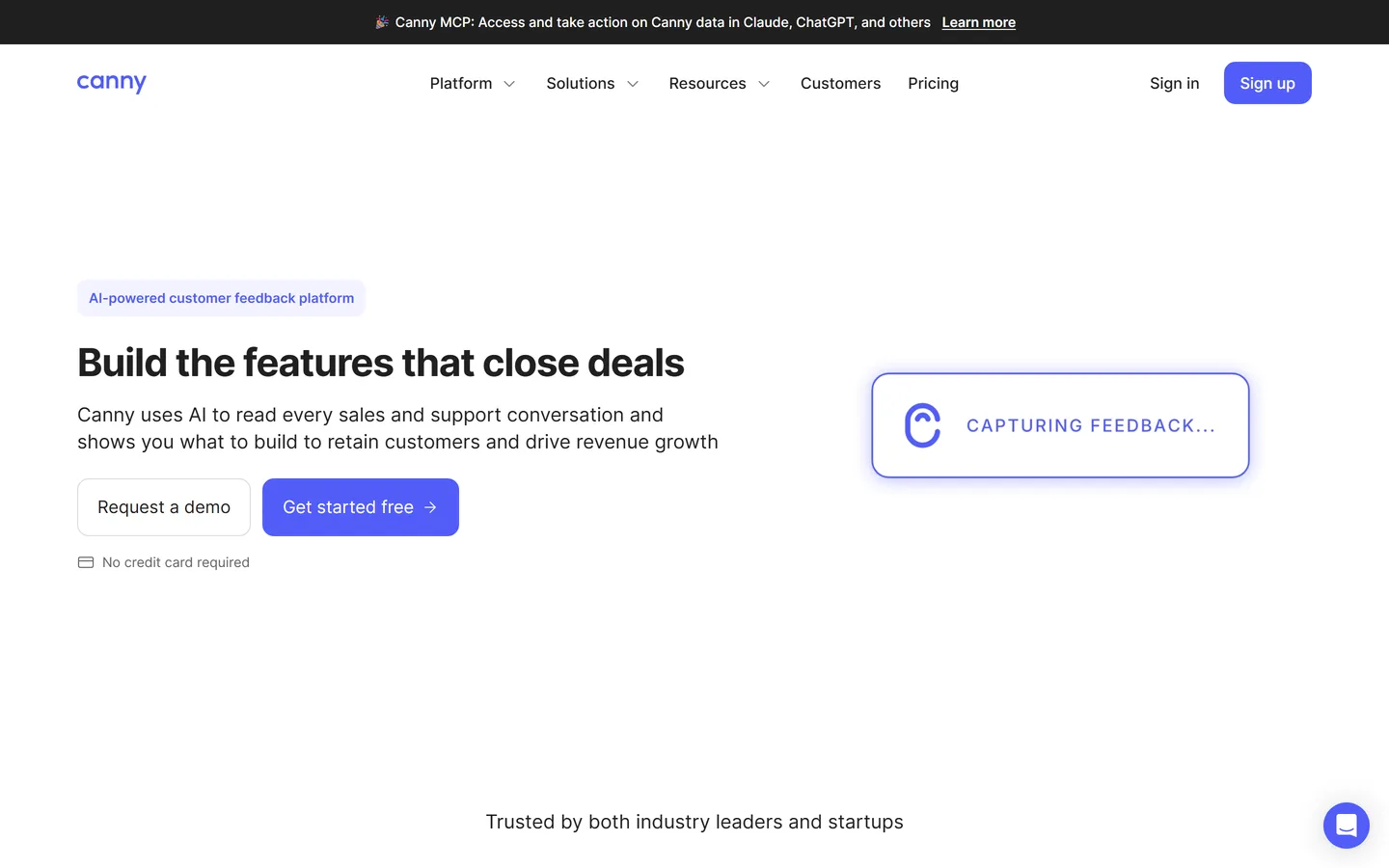
Canny gives customers a public board to post feature requests and vote on existing ones, with a changelog and public roadmap attached. It's the most focused product in this category and does its job very well — the demand signal is legible and customers appreciate seeing that requests go somewhere. Its structural limitation is the one every voting board has: the loudest and most engaged customers dominate, and a vote count tells you nothing about why.
Best for
Teams who want customers posting and voting on requests in public
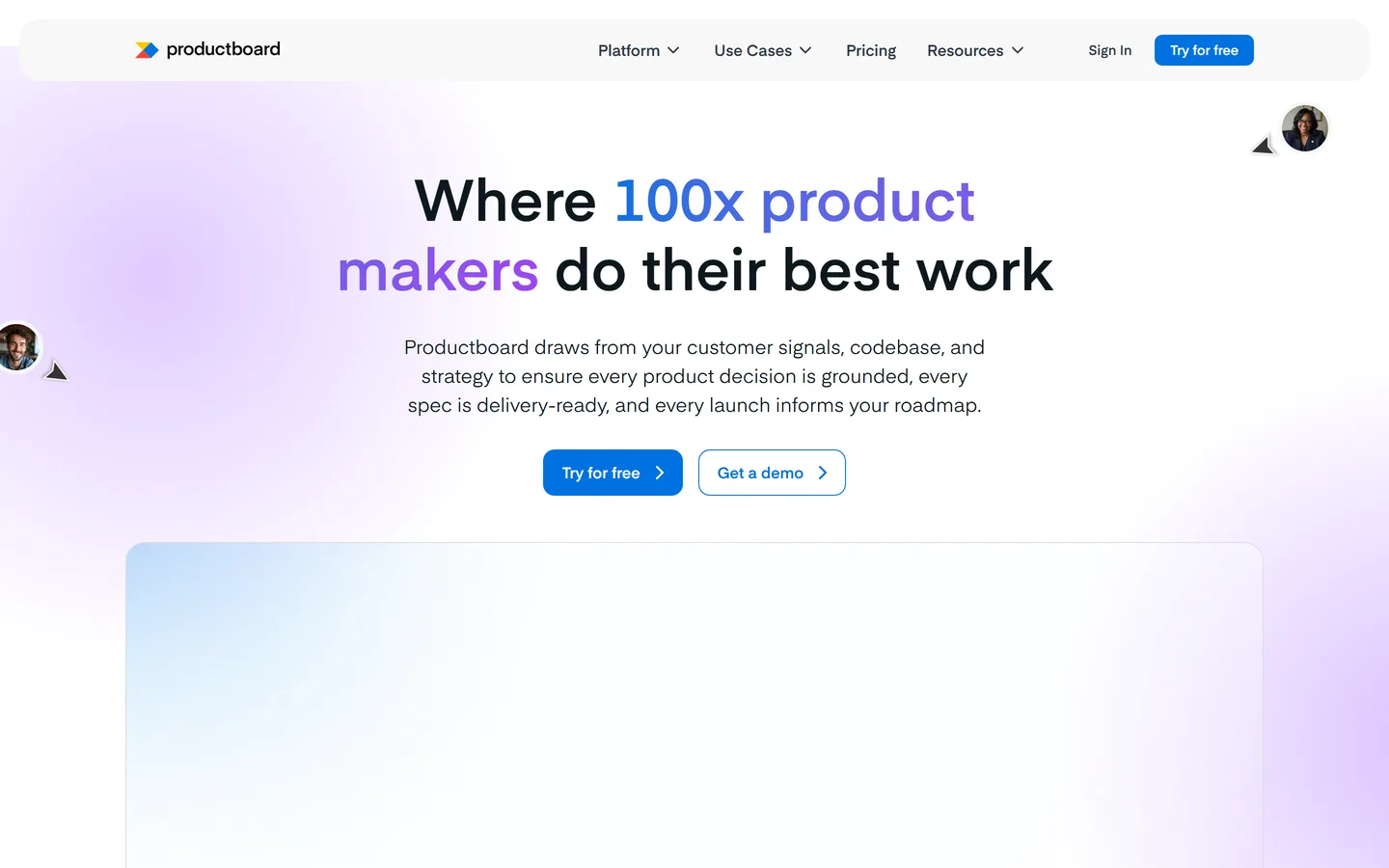
Productboard pulls feedback in from support, sales, surveys, and a customer portal, links it to features, scores those features, and builds roadmaps from the result. Of the collection tools here it goes furthest toward a decision, which is why it's the standard choice for mid-size product orgs. The linking work is largely manual — someone reads each piece of feedback and attaches it to the right feature — and that upkeep is the real cost.
Best for
Product teams who need feedback and roadmap in one system
Pricing
Spark from ~$15/maker/mo (annual), ~$19 billed monthly
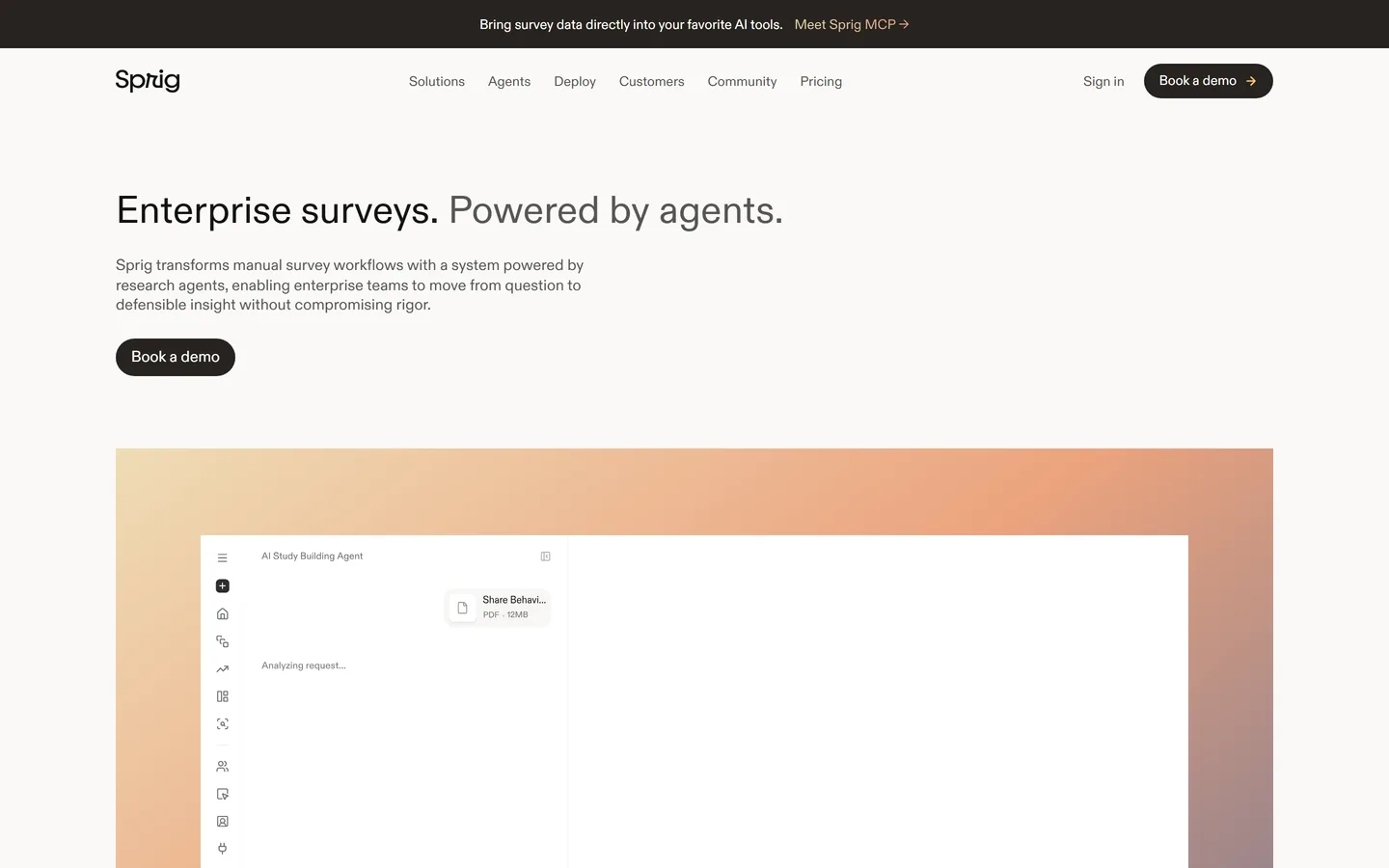
Sprig triggers micro-surveys inside your product based on what a user just did, then uses AI to summarize and theme the open-text responses. Because the question arrives in context, response quality is far better than an emailed survey — you're asking someone about a flow while they're still in it. It's built around your existing users, so it can't help with prospects or churned customers.
Best for
Asking the right users a question at the right moment
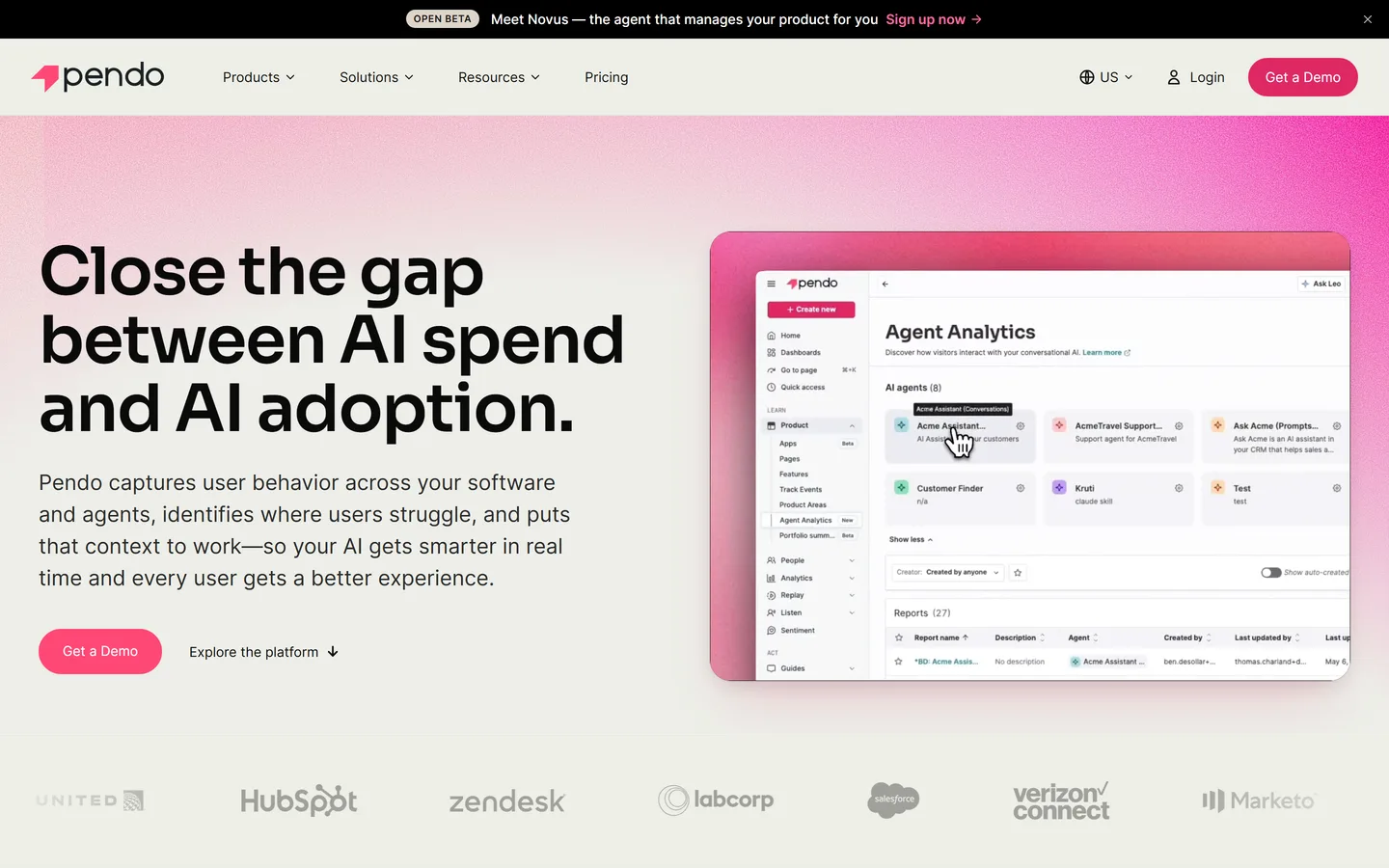
Pendo combines product analytics, in-app guides, and surveys, so you can see that users abandon a flow and immediately ask the ones who did why. That combination is genuinely powerful and is the reason it's a common enterprise standard. It's a large platform with pricing and an implementation to match, and its feedback features are a component of the suite rather than its focus.
Best for
Teams who want behavioural data and surveys in one platform
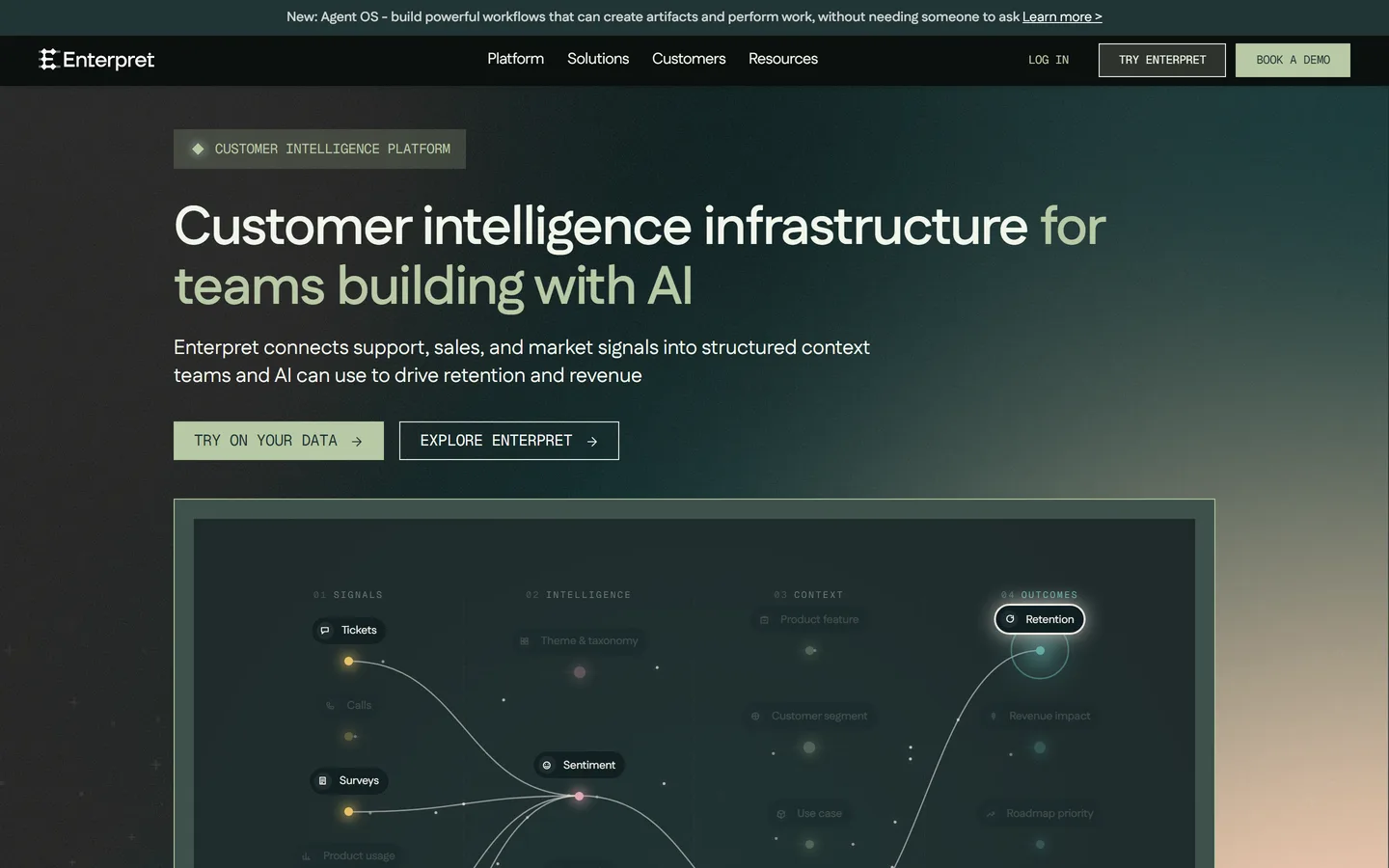
Enterpret connects to the places feedback already lands — support tickets, app reviews, sales notes, survey responses — and builds a taxonomy across all of it automatically, so you can see what's rising without anyone tagging anything. For an organization with high feedback volume and no capacity to read it, that's the single highest-leverage tool here. It analyzes existing feedback rather than collecting anything new, and it needs real volume to be worth it.
Best for
Companies drowning in support tickets, reviews, and survey text
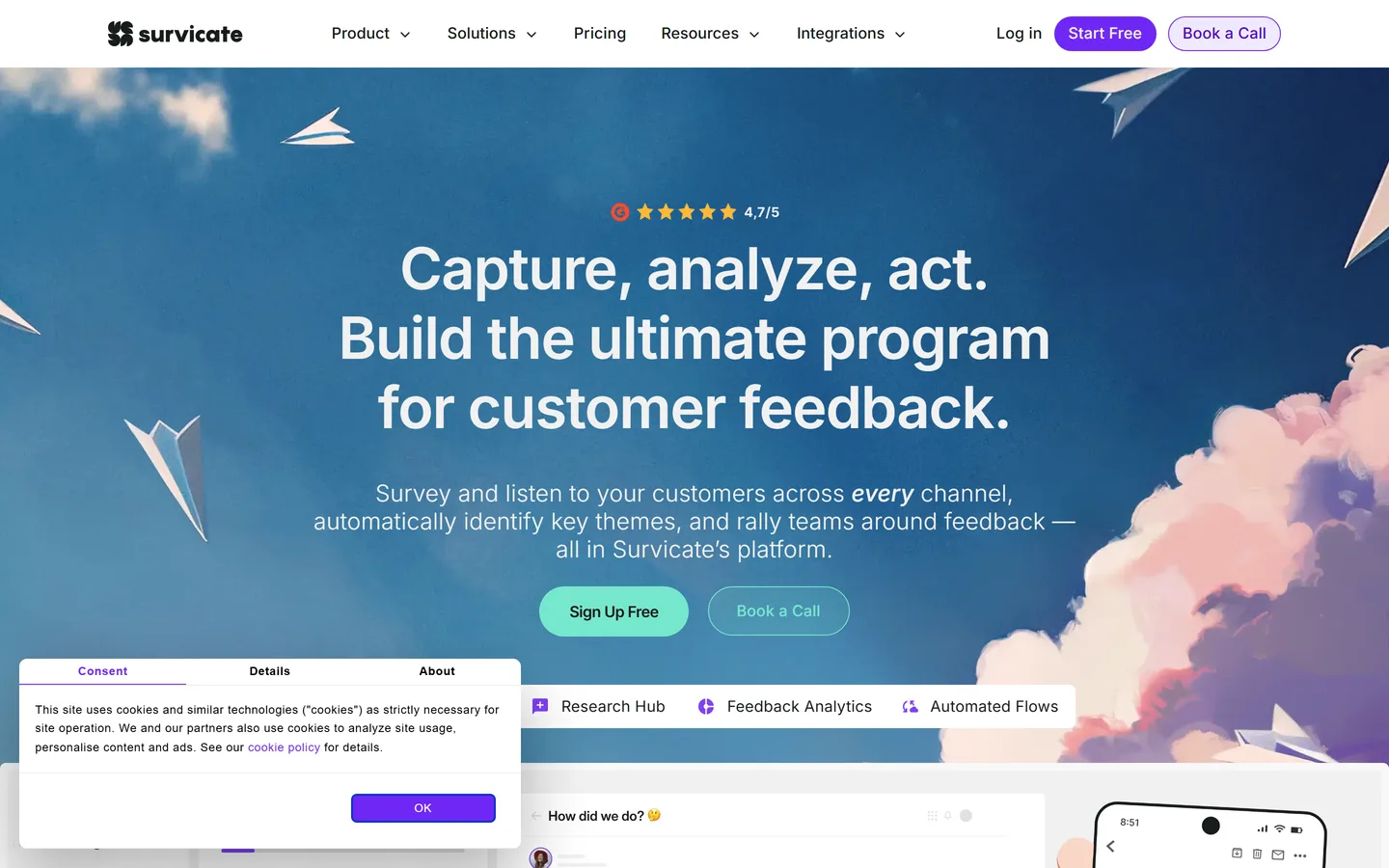
Survicate runs surveys across email, link, website, and in-app, with the standard NPS and CSAT templates plus decent targeting — a practical, well-priced way to get structured feedback from a lot of people. It's the most sensible pick if you want survey coverage without committing to a platform. It's a survey tool: analysis is reporting rather than synthesis, and it won't tell you what to build.
Best for
Running NPS, CSAT, and targeted surveys without enterprise cost
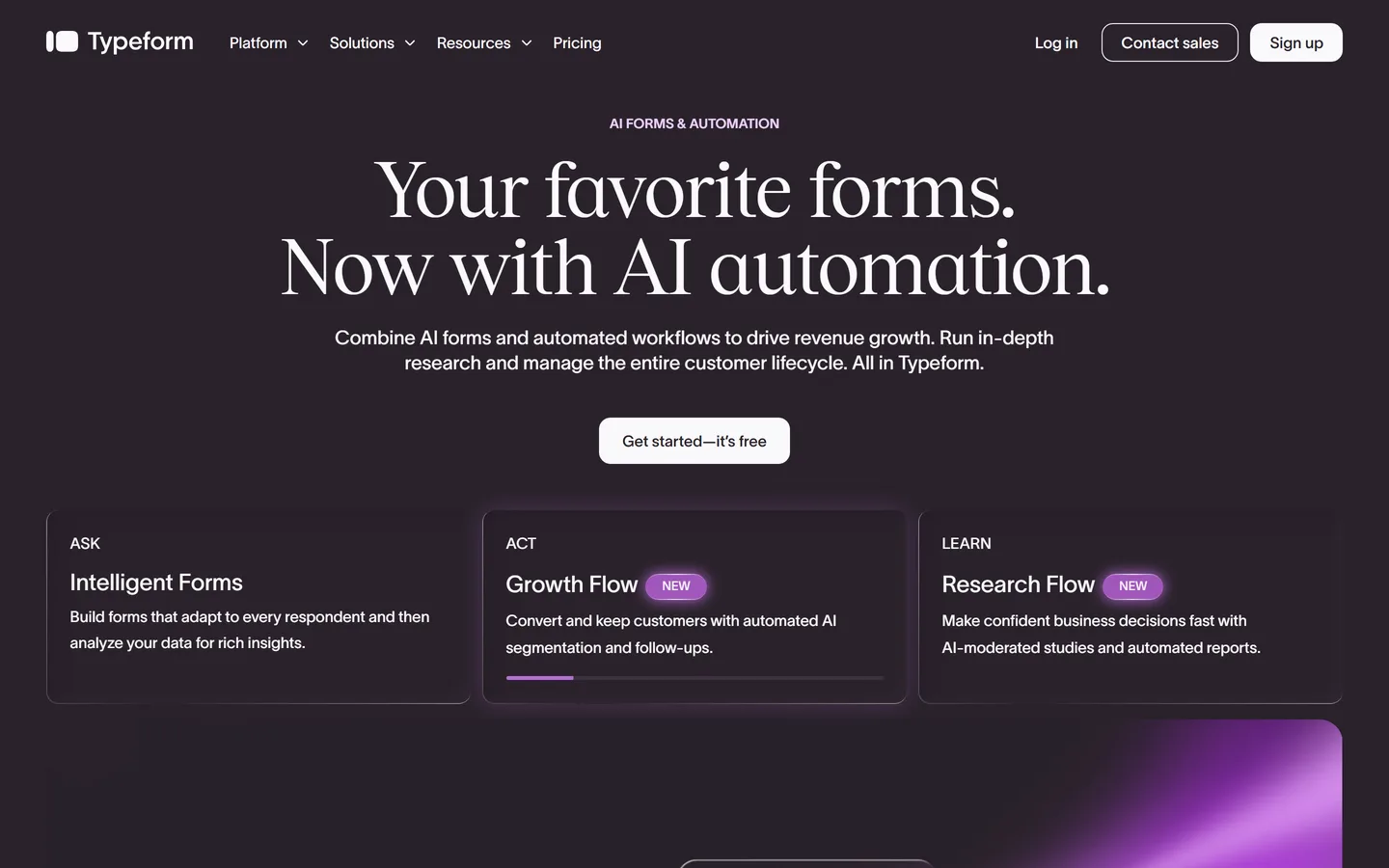
Typeform's conversational, one-question-at-a-time format produces noticeably higher completion rates than a conventional form, which matters more than it sounds when you're screening research participants or running a one-off survey. It's the best general-purpose form tool for research-adjacent work. It's not a feedback management system — there's no theming, no request board, and no ongoing loop.
Best for
One-off research surveys and screeners that need completions
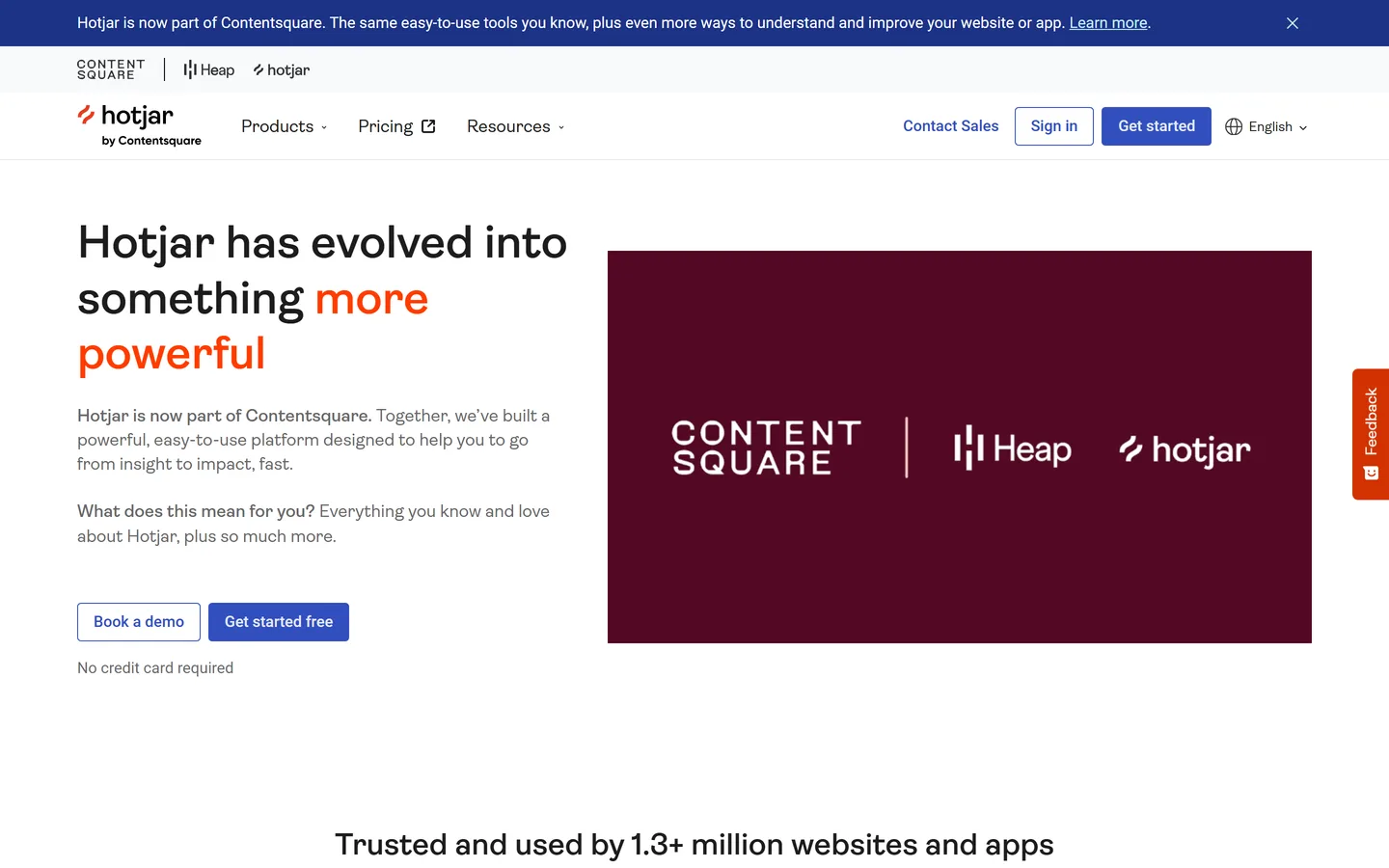
Hotjar's on-site surveys and feedback widgets sit alongside session recordings and heatmaps, so a complaint about a confusing page comes with a recording of someone being confused by it. For the price, that pairing is hard to beat and it's the fastest way to start collecting anything at all. Analysis stays per-response, and the free tier's daily session limits arrive quickly on a busy site.
Best for
Small teams who want feedback and behaviour on a budget
The most expensive mistake in this category is buying a collection tool to answer a question only conversations can answer. Every entry is marked for which it does, and the ones that genuinely do both are rare enough to be worth calling out.
We checked who the feedback comes from
In-app surveys reach current active users. Request boards reach engaged customers who bother to post. Neither reaches churned customers or prospects who chose someone else — often the people with the most useful thing to say. Each entry names its blind spot.
We looked for the manual upkeep
Several tools here promise organized feedback and deliver a tagging job. Where linking or categorizing is manual, we said so, because that work is ongoing and usually lands on one person.
We asked whether it reaches a decision
Collecting feedback is easy and acting on it is not. We flagged which tools carry feedback through to prioritization rather than producing a well-organized inbox.
Pricing checked August 2026, and we're not neutral
Published prices as of August 2026, rounded; enterprise tiers are quote-based. Intervool is ours and is marked as such — it scores low on the collection columns because it genuinely isn't a volume feedback tool, and the verdict names the right products when collection is what you need.
FAQ
Common questions
What is the best customer feedback tool?
For public feature requests and voting, Canny. For feedback tied to roadmapping, Productboard. For in-app surveys, Sprig or Pendo. For making sense of high-volume unstructured feedback, Enterpret. For multi-channel surveys at a fair price, Survicate. For understanding why customers want what they ask for, interview-based tools like Intervool — a different job from all of the above.
What's the difference between customer feedback and customer research?
Feedback is unsolicited and self-selected — customers tell you what they think, when they feel like it, and the sample skews toward the vocal. Research is deliberate: you choose who to talk to and what to investigate, so the sample answers your question rather than volunteering. Feedback is excellent at surfacing what's common; research is what tells you what's true.
Should I use a feature request board?
Yes, with clear eyes about what it measures. A board is a good demand signal and a genuinely good customer experience — people like seeing their request acknowledged. What it isn't is a prioritization mechanism: vote counts measure engagement and reach, so a request with sixty votes may represent one loud community while a silent problem costs you more revenue.
How do I analyze customer feedback at scale?
Below a few hundred items a month, read it — nothing beats a human noticing the odd one out. Above that, use a tool that auto-themes: Enterpret across existing sources, Sprig for in-app open text. Whatever the volume, pair it with a handful of interviews, because themes tell you what's frequent and only conversations tell you what's actually going wrong.
Do I need both a feedback tool and a research tool?
Most teams past early stage do, and they answer different questions. A feedback tool tells you sixty customers asked for exports. A research tool tells you they're all working around the same broken reporting flow, and that fixing the flow serves them better than shipping exports. Breadth finds the signal; depth tells you what to build.
Product feedback tools vs customer feedback tools — is there a difference?
Not really; the terms are used interchangeably. 'Product feedback tools' tends to mean the request boards and in-app survey tools that feed a product roadmap (Canny, Productboard, Sprig, Pendo), while 'customer feedback tools' is the wider label that also takes in surveys, support, and reviews. Every tool on this page fits both descriptions, and the breadth-versus-depth split above matters far more than which name you search for.
What are AI feedback analytics tools, and do I need one?
A newer cluster that does nothing but make sense of feedback at volume: Enterpret (above) unifies every source into an adaptive taxonomy, Unwrap.ai auto-surfaces trends across tickets, calls, and reviews, and Syncly flags negative trends early for support and CX teams. The category is consolidating — Amplitude acquired Kraftful in 2025 and folded its AI voice-of-customer analysis in. You need one when you're past a few hundred items a month and nobody can read it all; below that, a spreadsheet and a handful of interviews still win.
Is acting on customer feedback worth the effort?
The payoff is measurable. Qualtrics' XM Institute found 72% of US consumers would pay more for a premium experience, and the experience is built one acted-on piece of feedback at a time. The trap is collecting far more than you act on — a feedback tool earns its cost only when it shortens the path from a customer saying something to the product changing.
What's the cheapest way to collect customer feedback?
Hotjar's free tier for on-site widgets and session recordings, or Canny's free plan for a request board. Both cost nothing to start and are enough for a small product. The genuinely cheapest option is emailing twenty customers and asking for fifteen minutes — it takes an afternoon and consistently produces more than a quarter of survey responses.