Best Customer Discovery Tools for Founders in 2026
Customer discovery has an unusual property among things founders buy tools for: the first version needs almost none. Ten conversations and a document will teach you more than any platform, and the constraint at that stage is finding people and asking good questions, not software. Tooling starts mattering at the point where you've done twenty interviews, half-remember what people said, and can't tell whether the thing you heard on Tuesday was a pattern or one person. This guide covers what's genuinely useful at each stage, starting with the stage where the answer is nothing.
What tools do founders need for customer discovery?
For your first ten interviews: a free notetaker like Fathom so you can talk instead of typing, and a document. Genuinely nothing else. Once you're past roughly fifteen conversations and can no longer hold them all in your head, the bottleneck moves to synthesis — and that's where Intervool earns its place, clustering what repeats across every interview into themes, building personas and segments from the evidence, and turning them into a prioritized roadmap you can defend to a co-founder or an investor. If your problem is finding people rather than remembering them, User Interviews is the fastest fix. If you need signal from hundreds rather than depth from dozens, Wondering runs AI-moderated interviews at that scale.
Jump to a tool
Compared at a glance
Founders have two constraints these columns are built around: no researcher, and no budget. Everything else follows from those.
Yes Does thisPartial Partly, or with workaroundsNo Not a feature
No researcher needed
A founder or PM can get full value without research training or a dedicated owner.
Captures interviews
Records and transcribes the conversation so you can talk instead of typing notes.
Synthesizes for you
Finds the patterns across conversations rather than leaving you to re-read everything.
Helps you find people
Sources people to talk to, through a panel, a form, or an in-product prompt.
Cheap to start
Free or under roughly $50/month — realistic before there's revenue.
Ends in a plan
Produces a prioritized list of what to build, not just a pile of notes.
The categories, and what each is for
These products get compared as if they’re interchangeable. They aren’t — they’re solving different halves of the job.
Discovery to decision
Capture interviews, find the patterns for you, and end with a prioritized list of what to build.
Intervool
Just capture it
Free notetakers so you can hold the conversation instead of typing through it. The right first purchase.
Fathom, tl;dv
Find people to talk to
The real bottleneck early on. Panels, screeners, and forms that get strangers onto a call.
User Interviews, Typeform
Validate at scale
When you need signal from hundreds rather than depth from dozens — later, and rarely first.
Wondering, Maze, Canny
The tools in detail
01
Intervool
Our productDiscovery to decision
For when you've done twenty interviews and can't hold them in your head
app.intervool.com/interviews
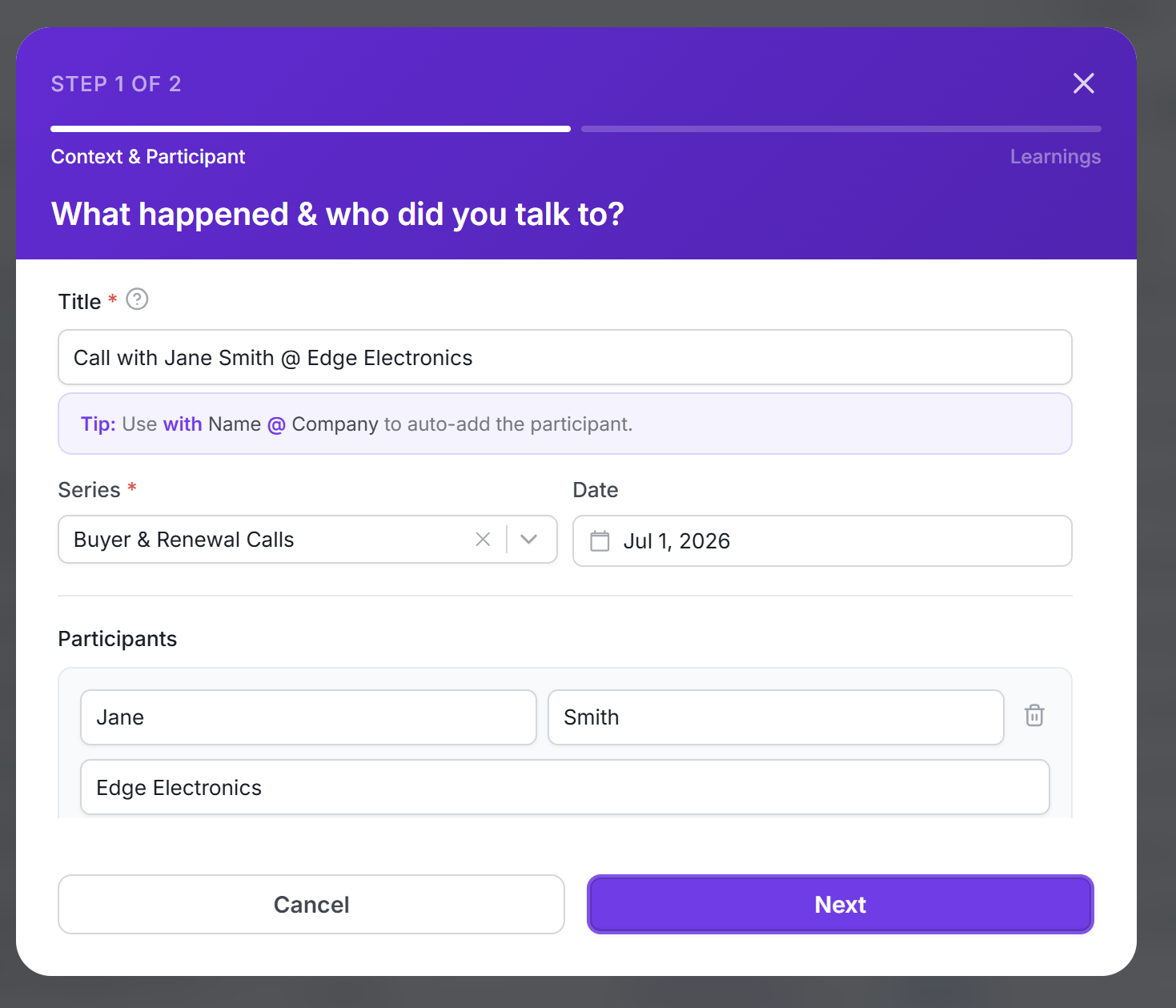
Upload a recording from anywhere — or let Intervool join the call.
Intervool is built for the moment discovery stops being about doing interviews and starts being about making sense of them. Upload or record every conversation and it transcribes them, pulls out pain points, feature requests, and opportunities, and clusters what repeats into themes with the quotes attached. Those become dynamic personas and segments — the different kinds of customer you're hearing from, and how their needs diverge — and a prioritized roadmap where each bet traces to what someone actually said. It's designed to be run by a founder with no research training, which is the point: the alternative is re-reading thirty transcripts at midnight.
Best for
Founders past the first handful of conversations who need a defensible answer on what to build
Pricing
Basic $39/mo · Team $279/mo (6 seats) · Enterprise custom
Free option
14-day free trial, no credit card
Strengths
Finds the patterns across every interview so you don't re-read transcripts
Personas and segments emerge from the evidence, not from guessing
Ends in a prioritized roadmap you can defend to a co-founder or investor
Built for founders — no researcher or research training needed
Upload calls from any free notetaker you already used
Limitations
Overkill for your first ten interviews — use a free notetaker
$39/mo after the 14-day trial; no permanent free tier
Doesn't help you find people to talk to
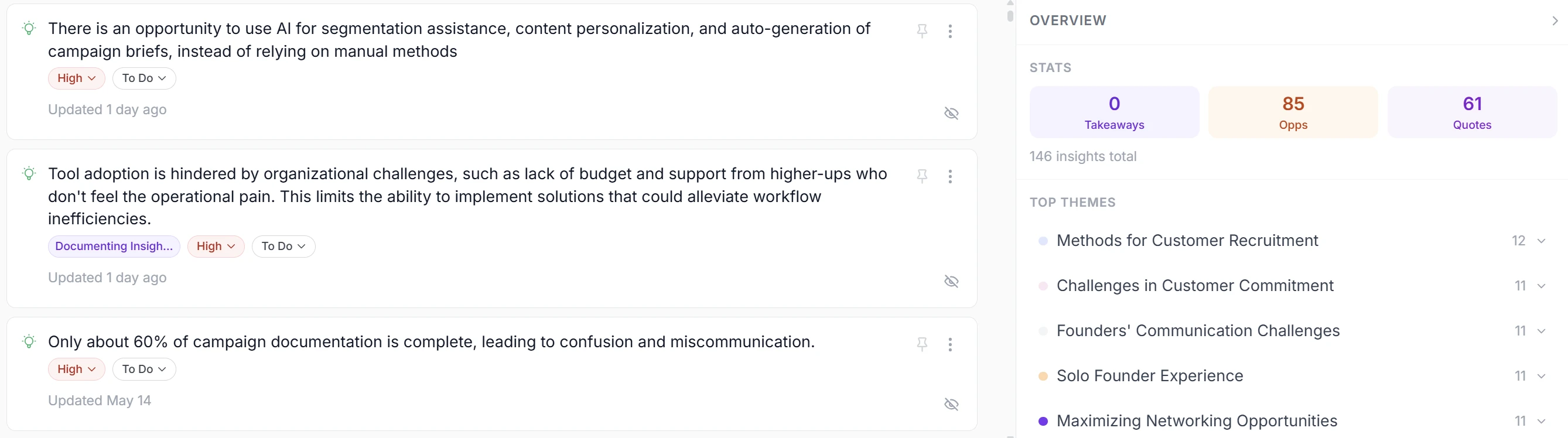
app.intervool.com/insights
Insights from every call, clustered into themes you can act on.
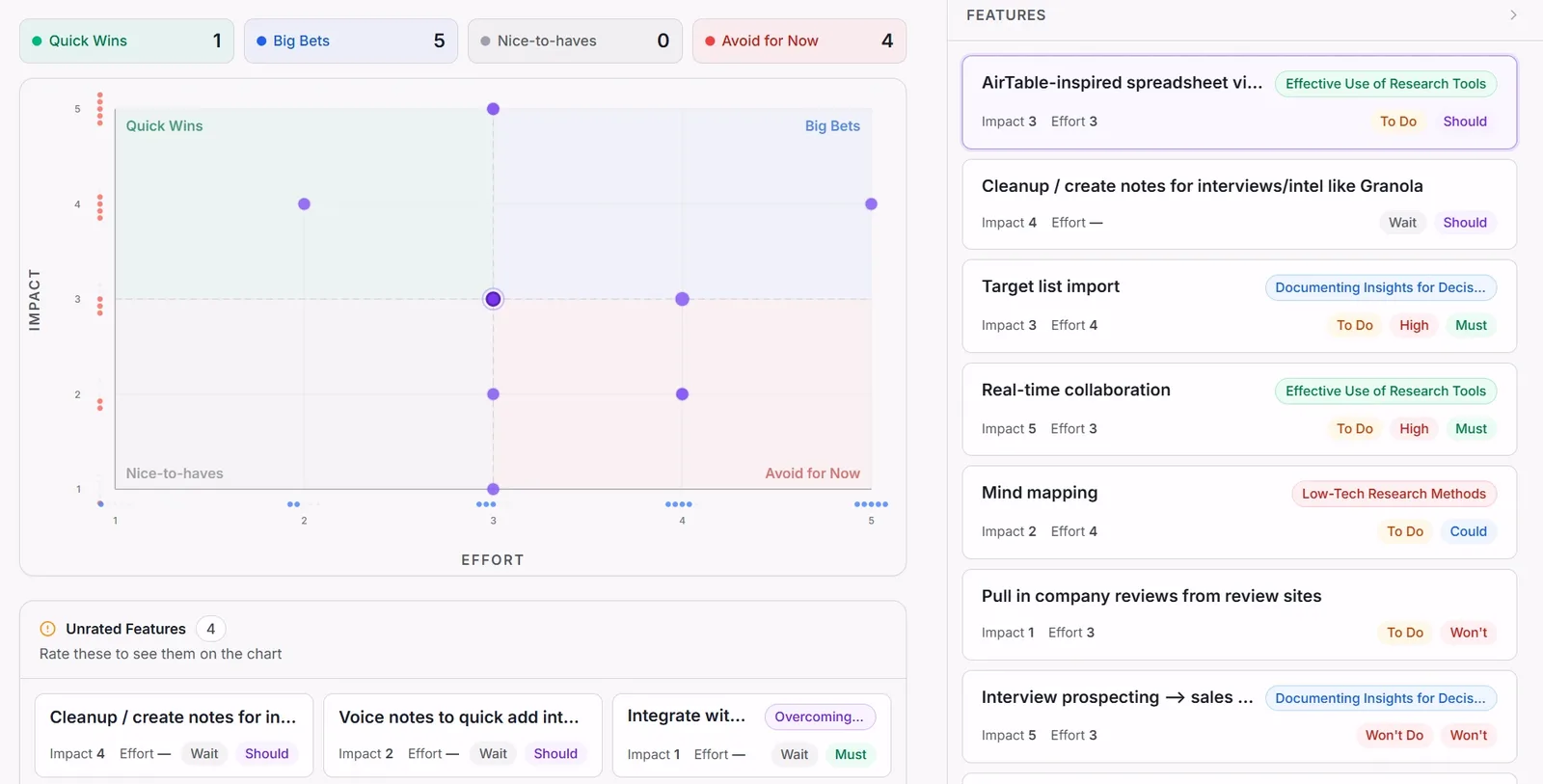
app.intervool.com/roadmap
Themes become prioritized bets — each one click from the quote behind it.
Fathom records and transcribes calls and writes a summary, free and unlimited for one person. For early discovery that's exactly the right amount of tooling: it lets you hold eye contact and ask a real follow-up question instead of typing, which is the single biggest quality improvement available in your first ten interviews. It summarizes each call separately, so once you have twenty you'll be reading twenty summaries looking for the pattern yourself.
Best for
Your first ten discovery calls
Pricing
Team plans from ~$19/user/mo
Free option
Free forever for individuals — unlimited recording
Strengths
Free and unlimited for an individual
Lets you actually listen instead of taking notes
Summaries arrive within a minute of the call
Limitations
One call at a time — no cross-interview patterns
Free plan is single-player
A bot joins the call, which some interviewees notice
The hardest part of early discovery is usually not analysis but access — your first fifteen conversations come from your network, and then you're talking to friends of friends who are being polite. User Interviews sources, screens, schedules, and pays participants from a large panel, so you can specify who you need and have calls booked within days. You pay per participant plus incentives, which is real money but cheap against a quarter spent building for the wrong person.
Best for
Founders who need to talk to people outside their network
Pricing
From ~$49/session on pay-as-you-go, plus participant incentives
Free option
Free to use with your own participant list on the entry tier
Strengths
Reaches people outside your network fast
Handles screening, scheduling, and incentives
Pay per participant — no subscription commitment
Limitations
Costs add up per participant plus incentive
Panel participants are less invested than real prospects
A screener form is how you turn a waitlist, a launch post, or a newsletter into a list of people worth thirty minutes. Typeform's one-question-at-a-time format completes at a meaningfully higher rate than a standard form, which matters when the pool is small. Use it to filter, not to learn — a form can tell you who to call and can't replace calling them.
Best for
Filtering a waitlist or audience down to who's worth calling
Wondering runs AI-moderated interviews and concept tests with strong multi-language coverage, turning studies around in days. For a founder who has already done the qualitative work and needs to check whether a finding holds across a few hundred people or several markets, it's a fast way to get that. It's the wrong instrument for the beginning — AI moderation covers ground you defined, and early discovery is about the ground you didn't know was there.
Best for
Validating a specific concept across markets quickly
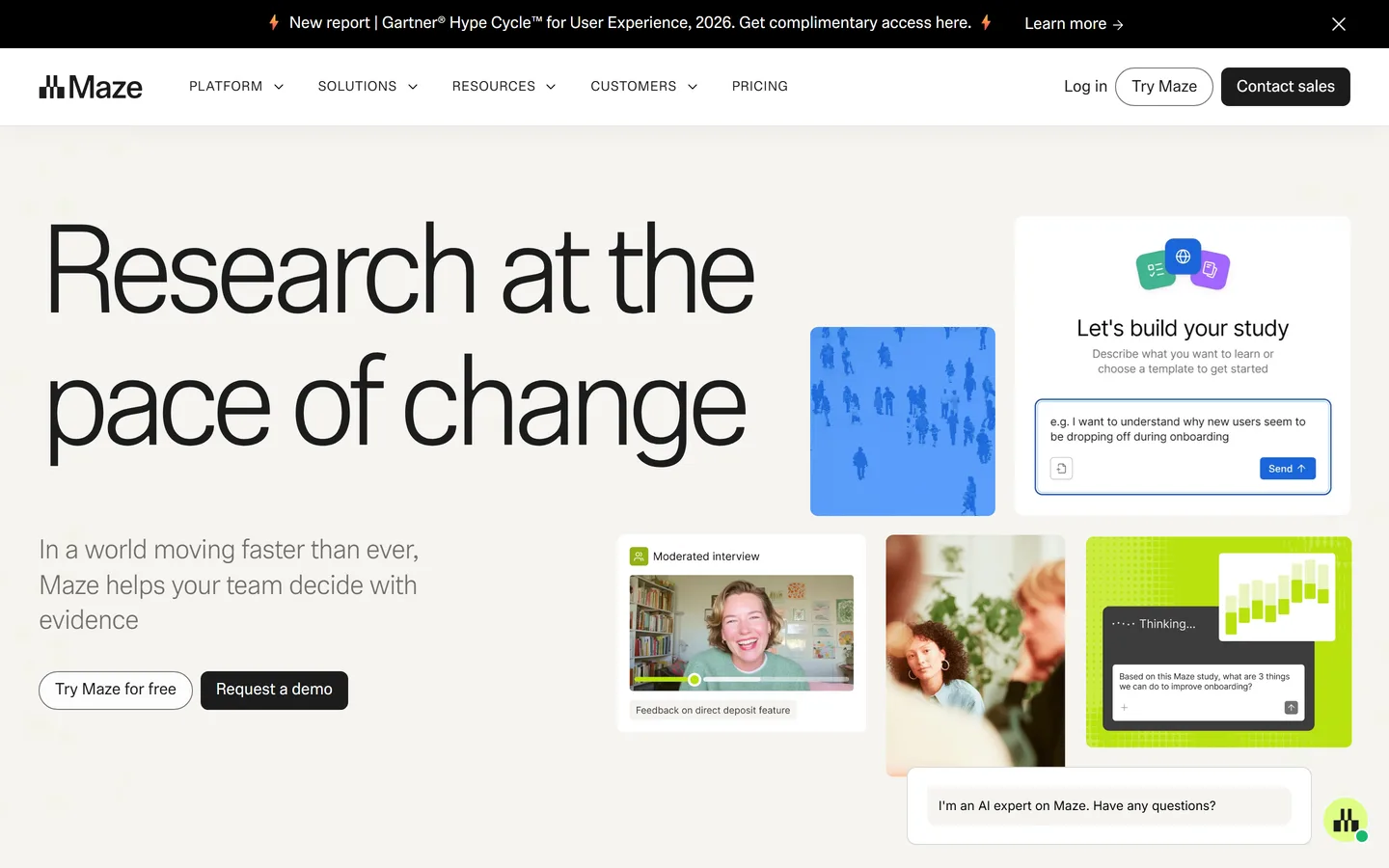
Maze sends unmoderated tests on a prototype and returns completion rates, misclicks, and time-on-task within hours. For a founder with a design and a nagging doubt it's the fastest way to find out whether people can actually use the thing. It answers solution questions, not problem questions — running it before you're confident about the problem produces precise data about whether people can navigate the wrong product.
Best for
Checking whether your solution works, once you trust the problem
Pricing
From ~$99/mo
Free option
Free plan with limited studies
Strengths
Results within hours
Catches usability problems before engineering time is spent
Somewhere for requests to land once you have users
canny.io
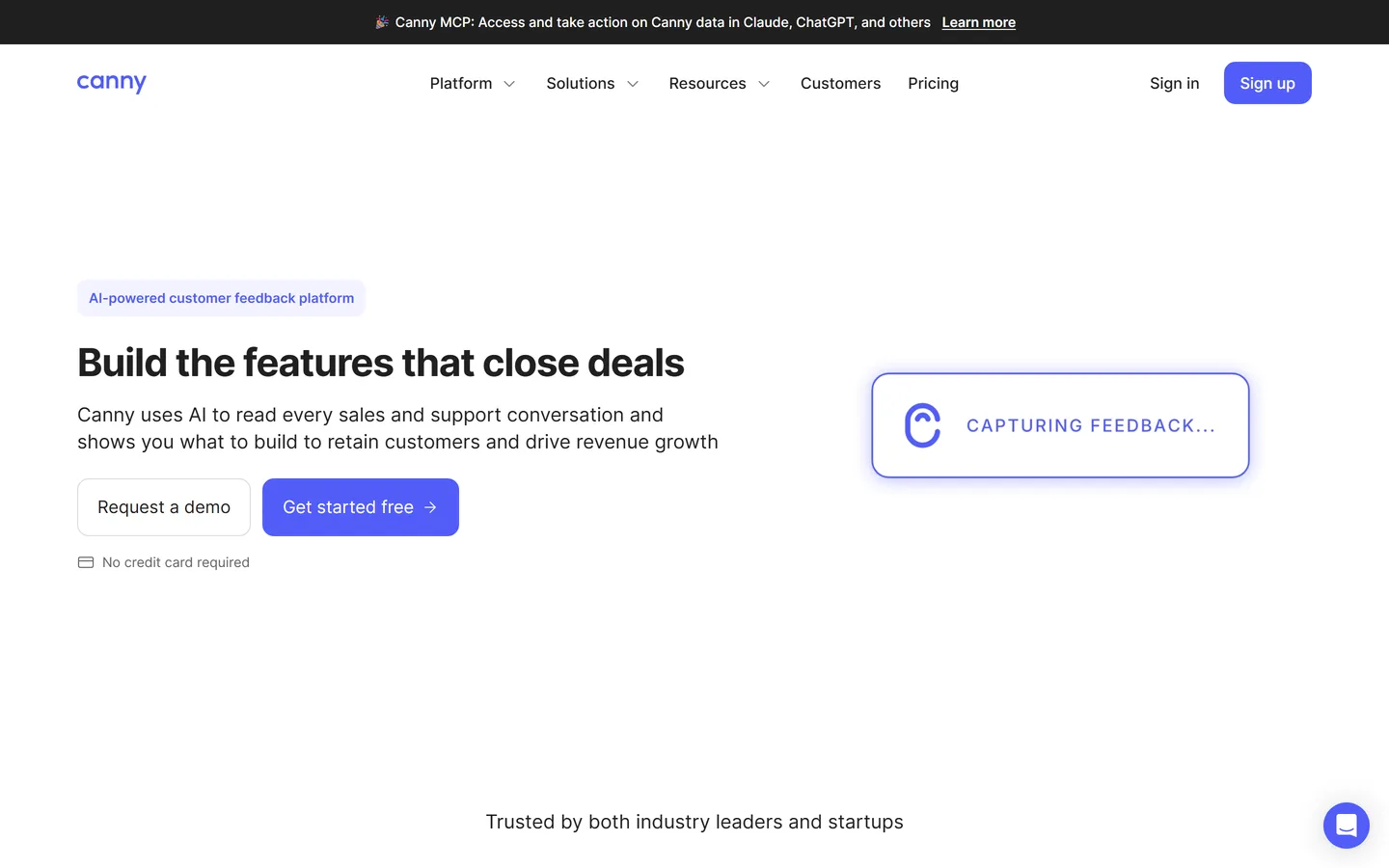
Once you have users, feature requests start arriving through email, Slack, and support, and tracking them in your head stops working. Canny gives them a public home where customers post, vote, and see progress. It's a demand signal and a good customer experience, and it's genuinely useless before you have users — an empty board persuades nobody.
Best for
Post-launch, when requests arrive faster than you can track them
Most customer discovery happens in a doc, and for a while that's correct — a page per interview and a running list of what you keep hearing costs nothing and imposes no process on work that shouldn't have much. It's listed here because pretending founders need software from day one would be dishonest. It breaks down predictably: somewhere past fifteen interviews, checking whether a pattern is real means re-reading everything, and nothing updates when you learn something new.
Best for
The first ten interviews, and honestly quite a few after
We started from 'you probably don't need a tool yet'
For the first ten interviews the honest recommendation is a free notetaker and a document, and this page says so before recommending anything paid. A guide that tells a pre-revenue founder to buy four subscriptions isn't advice, it's a sales page.
We assumed no researcher and no budget
Every tool is judged on whether a founder can get full value without research training, and whether the price is realistic before revenue. Excellent tools priced for enterprise research teams are marked accordingly rather than quietly listed.
We treated access as the real bottleneck
Founders usually stall on finding people to talk to, not on analyzing them — the first fifteen conversations come from your network and then it gets hard. Tools that solve access are weighted as heavily as tools that solve analysis.
We separated problem questions from solution questions
Prototype testing and concept validation answer 'does this work', which is only useful once you trust the problem. Each tool is placed by which question it answers, since using the wrong one early produces confident answers to the wrong question.
Pricing checked August 2026, and we're not neutral
Published prices as of August 2026, rounded. Intervool is ours and is marked as such — its own entry says it's overkill for your first ten interviews, because that's true and you'd work it out in week one anyway.
FAQ
Common questions
What is customer discovery?
The process of talking to potential customers to understand their problems before committing to a solution — the practice at the centre of Steve Blank's customer development work and the lean startup method. The goal is to find out whether the problem you think exists is real, severe, and worth paying to solve, ideally before you build anything.
What tools do I need for customer discovery as a founder?
At the start, a free notetaker like Fathom and a document. That's it. Once you're past roughly fifteen interviews and can't hold them in your head, add a synthesis tool such as Intervool. If you can't find people to talk to, add User Interviews. Buy in that order, and only when the current setup is actively hurting.
How many customer discovery interviews do I need?
Plan for fifteen to twenty per customer segment, and let saturation decide. The signal to stop is that new interviews stop surprising you — when you can predict what someone will say before they say it, that segment is done. Five is enough to spot something; twenty is enough to trust it.
Can I do customer discovery without spending money?
Yes, entirely. Fathom records and transcribes free, a document holds your notes, and your network plus a LinkedIn post gets you the first fifteen conversations. Paying starts making sense when the synthesis work — re-reading transcripts to check whether a pattern is real — costs more of your time than the subscription would.
What's the difference between customer discovery and user research?
Mostly the stage and the question. Discovery asks whether a problem is real and worth solving, usually before or around building, and is typically run by founders. User research asks how well a solution works and how to improve it, usually after, and is often run by researchers or designers. The interview techniques overlap heavily; what differs is what you're trying to find out.
How do I find people to interview for customer discovery?
In rough order of effort: your own network and their referrals, which gets you to about fifteen; communities where your customers already congregate — Slack groups, subreddits, LinkedIn; a screener form on your landing page or waitlist; and a recruiting panel like User Interviews when you need people outside your reach. Warm intros produce better conversations; panels produce faster ones.