Tool roundup

Best Persona & Segment Tools in 2026

Personas have a reputation problem, and it's deserved. The standard artifact — a stock photo, an invented name, a bio, three bullet points about goals — gets made in a workshop, printed, pinned to a wall, and never consulted again, because everyone in the room knows it was assembled from assumptions. The tools below split cleanly on this: some are document builders that make a persona look professional and have no view on whether it's true, and some build the profile from research data and update it as you learn. This guide is mostly about that distinction.

By Jess O'Malley, Founder & CEO, IntervoolLast reviewed 7 tools compared

What's the best tool for creating personas?

For a polished persona document to present or hand to a client, UXPressia is the most complete — personas, journey maps, and impact maps with genuinely good templates — and Xtensio is the fastest and cheapest way to produce something presentable. Both are document builders: the accuracy of what goes in them is entirely your problem. For personas built from research rather than assumptions, Dovetail can assemble them from tagged findings with manual effort, and Intervool generates dynamic personas and segments directly from synthesized interviews, updating them as new research arrives and linking every attribute back to the quote behind it. If your personas keep going stale, that's the difference that matters.

Compared at a glance

The first two columns separate personas built from evidence from personas typed into a template. That's the whole argument on this page.

Tool
Built from research
Updates as you learn
Segments too
Evidence-linked
Presentation-ready
Connects to the roadmap
Intervool — Built from research: Yes
Intervool — Updates as you learn: Yes
Intervool — Segments too: Yes
Intervool — Evidence-linked: Yes
Intervool — Presentation-ready: Partial
Intervool — Connects to the roadmap: Yes
UXPressia — Built from research: No
UXPressia — Updates as you learn: No
UXPressia — Segments too: Partial
UXPressia — Evidence-linked: No
UXPressia — Presentation-ready: Yes
UXPressia — Connects to the roadmap: No
Xtensio — Built from research: No
Xtensio — Updates as you learn: No
Xtensio — Segments too: No
Xtensio — Evidence-linked: No
Xtensio — Presentation-ready: Yes
Xtensio — Connects to the roadmap: No
Dovetail — Built from research: Yes
Dovetail — Updates as you learn: No
Dovetail — Segments too: Partial
Dovetail — Evidence-linked: Yes
Dovetail — Presentation-ready: Partial
Dovetail — Connects to the roadmap: No
Condens — Built from research: Yes
Condens — Updates as you learn: No
Condens — Segments too: Partial
Condens — Evidence-linked: Yes
Condens — Presentation-ready: Partial
Condens — Connects to the roadmap: No
Notably — Built from research: Yes
Notably — Updates as you learn: Partial
Notably — Segments too: Partial
Notably — Evidence-linked: Partial
Notably — Presentation-ready: Partial
Notably — Connects to the roadmap: No
Sprig — Built from research: Partial
Sprig — Updates as you learn: Yes
Sprig — Segments too: Yes
Sprig — Evidence-linked: Partial
Sprig — Presentation-ready: No
Sprig — Connects to the roadmap: No
Yes Does thisPartial Partly, or with workaroundsNo Not a feature
Built from research
Personas are generated from real interview data rather than typed into a template by hand.
Updates as you learn
The persona changes when new research contradicts or extends it, instead of being frozen on the day it was made.
Segments too
Handles customer segments — groups defined by shared traits — as well as individual persona profiles.
Evidence-linked
Each attribute traces back to the interview and quote that justifies it.
Presentation-ready
Produces a polished, shareable artifact — templates, layouts, and export for stakeholders.
Connects to the roadmap
Personas and segments feed prioritization, so they influence what gets built.

The categories, and what each is for

These products get compared as if they’re interchangeable. They aren’t — they’re solving different halves of the job.

Personas from research data

Profiles generated from real interviews, updating as you learn, with every attribute traceable.

Intervool

Persona document builders

Templates and layouts that make a persona presentable. Excellent artifacts, no opinion on accuracy.

UXPressia, Xtensio

Repositories with persona features

Research archives where personas can be assembled from tagged findings, with manual effort.

Dovetail, Condens, Notably

Behavioral segmentation

Segments defined by what users actually did in the product rather than what they said.

Sprig, Pendo

The tools in detail

01

Intervool

Our productPersonas from research data

Personas that build themselves from your interviews
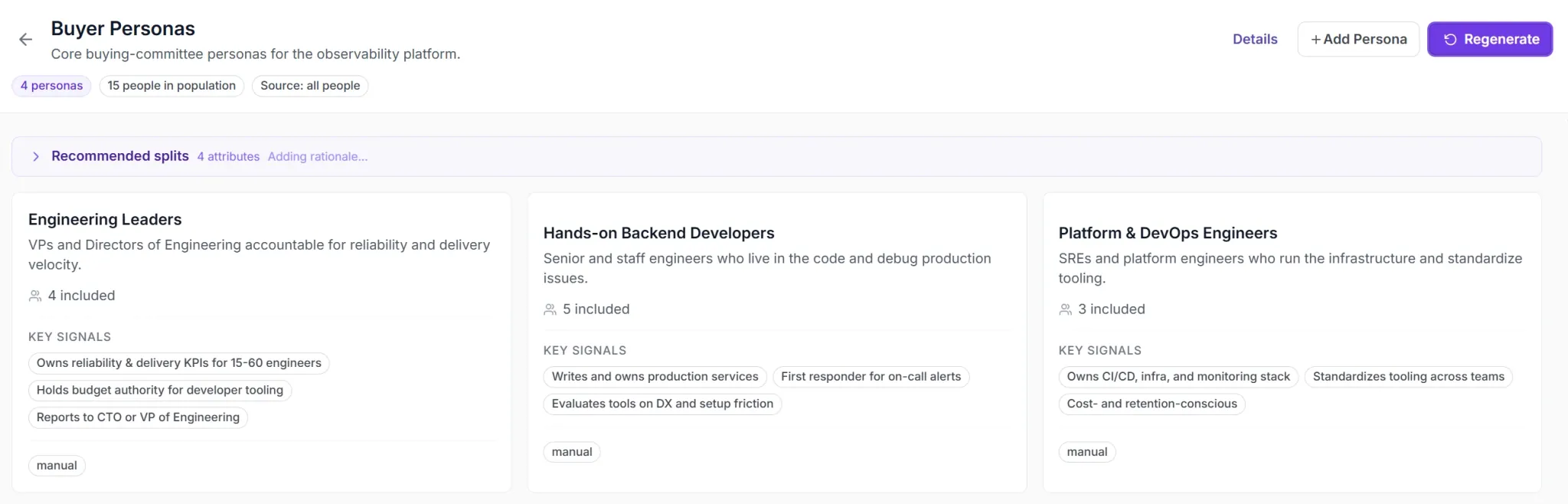
Intervool persona list built automatically from customer interview data
Personas built from who you actually interviewed.

Intervool builds personas and segments from the interviews it has already synthesized, rather than asking you to fill in a template. As it extracts pain points, goals, and context from each conversation, it groups the people you've spoken to into personas — kinds of customer — and segments — groups sharing a trait like industry or company size — and shows how each group's needs differ. Every attribute traces back to the interview and quote that justifies it, and when a new interview contradicts an assumption the persona updates rather than quietly becoming wrong. Those personas then feed prioritization, so they influence what gets built instead of decorating a wall.

Best for
Teams whose personas keep going stale because nobody has time to maintain them
Pricing
Basic $39/mo · Team $279/mo (6 seats) · Enterprise custom
Free option
30-day free trial, no credit card

Strengths

  • Personas generated from real interview data, not assumptions
  • Update automatically as new research arrives
  • Segments handled alongside personas, showing where needs diverge
  • Every attribute one click from the quote behind it
  • Feed directly into roadmap prioritization

Limitations

  • Needs real interviews — useless with no research
  • Less control over visual layout than a document builder
  • No journey-mapping or client-presentation templates
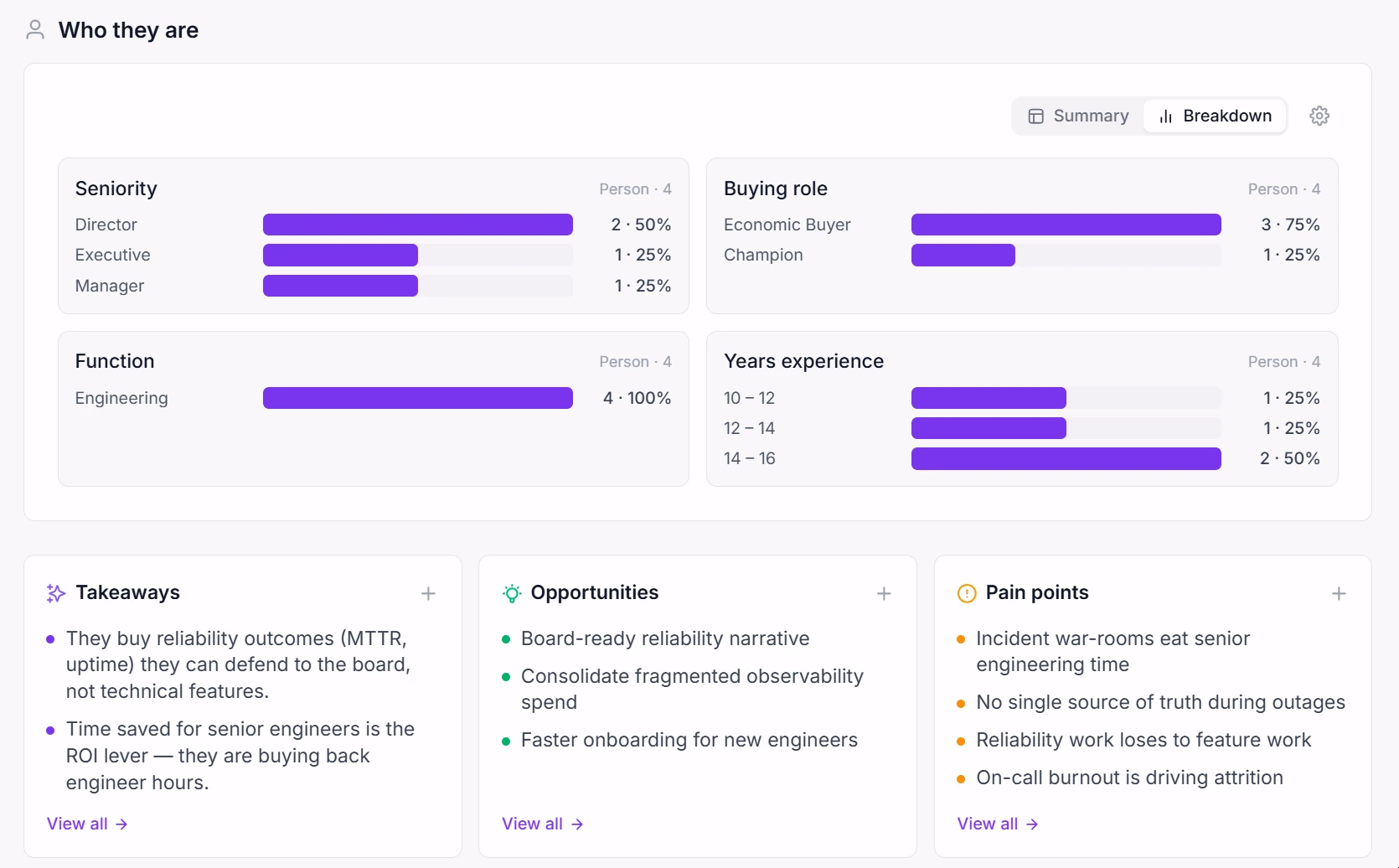
Intervool persona detail showing goals and pain points each linked to the interview quote behind it
Every persona attribute traces back to a real quote.
Intervool customer segments grouping interviewees by shared traits and showing how needs differ
Segments show where different customers need different things.
02

UXPressia

Persona document builder

The most complete persona and journey mapping toolkit

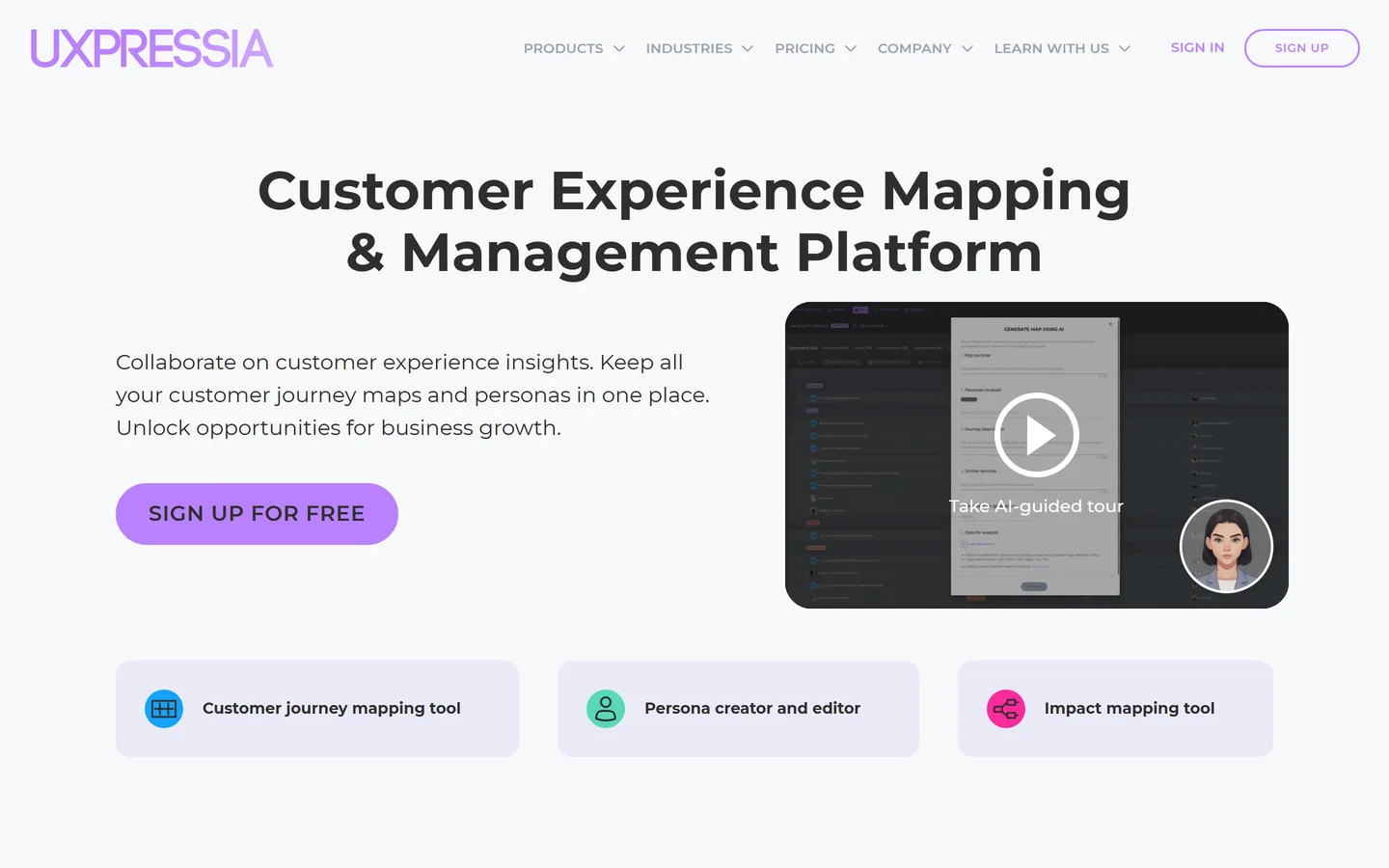
UXPressia homepage — persona creation and customer journey mapping

UXPressia covers personas, customer journey maps, and impact maps with a large template library and export quality good enough to put in front of a client. If your deliverable is the artifact — something reviewed, approved, and circulated — nothing here produces a better one. It's a design tool for personas: what you put in is up to you, and the tool will render an assumption exactly as beautifully as a finding.

Best for
Consultants and UX teams producing polished deliverables
Pricing
From ~$16/user/mo
Free option
Free plan with limited personas

Strengths

  • Best-in-class persona and journey map templates
  • Presentation-quality export
  • Journey mapping alongside personas

Limitations

  • Personas are typed in, not derived from research
  • Nothing updates when your understanding changes
  • Per-seat pricing for teams
03

Xtensio

Persona document builder

Fastest route to a presentable persona

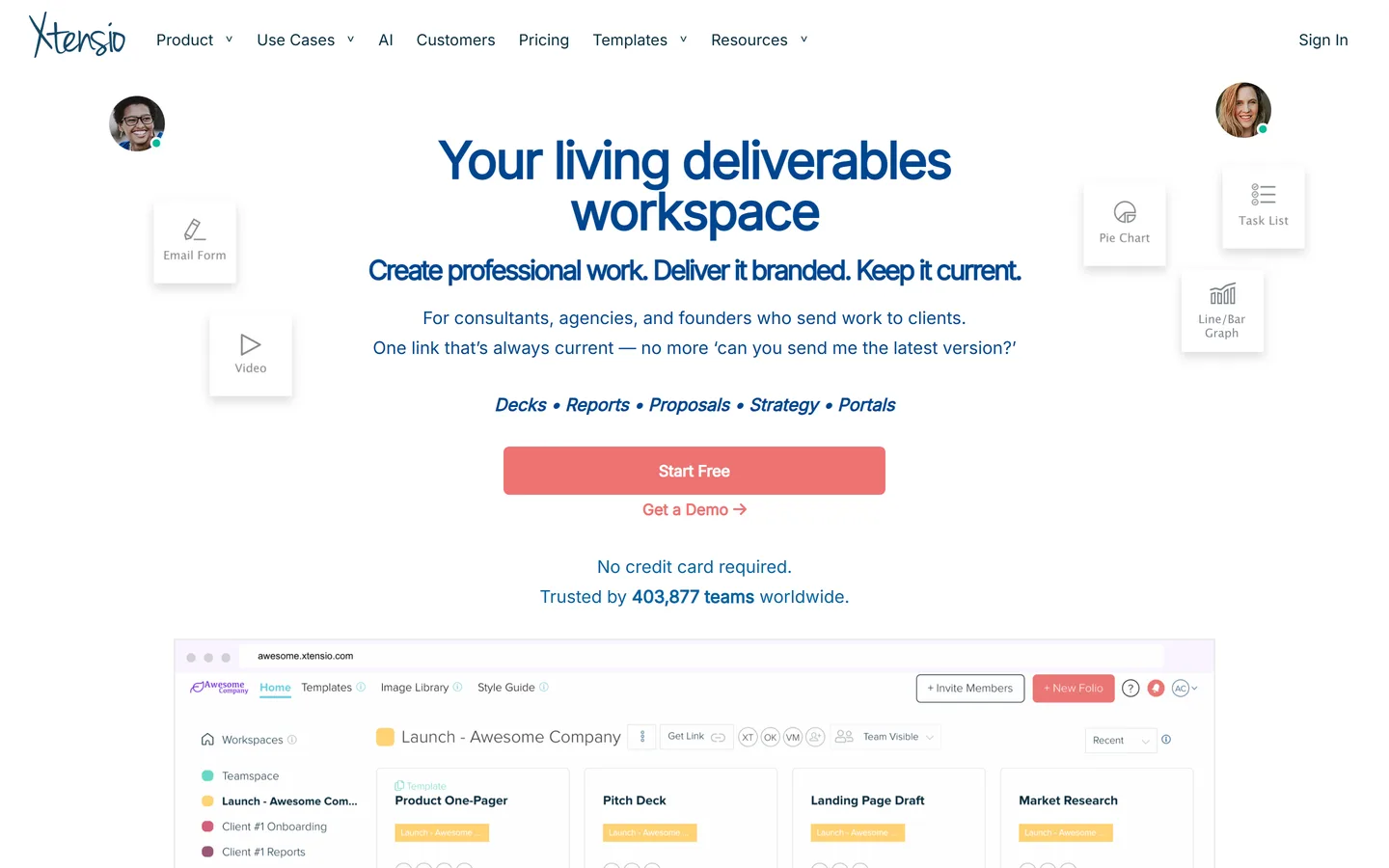
Xtensio homepage — persona templates and collaborative documents

Xtensio is a flexible document builder with well-made persona templates among many others — you can have something presentable in under an hour, and its free tier covers a single persona at no cost. For an early-stage team that needs a shared reference point rather than a research deliverable, that speed is the whole value. It's a general document tool, so there's no research connection of any kind.

Best for
Getting a decent-looking persona in front of people this afternoon
Pricing
From ~$12/user/mo
Free option
Free plan with limited documents

Strengths

  • Very quick to produce something presentable
  • Free tier covers a first persona
  • Flexible beyond personas — pitch decks, one-pagers

Limitations

  • Entirely manual, no research connection
  • Static documents that go stale
  • Not a research tool in any sense
04

Dovetail

Repository with persona features

Personas assembled from tagged research

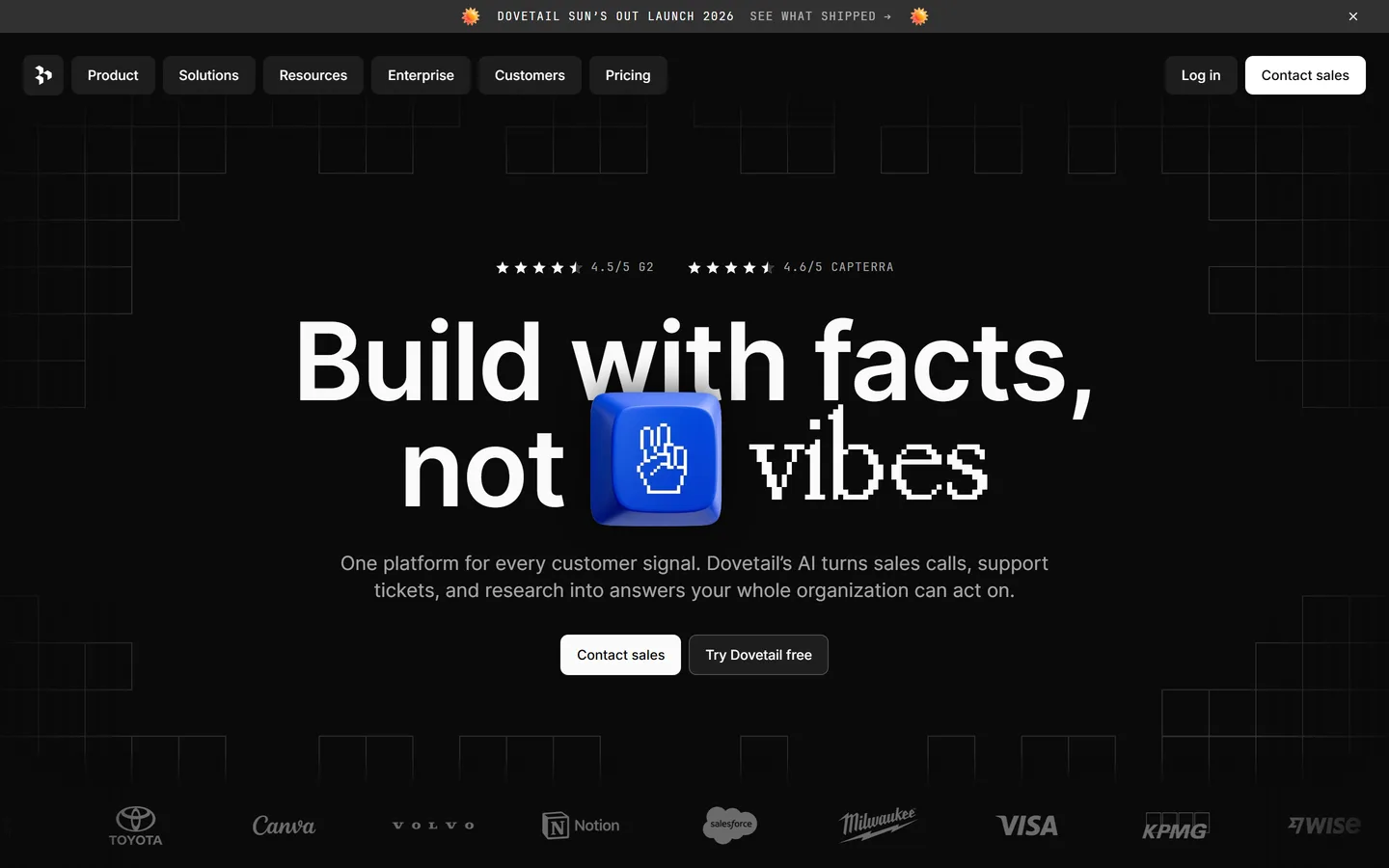
Dovetail homepage — research repository for building evidence-based personas

Dovetail doesn't have a dedicated persona builder, but it's the best-equipped repository for making one honestly: tag findings by participant type, filter across studies, and assemble a persona from what the evidence actually supports, with the source highlights attached. The result is genuinely defensible. It's manual work, and it's a snapshot — the persona reflects the day you built it and doesn't change when the next study contradicts it.

Best for
Research teams building personas from a real evidence base
Pricing
From ~$29/user/mo to enterprise
Free option
Limited free plan and trial

Strengths

  • Personas grounded in a real tagged evidence base
  • Source highlights stay attached
  • Draws on every study in the archive

Limitations

  • Manual assembly — no persona builder
  • Static once created
  • Per-seat pricing and taxonomy upkeep
05

Condens

Repository with persona features

Affordable repository for evidence-backed profiles

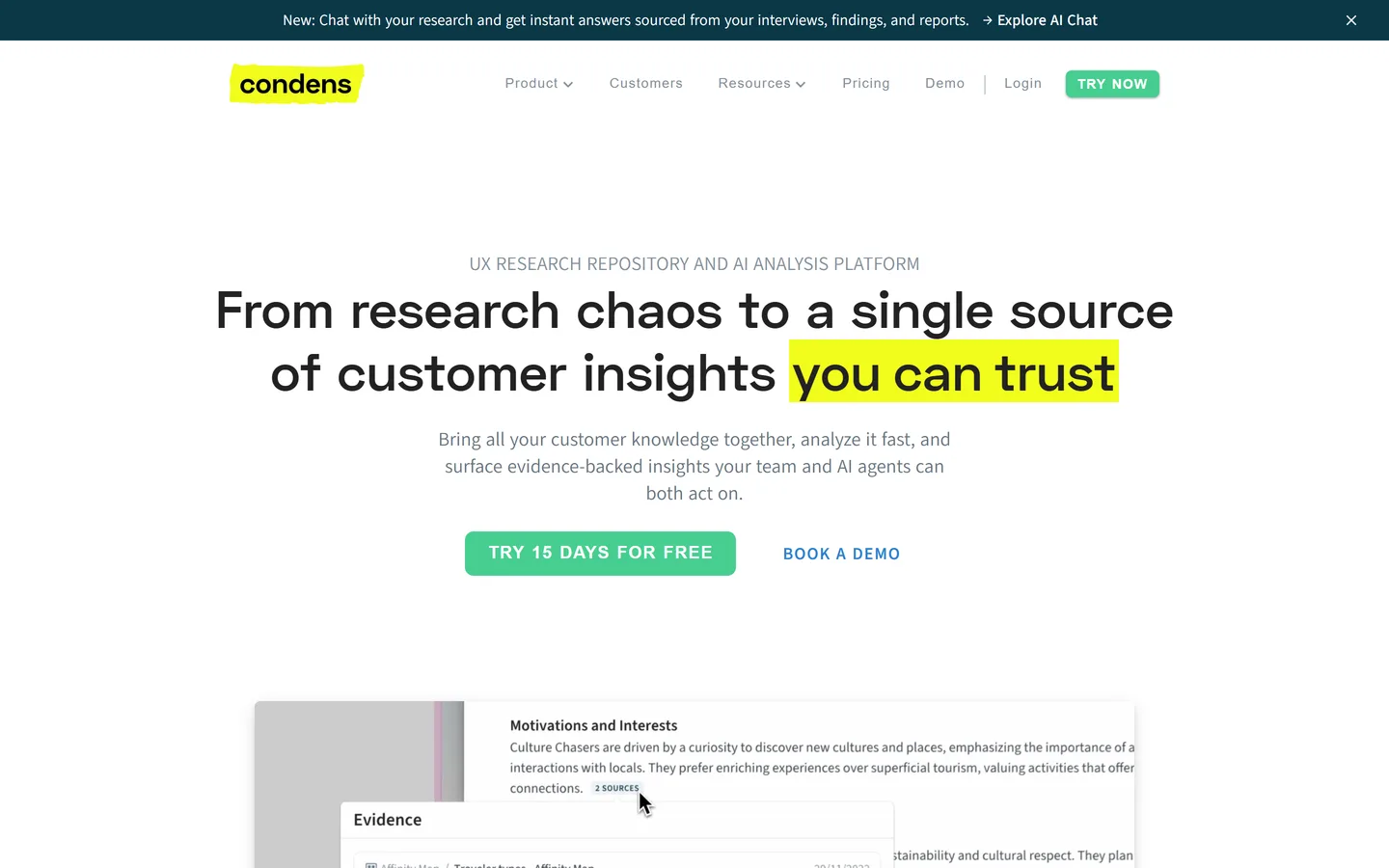
Condens homepage — research repository with participant attributes

Condens supports the same approach as Dovetail — tag by participant characteristics, filter, and build a profile from what the research supports — at roughly half the price. For a small research team that wants personas grounded in evidence rather than a workshop, it's the most cost-effective route. As with Dovetail, assembly is manual and the result is a snapshot rather than a living profile.

Best for
Small teams building personas from research on a budget
Pricing
From ~€15/user/mo
Free option
Free trial only

Strengths

  • Evidence-backed profiles at a low price
  • Clean, fast interface
  • Good participant attribute handling

Limitations

  • No dedicated persona builder
  • Static once created
  • Per-seat pricing
06

Notably

Repository with persona features

Build personas on a visual canvas from clustered data

Notably's canvas suits the way personas often actually get made: cluster observations, notice that the groups correspond to kinds of user, and build profiles from those clusters. AI assistance helps propose the groupings. It's a good middle ground between a blank template and a formal repository, though the persona output is a canvas artifact rather than a maintained profile.

Best for
Teams who derive personas in a synthesis workshop
Pricing
From ~$25/user/mo
Free option
Limited free plan

Strengths

  • Personas emerge from clustered real observations
  • AI-assisted grouping
  • Good for collaborative synthesis sessions

Limitations

  • Output is a canvas, not a living profile
  • Smaller product and ecosystem
  • Per-seat pricing
07

Sprig

Behavioral segmentation

Segments from what users did, not what they said

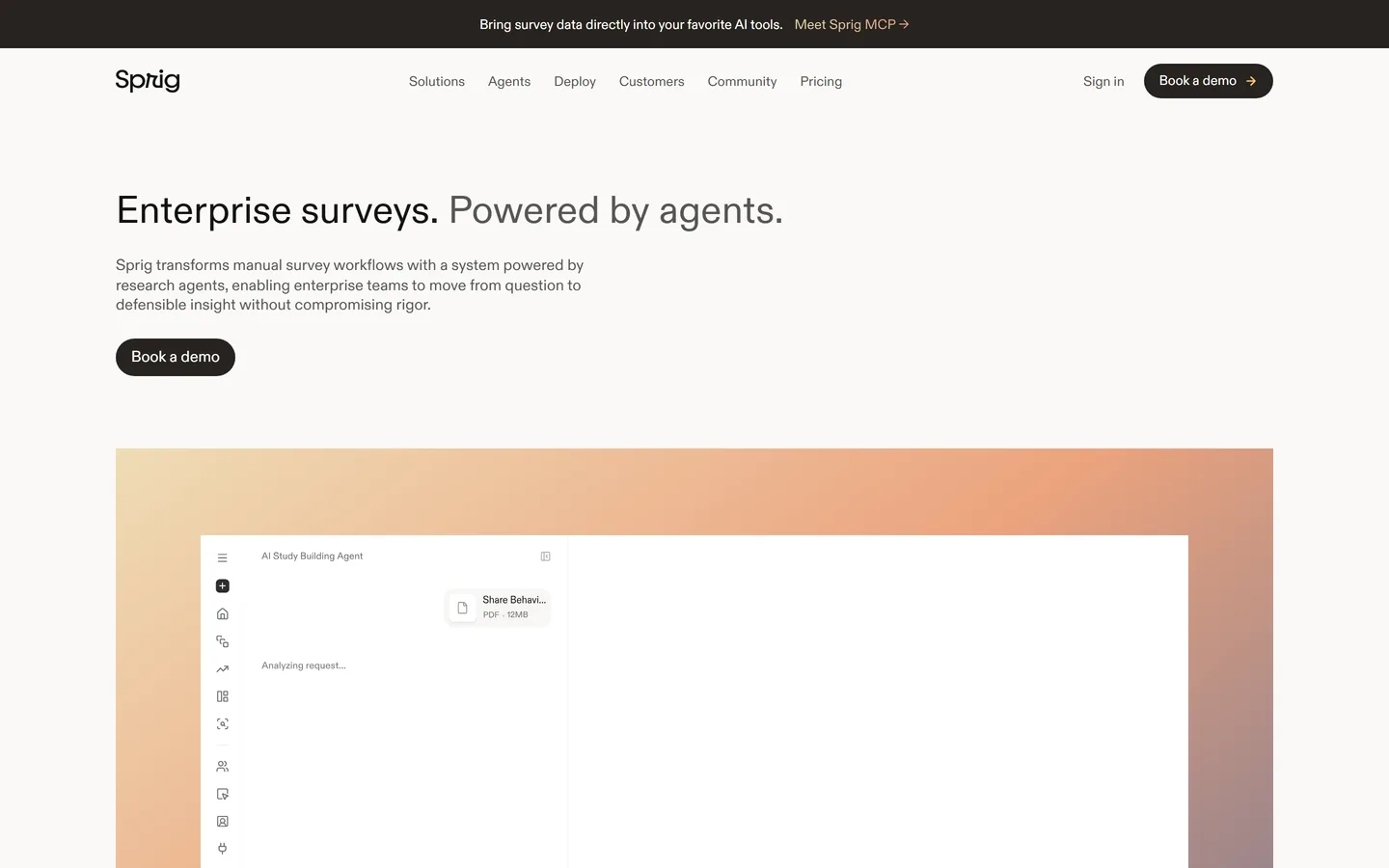
Sprig homepage — behavioural segmentation and in-product surveys

Sprig builds segments from behaviour — which users completed a flow, which abandoned it, which never found a feature — and can survey each group in context to find out why. That behavioural grounding is a useful complement to interview-based personas: what people do and what they say diverge more often than anyone likes. It only sees current active users, so churned customers and prospects are invisible to it.

Best for
Segmenting active users by in-product behaviour
Pricing
From ~$175/mo
Free option
Free plan with limited responses

Strengths

  • Segments grounded in actual product behaviour
  • Can survey each segment in context
  • AI theming of open-text responses

Limitations

  • Only sees current active users
  • Behavioural segments, not qualitative personas
  • Pricing scales with traffic
Methodology

How we evaluated these

We separated document builders from research tools

Half this category makes personas look good and has no view on whether they're accurate. That's a legitimate product and a completely different purchase from a tool that derives the profile from evidence, so the grid marks it plainly.

We treated staleness as the core failure

Personas don't fail by being ugly, they fail by being frozen — made once, never revisited, quietly wrong within two quarters. Whether a tool updates as understanding changes is weighted as heavily as anything else here.

We included segments, not just personas

Personas describe kinds of user; segments describe groups sharing a trait like industry or company size. Teams routinely need both and most tools handle only one, so it's a column rather than an assumption.

We asked whether personas change decisions

A persona that never influences prioritization is a poster. We noted which tools connect profiles to what gets built, since that connection is the difference between a persona being used and being displayed.

Pricing checked August 2026, and we're not neutral

Published prices as of August 2026, rounded. Intervool is ours and is marked as such — it scores only partial on presentation-ready visuals because UXPressia genuinely produces a better artifact, and that's the right tool if a polished deliverable is what you need.

FAQ

Common questions

What is the best tool for creating personas?

For polished persona documents and journey maps, UXPressia. For something presentable quickly and cheaply, Xtensio. For personas assembled from a real research archive, Dovetail or Condens. For personas generated from interviews that update as you learn and feed into prioritization, Intervool.

What's the difference between a persona and a segment?

A persona describes a kind of user — their goals, pain points, and context — so the team designs for a recognisable person rather than an average. A segment is a group sharing a measurable trait: industry, company size, plan tier, behaviour. Personas help you empathise; segments help you target and prioritize. Most teams need both, and conflating them is why persona documents often contain a confusing mix of psychology and firmographics.

Why do personas go stale?

Because they're usually built once, in a workshop, from a mix of research and assumption, and then treated as settled. Your understanding of customers changes with every interview, and a static document doesn't. Six months later it describes a customer who never quite existed, everyone knows it, and it stops being consulted. The fix isn't better templates — it's personas that update when the evidence does.

How do you build personas from customer interviews?

Interview across the range of customer types you care about, extract each person's goals, pain points, and context, then group people whose patterns genuinely resemble each other — resisting the temptation to make groups tidier than the data. Name each group by what defines it, keep the supporting quotes attached, and revisit after every few interviews. Tools like Intervool do the grouping and the evidence-linking automatically; the judgement about whether a grouping is real stays yours.

Are personas still useful in 2026?

Evidence-based ones, yes — a shared, accurate mental model of who you're building for genuinely improves decisions, especially as a team grows past the point where everyone talks to customers. Invented ones are worse than nothing, because they give a guess the authority of a document. The criticism personas attract is almost always aimed at the second kind.

Can AI generate customer personas?

From your research data, yes and usefully — grouping interviewees by pattern and summarizing each group is exactly the kind of work AI does well. From nothing, it will happily invent a plausible persona built from training data about your industry, which is a well-formatted stereotype. The distinction is whether the persona is derived from people you actually spoke to.

Stop losing what your customers told you

Intervool turns every interview into themes, personas, and a roadmap you can defend. Free for 30 days, no credit card.