Analysis is where research actually costs you. Running an interview takes an hour; making sense of twenty of them takes days, and it's the step teams quietly skip when the quarter gets busy — which is how research ends up as a folder of recordings nobody opened. This guide compares the tools built for that step specifically: extracting what matters from each transcript, finding what repeats across all of them, and keeping the evidence attached so the conclusion survives being questioned.
For researchers who want AI notes and cross-study queries with a familiar research structure, Looppanel is the strongest specialist. For rigorous manual coding with AI assistance — the academic approach — Delve is the most approachable and Dovetail the most scalable. For product teams, the deciding factor is usually what happens after synthesis: Intervool extracts insights from every interview, clusters recurring themes with the quotes attached, and carries them into personas, segments, and a prioritized roadmap, so analysis ends in a decision rather than a report. If you need a tagging taxonomy you fully control, a repository suits you better than an AI-first tool.
Jump to a tool
Compared at a glance
These tools all read transcripts. The columns separate how much analysis they do for you, and whether the result goes anywhere.
Yes Does thisPartial Partly, or with workaroundsNo Not a feature
AI extracts insights
Pulls the meaningful observations out of each transcript automatically, instead of you highlighting them.
Clusters across interviews
Groups what repeats across the whole set into themes, rather than summarizing each interview separately.
Evidence trail
Every theme and conclusion stays one click from the exact transcript moment and the person who said it.
You can override the AI
AI output is a starting point you can correct, merge, and re-group — not a black box you accept.
Personas & segments
Turns findings into profiles of customer types and groups as a first-class workflow.
Prioritized roadmap
Turns themes into ranked feature bets inside the same tool, rather than exporting to a PM tool.
The categories, and what each is for
These products get compared as if they’re interchangeable. They aren’t — they’re solving different halves of the job.
Analysis to decision
AI synthesis that continues into personas, segments, and a prioritized roadmap.
Intervool
AI-first research analysis
AI generates the notes and answers questions across a study. Fast, with less manual control.
Looppanel, Marvin, Notably
Coding-first analysis
You build the codebook and the tool helps apply it. Maximum rigour and maximum effort.
Delve, Dovetail, Condens
Media-first analysis
Analysis through video and transcript search, ending in clips rather than written findings.
Reduct
The tools in detail
01
Intervool
Our productAnalysis to decision
Synthesis that ends in a roadmap, not a report
app.intervool.com/insights
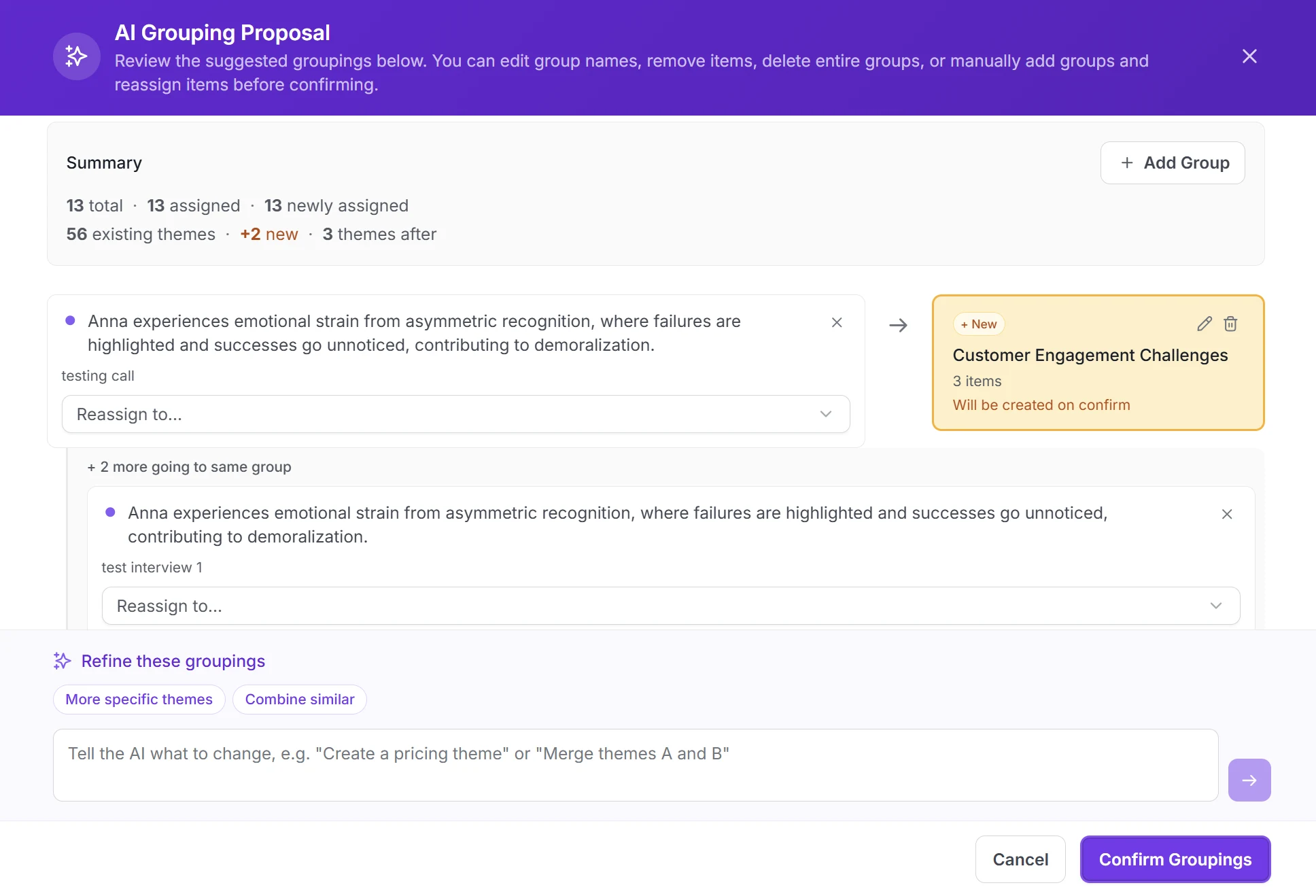
AI proposes the grouping; you merge, split, or reject it.
Intervool reads every interview and pulls out the pain points, feature requests, and opportunities inside them, then clusters what repeats across the whole set into evidence-linked themes — each showing how often it appeared and which customers it came from. You can merge, split, rename, and reject anything the AI proposes, so it's a first pass rather than a verdict. Those themes then build dynamic personas and segments and become a prioritized roadmap, with every item one click from the quote behind it. Analysis stops being a document and becomes the reason something got built.
Best for
Product teams who analyze interviews in order to decide what to build
Pricing
Basic $39/mo · Team $279/mo (6 seats) · Enterprise custom
Free option
14-day free trial, no credit card
Strengths
AI does the first pass across every interview, you refine it
Themes show frequency and which segments they came from
Every conclusion traceable to the exact transcript moment
Continues into personas, segments, and a prioritized roadmap
Works on uploaded recordings and notes from any other tool
Limitations
Not a formal codebook tool — no academic coding rigour
Built for product research rather than academic study
No permanent free tier
app.intervool.com/insights
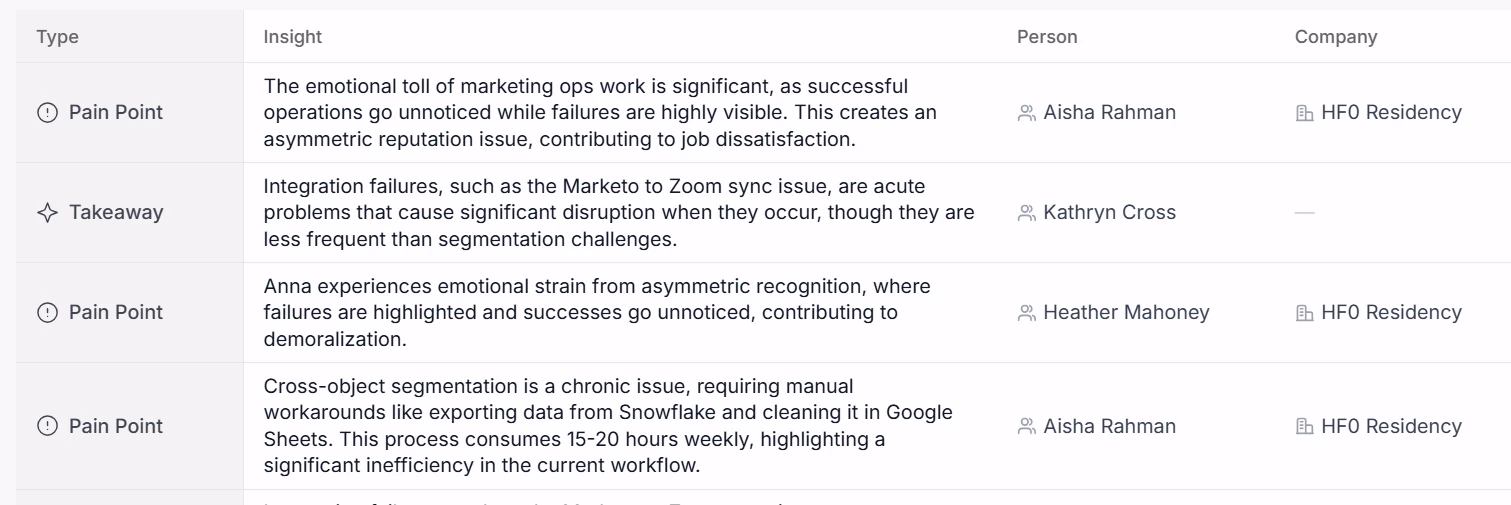
Each insight keeps the interview and person it came from.
app.intervool.com/themes
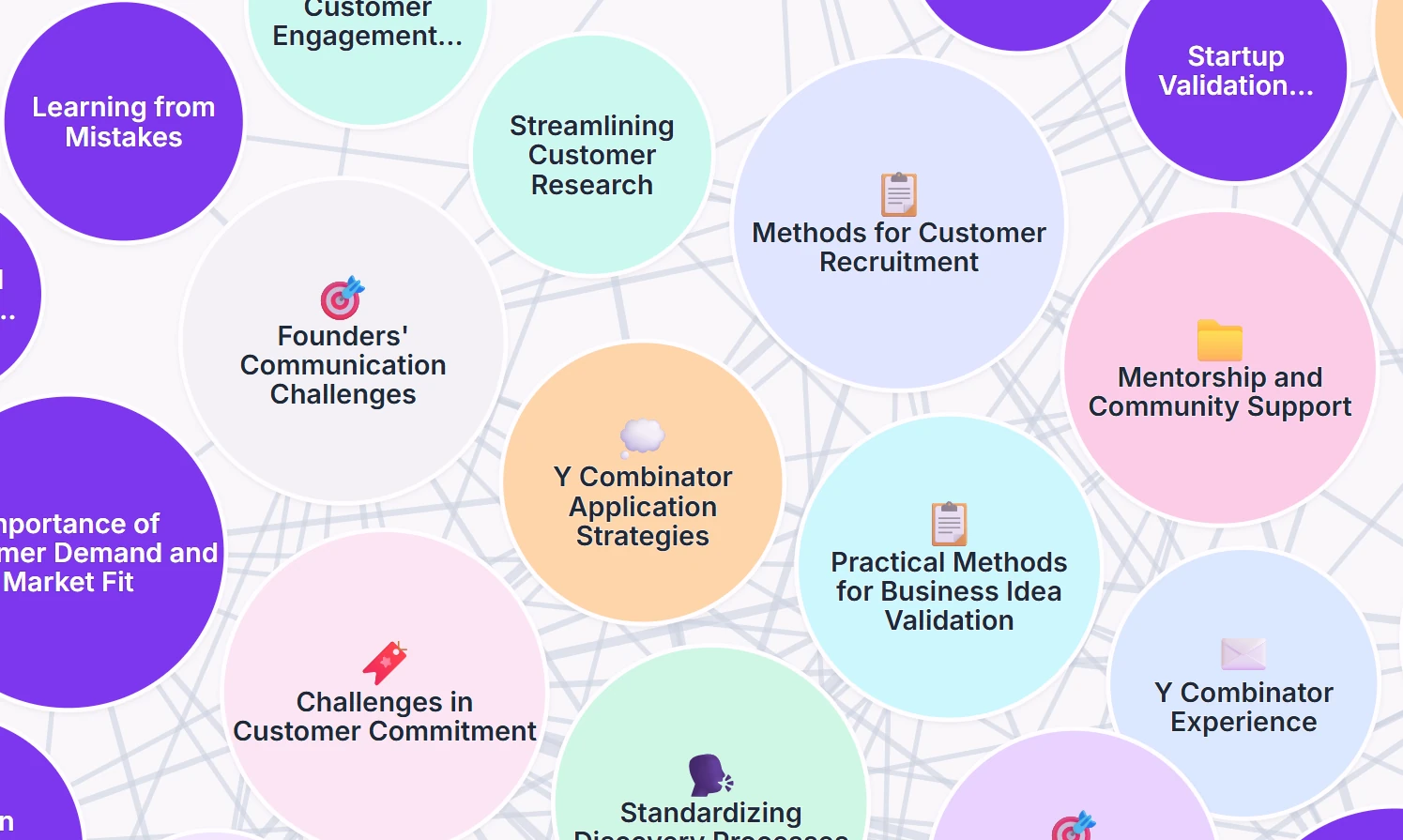
How the themes relate — and which cluster together.
AI research notes, structured around your questions
looppanel.com
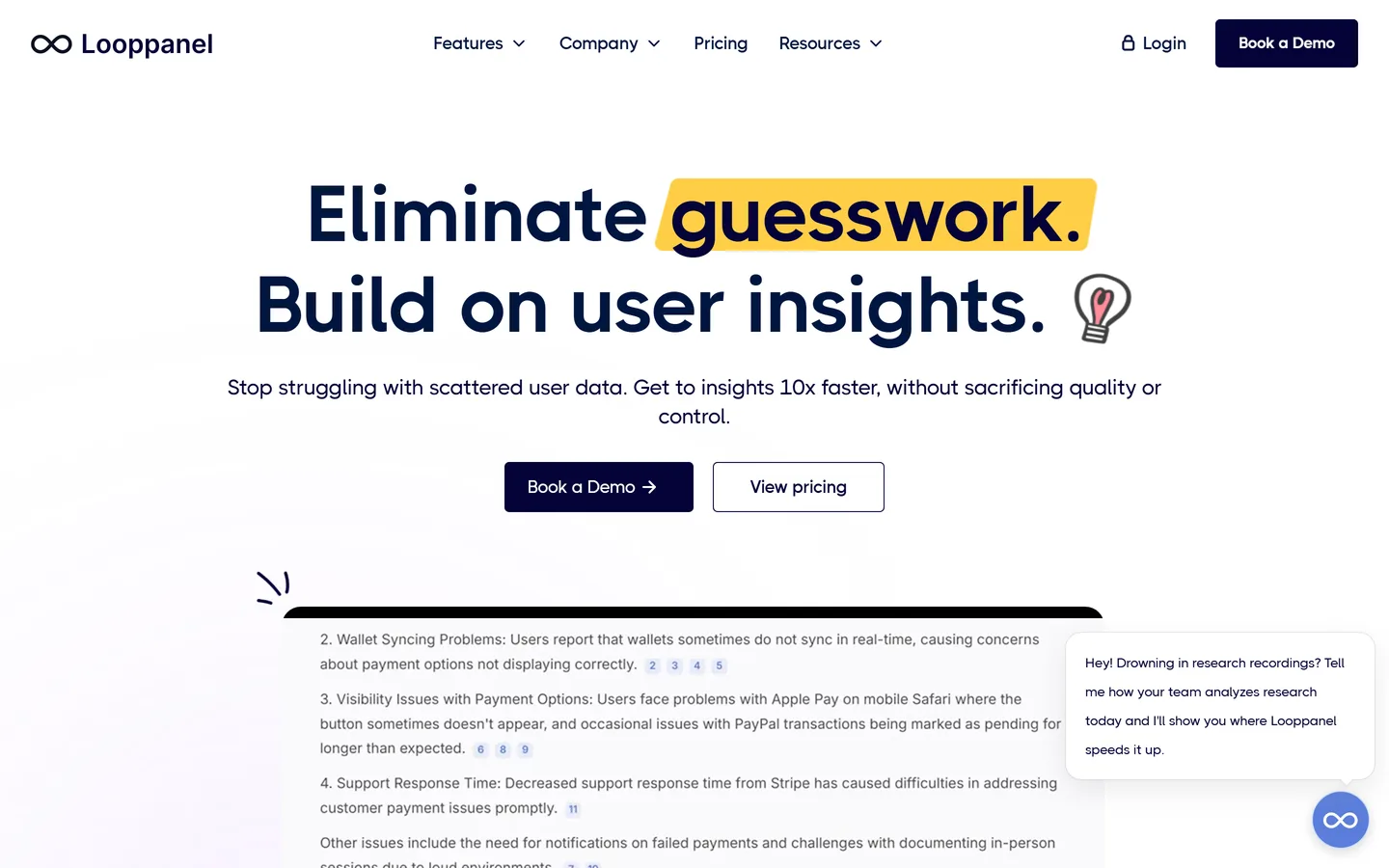
Looppanel transcribes research calls and generates notes organized against the questions you planned to ask, which makes the output immediately usable if you work from a discussion guide. Its ask-AI feature answers questions across a whole study rather than one call, and tagging and highlight workflows are well designed. It's analysis-complete: what it produces is findings, and turning those into decisions happens elsewhere.
Best for
Researchers running defined studies with a discussion guide
Pricing
Pro from ~$395/mo (5 editors); ~$75/mo per additional editor
Qualitative coding without the academic software price
delvetool.com
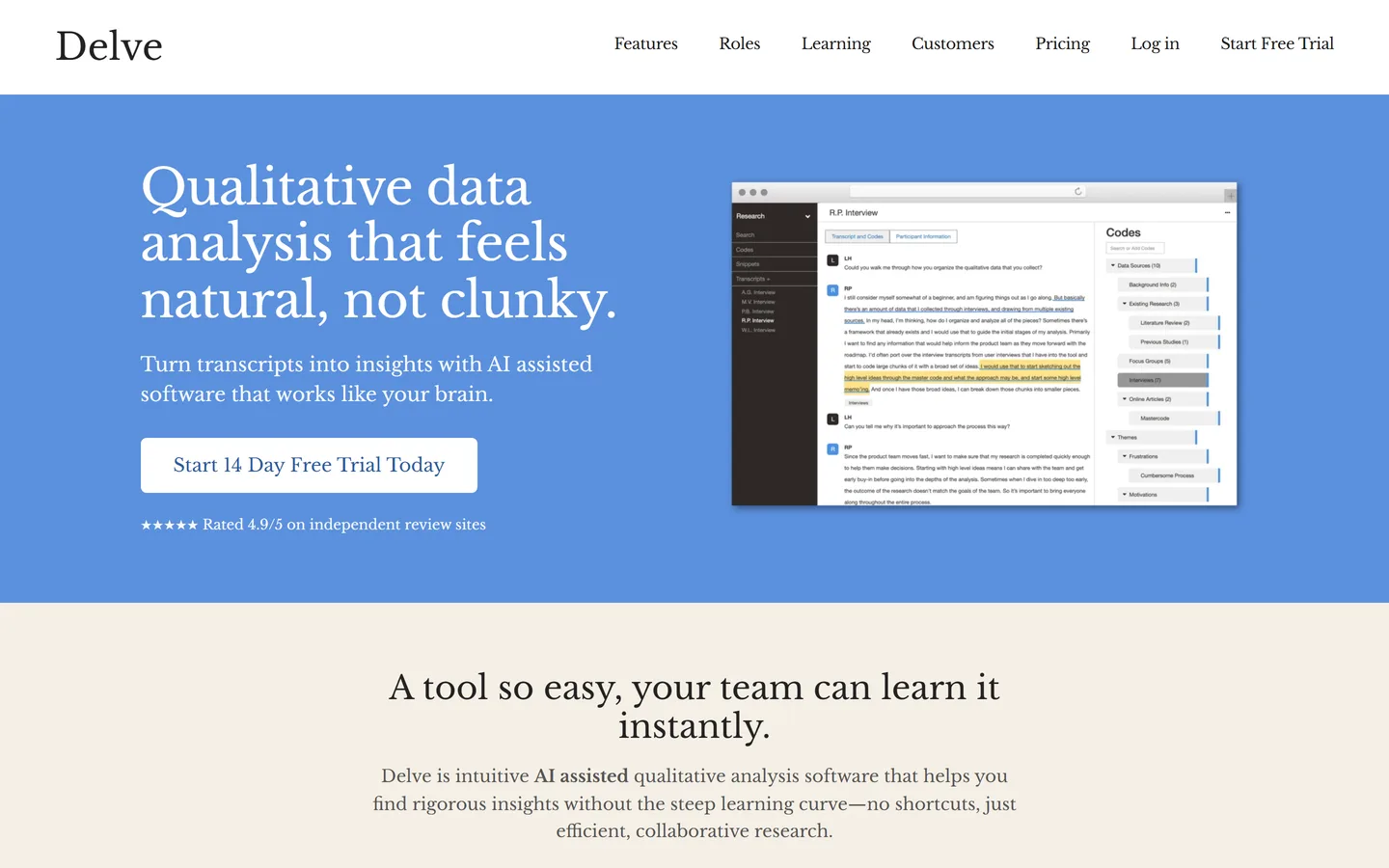
Delve is built for qualitative coding in the proper sense: you create a codebook, apply codes to passages, and build themes from the coded data, with AI assistance available for a first pass. It's far more approachable and cheaper than NVivo or ATLAS.ti while keeping the methodological rigour, which makes it the best bridge between academic practice and product work. It expects you to do the thinking — that's the point, and also the cost.
Best for
Rigorous thematic coding by someone who knows what they're doing
Pricing
From ~$20/user/mo
Free option
Free trial only
Strengths
Real qualitative coding at a reasonable price
Much easier to learn than NVivo or ATLAS.ti
AI-assisted coding you stay in control of
Limitations
Requires genuine coding effort and method knowledge
Dovetail's analysis model is systematic tagging: highlight passages, apply tags from a shared taxonomy, and read patterns off the tag counts, with AI assistance layered on top. For a team that maintains its taxonomy properly the results are rigorous and consistent across years of studies. That consistency is entirely dependent on the discipline — where nobody owns the taxonomy, tag sprawl sets in within a couple of quarters.
Best for
Research teams analyzing at scale with a shared taxonomy
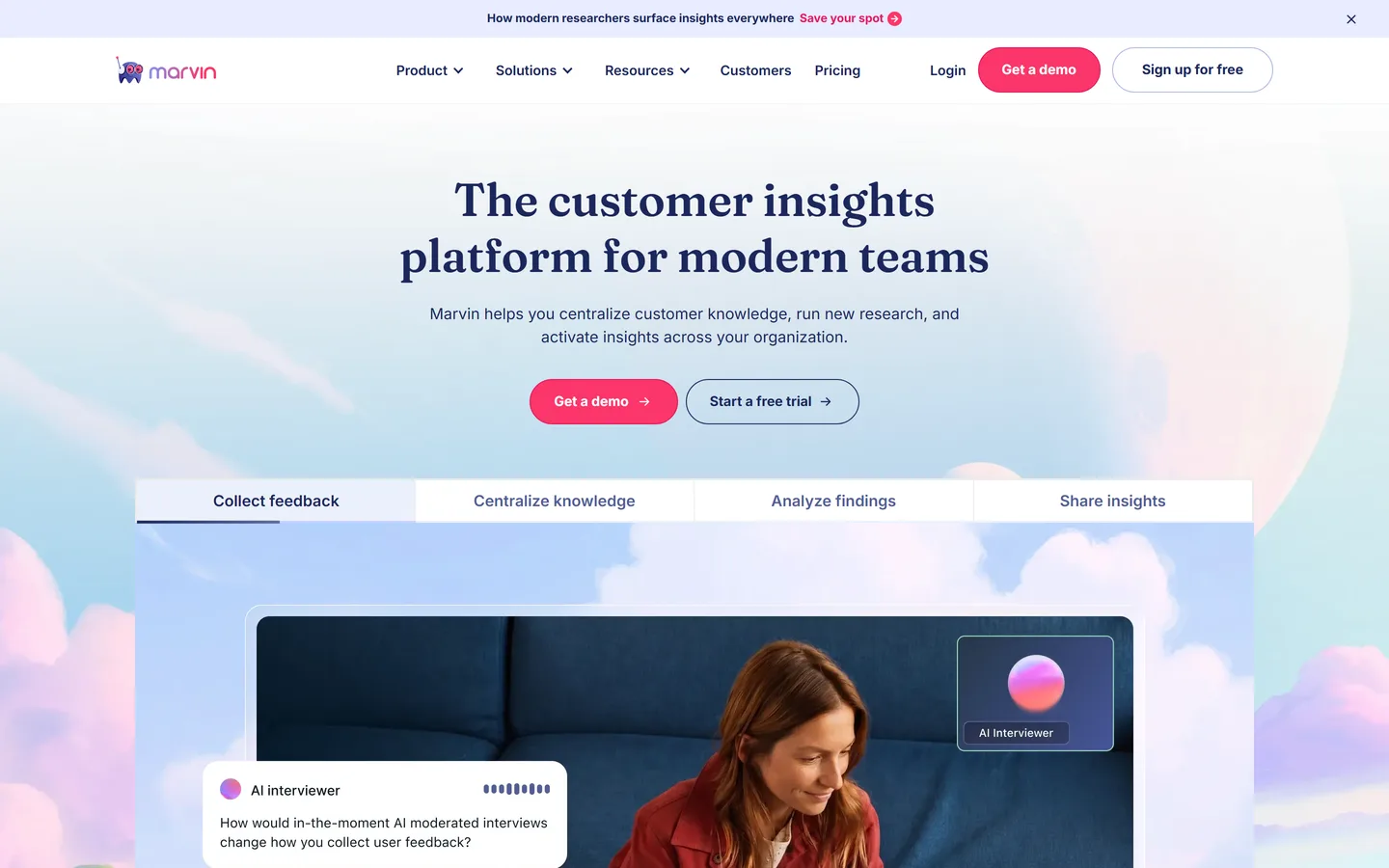
Marvin leans harder on AI than most repositories: it transcribes, summarizes, and proposes clusters, so a study arrives partly analyzed rather than as raw material. For teams where analysis backlog is the recurring problem that's a real advantage. At around $50 per user per month it's the priciest per-seat option here, and the output is still findings rather than decisions.
Best for
Research teams who want AI doing more of the first pass
Pricing
Paid tiers quoted on request (Starter, Pro, Enterprise)
Free option
Free plan — 5 file uploads/mo, AI notetaker and Ask AI included
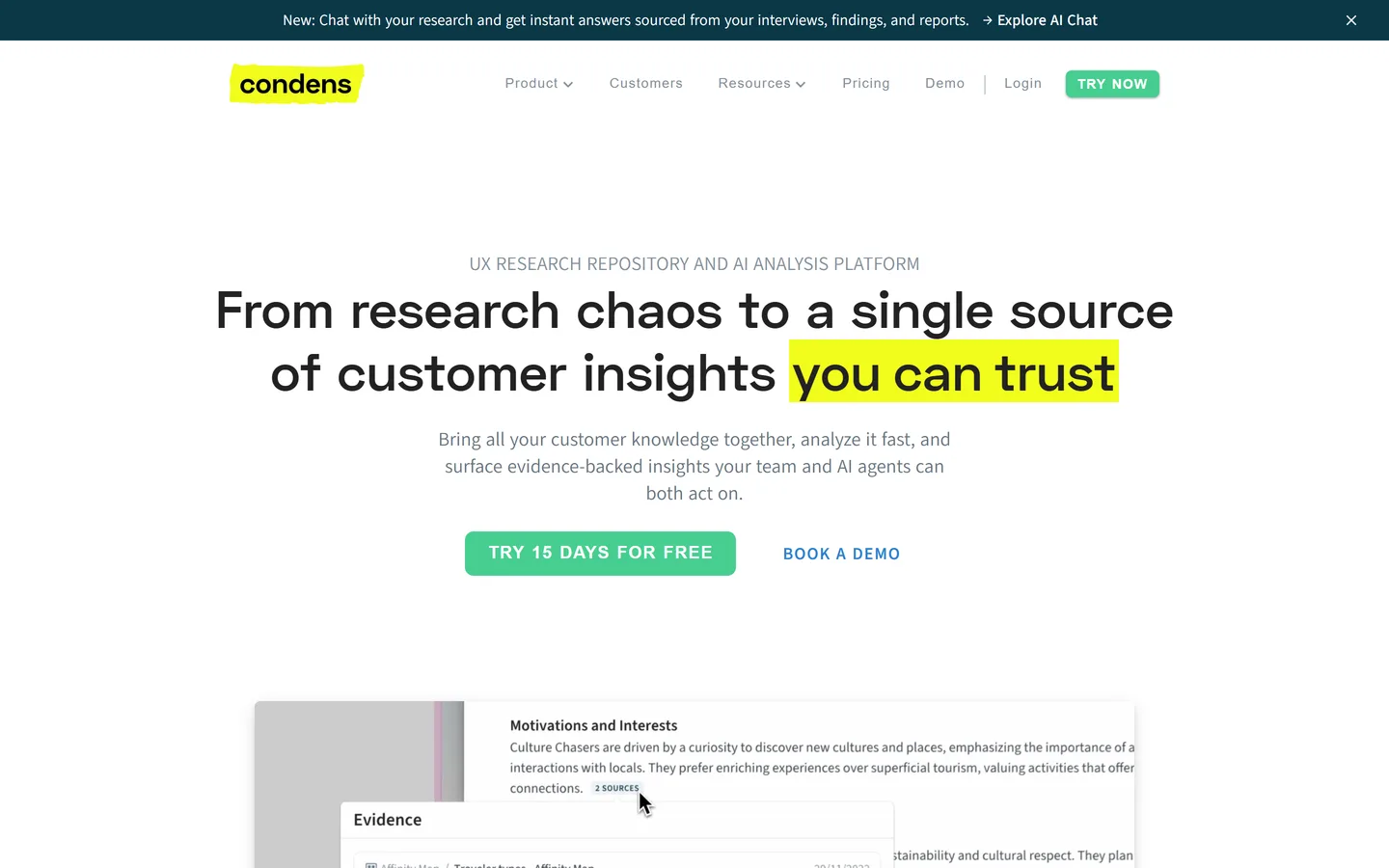
Condens handles the analysis loop well — highlight, tag, group into findings, and share — with an interface that stays fast as a study grows, starting around €15 per user per month. For a small team that wants structured synthesis without a heavyweight platform it's the most sensible option. AI assistance is lighter than in the AI-first tools, so more of the thinking is yours.
Best for
Small research teams doing structured analysis on a budget
Notably puts analysis on a canvas: notes become cards you group, with AI proposing summaries and clusters as you go. If your instinct in a synthesis session is to put things on a wall and move them around, it matches that far better than a tag-and-filter interface. It's a smaller product than the established repositories, with a correspondingly smaller ecosystem.
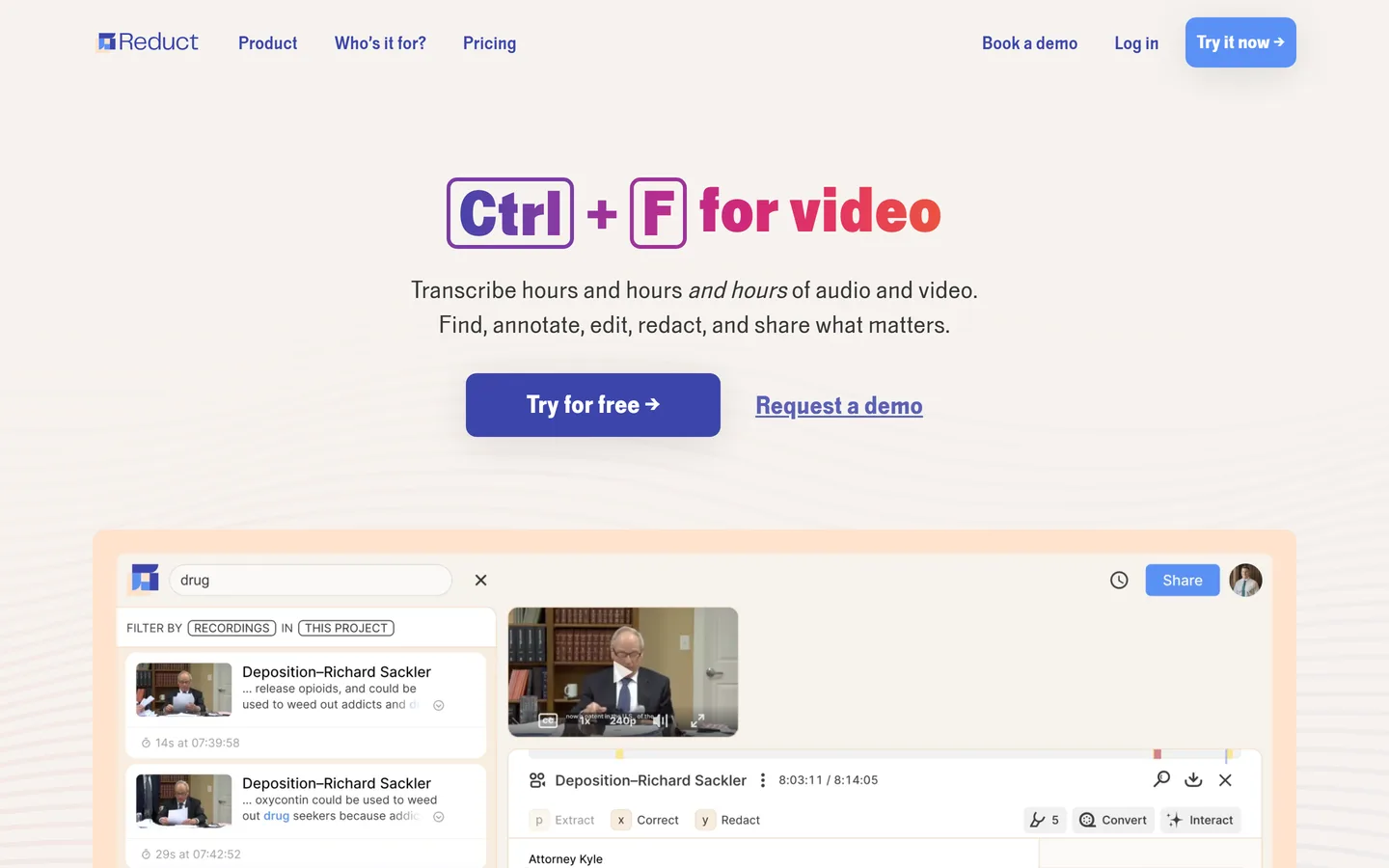
Reduct treats analysis as video work: search every recording by transcript, pull the matching moments, and assemble them into a reel by editing text. For persuading stakeholders it's unmatched — six customers saying the same thing in their own voices ends an argument a written finding would not. Structured theming and coding are lighter, so it complements a text-based tool more often than it replaces one.
Best for
Teams whose findings need to be seen rather than read
Notetakers and transcription services appear on other guides. This page assumes the interviews happened and the transcripts exist, so a tool earns a place only if it helps you understand them.
We checked whether you can overrule the AI
AI-proposed themes are useful as a first pass and dangerous as a verdict — they miss context and occasionally merge two different problems. Tools that let you merge, split, rename, and reject are marked, because analysis you can't correct isn't analysis.
We insisted on the evidence trail
A theme without traceable quotes is an assertion. We checked whether every finding stays linked to the exact transcript moment and the person, since that link is what makes a conclusion survive a disagreement in a planning meeting.
We weighed effort against rigour
Formal coding produces the most defensible analysis and takes the most time, and for most product decisions AI-assisted synthesis is the right trade. Each entry says where it sits on that line so you can pick deliberately rather than by accident.
Pricing checked August 2026, and we're not neutral
Published prices as of August 2026, rounded. Intervool is ours and is marked as such — it scores 'no' on formal codebook rigour because it doesn't do academic coding, and Delve or Dovetail are the honest recommendation when that's what you need.
FAQ
Common questions
What is interview analysis software?
Tools that help you make sense of interview transcripts — extracting the meaningful observations, grouping what repeats into themes, and keeping conclusions linked to the quotes behind them. It's the step between having recordings and knowing what they mean, and it's where most of the time in qualitative research actually goes.
How do you analyze customer interviews?
The classic approach is coding: read each transcript, label meaningful passages, group labels into themes, then check each theme against the raw data. AI tools compress the first two steps by proposing observations and clusters, which you then correct. Either way the discipline is the same — a theme only counts when you can point at the quotes underneath it, and one memorable interview is not a pattern.
Can AI analyze qualitative interviews reliably?
For the mechanical parts, yes: extracting observations, grouping similar statements, and surfacing frequency across many transcripts are all things AI does faster and more consistently than a tired human at 6pm. Where it needs supervision is judgement — it will occasionally merge two problems that share vocabulary, or flatten a contradiction that was the most interesting thing in the interview. Treat AI output as a strong first pass you review, not a finished analysis.
What's the difference between coding and AI theming?
Coding is deductive or inductive labelling you control: you define the codebook, apply it consistently, and the rigour comes from that consistency. AI theming is inductive and automatic — the tool proposes groupings from the content. Coding is more defensible and much slower; AI theming is faster and needs review. For academic work, code. For product decisions, AI theming with human review is usually the right trade.
How many interviews do you need before analysis is useful?
Patterns start appearing around five to eight interviews within one customer segment, and you'll usually reach saturation — new interviews stop surprising you — somewhere between twelve and twenty. Analysis tooling starts paying for itself around fifteen, which is roughly the point where holding everything in your head stops working.
Do I need NVivo or ATLAS.ti for interview analysis?
Only for academic or regulated research where the method has to be defensible to a reviewer. They're powerful and genuinely rigorous, and they're also expensive and slow to learn. For product research, Delve covers the same methodology far more approachably, and AI-first tools like Intervool or Looppanel get you to a usable answer in a fraction of the time.