Every prioritization framework is a structured way to argue about the same two questions: how much is this worth, and what will it cost? The frameworks differ in how much structure they add around those questions — and in how easy they make it to fool yourself. Here's an honest comparison of the three you'll actually encounter: impact-effort, RICE, and MoSCoW.
Impact vs effort: the fast default
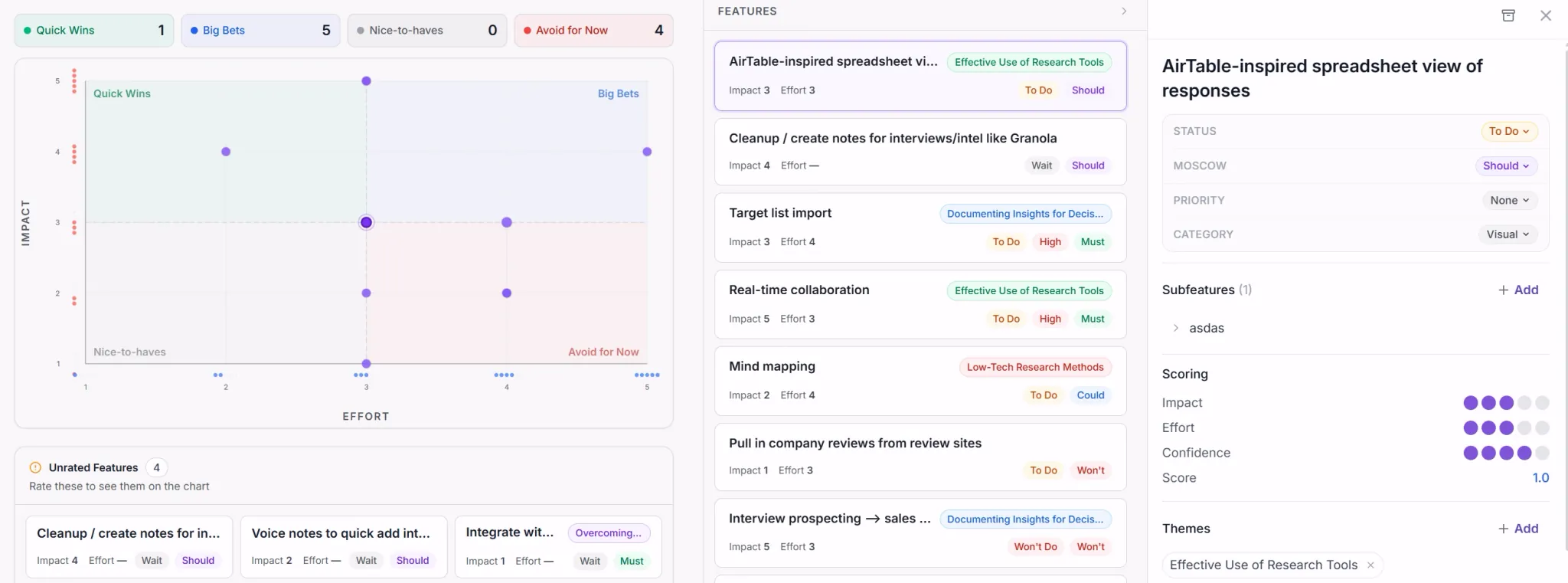
How it works: score each candidate on expected impact and estimated effort, then plot the 2×2 — quick wins (high impact, low effort), big bets (high/high), fill-ins (low/low), and money pits (low impact, high effort).
Where it shines: speed and communicability. A team can score twenty candidates in an hour, and the resulting matrix explains itself to any stakeholder in ten seconds. For startups and small teams, it's the right default — the precision of heavier frameworks is wasted when your estimates are rough anyway.
Where it lies to you: "impact" is doing a lot of unexamined work. Impact for whom? How many customers? How confident are you? Two people can put the same feature in opposite quadrants because they imagined different users. The fix isn't a heavier framework — it's better inputs: impact grounded in how often the underlying theme showed up in customer interviews and for which segments, not in gut feel.
RICE: impact-effort with the guesses made explicit
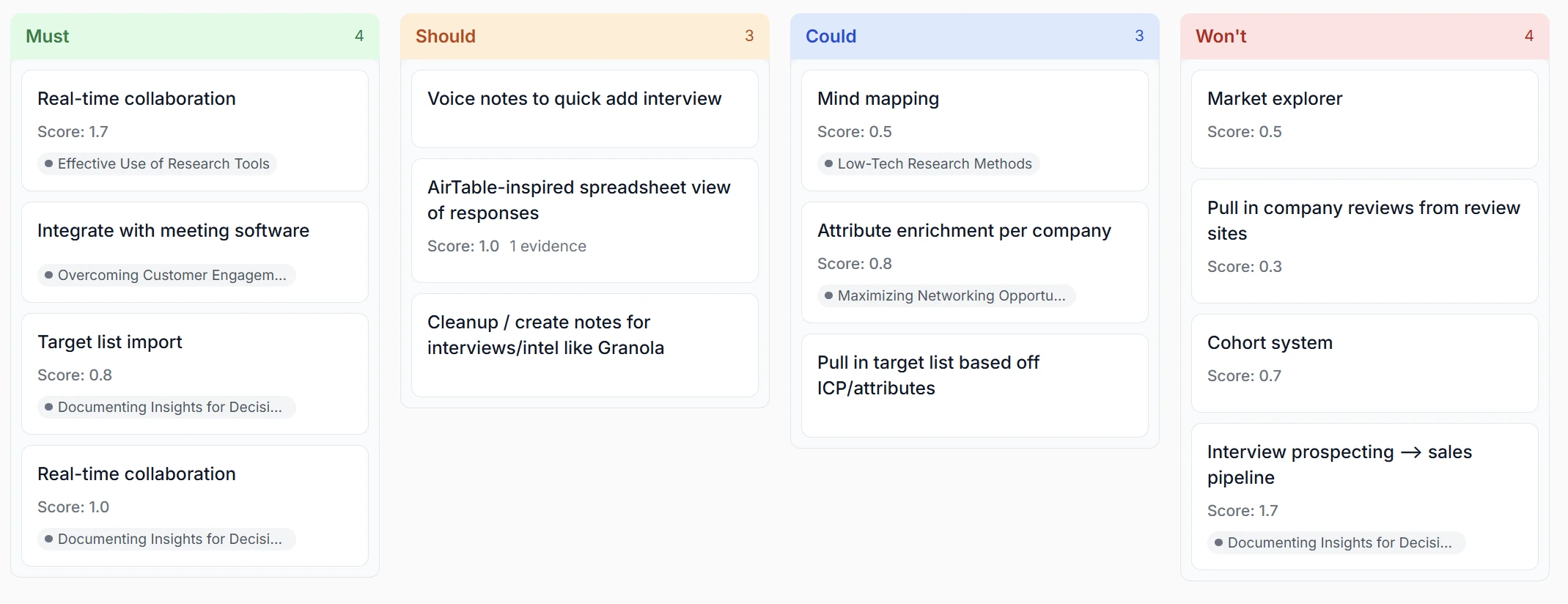
How it works: score Reach (customers affected per period), Impact (per customer), Confidence (how sure you are), and Effort (person-months), then compute (R × I × C) ÷ E and rank by the result.
Where it shines: RICE decomposes the vague "impact" axis into parts you can actually estimate — and the Confidence term is quietly its best feature, forcing you to admit which scores are evidence-backed and which are hopeful guesses. It suits teams with usage data (real Reach numbers) and many competing stakeholders, where a numeric ranking de-personalizes the argument.
Where it lies to you: false precision. A RICE score of 47.3 looks like measurement, but if Reach was a guess and Confidence was generous, it's a vibe with decimals. Teams also game it — nudging Confidence up on pet projects. The discipline that keeps RICE honest: every input above 50% confidence should cite its evidence, and Reach should come from data or from how many customers actually surfaced the problem in research.
MoSCoW: a necessity test, not a scoring formula
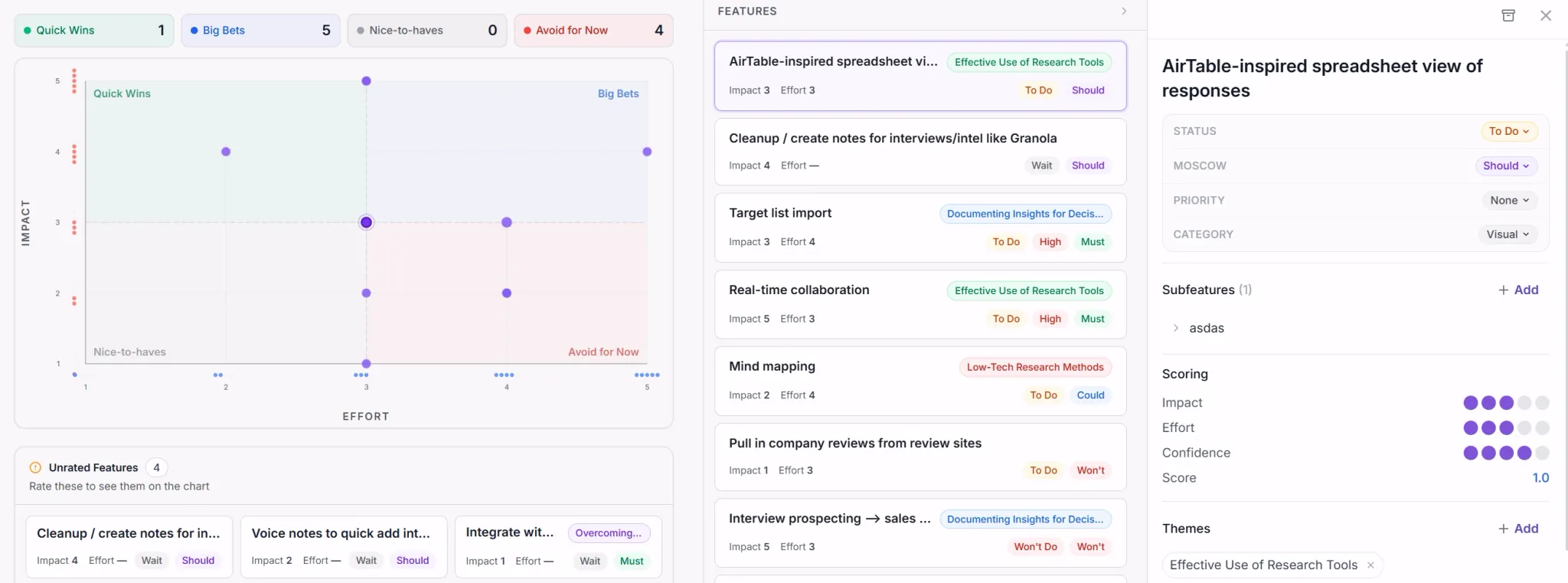
How it works: sort candidates into Must have, Should have, Could have, and Won't have (this time). There's no formula because the question is different in kind: not "how much value per unit of effort?" but "does the product actually need this?"
Where it shines: separating need from want. Must-haves are the workflows the product genuinely has to support — without them, your target customer can't get their job done. Should- and Could-haves are real improvements you could build, but the product works without them. And Won't isn't a rejection of the idea — it's an honest statement of what you're not able to build right now, given the team and the constraints. That last column is quietly the most valuable: naming what you can't do yet stops those ideas from haunting every planning cycle as if they were live options.
Where it lies to you: "must" inflation. Without evidence discipline, every stakeholder's favorite becomes a Must — the test only works if "need" is defined from the customer's workflow, not from internal conviction. The honest question for each candidate is: which real customer workflow breaks without this? If you can't point to one, it isn't a Must.
So which one?
- Small team, rough estimates, need speed → impact-effort, with impact grounded in interview evidence.
- Usage data, many stakeholders, contested decisions → RICE, with confidence scores kept honest.
- Deciding which workflows to support vs nice-to-haves vs not-yet → MoSCoW, with "need" defined by customer workflows.
They compose: impact-effort and RICE rank candidates within a category, while MoSCoW answers the prior question of whether something is needed at all — many teams run both. That's the model Intervool is built on — feature bets scored on impact vs effort, with impact informed by how often each theme appeared across your customer interviews and for which segments, then rendered as a MoSCoW roadmap board. Every score and every column placement stays one click from the customer quote behind it, so the framework argues from evidence instead of opinion. (The full guide to product roadmapping covers where prioritization fits in the bigger process.)
Whatever framework you choose, the uncomfortable truth is the same: the framework is the easy 20%. The hard 80% is having real customer evidence to feed it — and that's the part worth automating.