Prioritization is where a roadmap is really made. With more ideas than capacity, the question is always what next — and a good framework makes that call consistent and defensible. Here are the prioritization frameworks worth knowing, when to use each, and how to keep them grounded in evidence. (See prioritization and impact-vs-effort prioritization in our glossary.) Why it matters: McKinsey found teams that decide quickly are 2× as likely to also make high-quality decisions — a good prioritization framework is how you get both at once.
Why you need a prioritization framework
Without one, the roadmap defaults to whoever is loudest — the biggest prospect, the most senior stakeholder, the most recent complaint. A framework forces consistent criteria, makes trade-offs explicit, and lets you defend decisions with more than opinion.
The frameworks
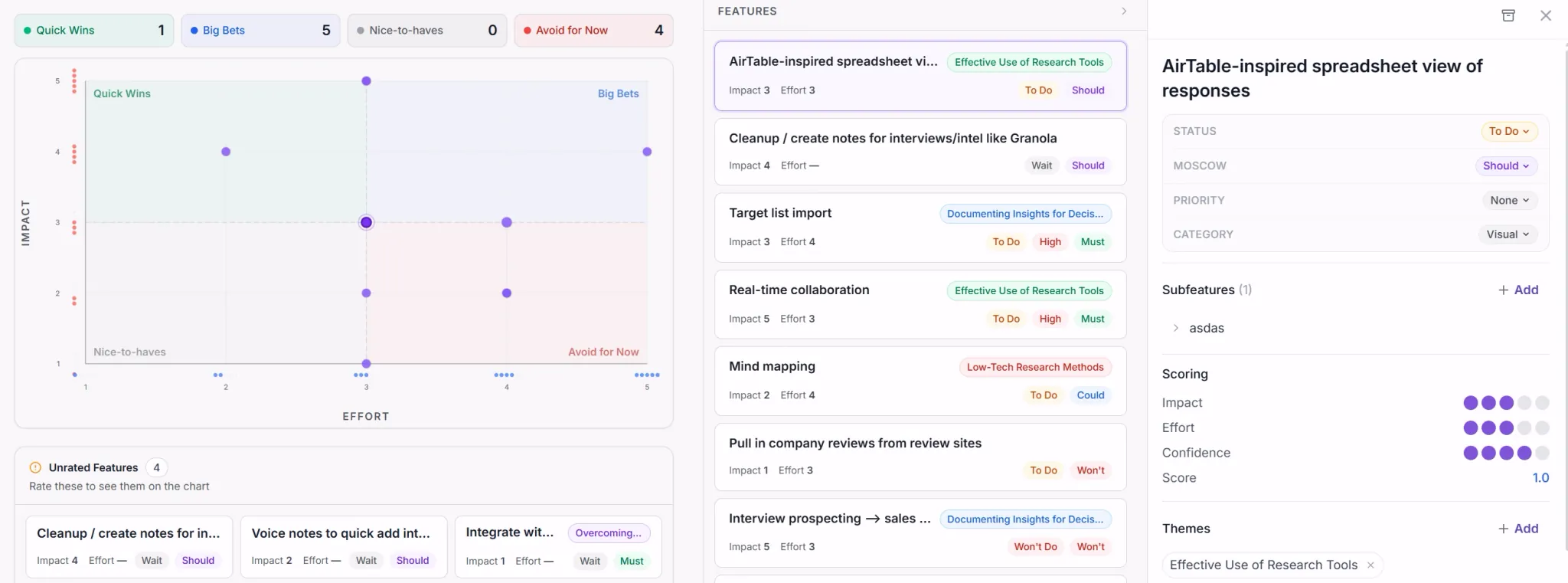
Impact vs. effort. Plot each idea on two axes — value delivered against cost to build. Quick wins (high impact, low effort) rise to the top; big bets and low-value work sort themselves out. Simple, fast, and the most widely used.
RICE. Score each idea by Reach × Impact × Confidence ÷ Effort. More rigorous than impact-vs-effort because it factors in how many users are affected and how sure you are. Great when you need to compare many ideas objectively.
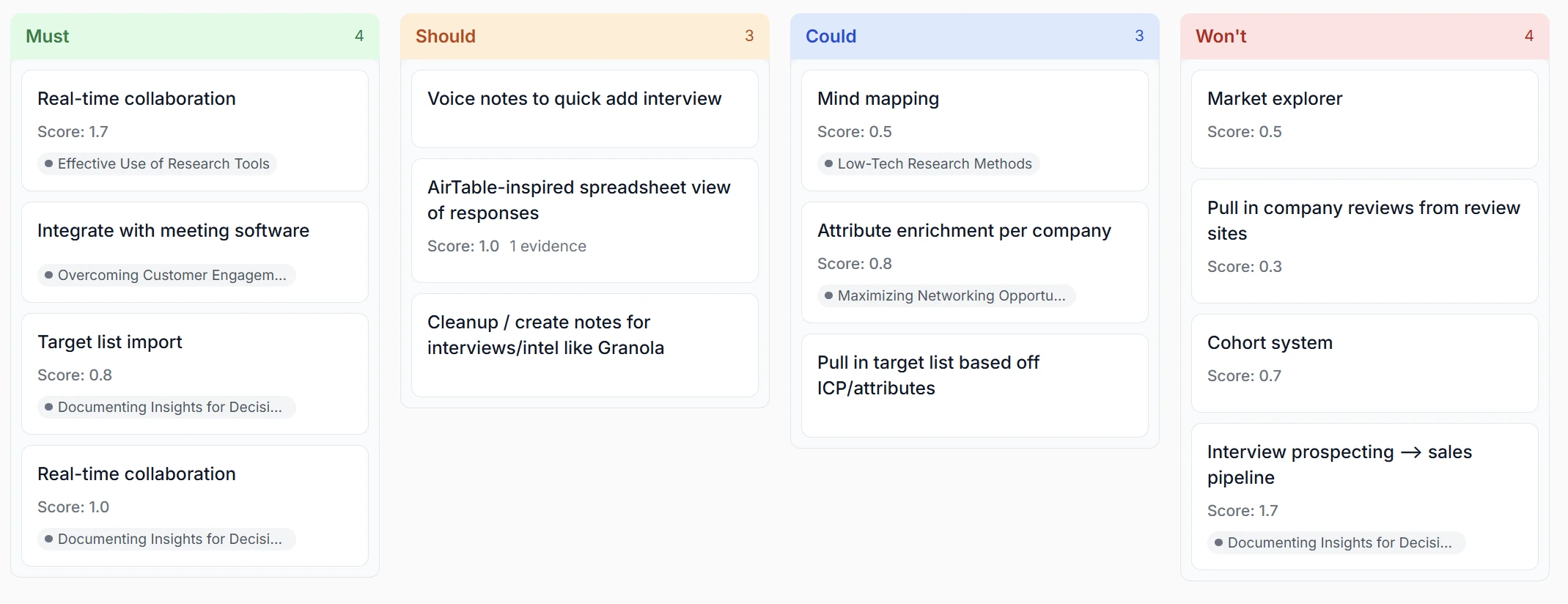
MoSCoW. Sort into Must-have, Should-have, Could-have, and Won't-have. Best for scoping a release or aligning stakeholders on what's in vs. out.
Kano model. Classify features by how they affect satisfaction — basic expectations, performance needs, and delighters. Useful for balancing table-stakes work against differentiation.
Weighted scoring. Define your own criteria (e.g., strategic fit, revenue, effort, risk), weight them, and score. Most flexible; best when priorities are nuanced.
Which framework should you use?
| Situation | Framework |
|---|---|
| Fast, lightweight calls | Impact vs. effort |
| Comparing many ideas objectively | RICE |
| Scoping a release / stakeholder alignment | MoSCoW |
| Balancing basics vs. delighters | Kano |
| Nuanced, custom criteria | Weighted scoring |
Don't over-engineer it — for most teams, impact vs. effort (or RICE) plus good judgment is enough.
The input that makes any framework work
Every framework depends on one thing: accurate inputs. "Impact" and "reach" are guesses unless they're grounded in real customer research. The most common failure mode is scoring ideas on opinion, then dressing it up as a framework.
Ground your scores in evidence: how often does a need show up across interviews? Which segments does it affect? How much revenue is tied to it? That's where the framework stops being theater and starts being decision-making — and where you avoid over-indexing on the loudest customer. (For a deeper head-to-head of the frameworks themselves, see RICE vs MoSCoW vs impact-effort; for where prioritization fits in the wider process, the product roadmapping guide.)
Prioritize on evidence with Intervool
Intervool makes prioritization evidence-based: it synthesizes interviews into themes, shows how often each shows up and for which segments, and scores feature bets on impact vs effort — every priority one click from the customer quote behind it. So your roadmap reflects what customers actually need, not who argued hardest. See how it works.