Thematic analysis is the part of research where you find out whether the thing you keep hearing is actually a pattern. Done properly it means reading every transcript, labelling what matters, grouping the labels, and checking the groups against the raw data — reliable, defensible, and slow enough that most product teams quietly skip it. The tools here split into two camps: academic software that makes the rigorous method possible, and AI tools that propose themes in minutes and ask you to check them. Both are legitimate; they answer different questions.
What's the best tool for pulling themes from customer interviews?
For academic or regulated research where method has to withstand review, NVivo and ATLAS.ti remain the standard, and Dedoose is the best choice for mixed-methods work with a team. Delve gives you the same coding rigour with a fraction of the learning curve and is the best pick for a researcher who wants proper method without the enterprise software. For product teams, the honest answer is that formal coding is usually more rigour than the decision requires: Intervool reads every interview, proposes evidence-linked themes with the frequency and customer segment attached, and lets you merge, split, and reject them — then carries the surviving themes into personas and a prioritized roadmap.
Jump to a tool
Compared at a glance
The split here is how much of the thinking the tool does. More automation means faster answers and more to check; more control means defensible method and real time cost.
Yes Does thisPartial Partly, or with workaroundsNo Not a feature
Finds themes for you
Proposes recurring themes from the content automatically, rather than waiting for you to code every passage.
Formal codebook
Supports a defined, reusable set of codes applied consistently — the basis of defensible qualitative method.
Shows how often
Tells you how many interviews a theme appeared in, so you can tell a pattern from one memorable quote.
Quotes attached
Every theme stays linked to the exact passages and people it came from.
Themes by segment
Shows which kinds of customer a theme came from, so you can see where needs diverge.
Usable without training
A product manager can get real value in an afternoon, without a course in qualitative method.
The categories, and what each is for
These products get compared as if they’re interchangeable. They aren’t — they’re solving different halves of the job.
AI theming for product teams
Proposes themes across every interview in minutes, with frequency, segments, and quotes attached for you to verify.
Intervool
Modern coding tools
Real qualitative coding with a manageable learning curve and AI assistance where it helps.
Delve, Dovetail, Condens
Academic CAQDAS
The established qualitative analysis software. Maximum rigour, maximum cost, steepest learning curve.
NVivo, ATLAS.ti, Dedoose
Visual synthesis
Affinity mapping on a canvas — grouping cards until the shape of the data emerges.
Notably
The tools in detail
01
Intervool
Our productAI theming for product teams
Themes across every interview, with the evidence attached
app.intervool.com/themes
Themes across every interview, with the evidence attached.
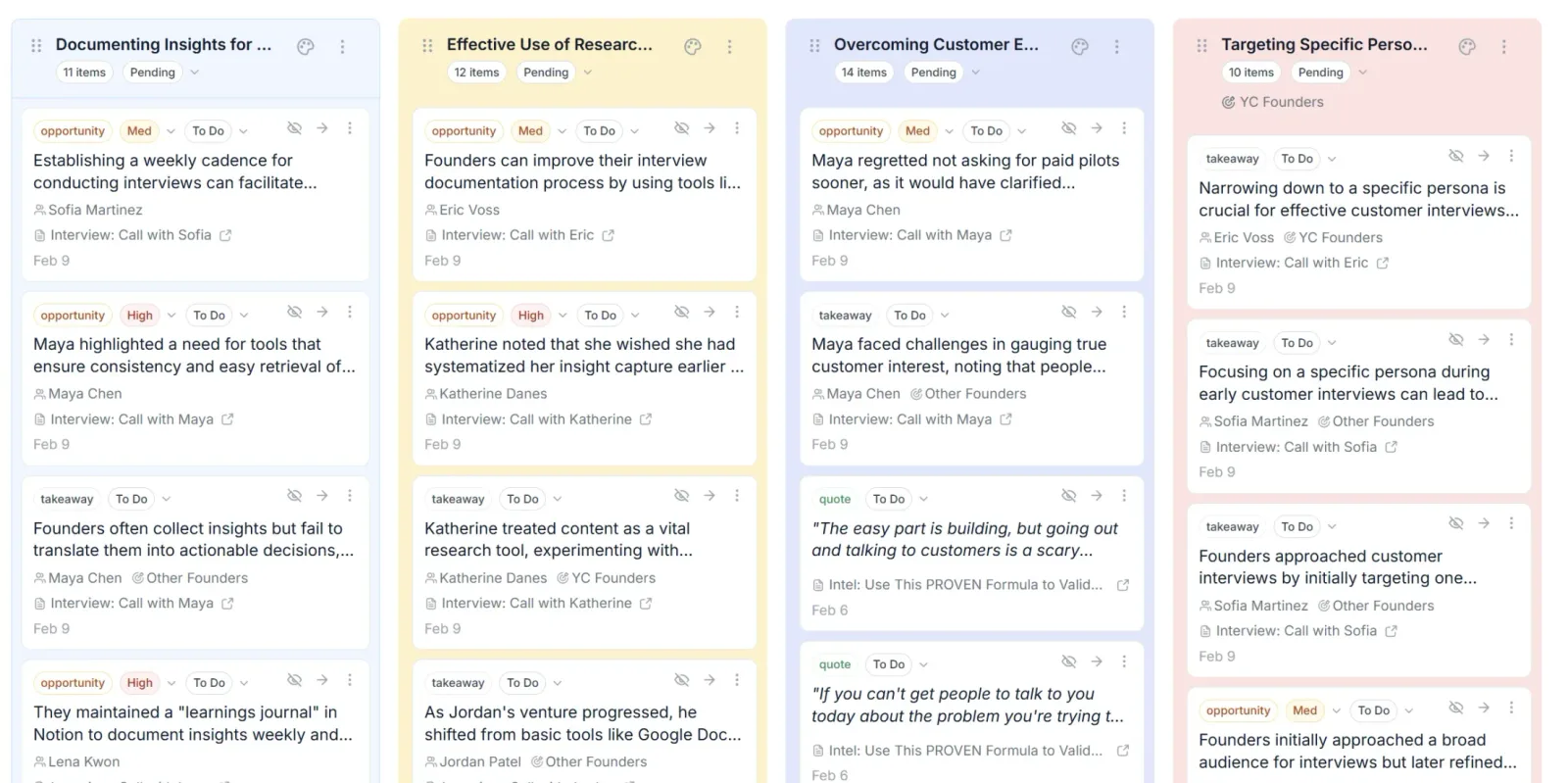
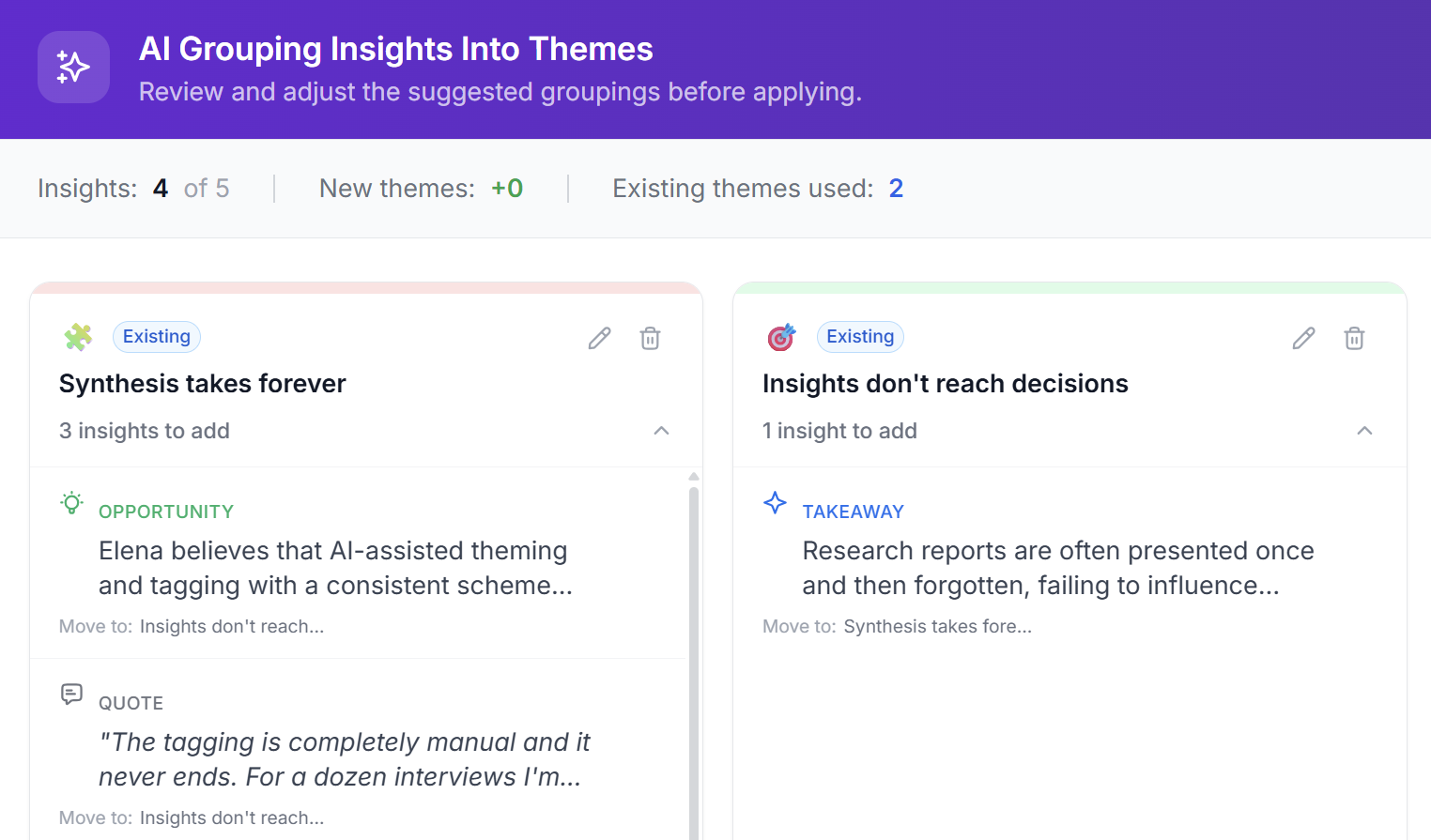
Intervool reads every interview and proposes themes from what actually repeats — each showing how many interviews it appeared in, which personas and segments it came from, and the exact quotes underneath. That last part is what makes it usable rather than merely fast: you can open any theme, read the six passages behind it, and decide the AI was wrong. Merge two themes, split one that conflated separate problems, rename, or reject outright. What survives becomes personas, segments, and a prioritized roadmap. It's not formal coding and doesn't pretend to be — there's no codebook to defend to a reviewer.
Best for
Product teams who need to know what repeats, and need it this week
Pricing
Basic $39/mo · Team $279/mo (6 seats) · Enterprise custom
Free option
14-day free trial, no credit card
Strengths
Themes proposed across every interview in minutes
Frequency and segment breakdown on every theme
Full control — merge, split, rename, reject
Every theme opens onto the quotes behind it
Surviving themes become personas and a prioritized roadmap
Limitations
No formal codebook or inter-rater reliability
Not suitable for academic or regulated research
Built for product interviews, not general qualitative data
app.intervool.com/themes
What repeats gets grouped and named automatically.
app.intervool.com/themes
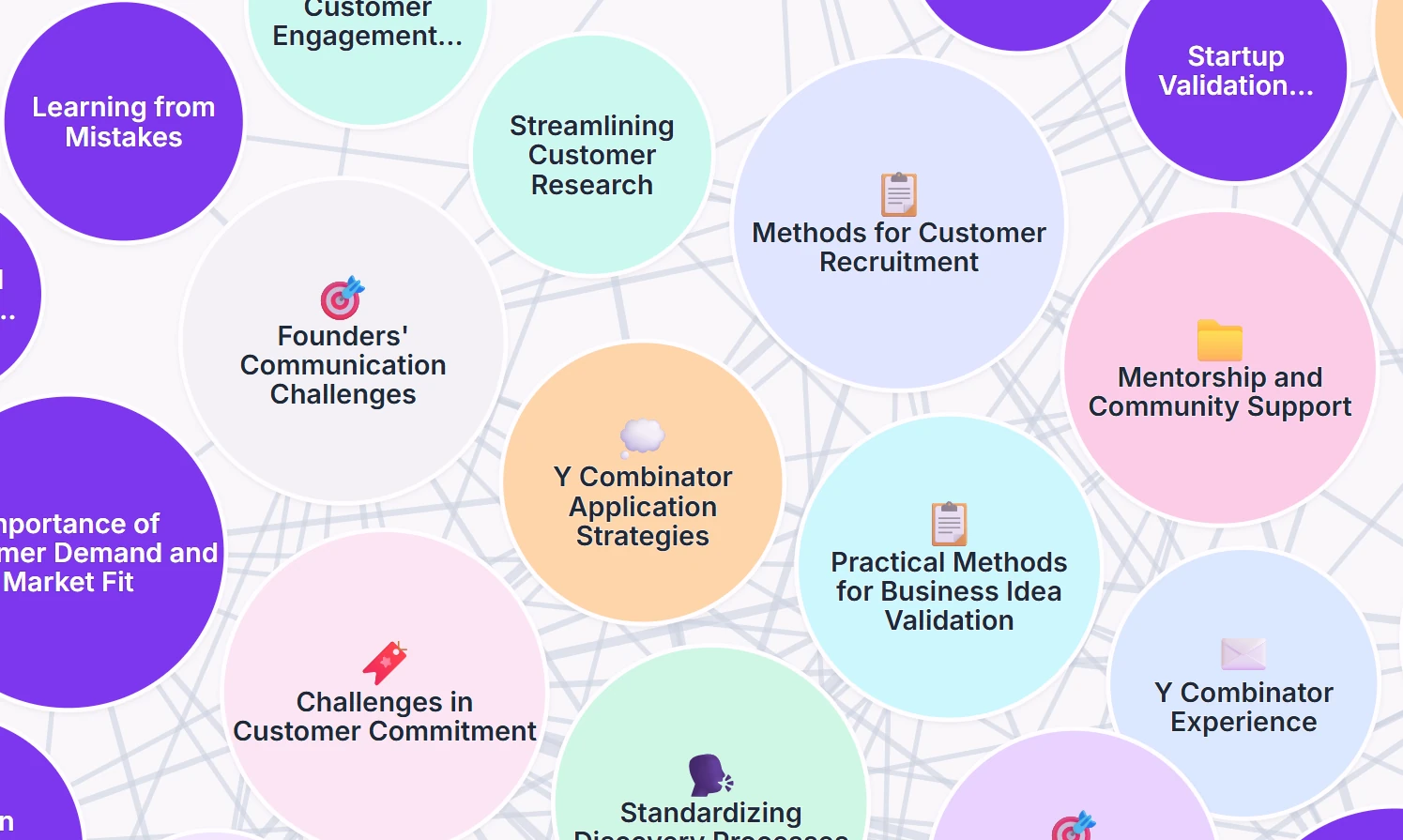
How the themes relate — and which cluster together.
Proper qualitative coding, without the academic software
delvetool.com
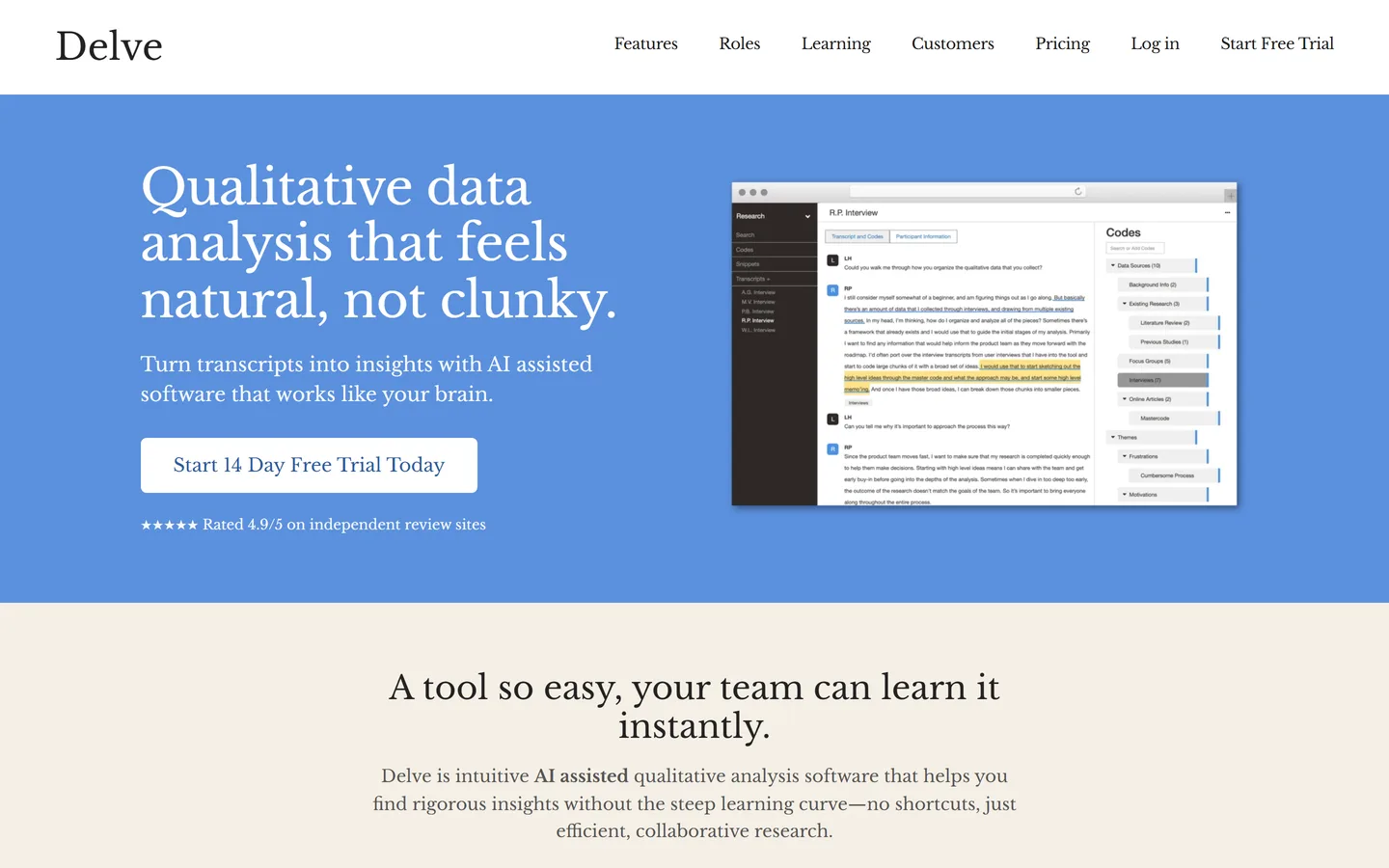
Delve does thematic analysis the way the textbooks describe it — build a codebook, code passages, group codes into themes, review against the data — with an interface a competent person can learn in an afternoon rather than a semester. It's the best available bridge between academic method and practical timelines, and its AI assist can do a first coding pass you then correct. You still do the analysis; it just removes the friction.
Best for
Researchers who want method rigour and a manageable learning curve
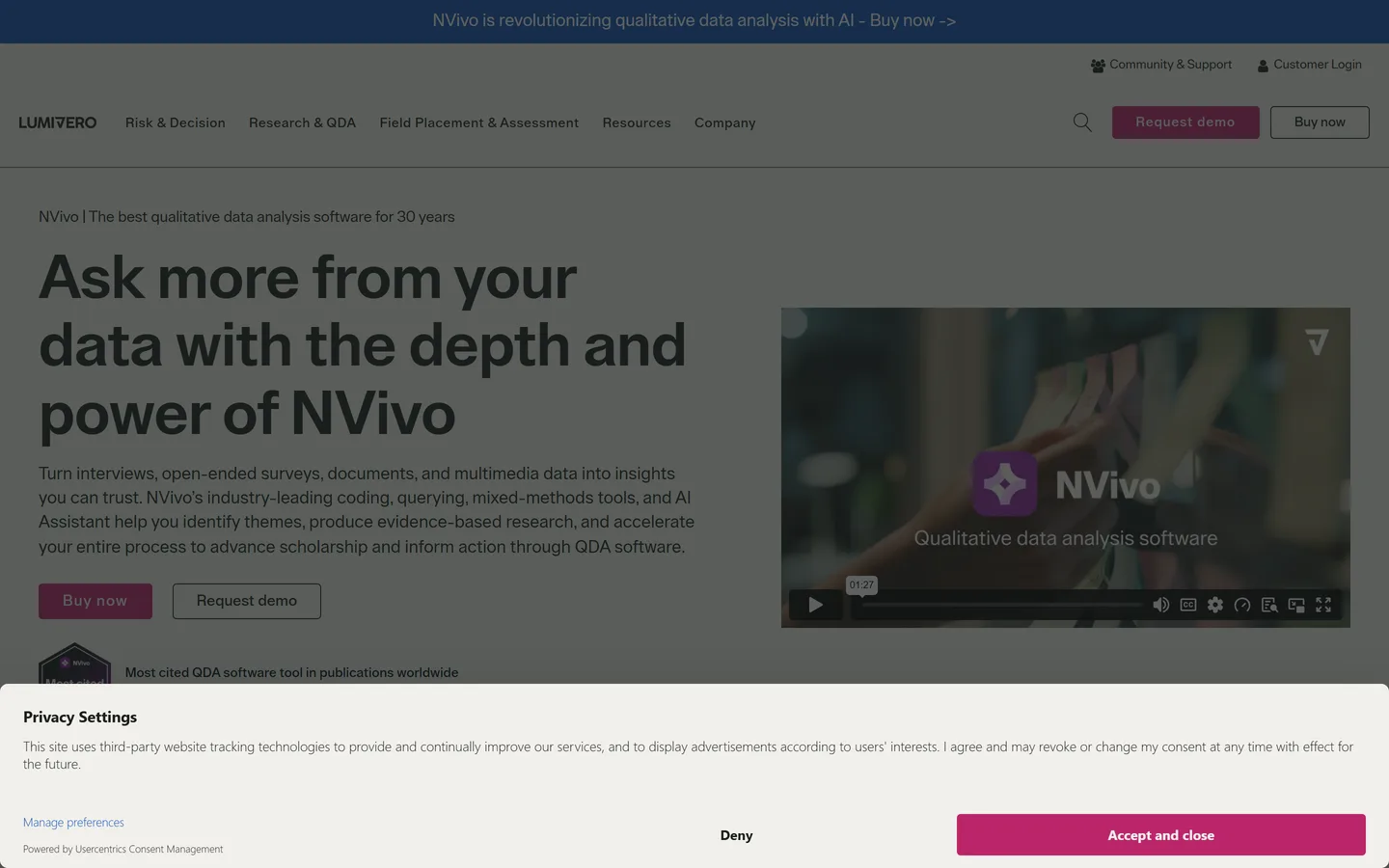
NVivo has been the default qualitative analysis software in academia for decades, and the reason is capability: complex codebooks, matrix queries, inter-rater reliability testing, and analysis across text, audio, video, and survey data. If your method section has to survive peer review, this is what reviewers expect to see. It is also expensive, licence-based, and genuinely hard to learn — most users report weeks before fluency.
Best for
Academic, healthcare, and regulated research that must withstand review
Pricing
Subscriptions from ~$130/yr; commercial licences ~$1,645+
Free option
14-day free trial
Strengths
The most complete qualitative analysis toolkit available
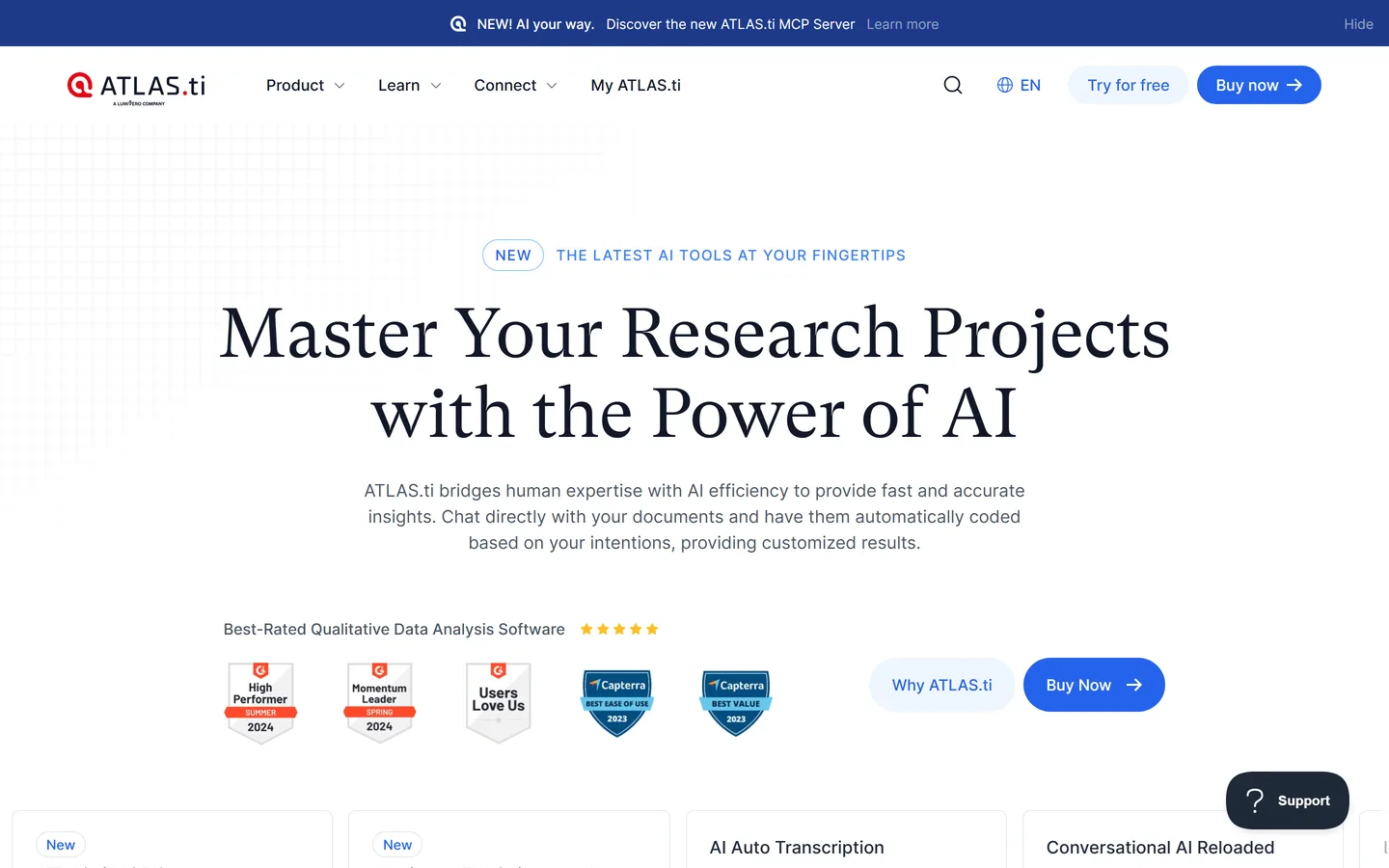
ATLAS.ti is NVivo's long-standing rival and the better choice if you want to see how codes relate to each other — its network views for mapping relationships between concepts are the strongest in the category. It has added AI coding assistance in recent versions, which softens the effort somewhat. Like NVivo it's licence-priced, desktop-centred, and assumes you know qualitative method going in.
Best for
Researchers who think in networks and relationships between codes
Pricing
Desktop commercial licence ~$670; subscriptions from ~$395/yr
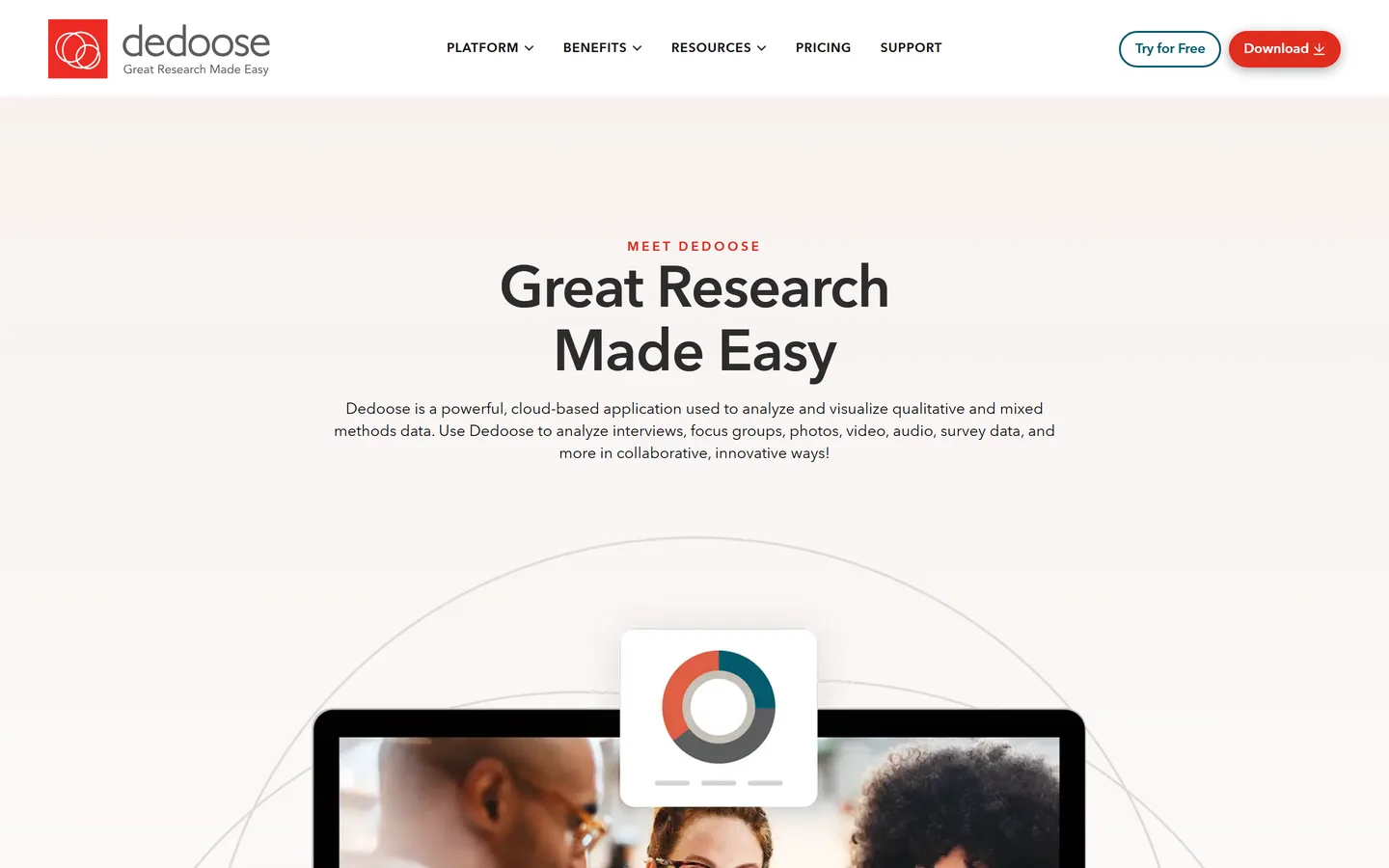
Dedoose runs entirely in the browser and is built for mixed-methods work — coding qualitative data alongside demographic and quantitative variables, then cross-tabulating the two. For research where you need to know whether a theme differs by age, region, or plan tier, it handles that natively. It's priced per active user per month, which suits intermittent study work, and its interface is dated compared to newer tools.
Best for
Teams combining qualitative coding with quantitative data
Pricing
From ~$17.95/user per active month (~$15.95 for groups of 2–5)
Free option
14-day free trial
Strengths
True mixed-methods analysis
Browser-based with easy team collaboration
Monthly per-active-user pricing suits project work
Tag-based theming across an entire research archive
dovetail.com
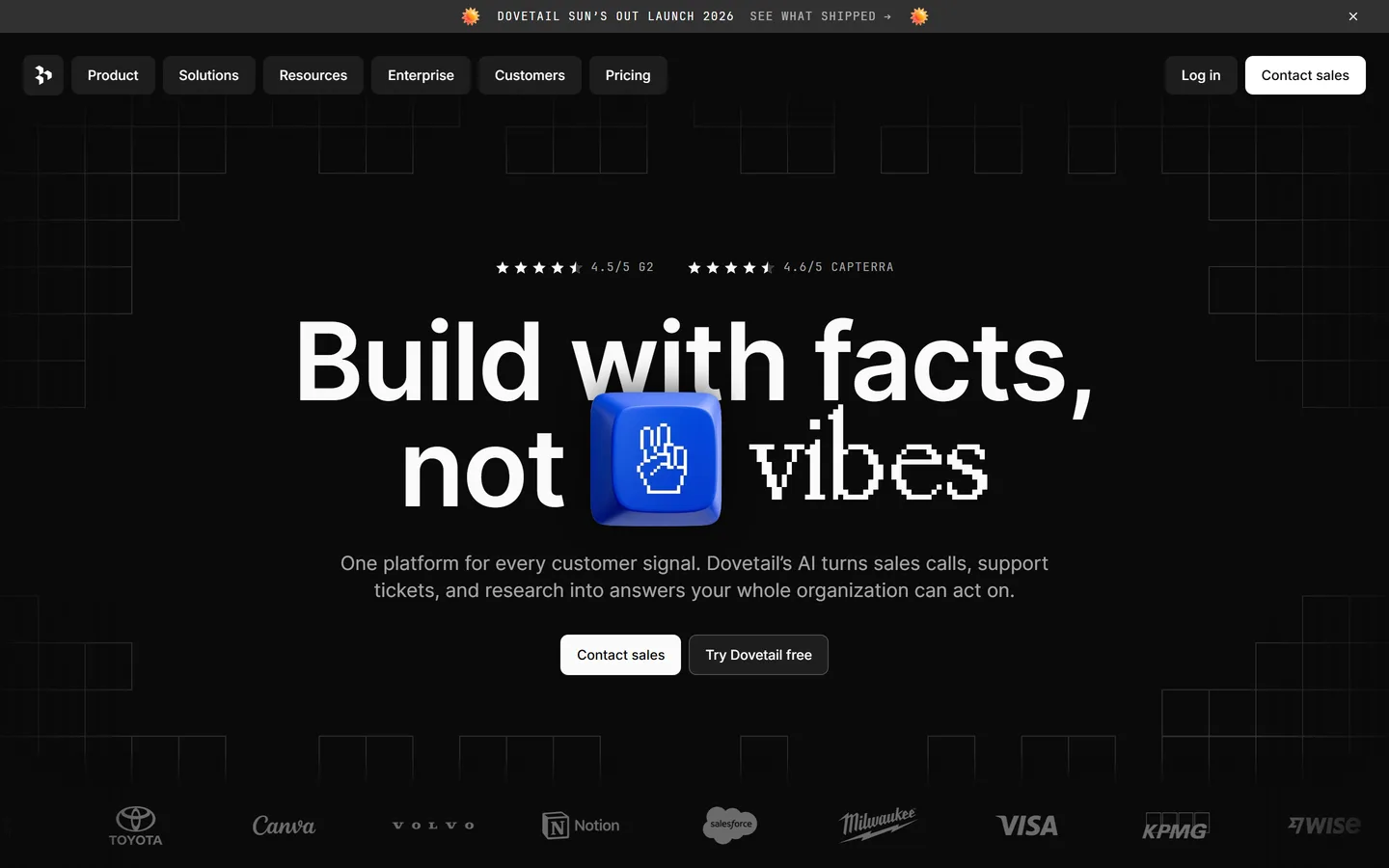
Dovetail's approach to themes is systematic tagging across every study in the archive, which means a theme can span research done eighteen months apart — something none of the study-scoped tools here can do. That longitudinal view is its real advantage. It depends completely on taxonomy discipline: without someone owning the tag list, the same concept ends up under four different names and the theming quietly stops working.
Best for
Research teams theming consistently across many studies
Notably turns synthesis into a canvas exercise: observations become cards, you group them spatially, and AI proposes clusters and summaries as the board fills. For anyone whose instinct in a synthesis workshop is to reach for sticky notes, it's the closest digital equivalent, and the AI assist means you don't start from an empty board. It's a smaller product than the incumbents with a correspondingly smaller ecosystem.
NVivo, ATLAS.ti, and Dedoose are wrong for most product teams and exactly right for some readers. Leaving them out would make this a product-tools list wearing a methodology title, so they're here with honest notes on cost and learning curve.
We treated frequency as non-negotiable
The failure mode in thematic analysis is promoting one vivid interview to a pattern. Any tool worth using tells you how many interviews a theme actually appeared in, so that's a grid column rather than a feature note.
We checked you can disagree with the machine
AI-proposed themes routinely merge two problems that happen to share vocabulary. Tools where you can split, merge, rename, and reject are marked, because a theme you can't argue with isn't analysis.
We asked whether segments are visible
A theme that appears in eight of twenty interviews means something different if all eight are enterprise customers. Tools that break themes down by customer type are noted, since that distinction frequently changes the decision.
Pricing checked August 2026, and we're not neutral
Published prices as of August 2026, rounded; academic licences vary by institution. Intervool is ours and is marked as such — it scores only partial on formal codebooks because it genuinely doesn't do academic coding, and NVivo, ATLAS.ti, or Delve are the honest answer when you need that.
FAQ
Common questions
What is thematic analysis?
A method for finding patterns of meaning across qualitative data. The standard approach — Braun and Clarke's six phases — is: get familiar with the data, generate initial codes, search for themes, review them against the data, define and name them, and write up. The review step is the one people skip and the one that stops you promoting a vivid quote to a finding.
What's the best tool for pulling themes from customer interviews?
For product teams, an AI-first tool that proposes themes with frequency and quotes attached — Intervool does this across every interview and lets you correct what it gets wrong. For rigorous coding, Delve is the most approachable and NVivo or ATLAS.ti the most complete. For themes spanning years of studies, Dovetail's tagging model handles that best.
Can AI do thematic analysis?
It can do the mechanical majority of it — reading everything, extracting observations, and grouping similar statements — far faster and more consistently than a person working through twenty transcripts. What it can't be trusted with unsupervised is judgement: it will occasionally merge two distinct problems that use the same words, or smooth over the contradiction that was the most interesting thing in the data. Treat it as a first pass you review, and always read the quotes under a theme before acting on it.
How many interviews do you need for thematic analysis?
Themes typically start stabilising around five to eight interviews within a single segment, and saturation — where new interviews stop adding new themes — usually arrives between twelve and twenty. If you're comparing segments, plan for that range within each rather than in total.
What are the best NVivo alternatives?
Delve is the closest in method with a far gentler learning curve and much lower price. ATLAS.ti is the direct rival if you want equivalent power with better visual mapping. Dedoose is the best browser-based option for mixed methods. For product research where academic rigour isn't the requirement, Intervool or Dovetail get you to usable themes without the coding overhead.
Is manual coding better than AI theming?
It's more defensible, and slower. Manual coding gives you a documented, reproducible method — necessary for publication or regulated research. AI theming gives you a usable answer in an afternoon with review effort instead of coding effort. For a decision about what to build next quarter, AI theming with a genuine review of the quotes is almost always the better trade; for a paper, it isn't a trade you can make.