Every research practice starts the same way: a spreadsheet. One tab for interviews, another for quotes, maybe a third for themes. It works — until it doesn't.
This post covers when spreadsheets stop working for qualitative research, what you lose by staying too long, and when it's time to switch to a research repository.
Why spreadsheets work at first
Spreadsheets are free, familiar, and flexible. For the first 5-10 interviews, they're fine:
- Low setup cost — open a sheet, start typing.
- Familiar interface — everyone knows how to use them.
- Flexible structure — add columns as you need them.
- Good enough search — Cmd+F works for small datasets.
If you're running occasional research with a small team, spreadsheets can work indefinitely.
When spreadsheets break down
But spreadsheets hit a wall fast. Here's what breaks:
Search stops working
Cmd+F finds exact matches. It doesn't find "the customer who complained about onboarding" when you wrote "user struggled with setup." Real search needs semantic understanding.
Evidence linking is manual
In a spreadsheet, you paste quotes and hope you remember which interview they came from. There's no automatic link to the source recording or timestamp. When someone asks "who said that?", you're digging.
Synthesis happens in your head
Spreadsheets store data. They don't surface patterns. You have to read every row, remember connections, and synthesize manually. That works for 10 interviews. At 50, it's impossible.
Collaboration is fragile
Multiple people editing the same sheet creates merge conflicts, accidental deletions, and version confusion. "Which version has the latest tags?" becomes a recurring question.
Onboarding is painful
When a new PM or researcher joins, they can't self-serve. Someone has to walk them through the spreadsheet, explain the structure, and point them to relevant rows. The knowledge lives in people, not the tool.
The cost of staying too long
Teams often stick with spreadsheets past the breaking point. The costs compound:
- Duplicate research — you re-run studies because you can't find past findings.
- Lost insights — critical quotes disappear into forgotten tabs.
- Slow synthesis — hours spent re-reading instead of analyzing.
- Siloed knowledge — only the person who ran the study knows what it found.
- Gut-feel decisions — without accessible evidence, roadmaps default to opinions.
When to switch to a research repository
Switch when any of these are true:
| Signal | Why it matters |
|---|---|
| 10+ interviews | Search and synthesis break down. |
| Multiple researchers | Collaboration needs structure. |
| Team needs access | PMs, designers, GTM can't self-serve from a spreadsheet. |
| Research informs roadmap | Decisions need traceable evidence. |
| Historical research matters | You need to reference past studies, not just current ones. |
If two or more apply, it's time.
What you gain with a repository
A research repository solves the problems spreadsheets create:
Real search
Find "onboarding complaints" even when the exact phrase doesn't appear. Search by theme, persona, date, or keyword.
Automatic evidence linking
Every insight connects to the source quote, timestamp, and recording. One click to verify.
AI synthesis
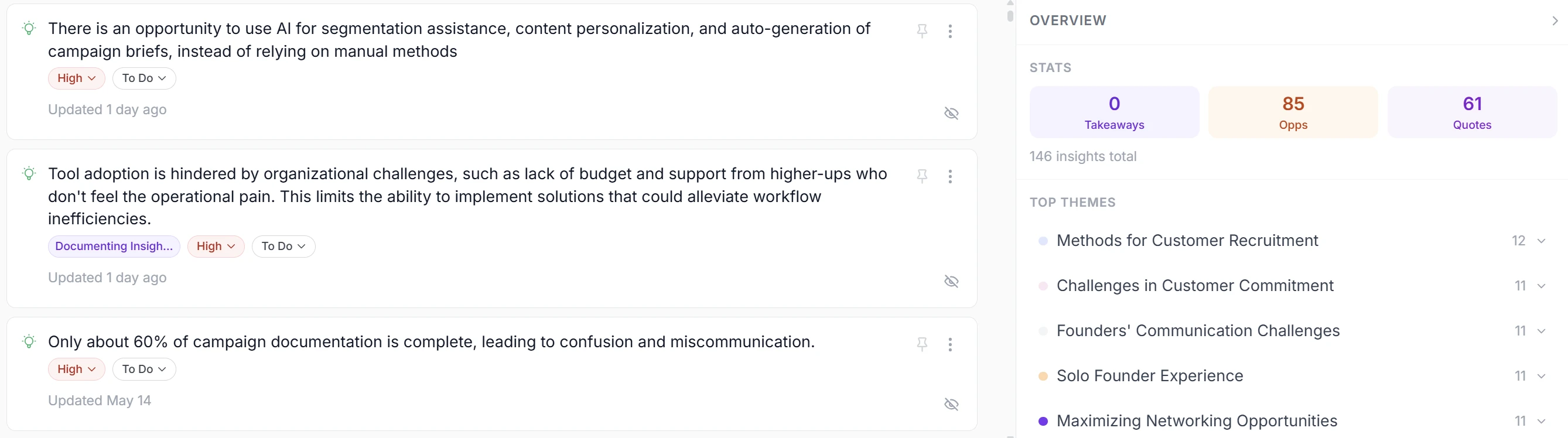
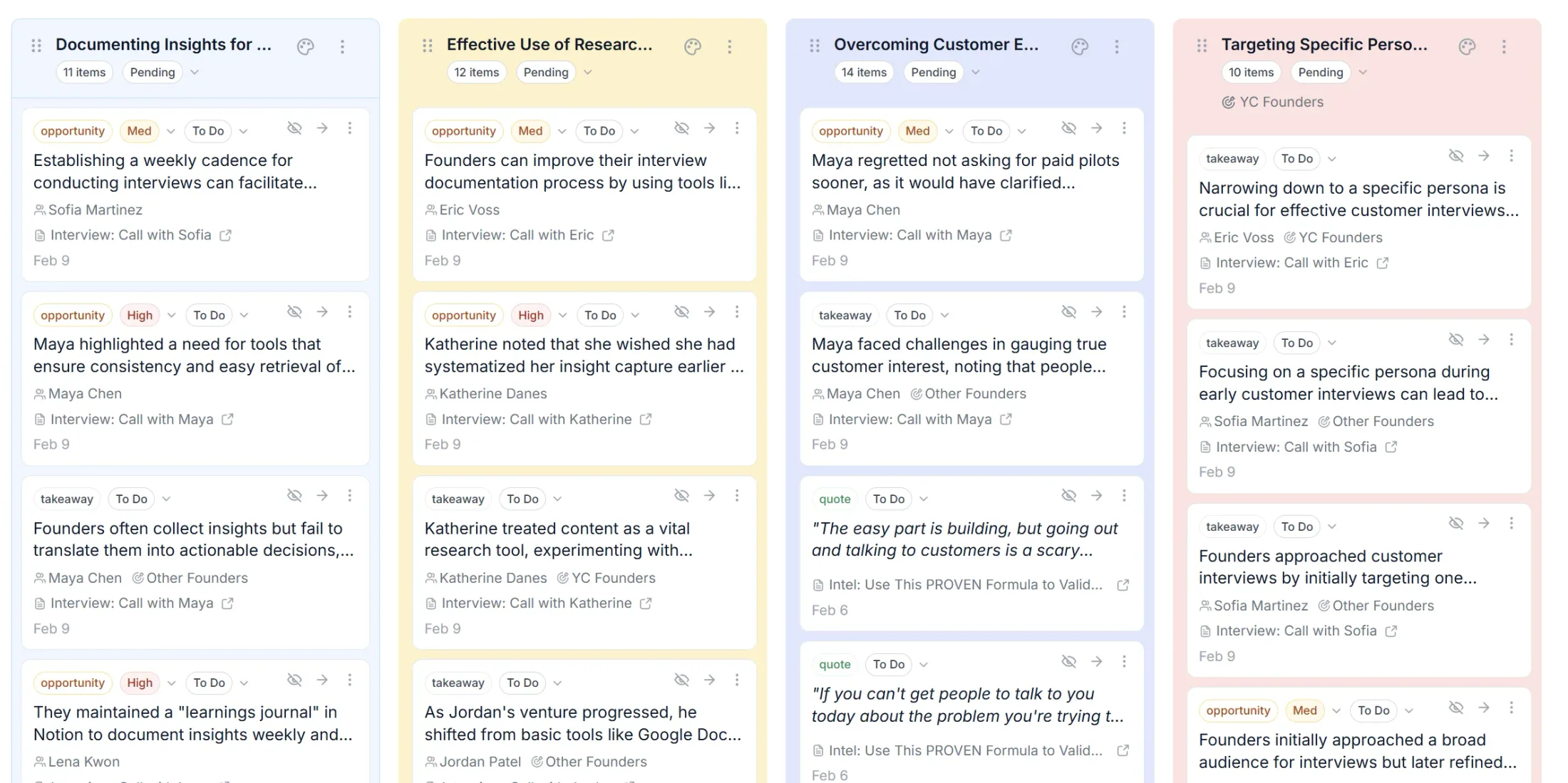
The tool extracts themes, clusters patterns, and surfaces what repeats across interviews. Synthesis takes hours, not days.
Team-wide access
Designers, PMs, and GTM can search and explore research without asking the researcher. Knowledge is democratized.
Compounding knowledge
Past research stays findable. Every new study builds on what came before.
Choosing a repository
Not all repositories are equal. Match the tool to your needs:
| Need | Tool |
|---|---|
| Store and tag findings | Dovetail, Condens |
| AI synthesis at scale | Marvin, Intervool |
| Research → roadmap | Intervool |
If you're a product team (not a dedicated research team), prioritize tools that connect research to decisions.
(See our full guide to research repositories, or how Intervool works as a UX research repository.)
Making the switch
Migration doesn't have to be painful:
- Export key interviews — prioritize the last 6-12 months.
- Upload to the repository — let AI transcribe and extract insights.
- Establish conventions — standardize tags and structure.
- Sunset the spreadsheet — make the repository the single source of truth.
The hardest part is committing. Once you do, the benefits compound fast.
The repository that replaces your spreadsheet
Intervool is built for teams making this switch. Upload your interviews — recordings, transcripts, or notes — and Intervool stores them, transcribes them, extracts insights with AI, and connects them to personas, themes, and a prioritized roadmap.
It's the research repository that turns spreadsheets into decisions.