Everyone wants "customer insights," but the word gets used for everything from a survey stat to a gut feeling. A real customer insight is something more specific — and more useful. This guide defines it, shows how it differs from data and feedback, and explains how customer insights AI is changing the game. The stakes are real: McKinsey finds intensive users of customer insight are 23× more likely to outperform competitors on new-customer acquisition.
What is a customer insight?
A customer insight is a non-obvious, evidence-based understanding of why customers behave the way they do — one that can guide a decision. It's not a data point ("40% dropped off at checkout") and not raw feedback ("checkout is annoying"); it's the interpretation that connects them and points to action ("customers abandon checkout because surprise shipping costs break the trust built earlier — so we should show total cost upfront"). (See customer insights software for how Intervool generates them.)
Customer insight vs. data vs. feedback
| What it is | Example | |
|---|---|---|
| Data | A measured fact | "Checkout completion is 62%." |
| Feedback | What a customer said | "I didn't expect the shipping fee." |
| Insight | The why + the implication | "Unexpected costs erode trust at checkout; show totals earlier." |
Insight is where data and feedback become a decision.
How to generate customer insights
- Gather evidence from interviews, feedback, and behavior.
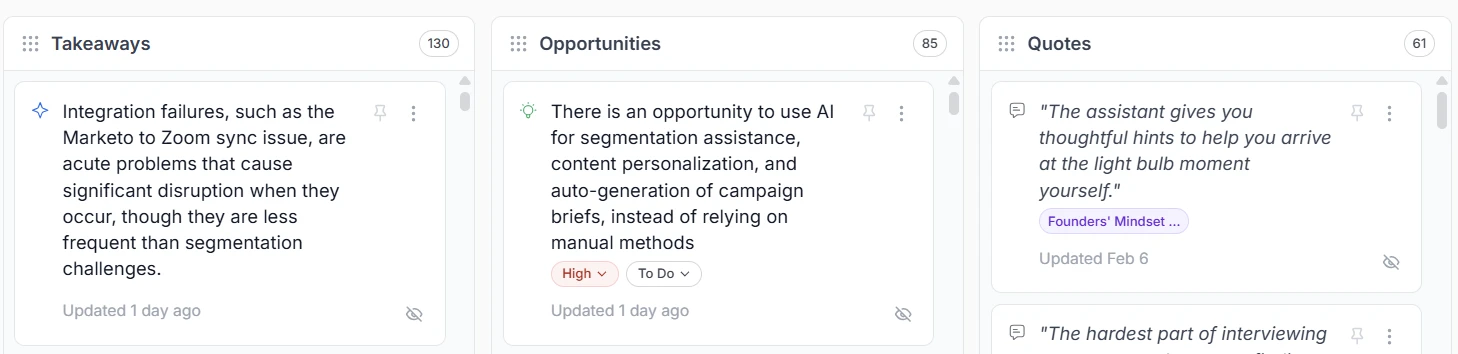
- Synthesize — cluster recurring signals with thematic synthesis and affinity mapping. Patterns across many sources beat any single anecdote.
- Interpret the why — explain what's driving the pattern, not just that it exists.
- Tie to a decision — a good insight implies an action and what would change your mind.
- Keep it traceable — link the insight to the quotes and data behind it so it's trustworthy.
How AI is changing customer insights
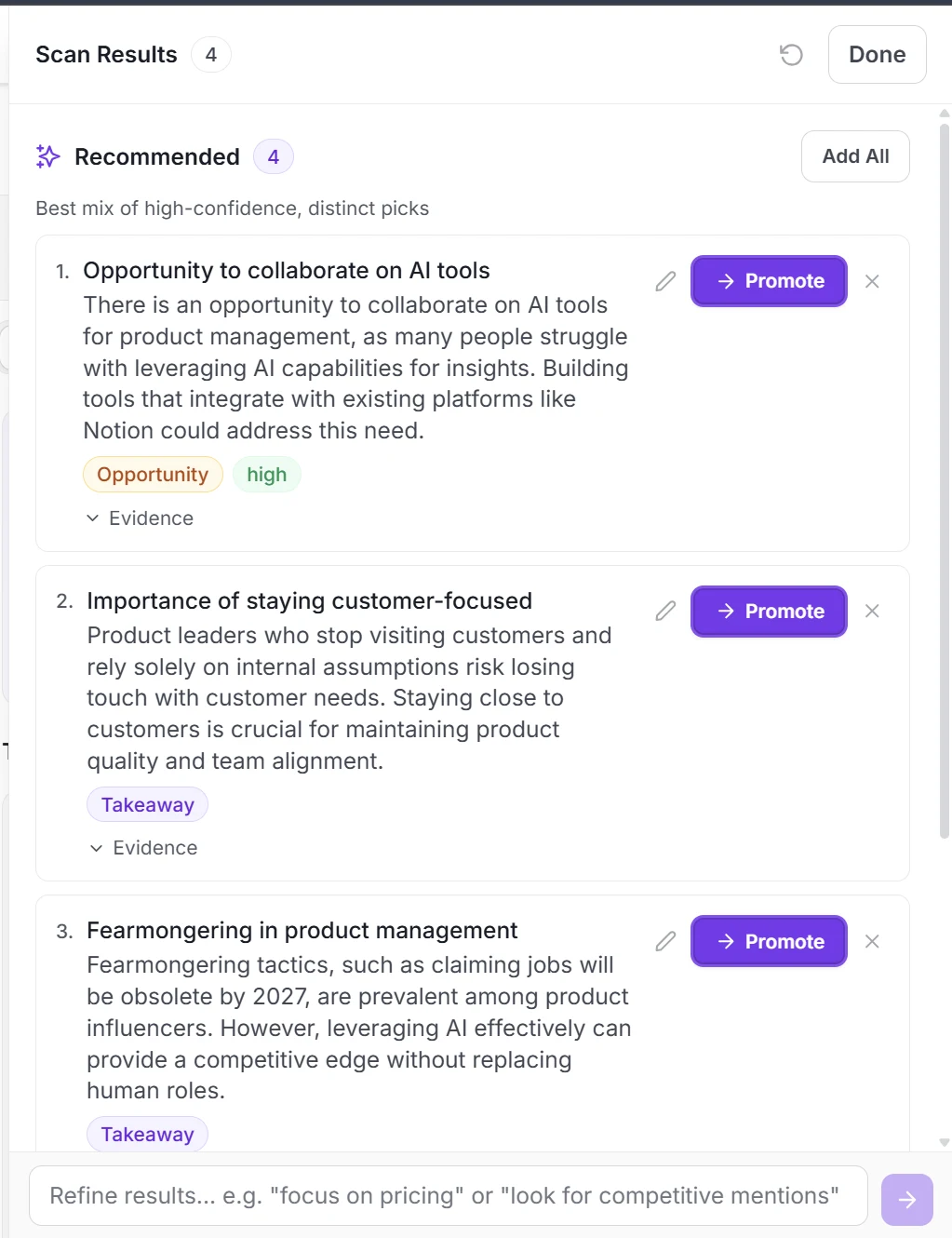
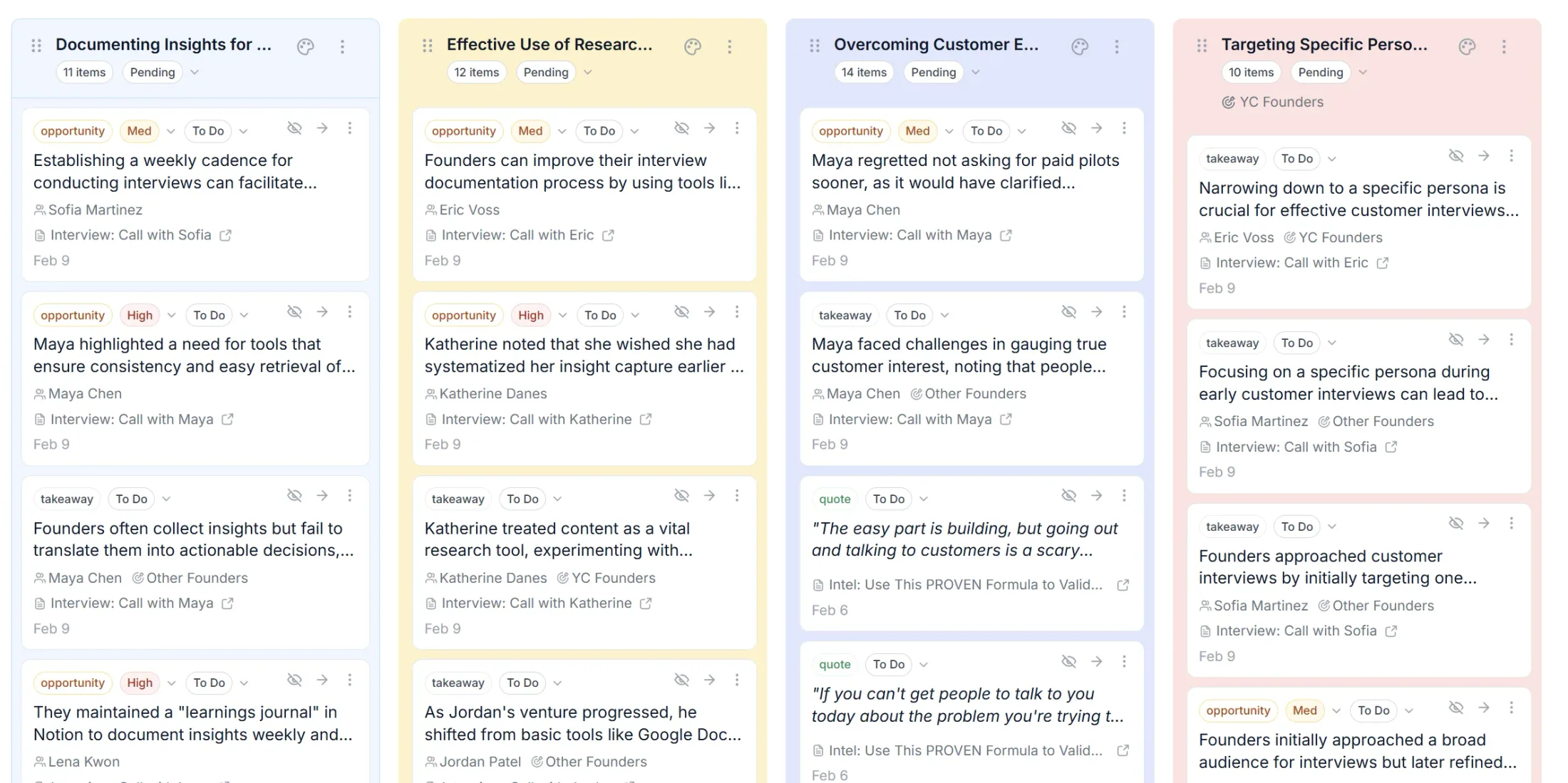
Customer insights AI uses machine learning to read large volumes of customer conversations — interviews, tickets, reviews — and surface themes, sentiment, and patterns automatically. The benefit is scale: you can find the signal across hundreds of conversations without reading every transcript by hand.
The caveat: AI is excellent at the volume work (extracting, tagging, clustering) but shouldn't own the judgment. Treat AI as an accelerator, keep a human deciding what the insight means, and insist that every AI-surfaced insight stays linked to its source so you can verify it rather than trust it blindly. (More on using AI to synthesize research without the echo chamber.)
Why customer insights matter
- They turn research into decisions instead of reports
- They reveal unmet needs and opportunities competitors miss
- They align teams around real customer needs, not opinions
- They make prioritization defensible
Generate customer insights with Intervool
Intervool turns interviews and feedback into evidence-linked customer insights with AI — surfacing what repeats across conversations, breaking it down by persona and segment, and connecting it to a prioritized roadmap. Every insight stays one click from the quote behind it, so it's trustworthy and actionable. See how it works or start a free trial.