A product roadmap is a prioritized plan of what you'll build and why. The best ones aren't a feature wishlist or a list of stakeholder demands — they're grounded in customer evidence and built around outcomes. This is a step-by-step guide to building one you can defend. (For the definition and anatomy, see our glossary entry on the product roadmap.) Getting this right is what separates a roadmap from a wishlist: Pendo's analysis found 80% of product features are rarely or never used — most of them shipped without evidence anyone wanted them.
Step 1: Anchor to outcomes, not features
Start from the problems and outcomes you're trying to drive — for customers and for the business — not a list of features. Outcome-oriented roadmaps stay flexible about how you solve a problem and keep the team focused on why.
Step 2: Gather the evidence
A roadmap is only as good as the inputs. Pull from customer research, support and sales conversations, usage data, and market analysis. Talk to customers directly — interviews surface the why behind the requests.
Step 3: Synthesize into themes
Cluster what you heard into themes — recurring needs and opportunities that show up across customers, not one-off asks. Themes, not raw requests, are the right unit for a roadmap. (More on how to analyze customer interviews.)
Step 4: Prioritize
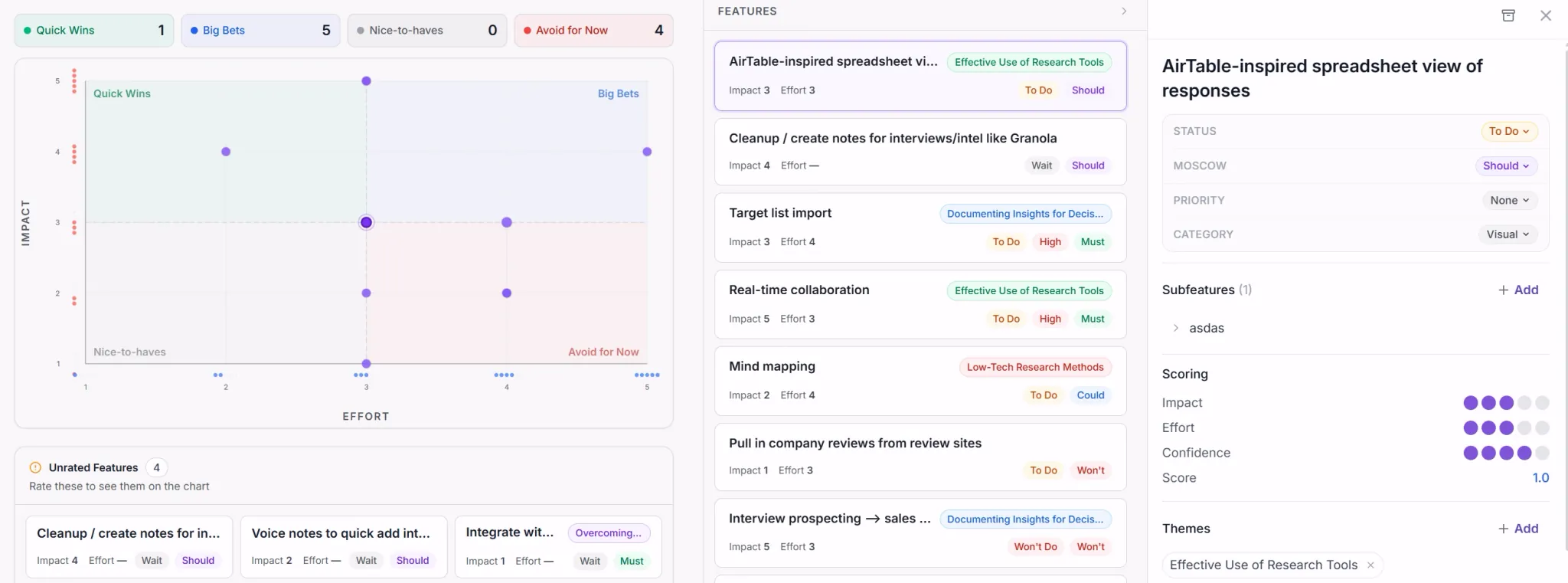
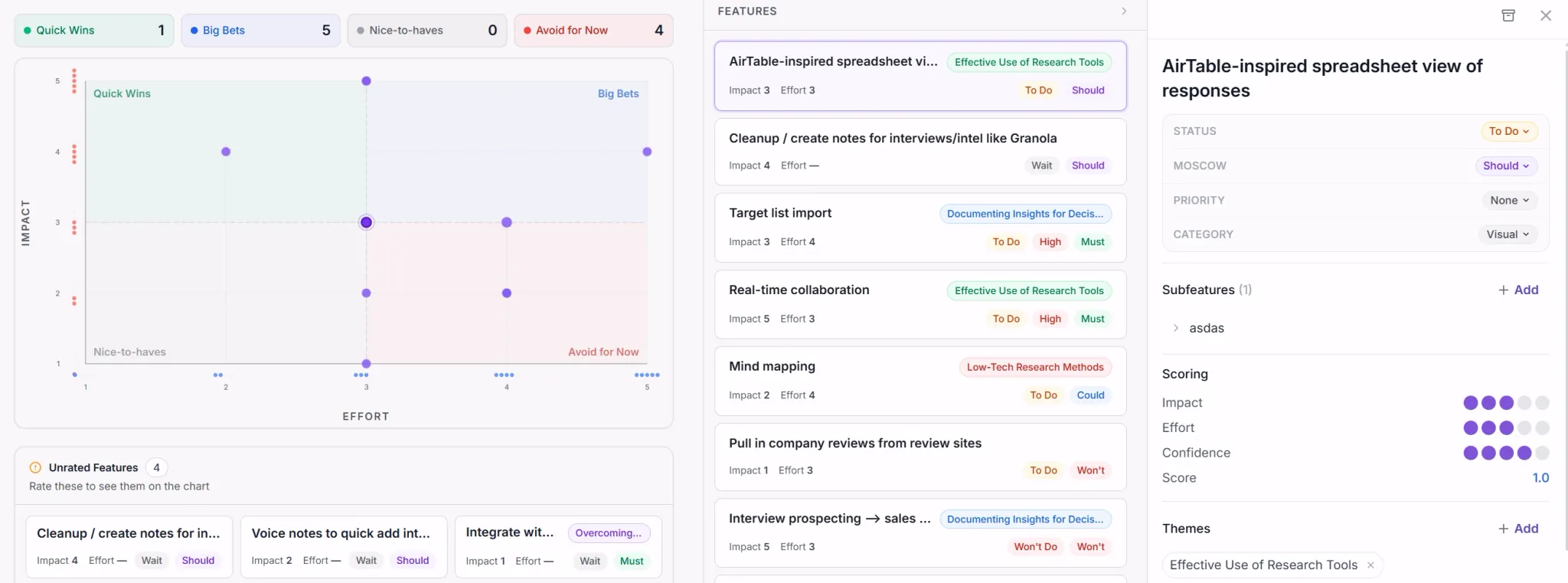
Score themes and ideas on impact vs effort (or a framework like RICE). Weight by how many customers and how much revenue each affects so you build for the many, not the loudest customer. (Deep dive: product roadmap prioritization.)
Step 5: Structure the roadmap
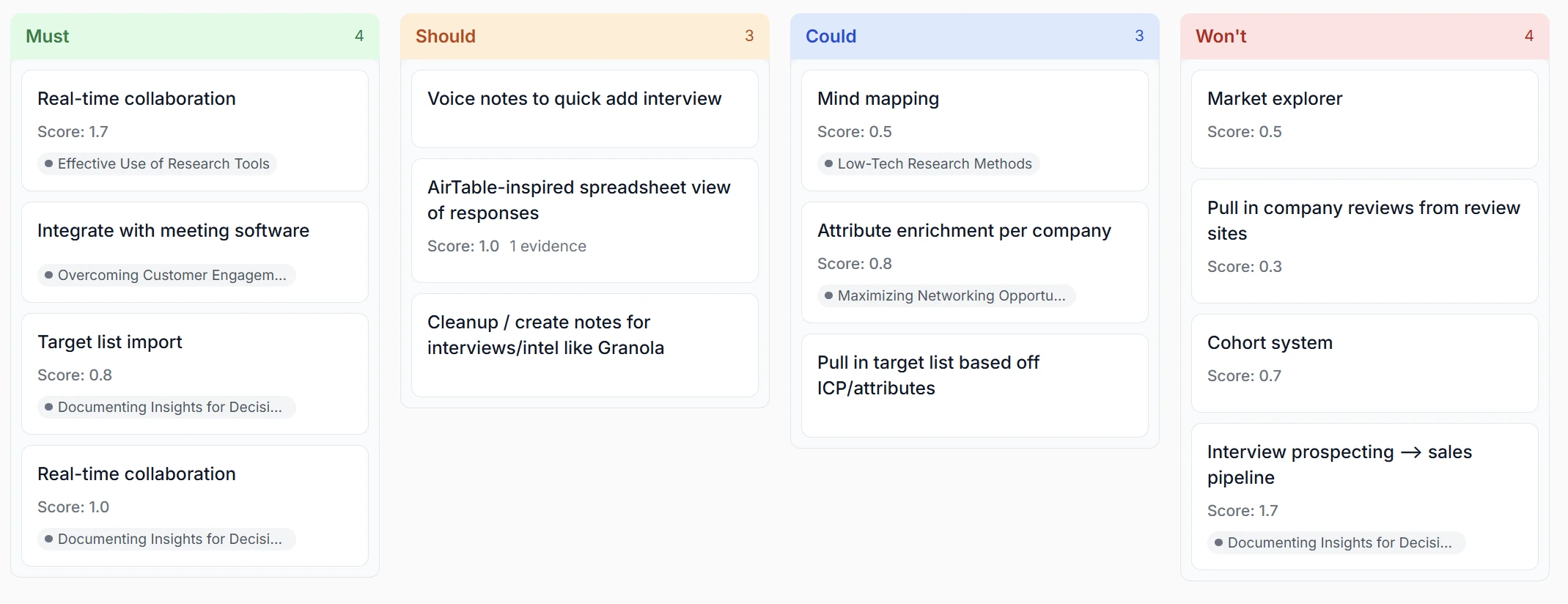
Organize the prioritized work in a way your team and stakeholders can read — commonly by now / next / later (time horizons) or by theme. Avoid over-precise dates early; communicate confidence, not false certainty.
Step 6: Keep it traceable and alive
Tie every roadmap item back to the evidence behind it, so you can defend each priority. Then treat the roadmap as living — revisit it as new research arrives, and communicate changes.
A common pitfall: the disconnected roadmap
Most roadmaps drift from the research that should inform them — the insights live in one tool and the roadmap in another, so priorities quietly become whatever the loudest stakeholder wanted. The fix is keeping the roadmap connected to the evidence.
That's how Intervool works: it synthesizes your interviews into themes, turns them into impact-vs-effort feature bets, and keeps every priority one click from the customer quote behind it — so the roadmap is a direct output of your research. See how it works or start a free trial.
For the bigger picture — roadmap types, framework comparisons, and the mistakes that sink roadmaps — see the complete guide to product roadmapping, and if you're choosing tooling, the best product roadmap tools comparison.