Ask experienced product leaders where roadmaps go wrong, and you'll hear a version of the same story: the squeakiest wheel gets the feature. The loudest customer, the biggest prospect in the room, the complaint that landed in the exec's inbox this week — they pull the roadmap toward outliers and away from the majority of users who'd quietly benefit from something else. The cost shows up in the data: Pendo's analysis found 80% of product features are rarely or never used — a lot of it built for the loudest voice rather than the broadest need.
How your feedback gets skewed
Two forces distort the picture, and most teams underestimate both.
Sampling bias. The feedback that reaches a product team is rarely representative. One leader described how relationship managers would filter out unhappy customers before a call ever happened — so the voice of customer that made it through skewed positive, or skewed toward whoever shouted loudest. Feedback naturally clusters at the extremes: the delighted and the furious are the ones who write in.
Recency bias. Without an aggregated view, decisions get anchored to whatever you heard most recently — the last sales call, the biggest prospect's must-have, the loudest voice in the last meeting. You end up building for outliers and missing the incremental wins that would help most of your customers.
The result is a roadmap optimized for a handful of memorable conversations instead of the pattern across all of them.
The fix: aggregate before you decide
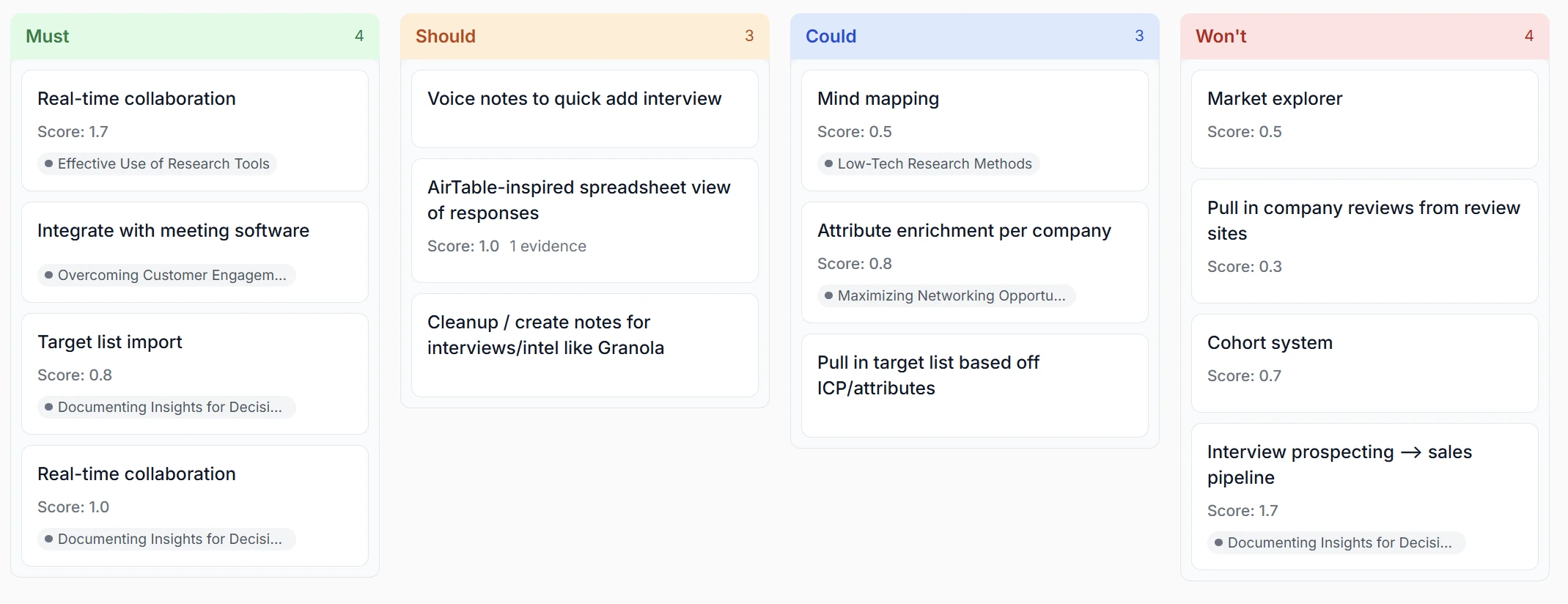
The product leaders who avoid this trap do one thing differently — they look at volume, not anecdotes. As one put it, you have to mute the outliers and dig deeper to capture an accurate, aggregated view of customer needs.
That means:
- Synthesize across many conversations, not a memorable few. Patterns only emerge at scale. Aggregating dozens of interviews (one leader cited 50+) makes real signal visible — and surfaces the questions you haven't even asked yet.
- Weight by prevalence, not volume of complaint. A pain point that shows up across many segments matters more than one loud account, even a big one.
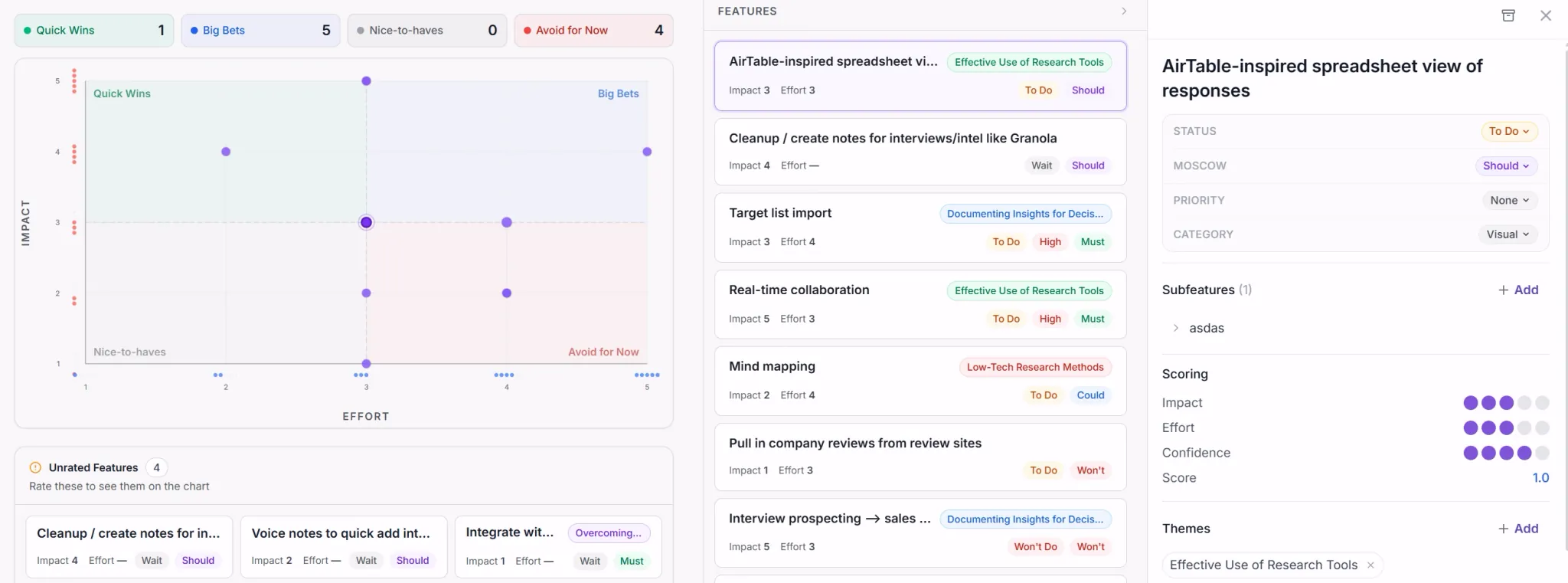
- Tie insight to impact. In one example, a team tagged customer calls by product area and tied at-risk revenue to specific features — so prioritization reflected real business impact, not isolated complaints.
- Triangulate. Compare what customers say against competitor and market analysis to separate genuine gaps from noise.
Embrace the ambiguity — then reduce it
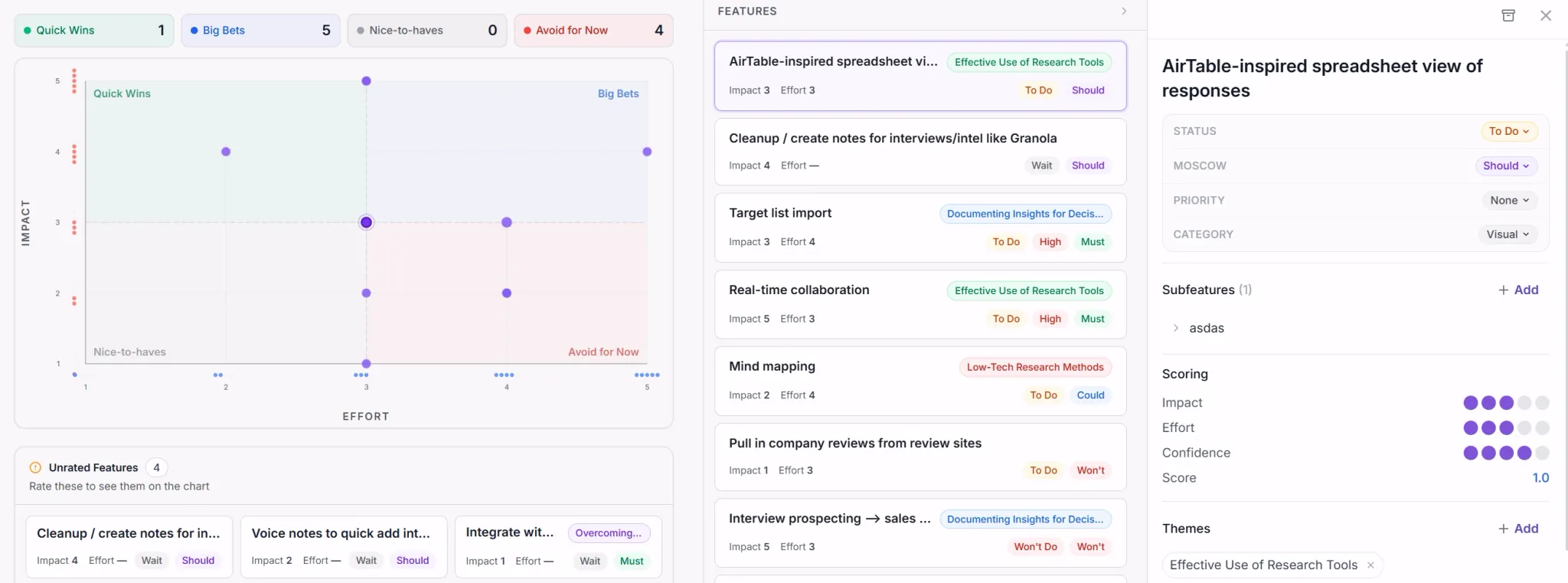
Many product leaders fear they don't have enough calls or data to decide. The honest answer: you'll never have perfect coverage, and some ambiguity is part of the job. But the move is to keep gathering and aggregating insight so each decision rests on more evidence than the last — not to freeze, and not to over-index on the one story you remember.
Where a research workspace helps
Aggregating insight by hand — re-reading transcripts, mind-mapping sticky notes — is exactly where teams give up and fall back on the loudest voice. Intervool is built to remove that friction: it pulls opportunities and pain points from every interview, groups them with thematic synthesis, and shows what repeats across conversations, personas, and segments. So when you prioritize, you're looking at the pattern across your whole customer base — not the last person who emailed.
Build for the many, backed by evidence. See how Intervool works or start a free trial.