Generic user testing questions get you generic answers. The strongest sessions start from a few universal question types, then tailor them to your specific kind of product. This guide covers the general types, how to adapt them, and example questions for common product types — a companion to our essential UX testing questions. Design rigor shows up on the P&L: McKinsey's Design Index found top-quartile companies posted 32 percentage points higher revenue growth than industry peers over five years.
The general types of user testing questions
Every good script draws on the same building blocks:
- Context questions — who the user is and their situation ("How do you handle this today?").
- Expectation questions — what they think will happen ("What do you expect this button to do?").
- Task-based questions — completing a real action ("Find and start a free trial.").
- Reaction questions — in-the-moment thoughts and feelings ("What's going through your mind here?").
- Reflection questions — the overall experience after the fact ("What would you change?").
- Comparison questions — versus alternatives ("How does this compare to what you use now?").
How to tailor questions to your product
Three adjustments turn generic questions into sharp ones:
- Anchor to the core job. Identify the one outcome your product exists to deliver, and build tasks around it. A budgeting app's core job ("understand where my money goes") is different from a CMS's ("publish a page").
- Match the user's expertise and frequency. Daily power users need different probing than first-time evaluators. Ask about habits and prior tools accordingly.
- Focus on the moments that matter. Every product has make-or-break moments — onboarding, checkout, the first "aha." Concentrate questions there rather than spreading thin.
Example user testing questions by product type
SaaS / B2B software
Core jobs are workflow efficiency and team adoption. Buyers and users often differ.
- "Walk me through how you'd accomplish [core workflow] today, before this tool."
- "Set up your account as if it were a normal Monday — talk me through it."
- "Who else on your team would touch this, and what would they need?"
- "What would have to be true for you to switch from your current tool?"
E-commerce
Core jobs are finding, trusting, and buying.
- "Find a [product] you'd actually consider buying."
- "What makes you trust — or hesitate about — this page?"
- "Take it through checkout as far as you're comfortable. What slowed you down?"
- "Was anything about pricing or shipping unclear?"
Mobile apps
Core jobs hinge on speed, context, and habit.
- "When and where would you typically use this — and what's around you?"
- "Complete [key action] one-handed. Anything awkward?"
- "What would make you open this app again tomorrow?"
- "Did any permission, notification, or sign-in step give you pause?"
Marketplaces (two-sided)
Test both sides — supply and demand have different jobs.
- Buyers: "How do you decide between two listings?"
- Sellers: "Walk me through listing your first item. Where did you get stuck?"
- "What would make you trust a stranger on this platform?"
Fintech
Trust, clarity, and anxiety dominate.
- "How did you feel entering your financial details there?"
- "Explain back to me what this screen says will happen to your money."
- "What would make you feel more (or less) secure here?"
Keep it neutral — whatever the product
Across every type, the rules hold: stay neutral, avoid leading phrasing, ask one thing at a time, and let users show you rather than tell you. Watch for confirmation bias when you interpret the answers.
From answers to decisions
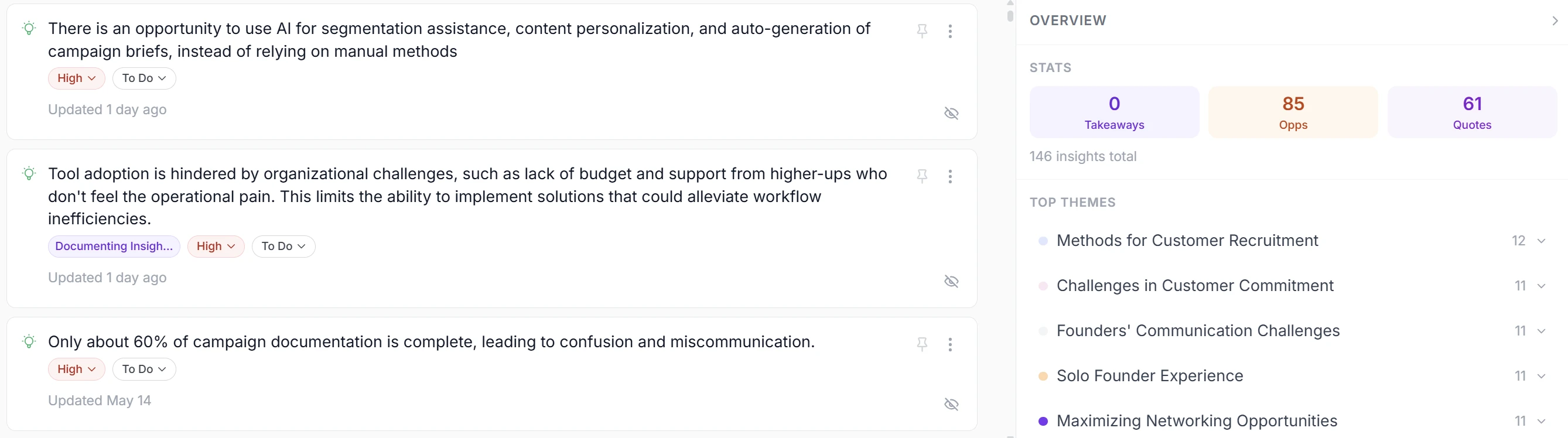
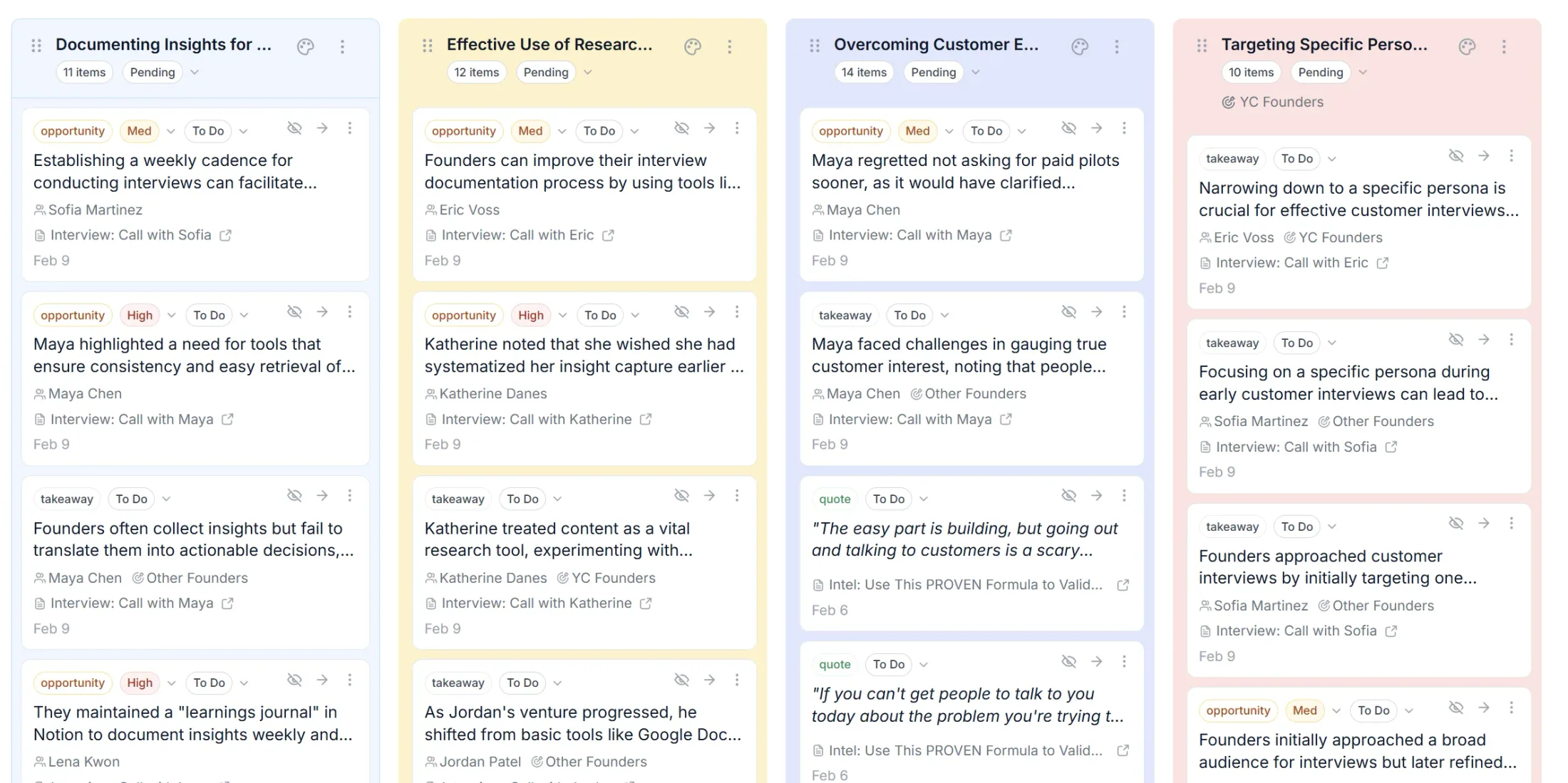
Tailored questions produce richer answers — and more to synthesize. Intervool transcribes each session, extracts the insights linked to the moment they were said, and clusters what repeats across users, personas, and segments — so the patterns surface no matter how many product-specific threads you ran. See how it works.