In conversations with experienced product leaders, one risk comes up again and again — and it's getting worse, not better, in the age of AI: confirmation bias. The tendency to seek out, favor, and remember information that confirms what we already believe is as old as decision-making itself. What's new is how easy modern tools make it to stay inside that bubble. It runs deep: in Peter Wason's classic experiment, only 6 of 29 people worked out a simple rule on their first try — the rest kept seeking evidence that confirmed their hunch instead of testing what would disprove it.
Why AI quietly amplifies confirmation bias
One product leader put it bluntly: AI tools are complimentary by default — ask a leading question and they'll happily validate your existing view. Spend long enough refining a recommendation with a chatbot and it starts making assumptions that match where the conversation has been, not where the truth is. You can go back and forth until you've talked yourself into something that quietly fell apart three prompts ago.
That's the trap. AI makes it frictionless to circle inside your own customer research and reasoning, mistaking fluency for validation. The faster it agrees, the more confident — and the more wrong — you can become.
Signs you're in an echo chamber
- You only test ideas against sources (people or tools) that tend to agree with you.
- Your AI prompts assume the conclusion ("why is X the best option?") instead of opening it up ("what would make X a bad idea?").
- You can't clearly state the strongest argument against your current direction.
- Customer evidence shows up to justify a decision you'd already made, not to shape it.
How to use AI to challenge your thinking
The same product leaders who flagged the risk also use AI constantly — the difference is how. A few habits worth stealing:
- Tell it to give it to you straight. Explicitly ask the model to argue against your idea, list failure modes, or play the skeptical customer. Reward disagreement.
- Make two models debate. Have one AI critique another's output. The friction surfaces assumptions a single thread would smooth over.
- Use AI to accelerate, not to conclude. It's excellent for iterating quickly — drafts, positioning, first passes. Keep the judgment about what to build human.
- Watch for drift. In long sessions, the model accumulates your framing. Start fresh when a thread has clearly absorbed your bias.
The real antidote: other people and real evidence
AI can simulate a second opinion, but it isn't a substitute for two things:
Diverse human perspectives. The most reliable way out of an echo chamber is to share your thinking with peers who don't share your assumptions. Different roles, different contexts, different incentives — they catch what you can't.
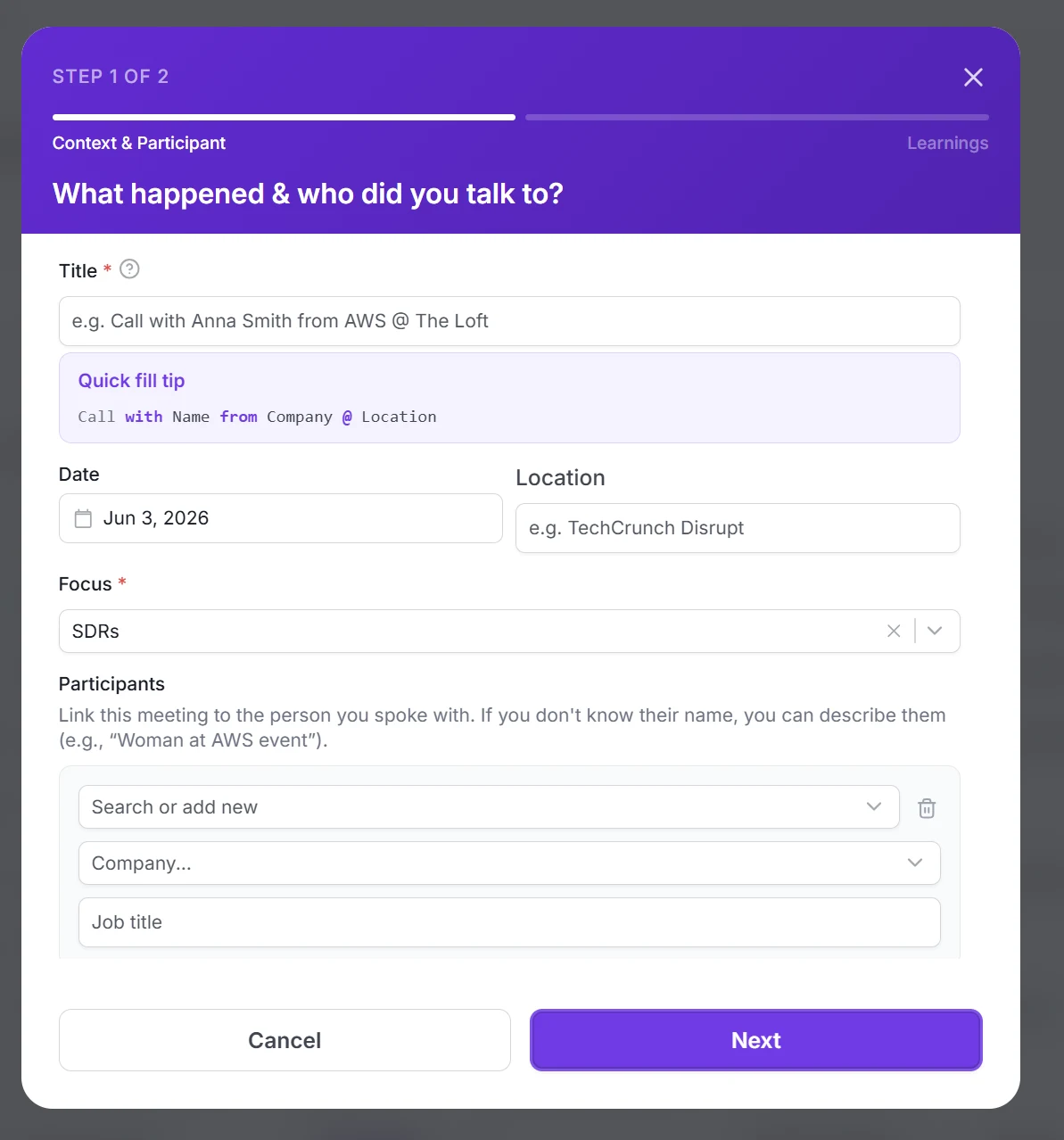
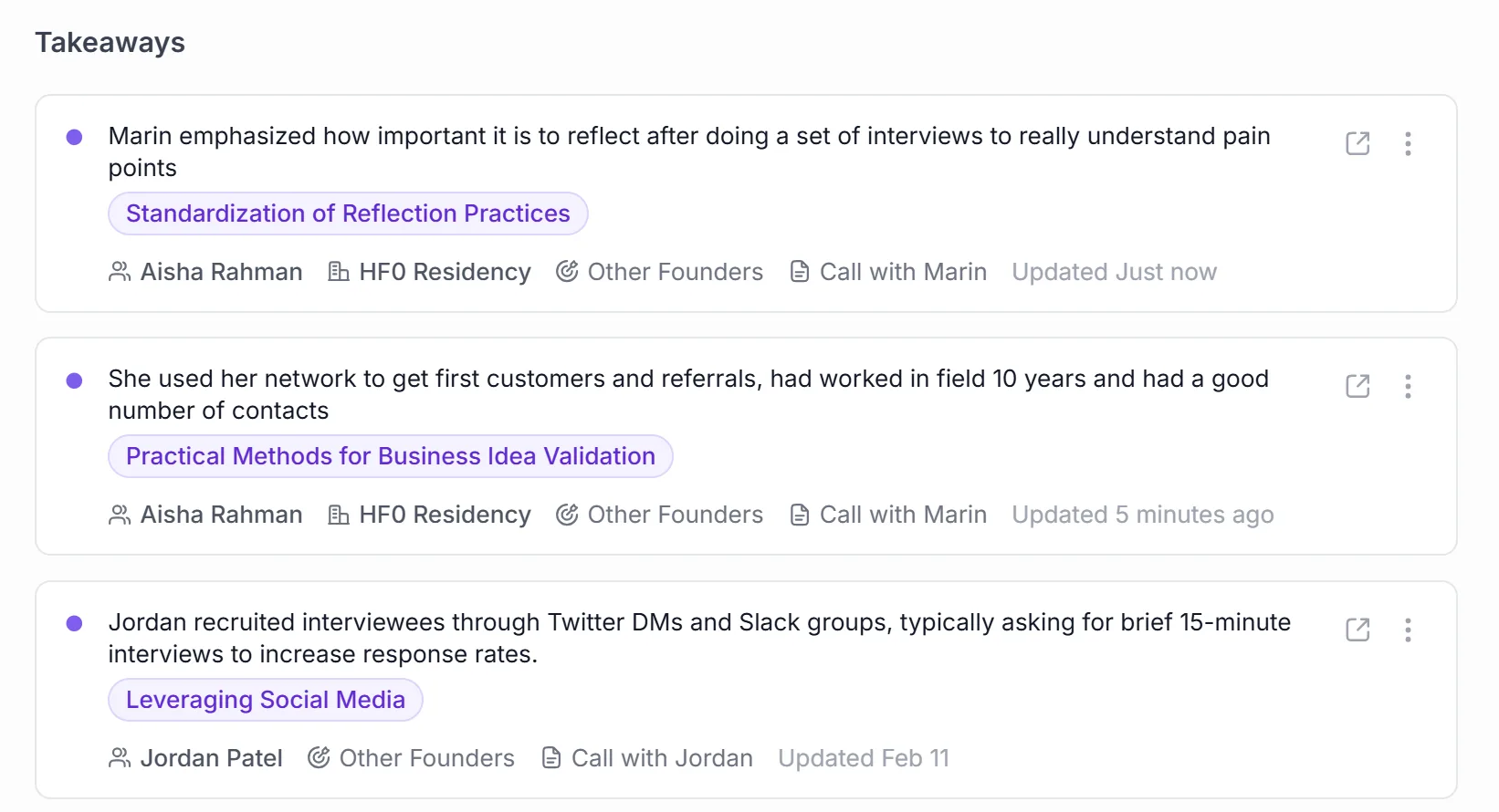
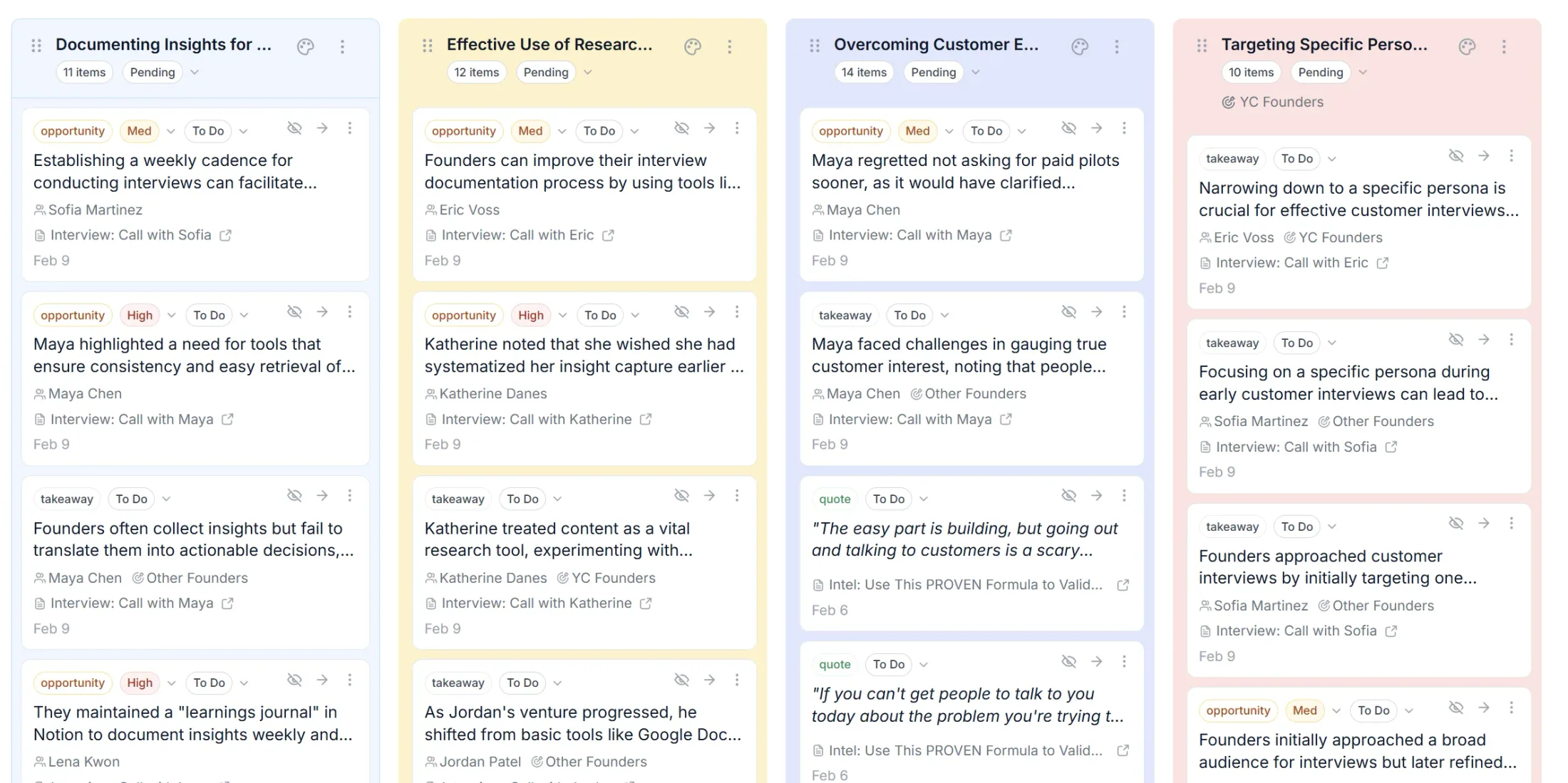
Aggregated customer evidence. Confirmation bias thrives when you cherry-pick a quote that fits. It struggles when you look at thematic synthesis across many conversations. When a pain point shows up across dozens of interviews — not just the one call you remember — you're reacting to a pattern, not your preference.
This is exactly what a customer research workspace is for. Instead of mentally cherry-picking, Intervool pulls insights from every interview, links each back to the moment it came from, and surfaces what actually repeats across conversations — so your roadmap reflects the evidence, not the echo.
A simple practice to debias product decisions
- Write down the decision and the strongest case against it.
- Pull the customer evidence on both sides from your research — not from memory.
- Share the framing with one peer who'll push back.
- Use AI to stress-test, not to bless.
- Decide, and note what would change your mind.
Confirmation bias never fully goes away — but you can build a process that keeps catching it. In a world where AI will agree with almost anything, the product managers who deliberately seek disagreement, and ground decisions in aggregated user feedback, are the ones who'll keep building things people actually need.
Want your customer evidence in one place instead of in your head? See how Intervool works or start a free trial.