Understanding user experience is the key to building products people love — and the right UX testing questions are how you get there. Good questions reveal pain points, motivations, and the gap between what users say and what they do. This guide covers the essential usability testing questions to ask before, during, and after a session, plus how to craft them so the answers are honest. There's plenty to uncover: Nielsen Norman Group measured an average task-failure rate of 22% — roughly one in five users still can't complete a key task, exactly what the right questions expose.
Why UX testing questions matter
Without deliberate questions, usability sessions drift and you miss the insight that drives design decisions. Effective questions:
- Identify pain points and friction
- Surface user opinions and expectations
- Evaluate how usable a specific feature really is
The trick is asking the right question at the right moment — and not leading the user toward the answer you hope to hear.
Types of UX testing questions
A good study mixes question types to capture both breadth and depth:
- Open-ended — "Walk me through how you'd…" — invites detailed, unexpected insight.
- Closed-ended — "Were you able to complete that? (yes/no)" — gives clean, comparable data.
- Contextual — about the user's environment and circumstances.
- Task-based — focused on completing a specific action in the product.
Open-ended questions are for exploration; closed-ended for confirmation. Use both for a balanced picture.
Crafting effective usability testing questions
- Align each question with a test objective — every question should earn its place.
- Keep it clear and concise — avoid jargon and compound questions.
- Stay neutral — leading questions ("Wasn't that easy?") skew your data. Phrase so every answer is equally acceptable.
- Make it accessible — simple language so all participants can respond.
Essential UX testing questions to ask
Pre-test questions (set the stage)
Gather context and expectations before the session:
- What device do you primarily use for this kind of task?
- Have you used a product like this before? What was that like?
- What are you hoping to get done here today?
In-test questions (capture the interaction)
Keep these unobtrusive so the user stays focused:
- Can you talk me through what you're doing right now?
- How intuitive did that feel?
- Was anything confusing or unexpected there?
- What did you expect to happen when you clicked that?
Post-test questions (capture the overall experience)
Reflect on the whole experience:
- How would you describe that experience overall?
- What was the most frustrating part? The best part?
- What one change would improve this most?
- How likely would you be to use / recommend this? Why?
Usability survey questions for broader insight
To complement individual sessions, surveys gather patterns from a larger audience:
- How often do you use this product?
- How would you rate the ease of navigation?
- Have you run into any issues recently? Tell us about one.
Avoiding bias and leading questions
Bias is the silent killer of usability research. Use neutral language, avoid assuming the answer, and resist confirming your own hopes — a major form of confirmation bias. In group settings, watch for groupthink and collect independent input first.
Turning answers into insight
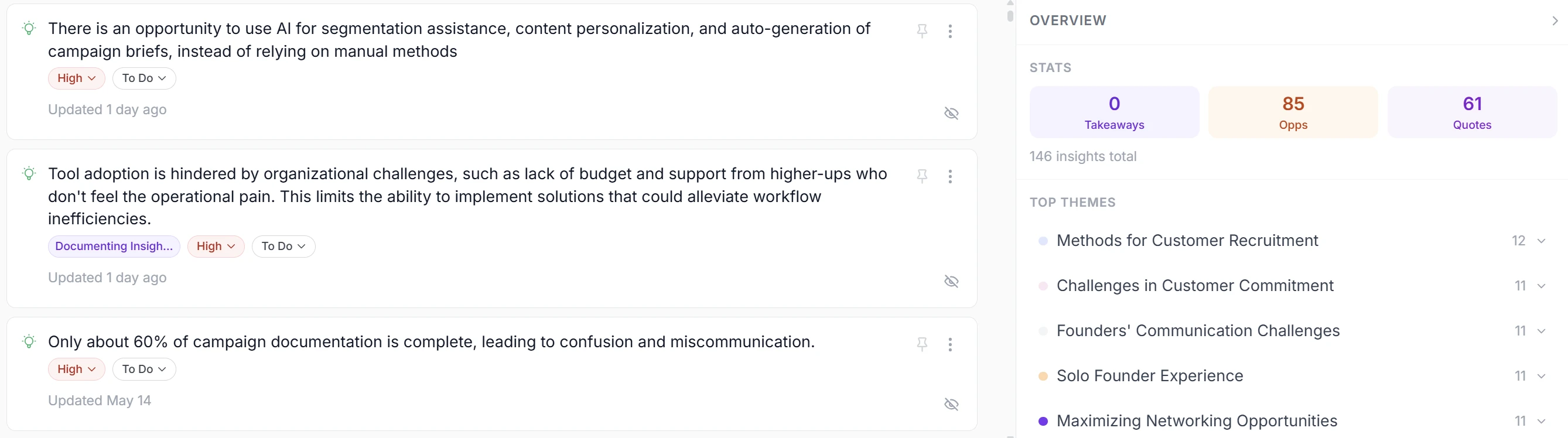
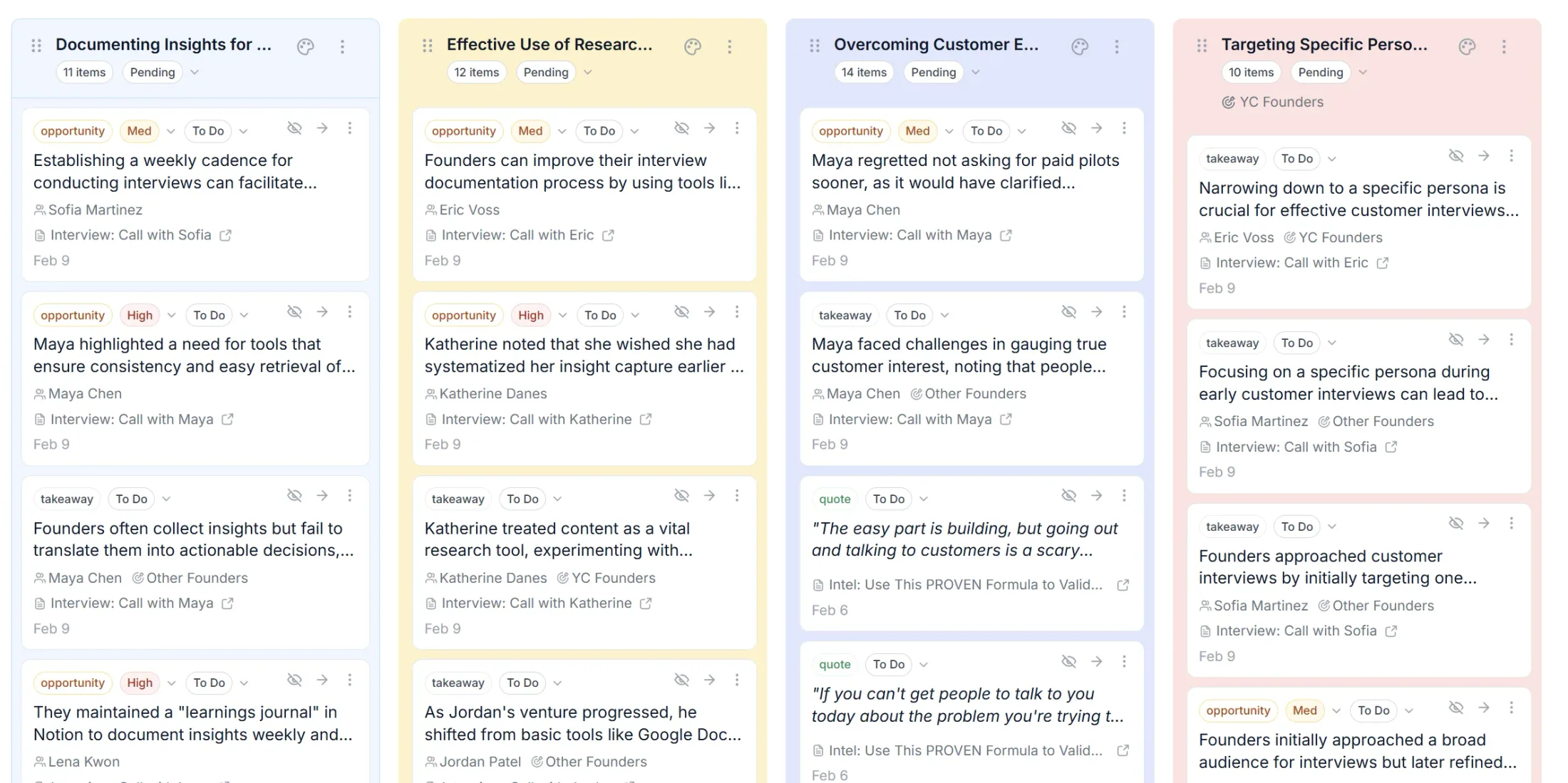
Great questions only pay off if the answers reach a decision. Capturing, transcribing, and synthesizing sessions by hand is where most teams stall. Intervool records and transcribes each session, extracts the insights linked to the moment they were said, and clusters what repeats across users — so your UX testing questions turn into a defensible roadmap, not a folder of notes.
Want the questions tailored to your product? See our companion guide: user testing questions by product type.