
Customer feedback is the input customers share about your product or service — what works, what frustrates them, and what they wish it did. Treated as evidence rather than noise, it's the raw material for better products, positioning, and retention. This guide covers what customer feedback is, the types and methods, and how to actually act on it. And the cost of ignoring it is real: PwC found 32% of customers will walk away from a brand they love after a single bad experience — acting on feedback is how you keep them.
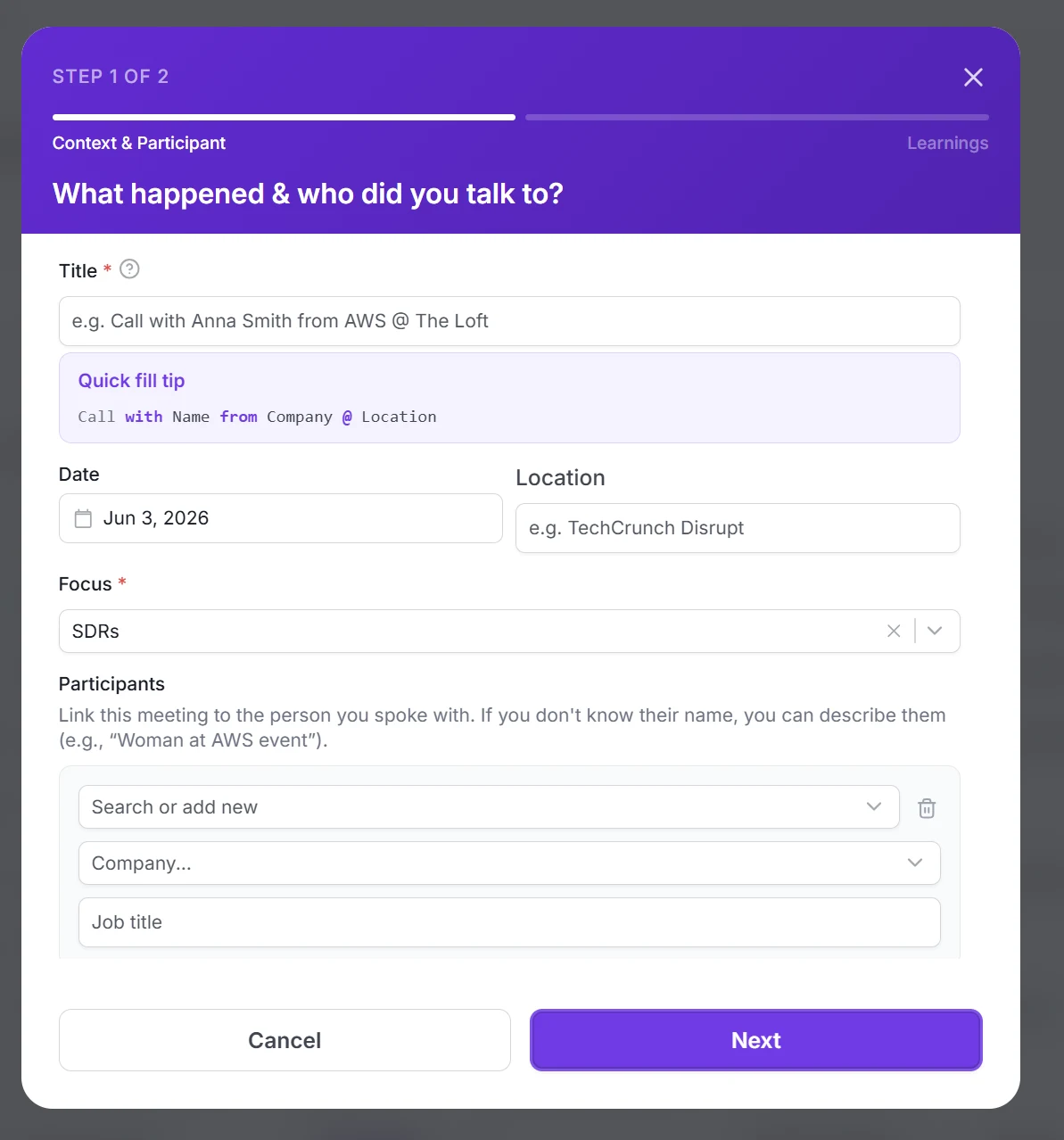
What is customer feedback?
Customer feedback is any information customers give you about their experience — solicited (interviews, surveys) or unsolicited (support tickets, reviews). It spans the rational ("the export button is hard to find") and the emotional ("I don't trust this with my data"), and it's the most direct signal you have about real needs. (See customer feedback software for how Intervool captures and acts on it.)
Types of customer feedback
- Solicited vs. unsolicited — feedback you asked for vs. feedback customers volunteer.
- Qualitative vs. quantitative — the "why" (open text, interviews) vs. the "how much" (ratings, NPS).
- Direct vs. indirect — said to you (a call) vs. observed (behavior, churn, reviews).
- By stage — pre-sale (objections), onboarding (friction), ongoing (requests), churn (reasons).
The richest understanding comes from combining them — pairing numbers with the stories behind them.
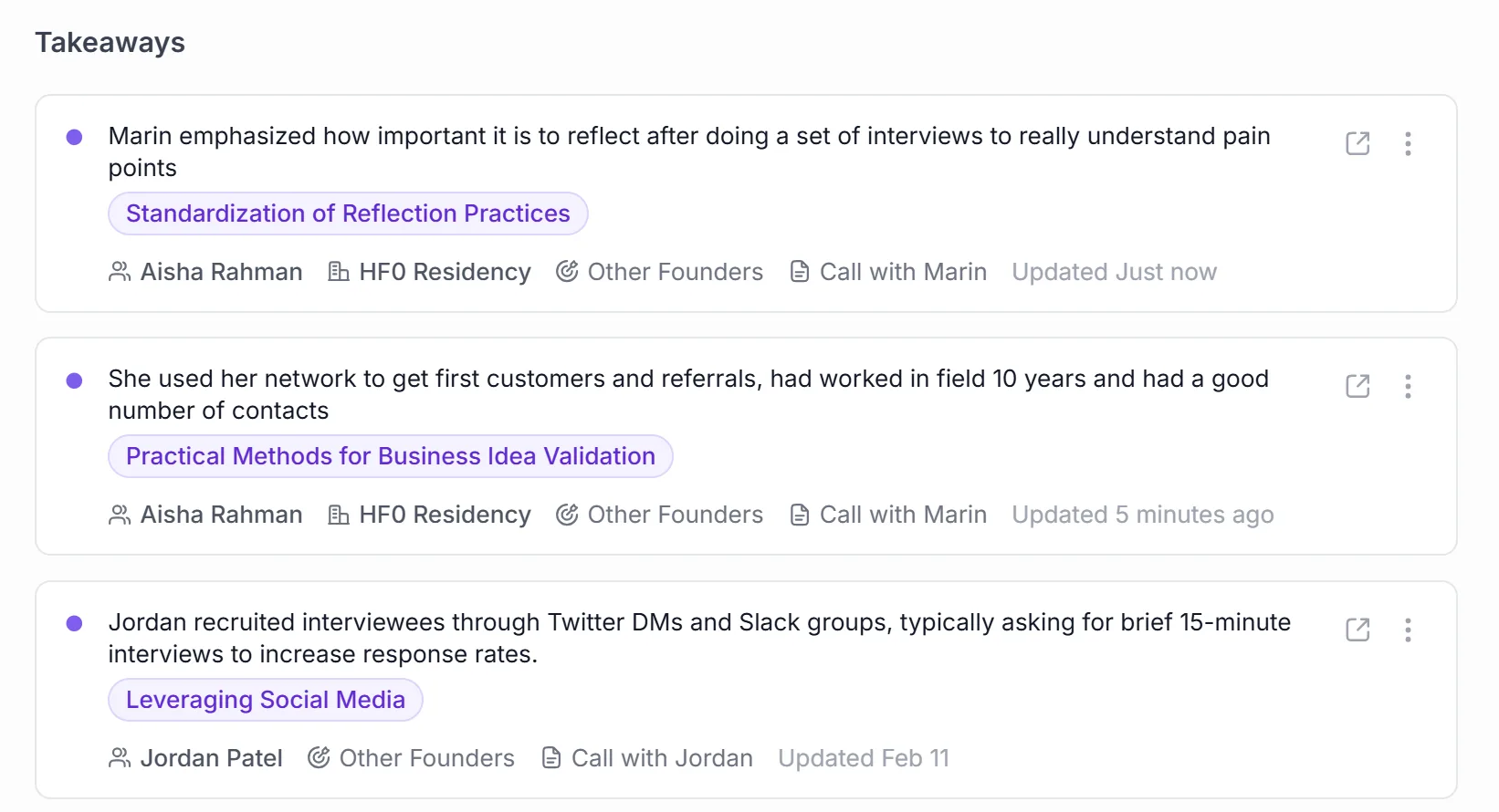
Methods to collect customer feedback
- Customer interviews — the deepest source of the "why." (See how to analyze them.)
- Surveys and in-app prompts — NPS, CSAT, and targeted micro-surveys at scale.
- Support tickets and chat logs — a goldmine you've already paid to collect.
- Reviews and social — unsolicited, candid signal.
- Sales and CS conversations — objections and expansion clues.
Why customer feedback matters
- Builds products around real needs, not assumptions
- Surfaces unmet needs and opportunities
- Reduces churn by catching friction early
- Aligns product, design, and GTM around the same evidence
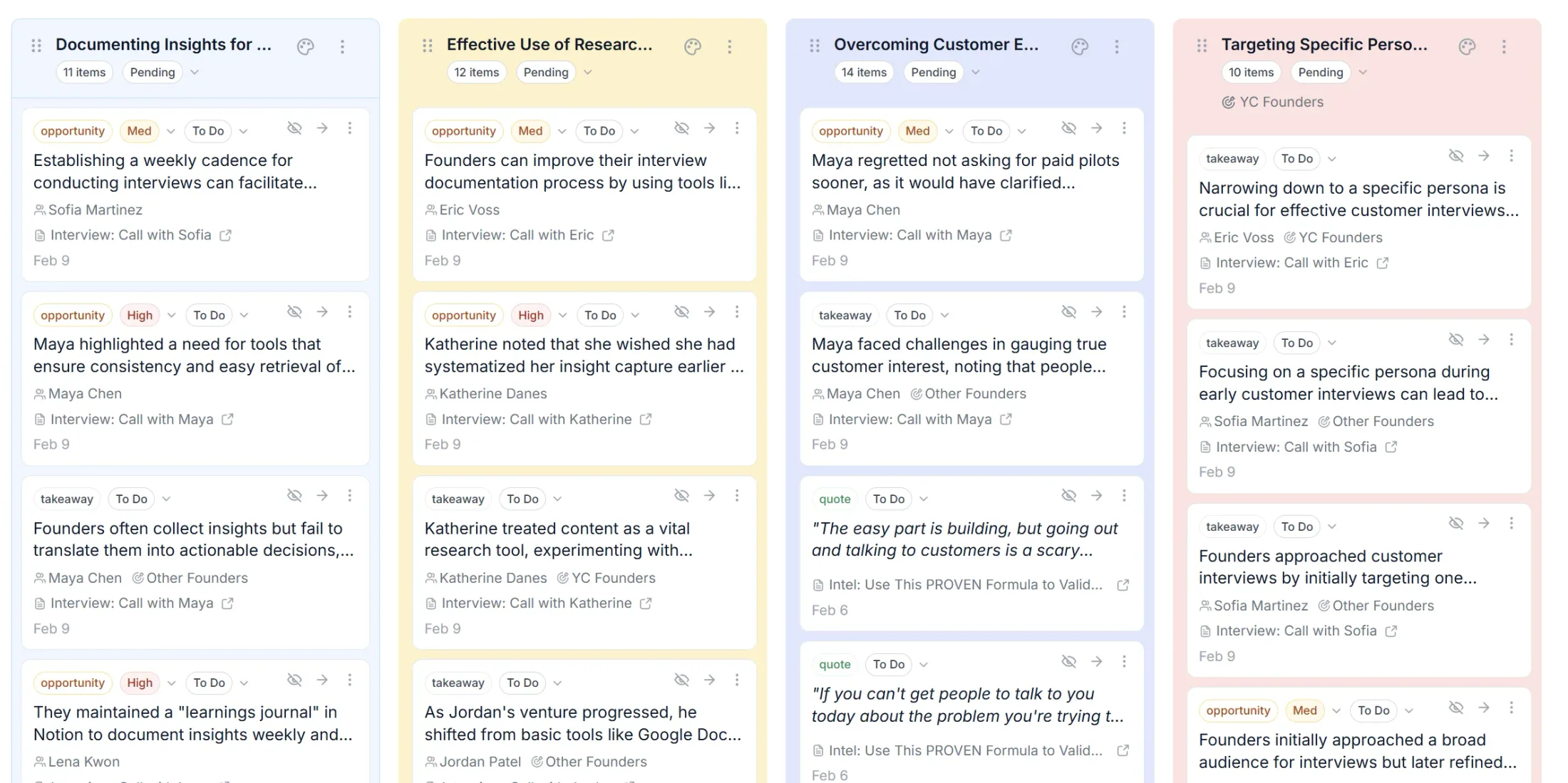
How to turn customer feedback into decisions
Collecting feedback is easy; acting on it is where most teams stall. A practical loop:
- Centralize it. Bring feedback from every channel into one place so it's not scattered.
- Synthesize it. Use thematic synthesis to cluster recurring signals into themes — what repeats matters more than any single loud voice. Don't just build for the loudest customer.
- Keep it traceable. Link every theme to the source quote so conclusions stay defensible.
- Prioritize by impact. Weigh themes by how many customers (and how much revenue) they affect.
- Close the loop. Act, then tell customers what changed.
Where Intervool fits
Intervool focuses on the qualitative heart of customer feedback: it captures and transcribes interviews and conversations, extracts evidence-linked insights, clusters what repeats, and carries it into a prioritized roadmap — so feedback drives what you build. It pairs well with survey and feedback-board tools for the quantitative side. See how it works or start a free trial.