A good customer interview starts with good questions — but most teams either wing it or copy a generic list that doesn't fit their product. This template gives you 30+ questions organized by what you're trying to learn, plus guidance on when to use each set. Wording matters more than most realize: in Loftus and Palmer's landmark study, changing a single verb — how fast were the cars going when they "smashed" versus "contacted"? — shifted answers from 40.5 mph to 31.8 mph, a reminder to keep questions neutral.
How to use this template
Don't ask all these questions in one interview. Pick 5–8 that match your goal for the call, then let the conversation flow. The best interviews feel like a conversation, not an interrogation.
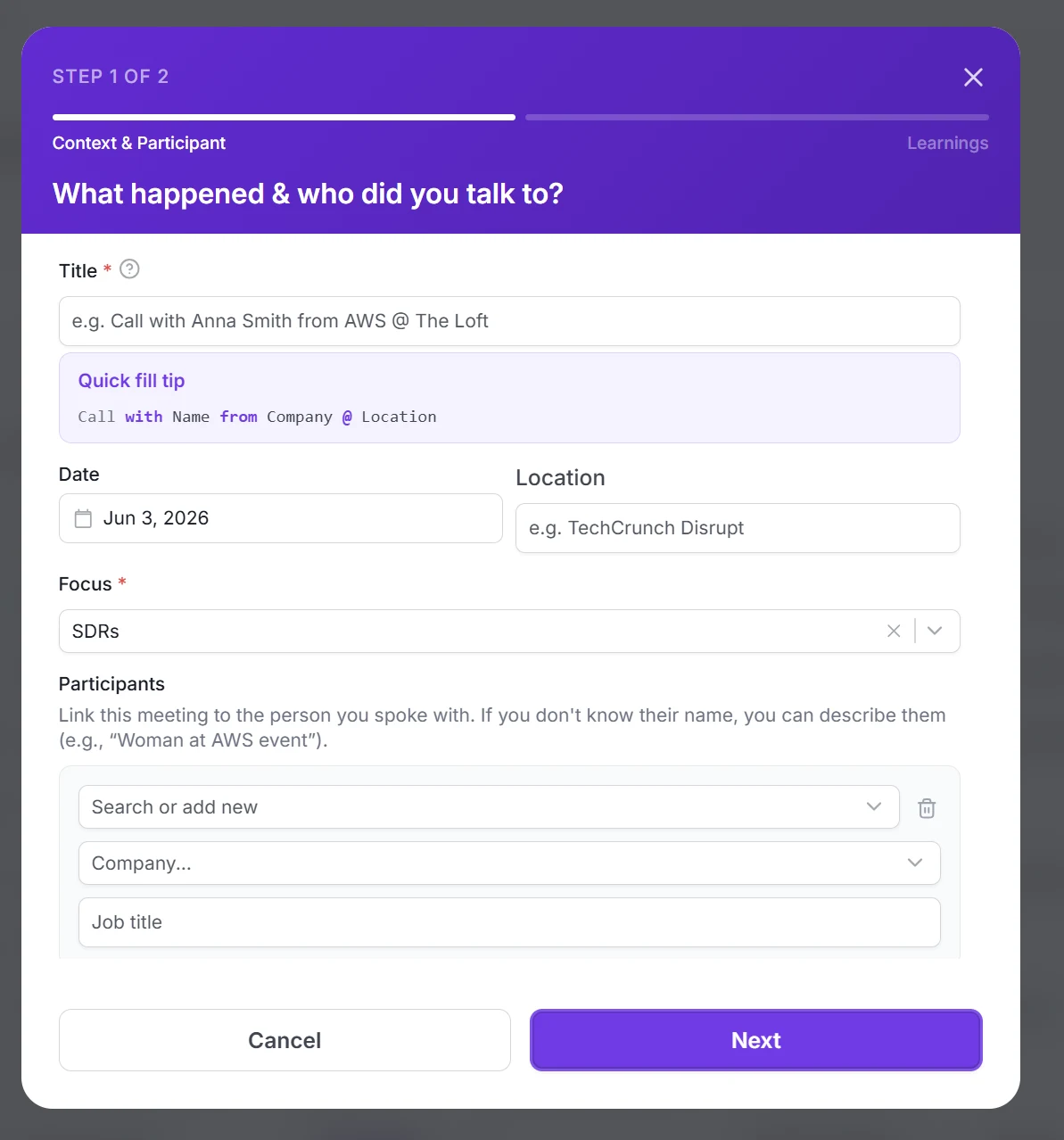
Before the call:
- Decide your goal (discovery, validation, usability, or churn)
- Pick questions from the relevant section
- Add 1–2 questions specific to your product or hypothesis
- Write them in your interview template so you don't forget
During the call:
- Start with context questions to understand who you're talking to
- Move to your core questions
- Follow up on anything interesting — "Tell me more about that" is your best question
- End with an open question to catch what you missed
Discovery interview questions
Use these when you're still exploring the problem space — before you have a solution or when you're looking for new opportunities.
Understanding the current workflow
- Walk me through how you handle [problem area] today.
- What does a typical [day/week/project] look like for you?
- Who else is involved in this process?
- What tools do you currently use for this?
- How long have you been doing it this way?
Finding pain points
- What's the most frustrating part of [process]?
- Where do things usually break down?
- What takes longer than it should?
- What do you wish you could do that you can't today?
- If you could wave a magic wand and fix one thing, what would it be?
Understanding stakes and motivation
- What happens when [problem] doesn't get solved?
- How does this affect your work / your team / your customers?
- Have you tried to solve this before? What happened?
- How important is fixing this compared to other things on your plate?
Validation interview questions
Use these when you have a hypothesis or early product and want to test whether it resonates.
Testing the problem
- How often do you run into [specific problem]?
- On a scale of 1–10, how painful is this for you?
- What have you tried to solve it? What worked and what didn't?
- Would you pay to solve this problem? How much?
Testing the solution
- [Show product/prototype] What's your first impression?
- What do you think this does?
- Would this help you with [problem]? How?
- What's missing that would make this useful?
- What would stop you from using this?
Testing positioning and messaging
- If I described this as [positioning statement], does that resonate?
- Who else on your team would care about this?
- How would you explain this to a colleague?
Usability interview questions
Use these when you're testing whether users can actually use your product effectively.
Task-based questions
- Can you show me how you would [specific task]?
- What would you do next?
- What did you expect to happen there?
- Was that what you expected? Why or why not?
Understanding confusion
- What are you looking for right now?
- Is anything confusing or unclear?
- What would make this easier?
- On a scale of 1–10, how easy was that to do?
Churn and retention interview questions
Use these when you're trying to understand why customers leave or stay.
For churned customers
- What made you decide to stop using [product]?
- What were you hoping to accomplish when you signed up?
- Did you try any alternatives? What made you choose them?
- What would have changed your mind?
- Is there anything we could do to win you back?
For retained customers
- What keeps you using [product]?
- What would make you consider switching to something else?
- What do you wish we did better?
- How would you feel if you could no longer use [product]?
Context questions (use in any interview)
These help you understand who you're talking to and how to weight their feedback.
- What's your role? How long have you been doing it?
- How big is your team / company?
- What's your main goal right now?
- How did you first hear about [product/problem]?
Open-ended closers
Always end with an open question to catch what you missed.
- Is there anything else I should have asked?
- What did I miss?
- Any questions for me?
Tips for better customer interviews
Listen more than you talk. The best ratio is 80% them, 20% you. Your job is to understand, not to pitch.
Follow the energy. When someone gets animated about something, dig deeper. That's where the insight is.
Ask "why" and "tell me more." These two phrases will teach you more than any scripted question.
Don't lead the witness. Instead of "Would you use a feature that does X?", ask "How do you handle X today?"
Record and transcribe. You can't take good notes and be fully present at the same time. Use customer interview software to capture everything, then pull insights later.
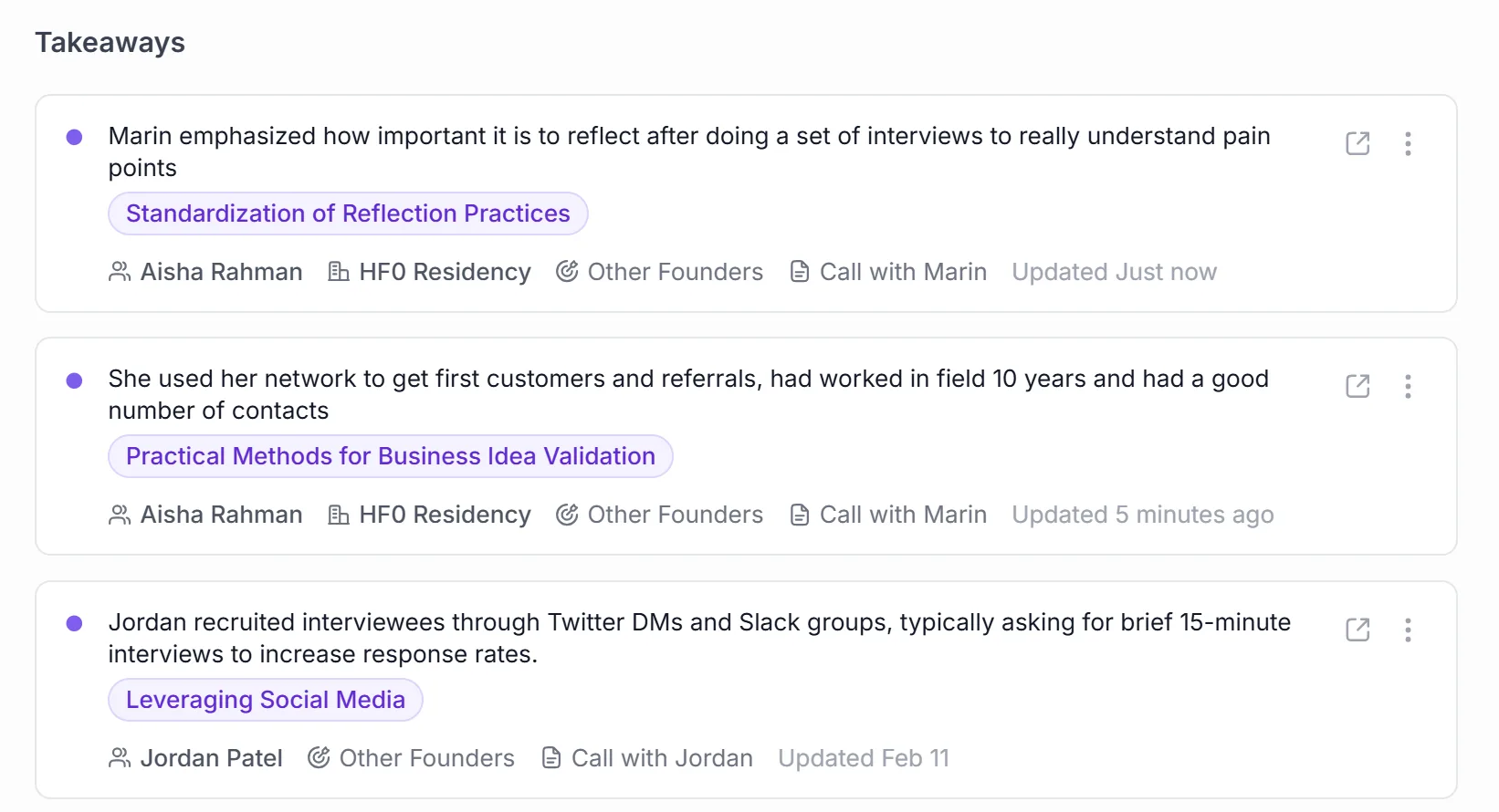
Debrief immediately. The 10 minutes after the call are the most valuable. Capture your top takeaway before you forget it. (See: The 10-Minute Interview Debrief)
Make your template work for you
This template is a starting point. The best interview guides are tailored to your product, your stage, and what you're trying to learn. Keep the questions that work, cut the ones that don't, and add your own as you learn what matters.
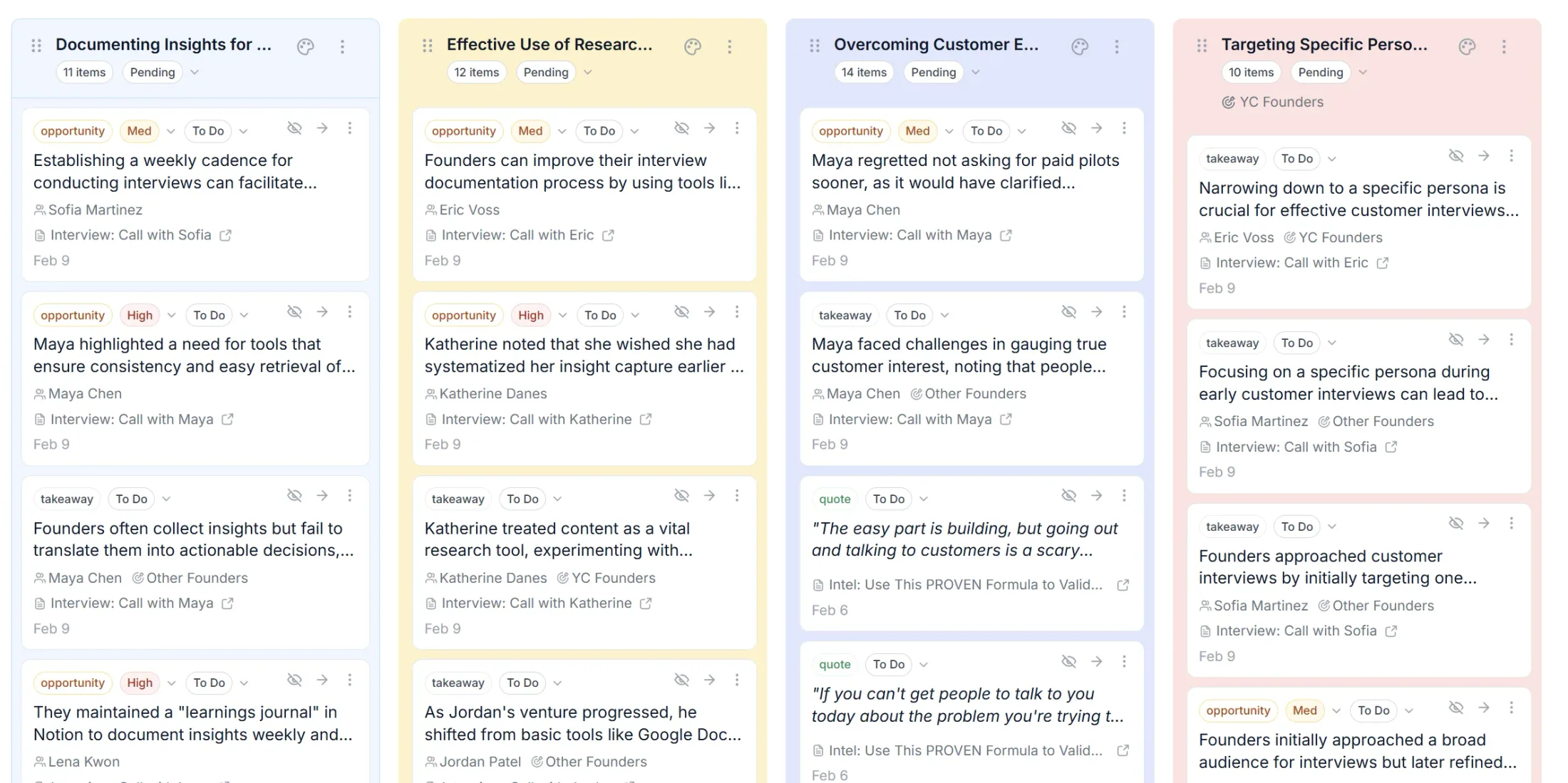
If you're running more than a few interviews, a workspace like Intervool helps you attach questions to each interview, capture everything in one place, and synthesize what you hear across calls — so the template turns into insight instead of a pile of notes.