User interviews are a cornerstone of effective user research. They provide deep insight into user needs and behaviors that surveys and analytics simply can't reach. And a little goes a long way: Nielsen Norman Group found that testing with just five users surfaces about 85% of usability problems, so a handful of well-run interviews already tells you most of what you need.
Conducting successful interviews takes careful planning and execution. This guide walks you through the process — from setting clear goals to crafting the right questions and building a reusable user interview template — and shows how a workspace like Intervool helps you turn what you hear into decisions.
Understanding the Role of User Interviews in User Research
User interviews let researchers delve into the motivations, goals, and challenges users face. Through direct conversation, you uncover insights that quantitative methods miss.
They play a vital role in the broader user research toolkit, complementing usability testing with rich qualitative data that informs design and development decisions.
Key benefits of user interviews:
- A deep understanding of user needs
- Identification of pain points and hurdles
- Insight into user expectations and desires
User interviews also feed your personas. By asking targeted persona-validation questions, you can build profiles that represent your key segments — keeping the team designing for real people, not a vague "average user." In short, interviews are foundational to any user-centered design process.
Setting Clear Goals for Your User Interview
The success of a user interview depends on clear goals. Knowing what you aim to achieve keeps the whole conversation aligned with your research objectives. Without specific goals, interviews drift; with them, you can focus on the right topics and measure success afterward.
Consider these when setting goals:
- Identify the core issues or opportunities you want to explore.
- Determine the specific user segments to target.
- Outline the intended outcomes of the interview.
These goals act as a roadmap, keeping the discussion on track and preventing unnecessary diversions.
Preparing for a Successful User Interview
Preparation starts with research into your audience. Understanding their needs and behaviors lets you tailor your approach. Choose a quiet, comfortable environment — in person or remote — that encourages open communication and builds trust.
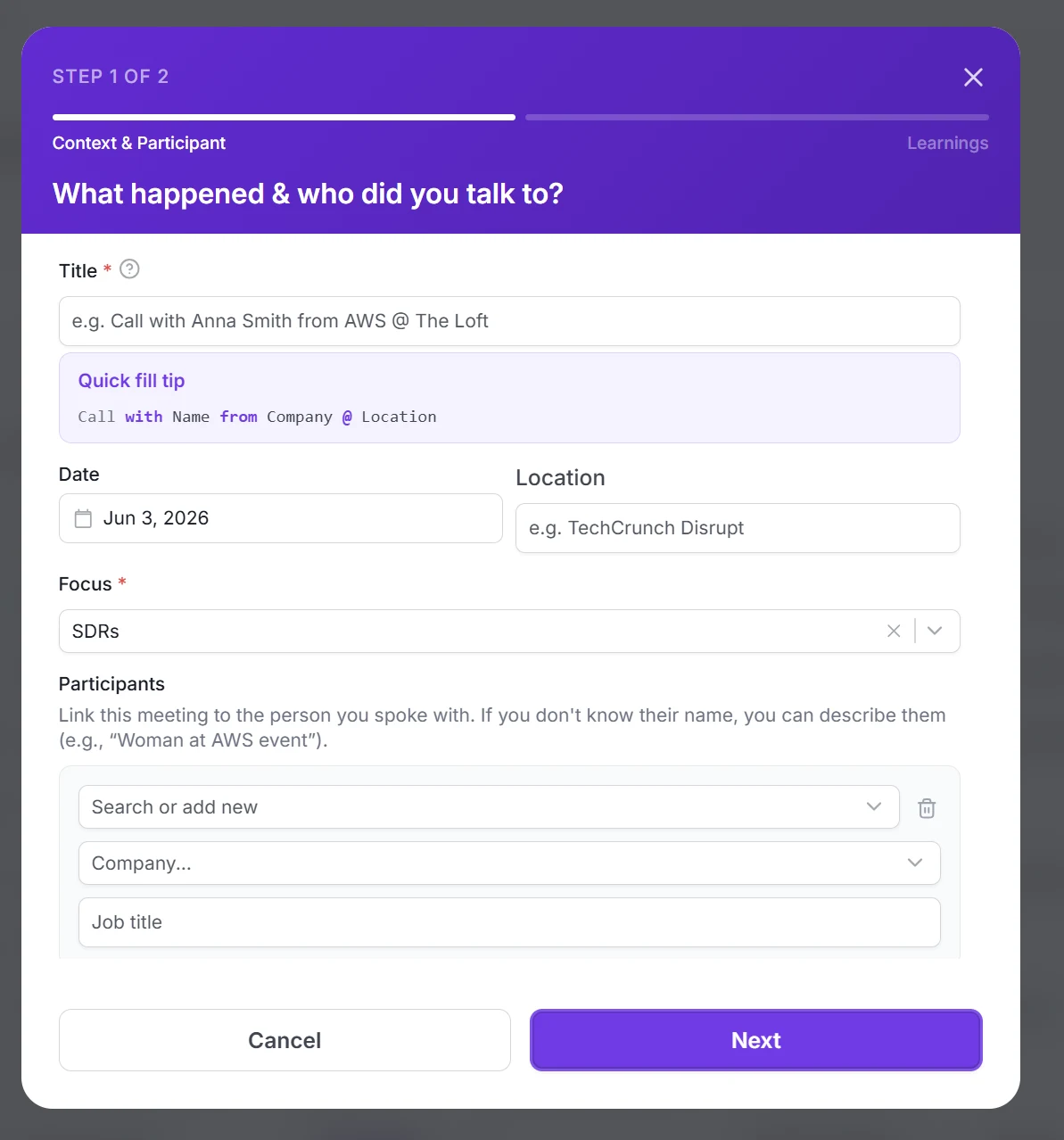
Draft a comprehensive user interview template so every important topic is covered and your sessions stay consistent. In Intervool you can attach a question set or template to each interview, so nothing slips through and every conversation is comparable.
Essential preparations:
- Test your recording and transcription setup ahead of the session.
- Schedule interviews at times convenient for participants.
- Prepare any materials, like consent forms, in advance.
- Pilot-test your questions with a colleague to catch confusing wording.
Meticulous preparation builds confidence and sets the stage for meaningful data collection.
Recruiting the Right Participants
The feedback you get is only as good as who you talk to. Target individuals who represent your user personas, and consider their demographics and behaviors so their experience aligns with your product. A diverse group yields broader insight.
Recruitment tips:
- Leverage your existing customer database.
- Partner with user research panels.
- Use a short screener survey to filter candidates efficiently.
Keep communication clear: tell participants the purpose and duration upfront. Transparency builds trust and encourages participation.
Crafting Effective User Research Interview Questions
Effective user research interview questions are central to gathering valuable insight. Align each question with your research goals, then lead with open-ended questions that let participants express their thoughts freely and reveal underlying motivations.
Consider including:
- "Can you describe how you use the product today?"
- "What challenges have you run into with similar tools?"
Avoid leading questions that subtly suggest an answer and skew your data:
- "Don't you think this feature is confusing?"
- "Isn't this the best option for you?"
Stay responsive to answers and ask follow-ups — this flexibility is where the richest data comes from. And keep wording clear and concise; ambiguous questions muddy the insights you collect.
Using User Interview Templates for Consistency
A well-designed user interview template guides the process so you never miss a crucial topic, and it standardizes data collection across sessions — which makes patterns and trends far easier to spot.
A good template includes:
- Introductory and warm-up questions
- Product-specific questions
- Persona-validation queries
Update your template as your research evolves. A dynamic template keeps your interviews relevant. (Reusable templates are built into Intervool, so a consistent script is one click away for every call.)
Conducting the Interview: Best Practices
Open with a warm welcome and a thank-you to set a relaxed tone. Then:
- Be clear about the interview's purpose.
- Assure participants of confidentiality.
- Encourage open, honest responses.
Use visual aids or prototypes when they help clarify a question. Watch for non-verbal cues — body language adds context to what's said. Stay flexible: adapt questions based on responses, let unexpected topics surface, and listen actively. End by summarizing key points to confirm understanding and give participants a chance to clarify.
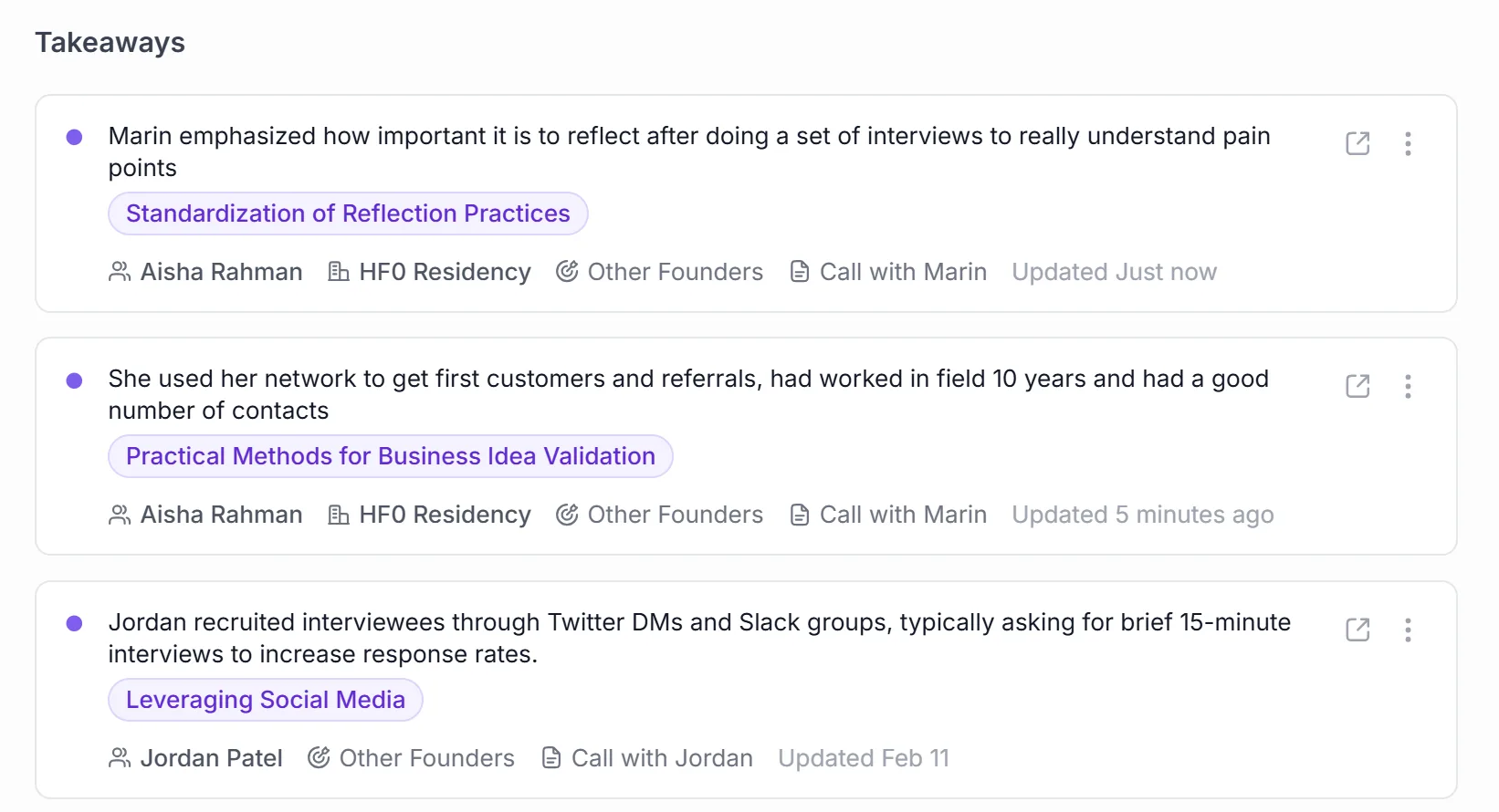
Record every session so nothing is lost. Intervool captures the video, audio, and a full transcript automatically, so you can stay present instead of taking frantic notes.
Avoiding Bias and Leading Questions
Unbiased questions lead to more honest feedback. Avoid wording that prompts a specific answer, and don't make assumptions about the user. Phrase questions so every possible answer is equally acceptable, and let user experiences surface naturally rather than steering the conversation. Always aim for objectivity and clarity.
Active Listening and Building Rapport
Active listening — being fully present and engaged — is vital. Building rapport makes users comfortable, and a relaxed environment leads to open, authentic communication.
Effective techniques:
- Maintain eye contact.
- Reflect back what you've heard.
- Show empathy and genuine interest.
Fostering that connection encourages users to speak freely, which surfaces deeper insight.
Analyzing and Synthesizing User Insights
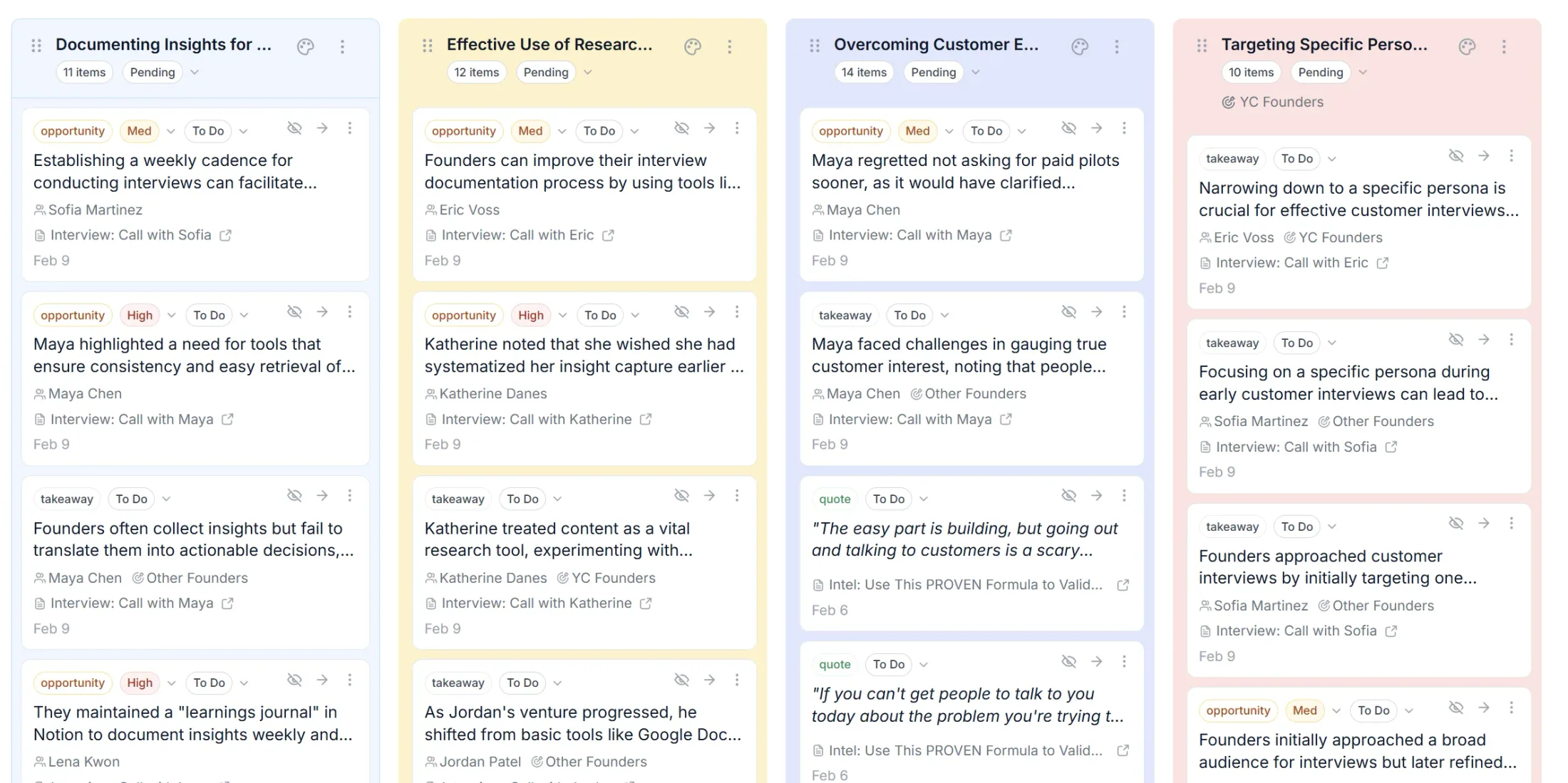
Once interviews are done, the real work begins. Organize the data, then look for common themes and recurring user needs. Synthesizing means combining data across interviews into a comprehensive view you can act on — using techniques like thematic synthesis and affinity mapping.
Steps for effective analysis:
- Categorize findings into themes.
- Identify user pain points.
- Highlight opportunities for improvement.
This is the step where most teams stall — and where Intervool does the heavy lifting. It transcribes each call, pulls structured insights (pain points, opportunities, and feature requests) linked back to the exact moment they came from, and surfaces what repeats across every conversation — so your user feedback becomes synthesis you can act on, not a static research repository.
Turning User Interview Findings into Actionable Outcomes
Transforming insight into action is what makes research worth doing. Align findings with your goals, then:
- Prioritize features based on user feedback.
- Incorporate feedback into design iterations.
- Share findings with cross-functional teams for broader impact.
Intervool turns themes into a prioritized product roadmap, with every bet one click from the customer quote behind it — so user insight leads to tangible improvements your team can defend.
Common Challenges and How to Overcome Them
- Unclear user responses → probe with follow-up questions for clarity.
- Participant availability → offer flexible scheduling or remote sessions.
- Insight lost after the call → record and transcribe everything so you can revisit it.
Anticipating these keeps your user interviews productive and your data trustworthy.
Conclusion and Next Steps
User interviews are vital for understanding user needs and improving usability and product design. The teams that win are the ones that get insight out of the recording and into the roadmap.
Take your findings and integrate them into your design process — or let Intervool do the heavy lifting. Start a free trial (14 days, no credit card) or see how Intervool works, and start planning your next series of interviews today.