"Customer interview" and "user interview" are often used interchangeably. In many contexts, they mean the same thing. But when the distinction matters, it really matters — and conflating them can lead you to the wrong conclusions.
This guide clarifies the difference, when each matters, and how to get the most from both.
The short answer
- Customer interview: A conversation with someone who pays for (or decides to buy) your product.
- User interview: A conversation with someone who uses your product day-to-day.
In B2C and many B2B products, these are the same person. In enterprise B2B, they're often different — and that difference shapes what you learn.
When the distinction matters
B2C and SMB products
For most consumer and small-business products, the buyer is the user. The person who pays is the person who uses the product every day.
In this case, "customer interview" and "user interview" are functionally synonymous. Use whichever term your team prefers.
Enterprise and B2B products
In larger organizations, the buyer and user often diverge:
- The buyer (customer) is typically a manager, executive, or procurement team. They care about ROI, security, integrations, pricing, and how the product fits the organization.
- The user is the person who actually uses the product daily. They care about usability, workflow fit, and whether the tool makes their job easier.
Talking only to buyers gives you a skewed picture — you'll hear about what they think users need, filtered through organizational politics. Talking only to users misses the purchasing criteria that determine whether you get the deal.
Multi-persona products
Some products serve multiple user types with different needs:
- A CRM has sales reps (users), sales managers (users with different needs), and VPs of Sales (buyers).
- A design tool has designers (users), design managers, and heads of product or engineering (buyers).
Each persona has different pain points, goals, and decision criteria. Conflating them leads to muddled research.
What you learn from each
Customer interviews reveal:
- Buying criteria: What drove them to look for a solution? What alternatives did they consider?
- Decision process: Who's involved? What convinced stakeholders?
- Business impact: What ROI do they expect? How do they measure success?
- Churn risk: What would make them leave? What's missing?
- Expansion potential: What would make them pay more or add seats?
User interviews reveal:
- Workflow fit: How does the product fit into their daily work?
- Usability issues: Where do they get stuck or confused?
- Feature needs: What's missing that would make their job easier?
- Workarounds: How do they hack around limitations?
- Adoption blockers: Why don't some team members use the product?
Both reveal:
- Pain points (though framed differently — business pain vs. workflow pain)
- Competitive landscape (what else they use or considered)
- Opportunities (gaps you could fill)
How to approach each
Customer interviews (buyers)
- Focus on the decision and business context.
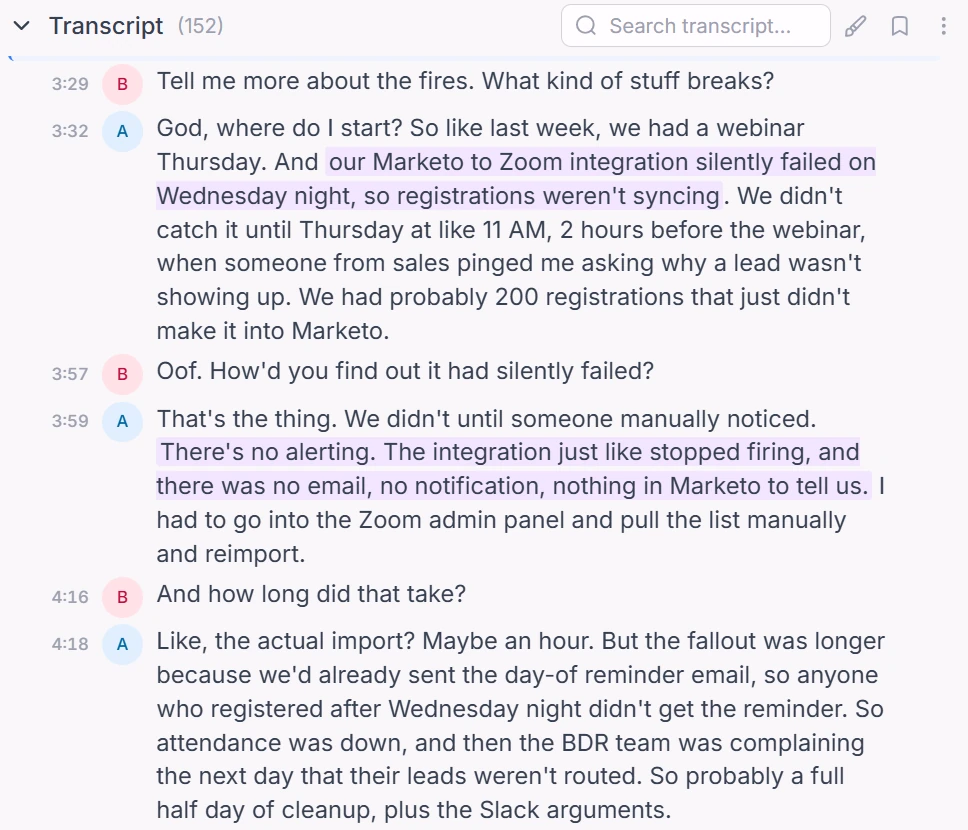
- Ask about the buying process: "Walk me through how you decided to purchase."
- Explore ROI: "What were you hoping to achieve? Did you?"
- Understand churn signals: "What would make you consider switching?"
- Ask about stakeholders: "Who else was involved in the decision?"
User interviews
- Focus on workflow and usability.
- Ask about daily work: "Walk me through how you use [product] on a typical day."
- Explore friction: "Where do things slow you down?"
- Understand workarounds: "Is there anything you wish it did that it doesn't?"
- Watch them use the product (usability testing) when possible.
Best practices for both
Interview separately when possible
If you're talking to both buyers and users, interview them separately. People behave differently when their boss is on the call.
Be clear about who you're talking to
Before the interview, confirm their role. "Are you the one who decided to purchase, the main daily user, or both?"
Weight insights appropriately
- Buyer feedback should heavily influence positioning, pricing, and go-to-market.
- User feedback should heavily influence product design and feature prioritization.
- When they conflict, you have a strategic decision to make — do you optimize for closing deals or for daily usage?
Don't assume buyers know what users need
This is the classic enterprise trap. Buyers often describe what they think users need based on secondhand feedback or their own assumptions. Validate with actual users before building.
Don't ignore buyers just because users love you
A product users love but buyers won't purchase doesn't survive. Understand the buying criteria, even if they seem less "pure" than user needs.
When to use which term
| Context | Best term |
|---|---|
| B2C or SMB | Either — they're the same person |
| Enterprise discovery | "Customer interview" for buyers, "user interview" for end users |
| General qualitative research | "Customer interview" or "user interview" based on who you're actually talking to |
| Job postings / process docs | Be specific about which you mean |
The synthesis challenge
The real skill isn't choosing one or the other — it's synthesizing both perspectives into a coherent picture.
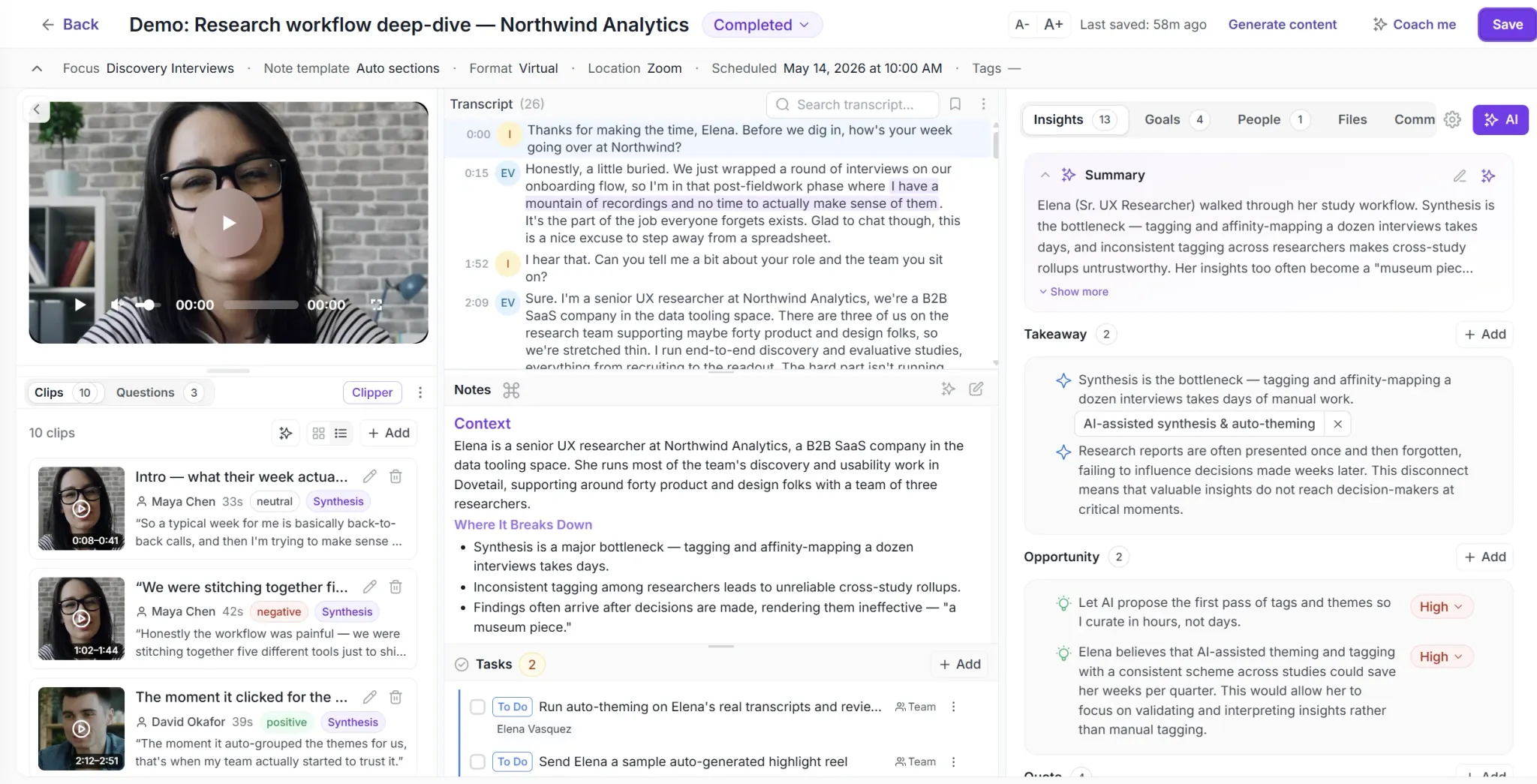
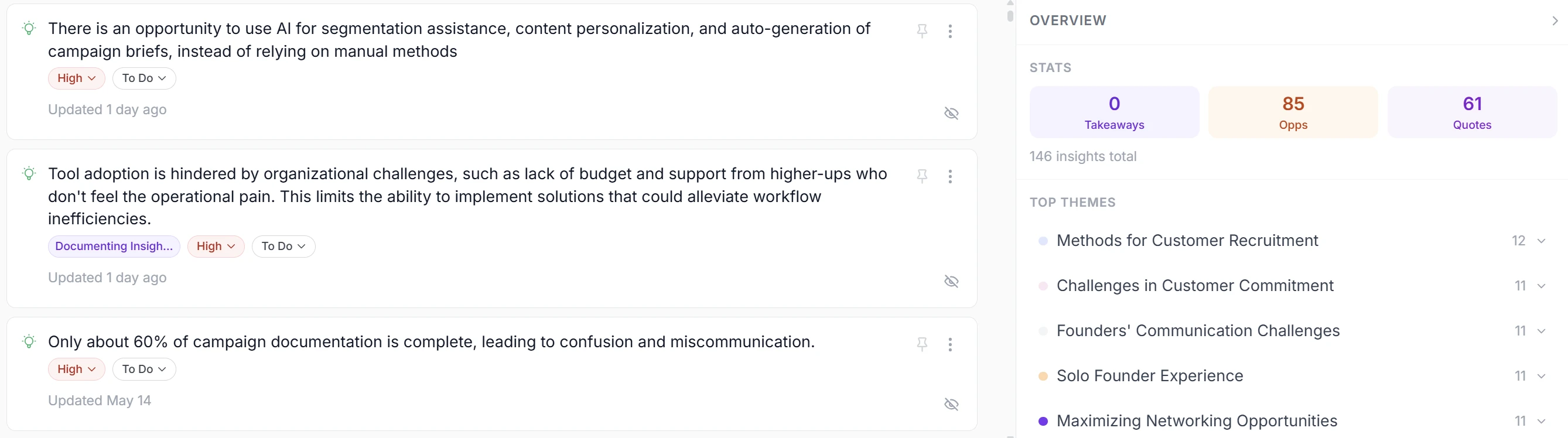
A customer interview software tool like Intervool helps here: you can tag interviews by persona (buyer vs. user), then filter your themes to see what each group cares about. The patterns that show up across both buyers and users are usually your highest-leverage opportunities.
Practical recommendations
-
Know who you're talking to before you start. Confirm their role in the buying and using process.
-
Interview both when they're different people. Buyer-only research misses usability; user-only research misses purchasing criteria.
-
Segment your analysis. Don't mush all feedback together — patterns within a persona are more actionable than patterns across mixed groups.
-
Prioritize overlap. When buyers and users agree on a problem, you've found something worth solving.
-
Navigate conflicts explicitly. When they disagree, make a conscious choice about who you're optimizing for and why.
The customer vs. user distinction is a lens, not a rule. Use it when it sharpens your thinking — and ignore it when everyone you're talking to is the same person anyway.