Qualitative research is how teams understand the why behind what people do. Where quantitative research counts what happens, qualitative research explains it — the motivations, context, and unspoken needs that numbers alone can't surface. This guide covers the core advantages of qualitative research, the disadvantages and how to mitigate them, and when to reach for it. The advantage compounds into performance: McKinsey found intensive users of customer insight are 23× more likely to outperform competitors on new-customer acquisition.
What is qualitative research?
Qualitative research is the study of people's experiences, thoughts, and behaviors through open-ended exploration — interviews, observation, open-text responses — that produces words and stories rather than just numbers. The output is rich, contextual insight into how people think and why they act.
Qualitative vs. quantitative research
| Qualitative | Quantitative | |
|---|---|---|
| Question | Why? How? What does it mean? | How many? How often? |
| Data | Words, stories, observations | Numbers, metrics |
| Sample size | Small, purposive (5–30) | Large, statistically powered |
| Analysis | Thematic, interpretive | Statistical |
| Best for | Discovery, depth, context | Measurement, validation at scale |
| Output | Themes, narratives, hypotheses | Rates, correlations, significance |
The two are complementary: qualitative research generates the hypotheses; quantitative research measures them at scale.
Common qualitative research methods
- Customer interviews — semi-structured 1:1 conversations, the workhorse of discovery.
- Focus groups — small-group discussion (watch for groupthink).
- Field studies / contextual inquiry — observing people in their real environment.
- Open-ended surveys — qualitative signal at broader scale.
- Support, sales, and review mining — analyzing the feedback you already collect.
9 advantages of qualitative research
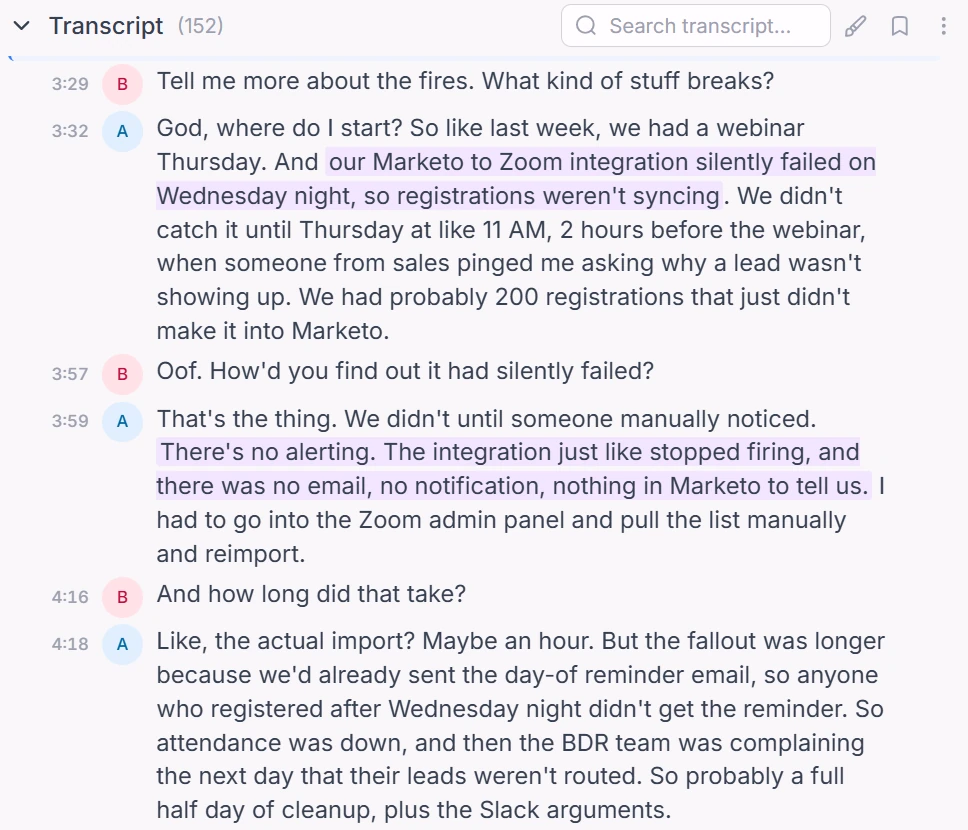
1. It reveals the "why" behind behavior. Analytics tell you users dropped off at step three; qualitative research tells you why — confusion, mistrust, a missing feature. That causal understanding is what makes insight actionable.
2. It uncovers unspoken and unmet needs. Open-ended exploration surfaces problems customers never thought to file as a request — the opportunities your roadmap would otherwise miss.
3. It's flexible mid-study. You can follow an unexpected thread, reword a question, or probe deeper in the moment — adapting as you learn rather than locking everything in upfront.
4. It captures context and emotion. Tone, hesitation, workarounds, and the story around a decision carry meaning that a rating scale flattens.
5. It's fast and affordable to start. You can learn a great deal from five to ten good conversations — no large panel or statistical power calculation required to get directional insight.
6. It builds empathy and team alignment. A vivid customer quote moves a roomful of stakeholders more than a chart. Shared exposure to real users aligns teams on what matters.
7. It's ideal for exploring new territory. When you don't yet know the right questions to ask, qualitative research helps you map the problem space before you commit to building or measuring.
8. It generates hypotheses to test at scale. Qualitative findings become the survey questions and metrics worth tracking — it sharpens your quantitative work.
9. It keeps decisions grounded in evidence. Done well, every theme links back to the specific quote behind it, so priorities trace to real customer needs instead of the loudest opinion in the room.
Disadvantages of qualitative research — and how to mitigate them
Honest coverage of the trade-offs (and the fixes) is what separates a good research practice from a sloppy one.
- Researcher and confirmation bias. Mitigation: ask neutral, non-leading questions; have a second person review themes; look for disconfirming evidence. (More on confirmation bias.)
- Hard to generalize. Small samples aren't statistically representative. Mitigation: triangulate with quantitative data; keep interviewing until themes repeat (saturation).
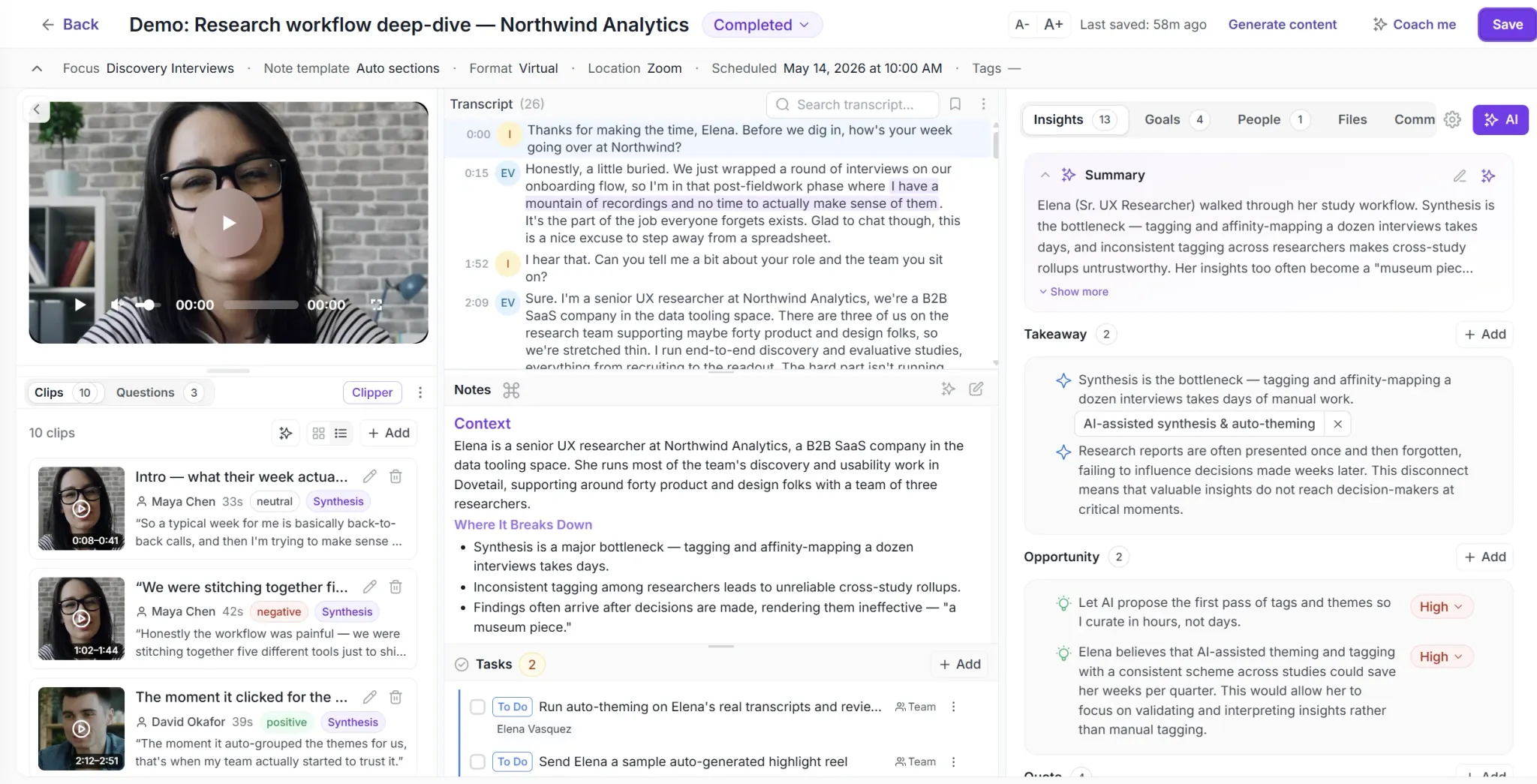
- Time-consuming to analyze. Transcribing and coding is slow by hand. Mitigation: record and auto-transcribe; use thematic synthesis and affinity mapping tooling to cluster at speed.
- Risk of misinterpretation. Mitigation: keep findings linked to source quotes so claims are verifiable, and validate interpretations with participants where possible.
- Sampling skew. The loudest or easiest-to-reach customers over-index. Mitigation: recruit purposively across segments; don't build only for the loudest customer.
When to use qualitative research
Reach for qualitative research when you're exploring a new problem, designing something, diagnosing why a metric moved, or building empathy. Reach for quantitative when you need to measure prevalence or validate at scale. Most strong research programs loop between the two: qualitative to find the signal, quantitative to size it.
Make the advantages real
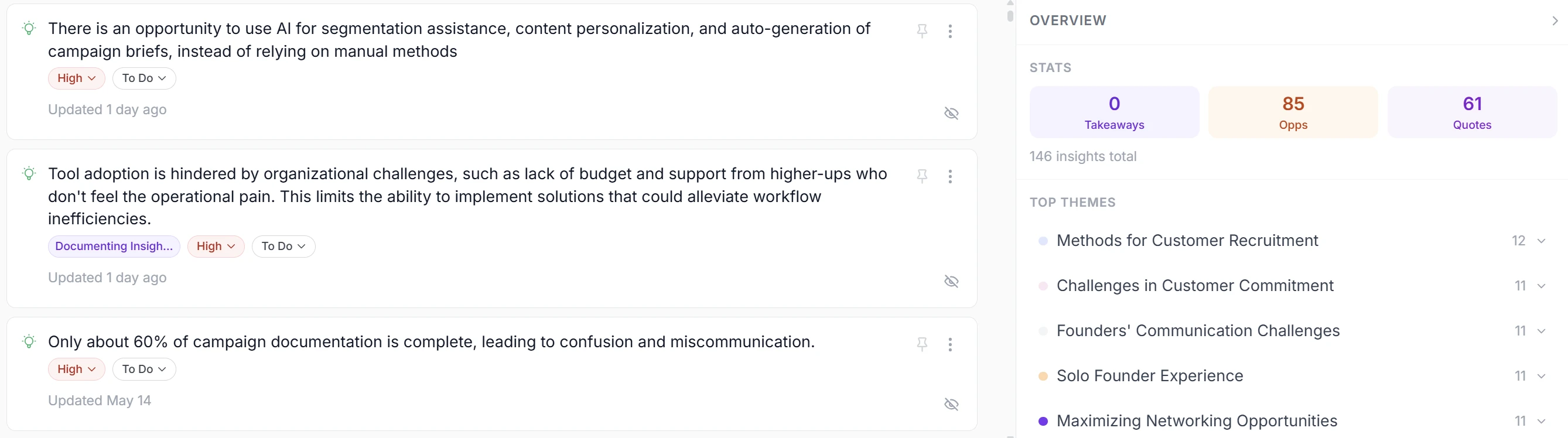
The advantages above only pay off if the insight actually reaches a decision — and that's where manual analysis breaks down. Intervool captures every interview, auto-synthesizes evidence-linked themes, and carries them into a prioritized roadmap, so the depth qualitative research provides doesn't evaporate in a folder of notes. See how it works or start a free trial.