Groupthink is when the desire for agreement overrides honest judgment — people converge on a consensus instead of voicing what they really think. In customer research it's especially dangerous, because it can quietly corrupt the very evidence you're using to make decisions. It shows up in two places: in the room with customers, and back on your own team.
What is groupthink?
Groupthink, a term coined by psychologist Irving Janis, describes a group prioritizing harmony and conformity over critical evaluation. Members self-censor doubts, assume silence means agreement, and pressure dissenters — producing a confident consensus that may be wrong. The classic ingredients: a dominant voice, time pressure, a desire to belong, and no structured way to surface disagreement.
Examples of groupthink in customer research
1. The focus group that converges. One articulate participant says they'd "definitely pay for this." Others, not wanting to seem negative, nod along. By the end the group "agrees" — but you've measured social conformity, not genuine demand.
2. The bandwagon feature request. A participant mentions a feature; the moderator perks up; the rest of the group piles on. The enthusiasm is real in the room and gone by Monday.
3. Social desirability bias. Customers tell you what they think you want to hear — praising your idea to be polite — especially in a group where dissent feels rude.
4. The HiPPO effect on your team. A senior leader states a conclusion early in the debrief; the team rationalizes toward it. The customer data gets cherry-picked to fit.
5. The shared-narrative trap. A team that's heard the same pitch a hundred times starts hearing confirmation everywhere, dismissing signals that don't fit the story. (Closely related to confirmation bias.)
Why groupthink is so costly in customer interviews
Research exists to challenge your assumptions. When groupthink takes over — among customers or among your team — research stops being a source of truth and becomes an echo of whatever was already believed. You end up building for a consensus that never existed, and the most valuable signal (the lone dissenting voice) gets silenced.
How to avoid groupthink in customer research
Favor 1:1 interviews over focus groups for discovery. Individual customer interviews remove peer pressure entirely — you hear what each person actually thinks. Reserve groups for reactions and co-creation, not demand validation.
Collect independent input before discussion. In any group setting, have people write their answer privately first, then share. This prevents anchoring on the first or loudest voice.
Facilitate neutrally. Ask open, non-leading questions ("walk me through the last time…") instead of "wouldn't this be useful?" Don't telegraph the answer you want.
Protect dissent. Explicitly invite disagreement, assign someone to argue the opposing case, and reward the person who pushes back.
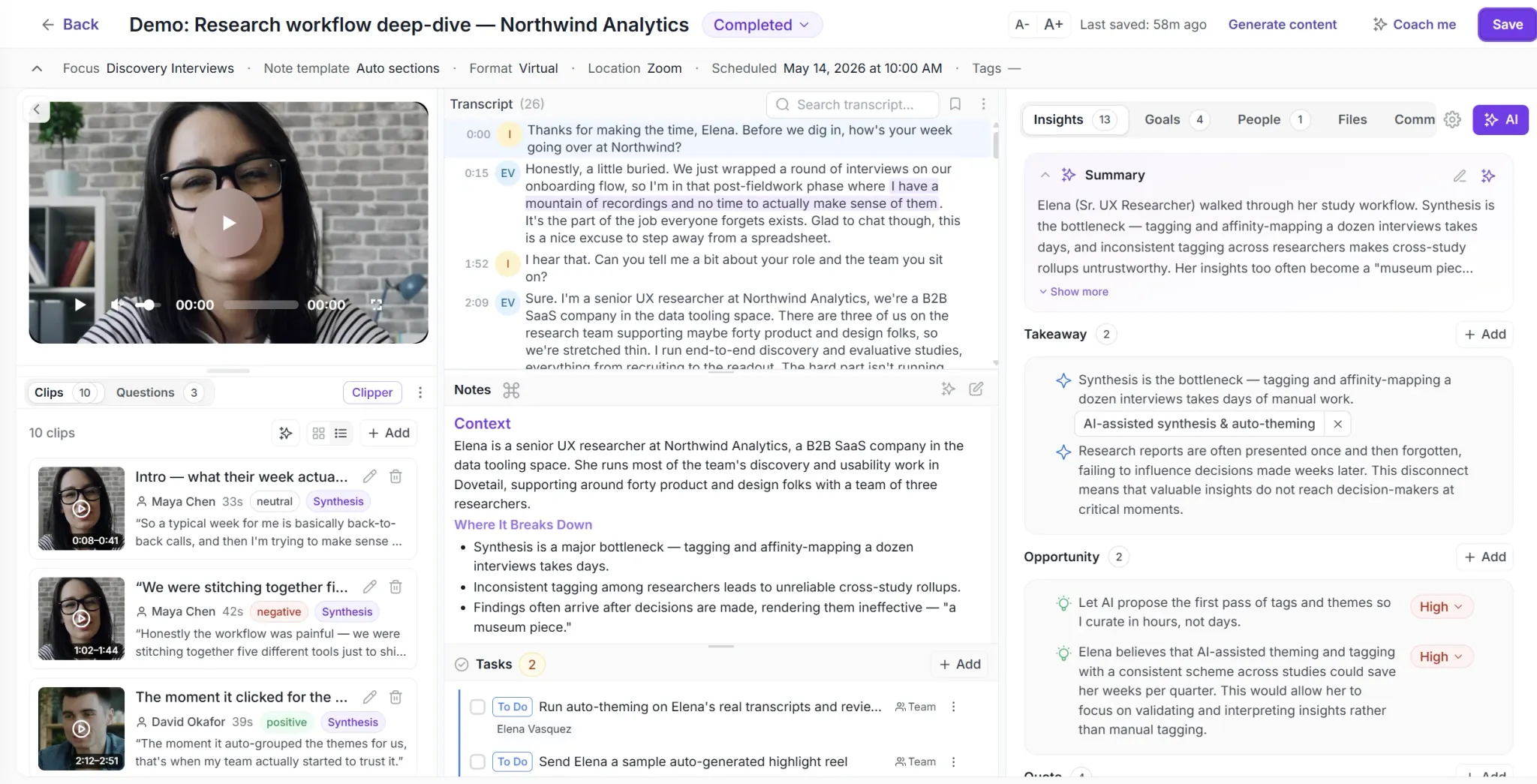
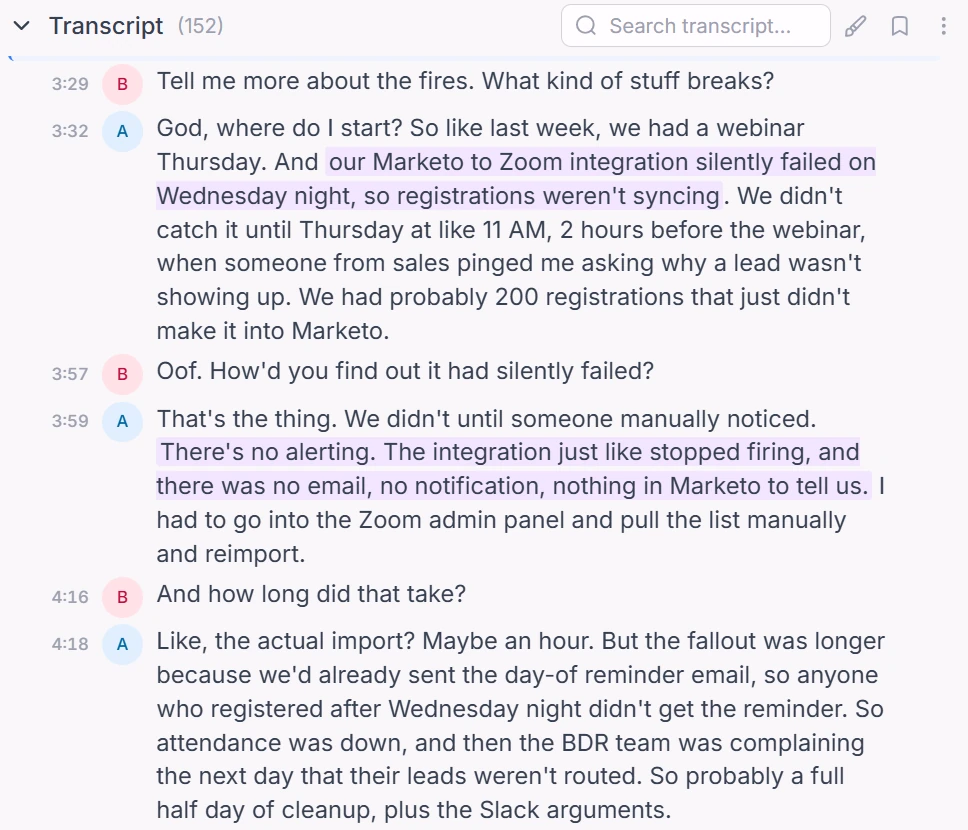
Separate observation from interpretation. Capture what was actually said — verbatim — before debating what it means, so the debrief argues from evidence, not memory.
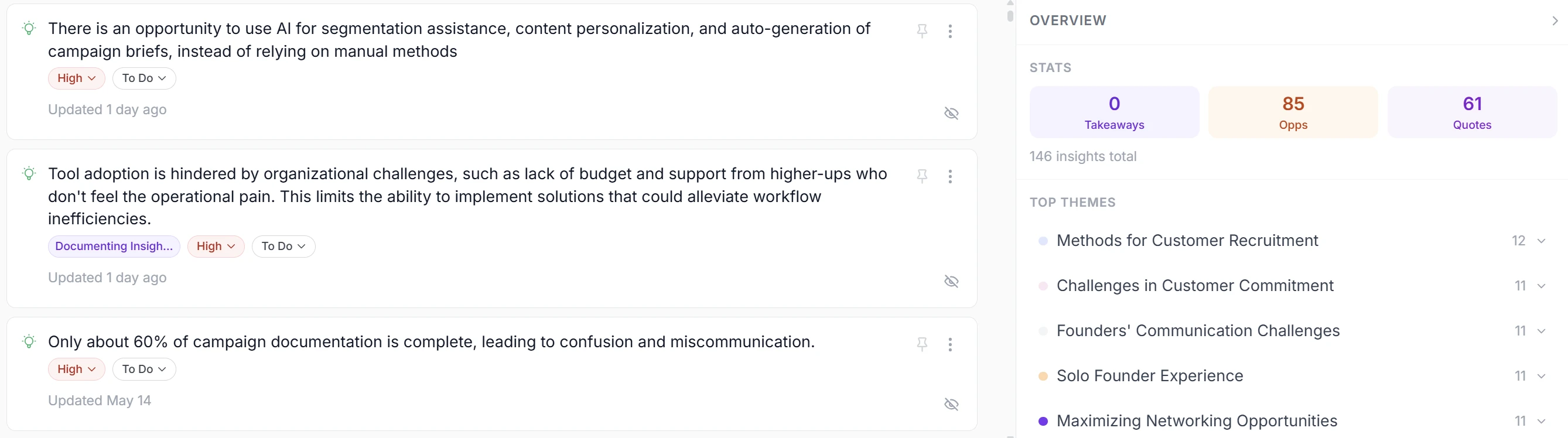
Aggregate across many conversations. Groupthink thrives on the one vivid session. Look at thematic synthesis across all your interviews so a single persuasive room can't set the agenda — and you don't end up building for the loudest voice.
Debrief from the data, not the HiPPO. Have the team review tagged quotes independently before anyone states a conclusion.
Keep your research honest
The antidote to groupthink is structure: independent input, neutral questions, protected dissent, and decisions traced to evidence rather than the loudest voice in the room. Intervool helps by keeping every insight linked to the exact moment it came from and surfacing what truly repeats across conversations — so your roadmap reflects real, independent signal, not consensus theater. See how it works.